All posts by islam

Iranian co. exports nano fever-indicating clothes

An Iranian textile company has produced and exported nano-enhanced clothes for children that can reveal if the one wearing them has fever by changing colors.

An Iranian manufacturing company has exported fever-indicating clothes for children, containing nanoparticles with antibacterial properties.
This year, € 100,000 worth of these clothes were exported to Kuwait and € 30,000 to Oman. A limited number were exported to Iraq, according to Iran Nanotechnology Innovation Council (INIC).
“We produced fever-indicating nano shirts, hats and socks, which change color when the body temperature rises” said Hojati, CEO of the company.

“The color changes from blue to white in boys’ clothes and from pink to white in girls’ clothes. Following this change of color, parents immediately become aware of the fever of their children and can take appropriate medical measures to control it. Due to the presence of chitosan-silica composites, antibacterial properties have been created in these clothes,” he added.

The company has a variety of products, including antibacterial socks, oleophobic aprons and super-absorbent antibacterial towels.

According to the Head of Iran Nanotechnology Innovation Council (INIC), Saeid Sarkar, 15 industrial sectors in Iran currently use nanotechnology, adding that Iranian nano products have so far been exported to many countries, such as South Korea, Australia, China, Indonesia, Russia, Turkey, Malaysia, Canada, as well as European, African and Latin American countries.

He put the value of the exported products at $62 million.

He also noted that with proper support, the Council could increase the worth of its nanotechnology enhanced products to $1 billion by 2025. /MNA/

New prize founded to honor Maryam Mirzakhani

A new prize is founded in the honor of the Iranian mathematician and a professor of mathematics at Stanford University, Maryam Mirzakhani, who won math’s most prestigious medal before she died in 2017.

The $50,000 prize will go to outstanding young female mathematicians who are no more than two years out from earning their doctoral degrees, livescience reported.

“We hope that the Maryam Mirzakhani New Frontiers Prize will help inspire young women to pursue their calling for mathematics,” said Richard Taylor, the chair of the selection committee for the Breakthrough Prize in Mathematics, which is awarding the money. “Recognizing some of the many aspiring women in mathematics is a fitting tribute to the beautiful intellect of Dr. Mirzakhani.”

Mirzakhani was just 40 when she died, only three years after winning one of math’s most prestigious prizes, the Fields Medal.

Mirzakhani was the only woman to have ever won the prize, which is handed out to mathematicians under age 40.

Her close collaborator, mathematician Alex Eskin of the University of Chicago, won a $3 million Breakthrough Prize this year for work he did in conjunction with Mirzakhani. The pair had worked out a theorem to explain some of the features of a geometric concept called moduli space.

Mirzakhani was also well known for her work in understanding the geometry of spheres, doughnuts and other curved, three-dimensional shapes, according to Stanford University. / MNA/

The Great Wall of Gorgan: longest ancient barrier between Central Europe and China

Stretched for almost 200 kilometers along northern Iran, the ancient Great Wall of Gorgan was constructed from 420s CE to 530s as a northern frontier of the then mighty Persian Empire, which was then ruled under Sassanids.

The wall was involved in a series of wars first against the Hephthalites or White Huns and later against the Turks.

Most parts of the gigantic monument are still hidden underneath the surface though some segments have so far been unearthed and even restored to former glory.

Iran’s Ministry of Cultural Heritage, Tourism and Handicrafts along with cultural heritage experts are making efforts to put the landmark monument on UNESCO World Heritage list in the years to come.

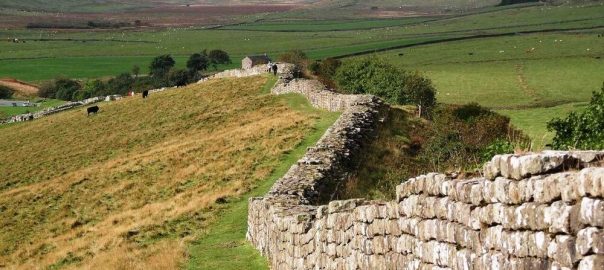
The wall is lined by 38 forts. It is the longest fort-lined ancient barrier between Central Europe and China, longer than Hadrian’s Wall and the Antonine Wall put together, according to UNESCO.

The gigantic barrier is also more than three times the length of the longest late Roman defensive wall built from scratch, the Anastasian Wall west of Constantinople. The combined area of the forts on the Gorgan Wall exceeds that of those on Hadrian’s Wall about threefold.

UNESCO adds that the Gorgan Wall is remarkable not only in terms of its physical scale, but even more so in terms of its technical sophistication. In order to enable construction works, canals had to be dug along the course of the defensive barrier, to provide the water needed for brick production. These canals received their water from supplier canals, which bridged the Gorgan River via qanats. One of these, the Sadd-e Garkaz, survives to 700 m length and 20 m height, but was originally almost one kilometer long.

The Gorgan Wall and its associated ancient military monuments provide a unique testimony to the engineering skills and military organization of the Sassanian Empire. They help to explain its geographic extent, from Mesopotamia to the west of the Indian Subcontinent, and how effective border defense contributed to the Empire’s prosperity in the interior and to its longevity. These monuments are, in terms of their scale, historical importance and sophistication, of global significance. /T.T/

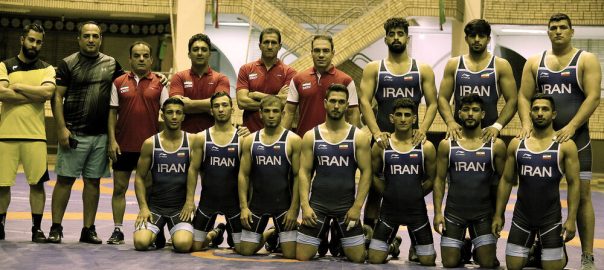
Iran U23 Greco-Roman team win world title

Iran Greco-Roman team won the title of the U23 World Championships in Budapest, Hungary on Sunday.

The Iranian team finished in first place with 122 points, followed by Georgia (121) and Russia (118).

Iran won three gold and three bronze medals in the competition.

Meysam Dalkhani in 63kg, Mohammadreza Geraei in 72kg and Aliakbar Yousefi in 130kg claimed three gold medals for Iran.

Mehdi Mohsennejhad in 60kg, Sajad Imentalab in 67kg and Mohammadhadi Saravi in 97kg took three bronze medals.

Final team standings
1. Iran – 122
2. Georgia – 121
3. Russia – 118
4. Ukraine – 77
5. Belarus – 69
6. Japan – 65
7. Turkey – 65
8. Armenia – 64
9. Kazakhstan – 54
10. Hungary – 42

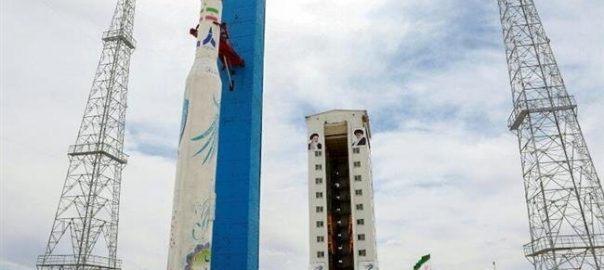
Iran to put three satellites into orbit

Iran is planning to launch three satellites in upcoming years, says Iranian Space Agency (ISA) chief Morteza Barari.

“Under the country’s second decade-long space development program, three satellites are being developed to be ultimately put into orbit,” Barari said on Sunday.

“The second decade-long space development program was initiated in 2016 and will continue until 2025 with the development of space-related infrastructure,” he said, Press TV reported.

The ISA chief underlined that no country had helped Iran in the development of satellites launched by the country so far, adding that the Islamic Republic’s top universities had instead made good investments in the field.

Iran’s indigenous satellite launch capabilities first made headlines when the first locally-built satellite, Omid (Hope), was launched in 2009.

The Islamic Republic also sent its first bio-capsule containing living creatures into space in February 2010, using a Kavoshgar-3 (Explorer-3) carrier.

In February 2015, the Islamic Republic placed its domestically-made Fajr (Dawn) satellite into orbit, which is capable of taking and transmitting high-quality photos to stations on Earth.

In January 2019, the domestically-built Payam (Message) satellite was launched into space with an aim to collect environmental information; however, technical problems that occurred during the final stage of the launch prevented the spacecraft from reaching orbit.

Speaking on Sunday, Barari noted that that the development of space technology in Iran could lead to “major” developments in the country’s economy.

The space agency chief explained that the newly emerging economic field related to space technologies had grown 139 percent during the time span of a decade and therefore represented an economic opportunity.

Further elaborating on the economic benefits of advanced space technology, Barari explained that satellite images could help increase efficiency in managing Iran’s environmental and agricultural sectors.

Data gathered from the satellites could also have a major role in avoiding and managing natural disasters, he said.

The ISA director added that pre-existing satellite information greatly contributed in managing and reducing damages inflicted from major floods earlier this year.

“With new satellite data, this can be done much better,” he said. / T.T/

Iran taekwondo runner-up at 2019 Serbia Open with six medals

Iranian men’s taekwondo team finished the 2019 Serbia Open, also known as Galeb Belgrade Trophy, with two gold, one silver and three bronze medals to stand second in the medals table.

The one-day event was held on Sunday in Belgrade with the participation of 285 practitioners from 43 countries.

Soroush Ahamdi (-68kg) and Mirhashem Hosseini (-74kg) earned two golds for Iran. The sole silver was brought home by Armin Hadipour in -58kg while Farzan Ashourzadeh (-63kg), and Sajjad Mardani and Saied Rajabi (both in +87kg) snatched three bronze medals.

Gold, silver and bronze medals of this event added respectively 10, 6, and 3.6 points to Olympics ranking of athletes.

Mexico claimed the event’s title with three golds and one silver and Australia finished third with two golds. / MNA/

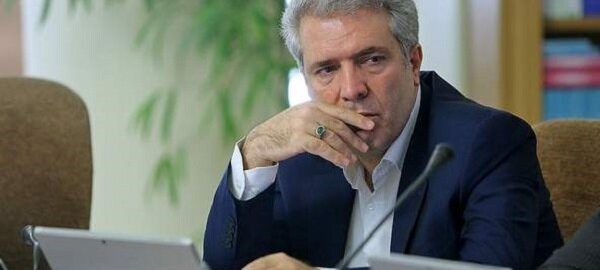
Iran hosts 5mn foreign tourists in 6 months: tourism min.

Iran’s Cultural Heritage, Tourism and Handicrafts Minister Ali Asqar Mounesan announced on Wednesday that about five million foreign tourists have visited Iran in the first half the current Iranian calendar year (starting March 21, 2019).

As he added, the data shows a 27 percent growth compared to the first half of the preceding year.

The minister hoped that the announced figure will hit 10 million by the current yearend.

As reported, the largest numbers of tourists entering the Isfahan province are from Germany, France, China, Spain, Turkey, Japan, Greece, Thailand, and Australia.

Iran has taken some important steps to increase its revenues from tourism under US sanctions.

For instance, as of July 16, the country started the implementation of no-visa policy for Chinese and Hongkonger tourists and businessmen who make trips to Iran.

Also in mid-August, Chairman of Iran Tour Operators Association Ebrahim Pourfaraj announced that the ban on imports of motorcycles with engines above 250cc and cars over 2,500cc has been removed to let foreign tourists ride them on Iranian roads.

Such vehicles are now allowed to be imported for the use of foreign tourists under specific conditions and supervision of Iranian customs and travel agencies, he added.

The ban has been removed only in favor of foreign tourists but to have Iranians also enjoy riding such vehicles, an affiliated plan is needed to be submitted to the cabinet and ratified, Pourfaraj said.

The ban outlawing motorcycles with engines above the size of 250cc was introduced in the early years of the Islamic revolution. / MNA/

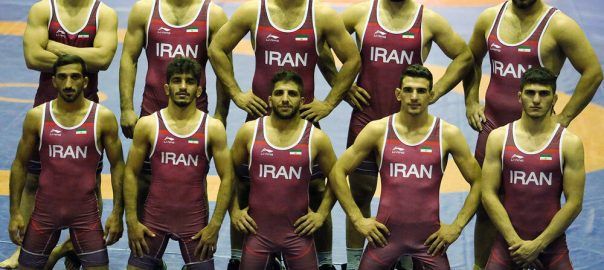
Freestyle team runners-up at U23 World C’ships

Iran freestyle team became runners-up at the 2019 U23 World Championships in Budapest, Hungary.

The Iranian team won three gold medals, one silver and two brones in the competition.

2018 Cadet World champion and 2019 Junior World silver medalist Amir Hossein ZARE (IRI) followed Nickal’s lead, shutting down 2016 U23 European bronze medalist Vitali Goloev from Russia in the finals match at 125 kg, 10-0.

At 86 kg, Kamran Ghasempour won his second-consecutive U23 World championship with a decisive 9-3 win over Gadzhimurad Magomedsaaidov from Azerbaijan.

Mojtaba Goleij, who did not compete at the 2018 U23 World Championships, put up seven points in the second period of the 97 kg title match against 2017 Junior World champion Shamil Musaev from Russia for an 8-2 victory and the gold medal.

Alireza Nosratolah Sarlak beat Mongolian Zanabazar Zandanbud 7-4 in the 57kg bronze medal match.

Hossein Lotfali Shahbazi also defeated Azerbaijan’s Shamil Zubairov 5-1 at the 92kg bronze medal match.

2017 Cadet World bronze medalist Mohammed Nokhodi lost to 2018 Junior World silver medalist Razambek Zhamalov from Russia at the 74kg final.

Russia won the team title with 145 points, followed by Iran with 139 points and Azerbaijan with 111 points, unitedwordwrestling.org reported.

Throughout the 2019 season, Russia has won the men’s freestyle team title in every age-group, including Cadet, Junior, U23 and Senior.

Team standings

1. Russia – 145
2. Iran – 139
3. Azerbaijan – 111
4. Georgia – 109
5. Mongolia – 70
6. Japan – 65
7. Kazakhstan – 65
8. Turkey – 60
9. Ukraine – 58
10. USA – 5

/TT /

Iran, Venezuela to coop. on science, technology

Iran and Venezuela will cooperate on science and technology through the production of knowledge-based companies.

During her visit to Pardis Technology Park, Venezuelan Science and Technology Minister Gabriela Jiménez Ramírez said that Iran and Venezuela have the opportunity to collaborate in the field of science and technology and develop new talents in the countries and use technology to preserve and promote peace and prosperity.

A Memorandum of Understanding (MoU) will be signed with Iran’s Presidential Deputy for Science and Technology which will be a great opportunity for the development of science in Venezuela, she added.

She mentioned that her country takes and appreciates all opportunities to exchange science and technology with Iran.

Venezuelan Science and Technology Minister Gabriela Jiménez Ramírez in her visit to Iran also met and held talks with Iran’s Minister of Science, Research, and Technology Mansour Gholami in Tehran on Wednesday. / MNA /

70,000-year-old human settlement found in northern Iran

70,000-year-old human settlement found in northern Iran
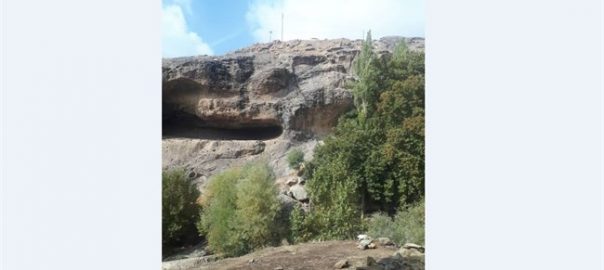
A group of archeologists found a human settlement in a cave in Alborz Province, west of Tehran, which dates back to 70,000 years ago.
The cave contained invaluable remains that prove human settlement, said the head of the excavation team Elham Qassidian.

Qassidian said that rock settlement found in the Sorhe area provides priceless data from the Middle Paleolithic age, IRNA reported.

She said that items discovered so far are mostly stone tools, which need more precise investigations, adding that this is the first settlement of Middle Paleolithic humans found in this area.

The other discovered items include stone tools, bones, and coal, said Saman Heydari, an archeology professor, adding that this style of tool-making can be traced back to 125,000 years ago.

Qassidian added that such settlements had already been found in the western parts of the country, like Kermanshah and Lorestan provinces, but this is the first time they are found in the southern parts of the Alborz Mountain range.

Alireza Dehqan-Mehrjui, the deputy head of the province’s Cultural Heritage, Tourism and Handicrafts Organization, said that the excavations are being done by an Iranian group in cooperation with Germany. The Neanderthal Museum of Germany is financially supporting the excavations. / ID /