All posts by islam

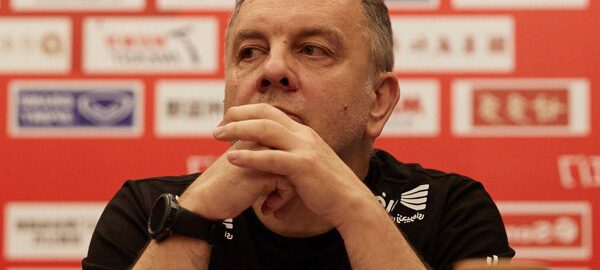
Kolakovic thanks Iran for the ‘wonderful adventure’

Igor Kolakovic published a post on his Instagram page to bid farewell with Iran after working for three days as the head coach of the National Volleyball Team.

“My dear associates, my dear players, federation employees. My dear Iranian friends! Adorable Iranian people! After three years of full effort, sweat, sadness, laughter, tears, beauty and joy, the moment of departure from Iran came,” he wrote on Tuesday.

The message came after the Iranian Volleyball Federation announced on Tuesday that the Montenegrin coach’s contract has been officially canceled.

“This wonderful adventure, a wonderful experience, was interrupted earlier than I expected. But it doesn’t matter anymore. Nothing can diminish my beautiful memories of the time we spent together in the constant struggle for the success of the Iranian team. You will forever be in my heart because of your courage, intellect, emotions, and respect that you have shown every day.”

“I look forward to our possible meetings wherever we are,” he added.

Kolakovic’s contract had been penned till the end of the 2020 Olympics but as the major event has been postponed for a year and national events are in a state of limbo due to the pandemic, the federation decided to terminate the agreement with mutual consent.

MNA/

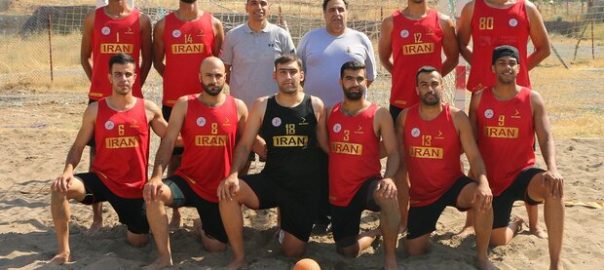
Iran handball to participate in 2020 Asian Beach Games

Iran’s national beach handball team is going to compete in the 6th edition of Asian Beach Games which is slated to be held in November in China.

This is the first time Iran handball is going to compete in the event. The team ranked third in the last Asian Championships held in China in June 2019.

The sixth Asian Beach Games are set to be held in Sanya from November 28 to December 6 in 17 sports disciplines with participation from all 45 member National Olympic Committees (NOCs).

Officials at the Olympic Council of Asia (OCA) said that the competition will be held as no case of COVID-19 has been reported in the area.

“The OCA has been in regular contact with the organising committee and with the Chinese Olympic Committee over the past three months and we have been very impressed with how the authorities have handled the Covid-19 outbreak in Sanya City and Hainan province,” said Al-Musallam, the Olympic Council of Asia (OCA) director general, Sportbusiness reported on April 15. “We appreciate there is still a long way to go in respect of controlling and preventing the spread of Covid-19 around Asia because the health, safety and well-being of our athletes is the most important factor.

“However, we remain hopeful that our Asian Beach Games can go ahead as planned in seven months’ time. We will continue to monitor the situation with the organising committee, the Chinese Olympic Committee and with all our National Olympic Committees in the five zones of Asia,” he added.

MNA/

Over 105,000 titles published in Iran over past year

Over 105,000 book titles have been published in Iran during the national calendar year of 1398 (March 20, 2019-2020).

The price of books has been doubled compared to the year 1397, Book House, a private Iranian organization that publishes information about books being published in Iran, reported on Tuesday.

Out of the total number of publications, 75,644 book titles have been authored by the Iranian writers, and 29,941 titles are translated books.

The number of all books in circulation in the year 1398 was 148,981,126 copies, which represents an increase of over 23 percent in the number of books compared to 1397.

The number of children’s books published in the year was 38,910, 247, which was the highest in numbers compared to previous years.

The average price of a book in 1398 was about 350,000 rials (about $8), but in 1397 it was about 180,000 rials (about $4).

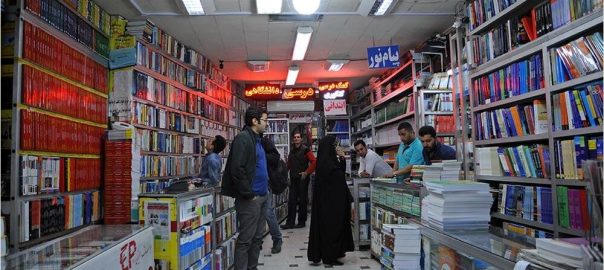
Photo: People are seen in a Tehran bookstore in an undated photo. /T.T/

US’ TAC Intl. Filmfest. to host two Iranian documentaries

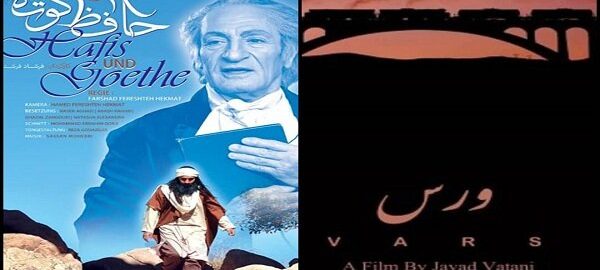
Two Iranian documentaries, namely ‘Hafis und Goethe’ and ‘Vars’, will take part at the 17th Archaeology Channel International Film Festival (TAC) in the US.

TAC Intl. Film Festival included two titles by Iranian filmmakers in its screening lineup. The films are:

Hafis und Goethe by Farshad Fereshteh-Hekmat: This documentary explores Goethe’s fascination with Hafiz. The film has been shot on location in Hafez’s hometown Shiraz, which also houses his tomb and Tehran.

‘Vars’ by Javad Vatani: At 360 feet high with a 216-foot span, when built-in 1936 the Vars Railway Bridge in Iran was an engineering and construction marvel, and changed the economic and social life of the region. Now, the construction warranties have finally run out, and the government is questioning whether to close down the bridge. A fascinating look at the bridge’s history and its impact on its community.

The 17th annual edition of the TAC Festival will have online film screenings only on May 13-17, 2020.

MNA/

Foreign demand for Iranian ventilators

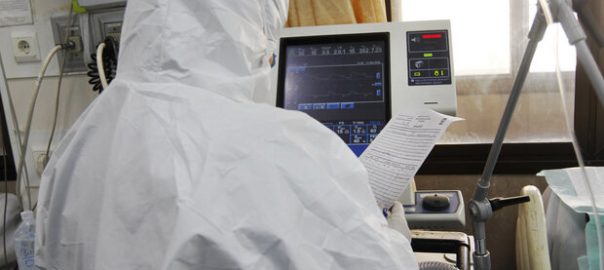
The CEO of an Iranian knowledge-based company told Mehr news on Tuesday that there are some requests from foreign countries, including Russia, Italy, and Spain, for the purchase of Iranian ventilators, under the coronavirus pandemic.

According to Ahmad Behfar-Moghaddam, his company received required licenses from Europe and could export its ventilators to European and other countries before the outbreak.

“Before the coronavirus outbreak we exported ventilators to Iraq, Afghanistan, Syria, Yemen, Baku, Azerbaijan, Georgia, Belgium, etc.,” he said.

“Due to the outbreak, our priority is supplying Iran’s domestic need for ventilators, but there are some new requests from Russia, Italy and Spain,” he added.

He noted that Iranian ventilators come at half the price of their foreign rivals.

As advanced and developed countries are facing serious problems in the field of provision of their medical and hospital equipment, knowledge-based companies in Iran have produced all these products and no patient in the country has experienced the shortage of this equipment including ventilators, CT Scan, ICU rooms, oxygen maker, etc..

The first production line for domestically-produced medical ventilators was inaugurated by VP for Science and Technology Sorena Sattari, back in January.

As reported, Iranian experts and technicians spent 88,000 hours over three years on research and development in order to manufacture the mechanical ventilator.

A medical ventilator is a mechanical ventilator, a machine designed to move breathable air into and out of the lungs, to provide breathing for a patient who is physically unable to breathe, or breathing insufficiently.

Failure to get oxygen into the heart tissue is one of the most common causes of death due to heart disease. As such, the production of the device and its use on patients in ICUs can greatly reduce heart damage.

MNA/

IRGC puts Iran’s first military satellite into orbit

Iran’s Islamic Revolutionary Guards Corps (IRGC) has successfully put its first military satellite into the orbit.

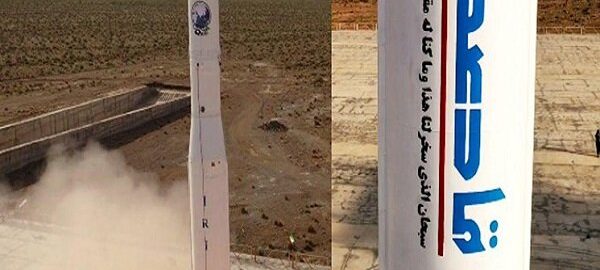
The elite force launched the Noor-1 Satellite by the domestically-built launcher Qassed (messenger) on Wednesday morning and placed it into the orbit at an altitude of 425km.

Noor-1 is the Islamic Republic’s first military satellite sent into space.

The satellite launch was carried out on the anniversary of the establishment of the IRGC.

The late founder of the Islamic Republic of Iran Imam Khomeini, in a decree to the Revolution Council on April 22, 1979, officially announced the establishment of the Islamic Revolution Guards Corps.

The elite force has played a major role in the doctrine of defense based on deterrence and firm response to aggressors. This institution has also proved its strategic and decisive role in dealing with security and military threats beyond the geography of Iran.

MNA/

“Nahid 1” telecommunications satellite to be sent into orbit this year: official

Head of Iranian Space Agency (ISA) Morteza Barari said on Sat. that “Nahid 1” telecommunications satellite will be sent into the orbit in the current year [started March 21, 2020].

He pointed to the prioritized projects in space section of the country in the current year and added, “with the necessary coordination made with the commissioner of launcher, “Nahid 1” telecommunication satellite will be sent into the orbit before the termination of the current year [to end March 20, 2021].”

“We hope that the flight model of the country’s three major space projects [including ‘Orbital Transmission System’, ‘Pars 1 Sensing Satellite’ and ‘Nahid 2 Telecommunications Satellite’ will be completed according to the scheduled programs in the current year,” he added.

Elsewhere in his remarks, Barari pointed to the Students’ International Small-Scale Satellite Project, which is being implemented by Asia-Pacific Space Cooperation Organization (APSCO) in Iranian Space Research Centers in cooperation with three universities of the country, and added, “since this project is done in international level jointly, we should try to take advantage of high capacities and potentials of this international organization effectively.”

The deputy minister of Communications and Information Technology (ICT) emphasized the need for developing infrastructures in the space field and added, “existing capacity of Iranian Space Research Center should be used optimally. In this regard, updating space programs of the country in the fields of developing space systems and navigation technologies is one of the main tasks of the Agency that this Research Center can play a constructive and important role in relevant issues.”

He called for the promotion of bilateral cooperation between the Iranian Space Agency and Space Research Center for developing international relations.

Turning to the motto of the current year named after ‘Surge in Production’ by the Leader of the Islamic Revolution, Barari said, “Iranian Space Agency will take giant stride in the current year in relevant issues.”

MNA/

Six contracts inked for producing COVID-19 vaccine: VP

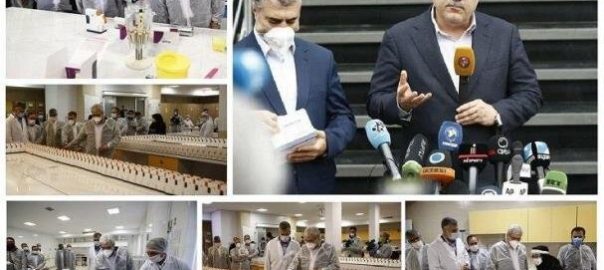
Vice President for Science and Technology Sorena Sattari said on Sun. that six contracts were concluded with knowledge-based companies in the field of producing coronavirus vaccine in the country.

In addition, a number of 76 clinical projects are underway in the country by researchers for treating coronavirus, also known as COVID-19, he added.

Turning to the achievements of knowledge-based firms, Sattari said, “these companies have managed to produce products in various fields including hospital equipment and also equipment needed in Intensive Care Unit (ICU), etc. and there is no need to import these products into the country amid coronavirus outbreak.”

Producing vaccine for the disease is one of the important projects that domestic researchers are working on it, he said, adding, “knowledge-based companies have cooperated with us in this field in a way that four contracts have so far been inked in the field of producing coronavirus vaccine.”

In addition, two other contracts will be inked in current week in the field of producing COVID-19 vaccine, and it is predicted that knowledge-based companies will produce five human vaccines which will hit the market in current year, he stressed.

He further noted that more than 76 clinical projects have either been conducted or are underway by researchers in the field of treatment of coronavirus disease, he said, adding, “these projects include drug tests, treatment methods, etc.”

MNA/

Iran to form women’s para powerlifting team

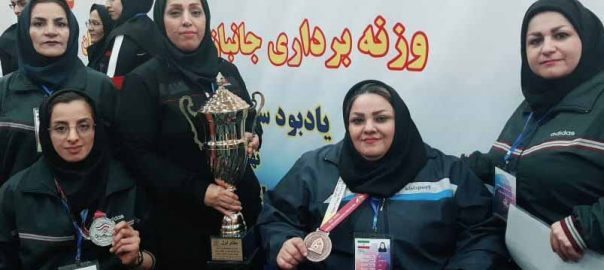
Iran will form the women’s para powerlifting team for the first time.

Iran Sports Federation for the Disabled Vice President Mojgan Nasiri has said that the female para powerlifters will par take at the international events after the Ministry of Sports and Youth confirms their dress code.

“With the aim of finding new talents in the sport, the domestic league was held with participation of 19 teams across the country last year,” Nasiri said.

“We were due to form the national team in the current year but it was delayed due to coronavirus outbreak. The team will be formed, when the situation becomes normal,” she added.

“We first want to participate at the Asian Para Games and our female powerlifters will compete at the Paralympic Games,” Nasiri went on to say.

Last year, The Iran Weightlifting Federation sent the women lifters to the Asian Championships and International Weightlifting Federation (IWF) World Championships for the first time./T.T/

Iran marks National Day of Saadi Shirazi, the Master of Speech

Today is the National Commemoration Day of the renowned Persian poet Saadi Shirazi, born in Shiraz around 1200 and died around 1292.

Abu-Muhammad Muslih al-Din bin Abdallah Shirazi, known by his pen-name Saadi, was one of the major Persian poets of the medieval period.

Saadi is known as a mystic and metaphysician in the history of Persian literature. He is recognized for the quality of his writings and for the depth of his social and moral thoughts.

The ancient scholar has gained worldwide fame, not only in the Persian-speaking countries but in western societies, with his poems being quoted in a multitude of sources.

Life

Saadi, who lost his father in childhood, experienced a youth of poverty and hardship; he left his hometown of Shiraz at a young age for Baghdad to pursue a better education. His first experience of education was at the Nezamiyeh University of Baghdad, where he studied Islamic sciences, theology, law, history, and Arabic literature. He traveled to different countries such as Anatolia, Syria, Egypt, and Iraq for thirty years. He also visited Qods, Mecca, and Medina.

The Master of Speech, as he is called, was a man of learning and traveling. He mingled with people from different groups from intellectuals, merchants, preachers, farmers, ordinary people to Sufi dervishes and even the thieves, trying to learn and study and also preach and advise people to gravitate to the wisdom and morality.

Returning to Shiraz as an elderly man, Saadi was greatly welcomed and respected by the ruler and the prominent figures of the city.

He spent the rest of his life in his birthplace till he passed away in around 1292.
Works

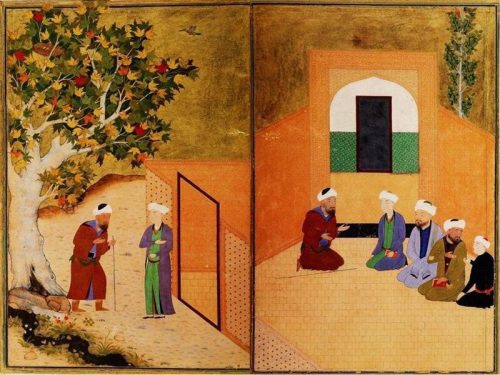
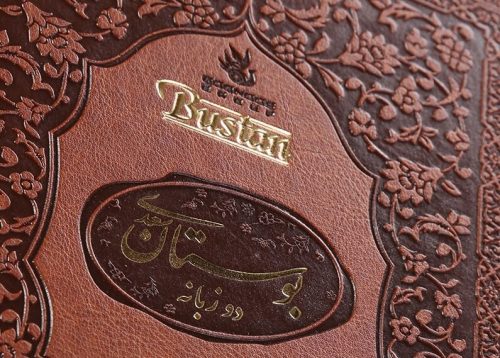
Saadi’s best-known masterpieces are Bustan (The Orchard) completed in 1257 and Gulistan (The Flower Garden) in 1258.

Bustan, as his best-known work, was completed in 1257. It is quite in verse, including 4,000 verses in 183 stories about the virtues such as justice, kindness, love, modesty, liberality, generosity, satisfaction and happiness, and the ecstatic practices of dervishes addressing all people to have a better and happier life.
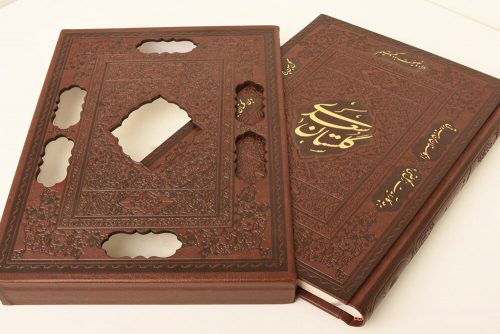
A year after the completion of Bustan, Saadi composed his masterpiece Gulistan.

Gulistan, comprised of 8 chapters is mainly in prose. The book widely addresses kings’ morality, dervishes’ behavior, benefits of contentment, silence and talking in proper time, love and youthfulness, weakness in old age, and education.

Saadi attempts to advise people to live freely and to improve the quality of their lives in Gulistan.

It is one of the most effective books in prose in Persian literature.
Saadi’s other works include Ghazals (love poems or Lyrics; sonnets), qasidas (longer mono-rhyme poems or Odes), quatrains and short pieces in prose in both Persian and Arabic. He is known as one of the greatest ghazal-writers of Persian poetry besides Hafiz.

Nature of Saadi’s poems

Saadi elaborately distinguishes between the spiritual and the mundane aspects of life in his works. He tries to visualize the deepest meanings of life in the most tangible contexts and close to conversational language as far as possible in such a way that even common people can get the most out of his writings.

He is a well-known poet among world scholars.

Goethe and Andre du Ryer presented Saadi to the west for the first time in 1634. The first complete translation of Golestan in English was done by Sir Richard Francis Burton.

In one of Saadi’s most well-known immortal poetries, he considers all humans as different parts of a whole body, regardless of social barriers and races:

“Human beings are members of a whole

In creation of one essence and soul

If one member is afflicted with pain

Other members uneasy will remain

If you have no sympathy for human pain

The name of human you cannot retain”

Mausoleum

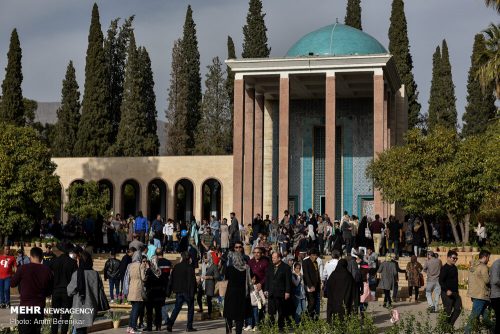
Saadi’s tomb is located in southern Shiraz. His mausoleum, also called Saadieh, is one of Iran’s major tourist attractions.

The tomb was first built in the 13th century. However, after being destroyed in the 17th century, it remained untouched till the present-day building was constructed in the 1950s.
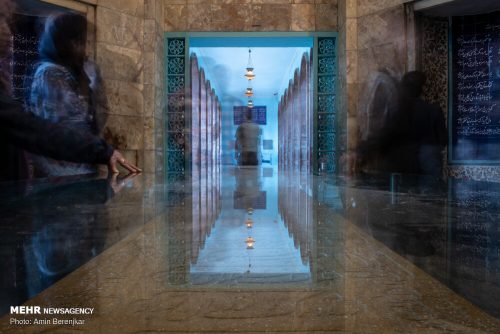
Many Persian elements have been used in its architecture. It is also a National Heritage Site.

Every year, a number of literati and scholars from around the world gather at the mausoleum on April 20 to commemorate the great Persian.
/MNA/