All posts by islam

Iran’s coronavirus cartoon contest holds awards ceremony

Iran’s We Defeat Coronavirus International Cartoon Contest organized its awards ceremony in Tehran on Saturday evening.

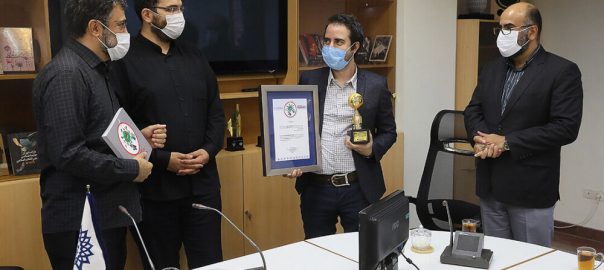
Iranian cartoonist Ali Radmand, the top winner of the competition, received his award from Mohammad-Mehdi Dadman, the director of the Art Bureau, the main organizer of the event.

The foreign winners could not attend the ceremony due to the coronavirus travel restrictions. The director of the bureau’s Visual Arts Office, Masud Shojaei-Tabatabai, said that their prizes will be sent to them.

Speaking at the ceremony, Dadman said that artists should help the people learn to adjust themselves to life with the coronavirus.

Radmand for his part said that he has tried to make people aware of the threat of coronavirus in his cartoons while he has also intended to bring smiles to their faces.

The organizers announced the winners of the contest, which was organized by Iran’s Art Bureau in collaboration with the Health Ministry on August 25.

Radmand won the first prize worth €1500. The Second prize worth €1000 went to Cau Gomez from Brazil and the third prize worth €500 was given to Stefaan Provijn from Belgium.

The winners were selected out of 47 finalists, 15 of whom were Iranians.

In addition, seven other participants were awarded honorable mentions.

Taravat Niki, Soheil Mohammadi, Mahmud Azadnia, Sajjad Rafei, Mansureh Dehqani, Alireza Pakdel and Mahnaz Yazdani were the seven honorees.

The people’s choice award was given to Majid Amini.

About 2000 cartoons were showcased for 28 days on irancartoon.ir, which was visited by 1,340,000 people.

The book for the exhibit bearing over 430 cartoons has been published with an introduction by Health Minister Namaki.

Turkish cartoonist Eray Ozbek presided over the international jury, which was composed of cartoonists Spiro Radulovic from Serbia, Nikola Vorontsov from Russia, Liuyi Wang from China and Marcio Leite from Brazil.

The jury for the national section consisted of Mohammad-Hossein Nirumand, Bahram Azimi, Masud Shojaei-Tabatabai and Salman Mohazzabieh.

Photo: Cartoonist Ali Radmand (3rd L) accepts his prize during the awards ceremony of the We Defeat Coronavirus International Cartoon Contest from Art Bureau director Mohammad-Mehdi Dadman (2nd L) and Masud Shojaei-Tabatabai (1st L) on September 5, 2020. (Art Bureau/Mohsen Seyyedi) /T.T/
Iran improves in nanotechnology articles citation

Iran’s ranking in nanotechnology articles citation in 2019 has significantly improved compared to 2018, as it moved 26 levels higher, according to the StatNano’s statistics collected from the WoS database.

Based on a report Nanotechnology Publications report, Iran ranked 38 worldwide for the average times the nano-articles have been cited in the Journal Citation Reports in 2019, while in 2018, it was placed 64.

As a determining indicator for evaluating the quality of articles, the 5-year average citation per article generally shows the share of highly-cited and lowly-cited articles by a researcher, institution, or country. For example, a high value of this indicator means that the proportion of lowly-cited articles is smaller in the distribution of the articles of a given country; in other words, most of the articles are highly-cited or medium-cited articles.

According to the report, among the countries that have published the greatest number of nanotechnology articles during the past five years, Singapore, Australia, Saudi Arabia, and Switzerland have had the highest average citation per article indicator in this field.

Despite their notable number of nanotechnology publications, the place of countries such as India and Russia in view of this index is worth pondering.

According to StatNano’s statistics, Singapore published nearly 12,000 nano-articles between 2015 and 2019, with an average of 22.6 citations per article during this period. However, Iran’s average is 10.36 citations per article.

Iran ranked 4th for the highest number of nano-article publications.

The indicator is 16.6 for the United States and 14.5 for China, the world’s leaders in nanoscience publications.

Australia has taken the second place in average citation per nano-article, followed by Saudi Arabia, Switzerland, and the Netherlands holding the third to fifth spots. /T.T/

Iranian swimmer Asghari sets new Guinness record

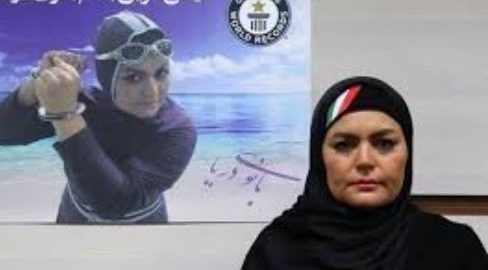
Iranian female swimmer Elham Sadat Asghari swam 10km in the Oman Sea wearing hijab to set a new Guinness World Record.

She swam with one hand for four hours and 59 minutes to register a new record.

Asghari had also registered Guinness World Record Certificate after registering her 5,488 meters swimming both in the Caspian Sea and a swimming pool in Tehran in 2019. It’s the farthest swim whilst wearing handcuffs.

Back in 2017, the 37-year-old Iranian sportswoman completed the challenge of swimming handcuffed for more than three hours non-stop in the Persian Gulf waters off the coast of the southwestern port city of Bushehr, located 1,050 kilometers (652 miles) south of the capital Tehran. /T.T/

Iran ranks 10th at UNESCO world heritage registration list

Iran is ranked 10th regarding the number of historical monuments and sites registered in the UNESCO world heritage list.

The director of the World Heritage Affairs Office at Iran’s Cultural Heritage, Handicrafts and Tourism Organization, Farhad Azizi announced that Iran is ranked 10th regarding the number of historical monuments and sites registered in the UNESCO world heritage list and upgrading this position can be very effective in the development of tourism in the country.

Before the Islamic Revolution, Persepolis, Naghsh-e Jahan Square and Choghaznabil were the only three UNESCO-listed monuments, but today the number has been increased this number to 24 historical sites, he added.

Azizi informed that within the next two weeks, the UNESCO Assessor will visit the Uraman region in western Kordestan province.

The global registration of the Oraman region is a good opportunity to introduce the historical and scenic areas of Iran, he said.

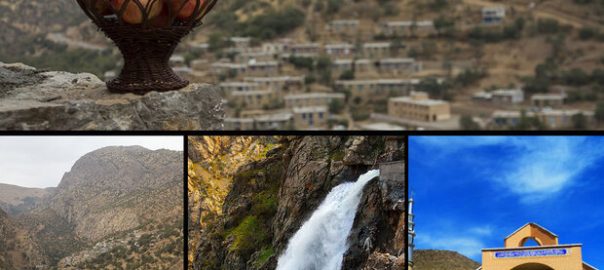
Uraman or Huraman or Hawraman Takht in Kordestan Province, west of Iran, is a mountain village resembling the tiered Masouleh Village in Gilan Province but on a much larger scale. For this reason, it has been nicknamed ‘1,000 Masoulehs.’

Uraman neighbors Iraq in the west and the city of Javanroud in the south. The village is connected to Mehran city via a 65-kilometer road. Uraman is surrounded by the mountains of the Zagros range and has mild temperatures in the spring and summer but very cold and long winters. /MNA/

Massive data center inaugurated in Iran

Iran has launched a massive data center to boost traffic and content generation on its National Information Network (NIN) as Tehran is to reduce reliance on global servers for key and sensitive online services.
The official IRNA news agency said the NIN Mother Data Center had been inaugurated earlier in the day in a ceremony attended by telecoms authorities and senior government and parliament officials.

It said the data center would host 100 racks and is capable of accommodating hundreds of data servers. Its capacity for Internet exchange points (IXP), through which Internet infrastructure companies connect with each other, is one terabit per second, the report added.

The new facility has been named after Martyr Qassem Soleimani, the Iranian major general killed in a US airstrike in the Iraqi capital Baghdad in January.

The data center’s opening comes after two main Iranian mobile operators launched their own data centers earlier this year to increase capacity for cloud computing and help Iran’s telecoms ministry to advance its plans on full implementation of the NIN.

Addressing the inaugural ceremony, Iran’s Minister of Communications and Information Technology (ICT) Mohammad Javad Azari Jahromi said the new data center had been designed and launched only in a matter of six months.

Jahromi said the center would hugely boost plans to develop the use of key online services on the NIN, including search engines, messengers and electronic mail services.

“This development is an effective step toward improving the quality of basic services on the NIN,” said the minister, adding that the data center would have two separate 500-server capacities for messenger and search engine applications.

Using the NIN on a nationwide scale helped Iran cope with a long internet blackout that was imposed during riots caused by fuel price hikes in November 2019.

Government authorities believe a full rollout of the NIN could hugely boost online services in Iran and help increase security across the network. / Iran Daily /

Tire production increases 27% in 5 months yr/yr

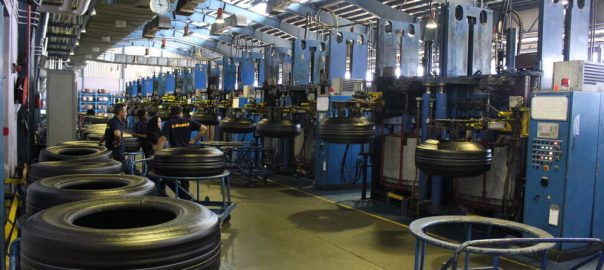
Production of tire in Iran has risen 27 percent during the first five months of the current Iranian calendar year (March 20-August 21), compared to the same period of time in the past year.

As reported by IRNA, 115,983 tons of tires have been produced during the five-month period of this year.

It terms of number, 10.232 million tires have been produced, showing a 26-percent growth year on year.

Of the mentioned figure, 62,968 tons were the passenger car tires, which shows a 28-percent rise.

Some 9,268 tons of van tires were manufactured, indicating a 13-percent growth.

Also, 21,237 tons of bus tires were manufactured, showing a 10-percent rise.

Manufacturing of the tires of light agricultural machinery experienced a growth of 123 percent to stand at 2,223 tons, and that of the heavy ones rose 42 percent to stand at 7,832 tons.

Meanwhile, 2,401 tons of road building machinery tires were manufactured, with a 17-percent growth compared to the first five months of the past year.

The bicycle tire output stood at 772 tons, indicating 80 percent growth.

Earlier last month, an official with Iran’s Industry, Mining, and Trade Ministry said that increasing the amount of investment making for the production of tire in the country is a necessity.

Kamran Kargar, the acting head of planning, supplying, and market regulating office of the ministry, said the consumption of tire is noticeable in Iran due to the country’s big transportation fleet.

“Now the ground is properly prepared for the production of light and heavy vehicles tires in the country, and investment making will play a significant role both for the establishment of new production units and for launching development projects”, the official noted.

Having the annual production capacity of 426,000 tons of tire, Iran accounts for 41 percent of tire output in the West Asian region, according to the deputy director of the non-metal industries office of the Iranian Industry, Mining, and Trade Ministry.

Mohsen Safdari has said that 11 tire production units are active in the country creating jobs for 14,500 people.

He said 426,000 tons is the nominal capacity, while the real output is less than this figure as some units are working with 60-70 percent of their capacity.

“Iranian tire industry is dependent on foreign raw materials by 40 percent, so we are self-reliant by 60 percent in this field”, the official announced.

In a bid to nullify the U.S. sanctions, Iran is determined to strengthen its domestic production to achieve self-reliance.

Selecting the motto of “Pickup in Production” for the previous Iranian calendar year (March 2019-March 2020), and the slogan of “Surge in Production” for the current year indicates the Islamic Republic’s determination to achieve this goal.

To this end, the Iranian ministries besides the private sector have been outlining their programs for the surge in production./T.T/

Iranian students win 4 medals at Intl. Biology Olympiad

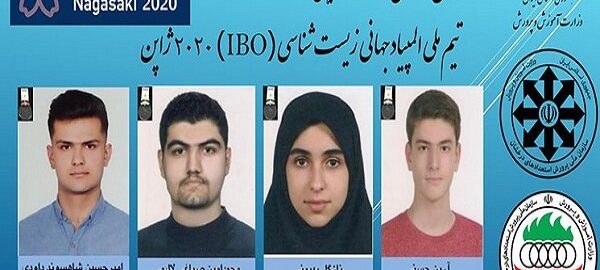
Iranian students won 3 silver and one bronze in the 31st International Biology Olympiad (IBO) which has been hosted by Japan virtually.

Four Iranian students took part in the 31st International Biology Olympiad which was held virtually due to coronavirus outbreak.

Arian Hassani, Nazgol Mohaimeni, and Mohammad Amin Sabbaghi Lalimi claimed silver medals and Amir Hossein Shahsvand Davoodi gained a bronze.

This international science Olympiad whose aim is to bring together the most gifted biology talents around the world was hosted by Japan from 3 to 11 July 2020.

The International Biology Olympiad (IBO) is a yearly Biology competition for secondary school students, who are winners of their respective National Biology Olympiad. Their skills in tackling biological problems, and dealing with biological experiments are tested. For a successful performance interest in biology, inventiveness, creativity, and perseverance are necessary. IBO gathers young people from all over the world in an open, friendly, and peaceful mind. IBO is hosted every year by a different IBO member and takes one week. / MNA/

Iran’s agri. products mounts 130 mn tons in 7 years: Min

Hailing Iran’s status in the agriculture in the world, Minister of Agriculture said, “The total production of the country’s agricultural sector has increased from 97 million tons to 130 million tons in last 7 years.”

Speaking at the inauguration ceremony of economic projects in Golestan Province of Iran on Tuesday, Kazem Khavazi, announced that during the last seven years, the total production of the country’s agricultural sector has increased from 97 million tons to 130 million tons.

Hailing that Iran is one of the strongest countries in the field of agriculture, he stressed that the country’s economic growth has always been due to this sector.

Elsewhere in his remarks, he considered the agricultural sector as the only sector that can sustainably increase the country’s economic growth and run the country without dependency on the oil sector.

The minister also referred that annually, more than 2.7 million tons of white meat is produced in the country. / MNA/

All foreign nationals in Iran receive free COVID-19 treatment

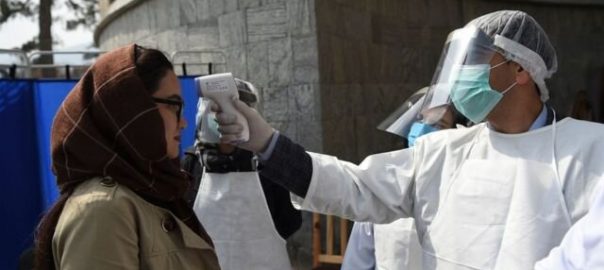
All foreign nationals infected with coronavirus receive medical treatment free of charge in Iran, deputy director for infectious diseases management department of the Ministry of Health has stated.

So far, at least 4 trillion rials (nearly $95 million at the official rate of 42,000 rials) have been spent only for the treatment of registered foreign nationals, Shahnam Arshi stated.

He went on to say that all health care services for refugees in Iran are free of charge and are also covered by the UNHCR.

It should also be noted that over a period of time, about 20 percent of COVID-19 patients in Mashhad hospitals were Afghan nationals who were treated free of charge, he added.

No foreign national has been charged for coronavirus testing or treatment, he said, highlighting, this is a service that is not done for free in many countries but has been done in the last 6 months for the treatment of foreign nationals in Iran.

There is no difference between documented and undocumented foreign nationals in the treatment of infectious diseases because if undocumented foreign nationals who are in Iran are not treated, they can easily spread the disease among others, so all foreign nationals residing in the country are covered by COVID-19 health services and other infectious and contagious diseases, he explained.

Iran is host to one of the largest and most protracted urban refugee situations in the world and has provided asylum to refugees for four decades.

The latest official government statistics in 2014, there are 951,142 Afghan refugees and 28,268 Iraqi refugees living in Iran. Many of the refugees living in Iran are the second and third generation, according to the United Nations High Commissioner for Refugees (UNHCR).

About 97 percent of refugees live in urban and semi-urban areas, while 3 percent are residing in 20 refugee resorts run by the UNHCR’s main government counterpart.

In addition to Afghan refugees, there are about 2.5 million Afghans living in Iran, including those having a passport and undocumented Afghans. 450,000 Afghan who did not have identity cards or birth certificates have received Iranian visas that allow them to live, work or study in the country.

Iran ramped up its production of essential medical equipment, and independent entrepreneurs – refugees included – have redirected their efforts towards contributing to the national COVID-19 response.

Undocumented Afghans who have access to free primary health services and similarly free COVID-19 related testing, treatment, and hospitalization, just like nationals.

In Iran, UNHCR is seeking $16.2 million for its COVID-19 emergency, while requires an additional $98.7 million to support Iran in maintaining and sustaining its commendable inclusive refugee policies, under the umbrella of the Solutions Strategy for Afghan Refugees (SSAR). /T.T/