May 7, 2026

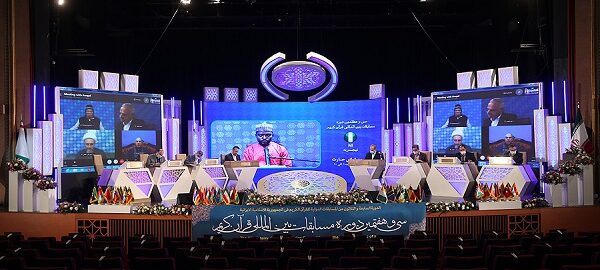
The final stage of Iran’s 37th International Quran Competition started in a ceremony here in Tehran on Saturday evening.
The ceremony began with recitation of verses from the Quran by Iranian Qari Hamed Alizadeh, followed by speeches by a number of religious and cultural officials.
Then the recorded performances of a number of the finalists in the categories of Tahqiq and Tarteel recitation and memorization were played and the panel of judges evaluated them.
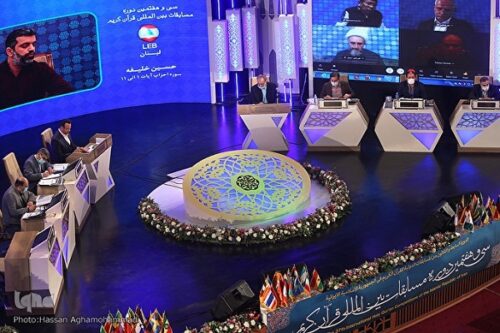
Representatives of Syria, Egypt, Iraq, Iran, the Netherlands, Indonesia, and Nigeria were among the finalists whose performances were played on the first night of the contest.
Twenty-three Quran experts from Iran, Syria, Iraq, Lebanon, Sudan, Indonesia, Jordan and Tunisia make up the panel of judges, headed by veteran Iranian Quran expert Abbas Salimi.
Iran Int’l Quran Contest: Final Round Gets Underway
The competition’s finals, broadcast on the IRIB Quran TV, Quran Radio and on several online platforms, will run until Wednesday.
The motto of this year’s edition is “One Book, One Ummah”.
The Awqaf and Charity Affairs Organization annually organizes the international Quranic event with the participation of Quran activists from various countries.
Qaris and Quran memorizers from over 80 countries took part in the 36th edition, held in Tehran in April 2019. / IQNA/
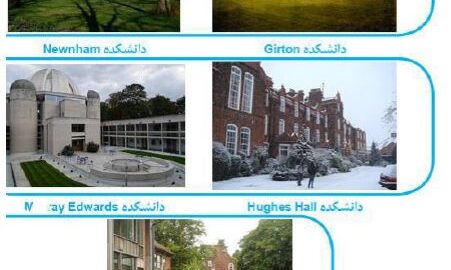
Two thousand Vatican-run special schools have been operating around the world for the past 120 years. Someone has written in his autography that he started studying at the Indonesian branch of the Don Bosco Catholic School when he was 6 years old and in spite of coming from a Muslim family he converted to Christianity under the influence of the teachings he received in that school. This person is no one but Barack Hussein Obama!
There is another person who says that he was a student at the Don Bosco Catholic School in Argentina at the age of 16 and because of the teachings he received there he became more pious and got interested in religious education. And that person is none other than Pope Francis, the current Pope!
The Don Bosco International Chain Schools have educated and trained about fifty prime ministers, presidents, ministers, and popes, and very little research has been conducted on these schools! But quite a number of research works have been done on neutral international schools such as Green Schools or Waldorf!
For more information please click here
The final stage of the 37th edition of Iran’s International Holy Quran Competition will begin in a ceremony in Tehran on Saturday afternoon.
Mehdi Qarasheikhlu, the head of the Quranic affairs center of Iran’s Awqaf and Charity Affairs Organization, said a number of officials, including the head of the organization and the secretary of the Supreme Council of the Cultural Revolution will attend the opening ceremony.
Speaking at a program on the IRIB Quran TV on Friday, Qarasheikhlu referred to the preparations for the final round, and said the competitions in the memorization and recitation categories have been recorded and will be played for the panel of judges to evaluate and score.
He said the Foreign Ministry, Islamic Culture and Relations Organization and Al-Mustafa International University helped in preparations and coordination for the recordings.
According to the official, the closing ceremony of the contest will be held on Wednesday and will be addressed by the Iranian Parliament Speaker.
The second international conference on Quran inscription will also be held concurrent with the competition on Monday, he went on to say.
The final round of the international Quranic event will be broadcast on the IRIB Quran TV, Quran Radio and on several online platforms.
The motto of this year’s edition is “One Book, One Ummah”.
The Awqaf and Charity Affairs Organization annually organizes the international Quranic event with the participation of Quran activists from various countries.
Qaris and Quran memorizers from over 80 countries took part in the 36th edition, held in Tehran in April 2019. / IQNA/
The organizing committee of Iran’s 37th International Holy Quran Competition announced the members of the contest’s panel of judges.
According to the announcement, 23 Quran experts from Iran and seven other countries form the panel.
The foreign arbiters are from Sudan, Lebanon, Indonesia, Syria, Iraq, Tunisia and Jordan.
They judge the contenders’ performances in different categories, including memorization and recitation of the Quran.
Veteran Quran activist Abbas Salimi is the head of the panel and Ahmad Hajisharif heads the technical committee.
Slated for March 6-11, the final round of the 37th edition of Iran’s international Quranic event will be held virtually.
The competitions in the finals will be broadcast on the IRIB Quran TV, Quran Radio and on several online platforms.
The motto of this year’s edition is “One Book, One Ummah”.
The Awqaf and Charity Affairs Organization annually organizes the international Quranic event with the participation of Quran activists from various countries.
Qaris and Quran memorizers from over 80 countries took part in the 36th edition, held in Tehran in April 2019. IQNA
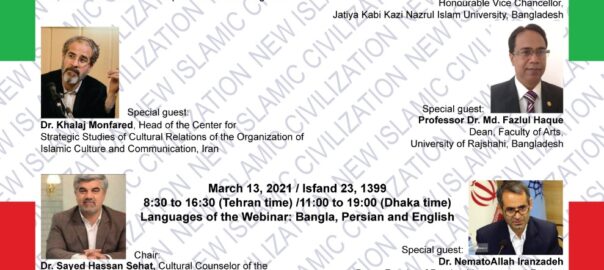
A webinar on ‘The Role of Literature, Culture and Humanities in the Formation of Civilization’ will be held on March 13, 2021 Organized by the Cultural Center of the Embassy of the Islamic Republic of Iran in Dhaka. You are cordially invited to the Program.
Topics of articles and lectures are given bellow
Zoom Meeting Link:
https://us02web.zoom.us/j/87170540656?pwd=dUU3U3J5UGNNYWxoVDZLZzlwMjJFdz09
Zoom Meeting ID: 871 7054 0656 (Passcode: 2021)
Facebook Live Link:
http://fb.com/iranmirrorbd/live/
Date of Webinar: 13 March 2021 (23 Isfand 1399)
Time: 11:00 am to 7:00 pm
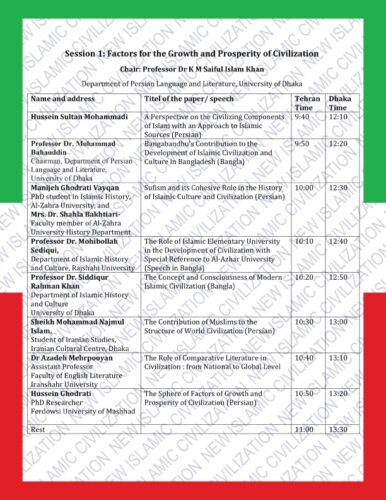
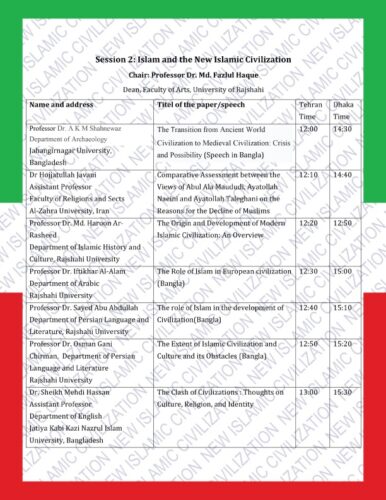
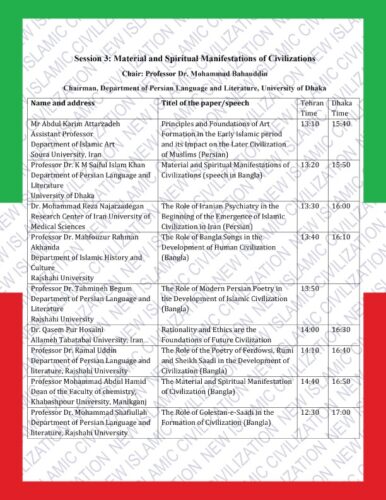
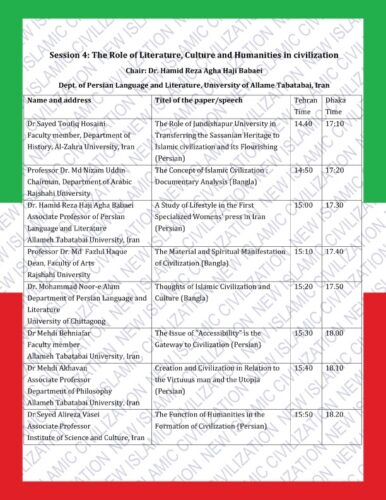
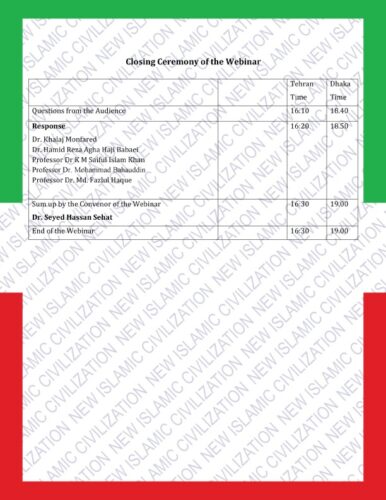
Webinar Languages: Bangla, Persian, English
Official email: [email protected]
Telephone: 0088029611987 /0088029611903
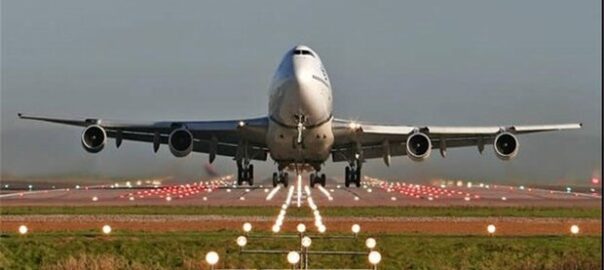
Iran is planning to start the production line of a 100-seat passenger plane and use IrAn-140 aircraft as a cargo jet, said the head of Iran’s Civil Aviation Organization.
“We are expanding the aircraft manufacturing program in the country, according to which IrAn-140 plane will be used as a cargo aircraft. It will be used in military units,” Touraj Dehghani Zanganeh earlier this week.
“In addition, we are working on launching the production line of a 100-passenger passenger plane,” he added.
The IrAn-140 is a locally built variant of the Antonov An-140. It is assembled under license by Iran Aircraft Manufacturing Industrial Company (HESA) in Isfahan.
Iran has in recent years made great strides in developing its civil aviation sector in defiance of the sanctions that have sought to restrict the country’s access to the sophisticated foreign technology. It has already been among the leading states in manufacturing military planes. /MNA/
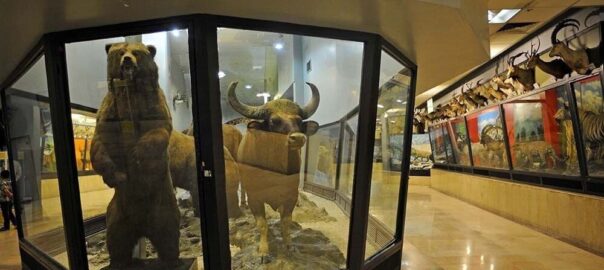
The richest and most important biodiversity museum of Iran has been set up in the Department of Environment (DOE), which exhibits extinct native species such as Persian lion and Caspian tiger, as well as rare species of Asiatic cheetah, mugger crocodile, bustard, grouse, and Asian black bear.
In the museum of the natural history of Iran, out of about 90,000 identified specimens in the world, there are more than 5,000 species of animals, plants, ancient and museums, while entry is not open to the public.
The museum includes several sections, including a genetic bank that includes samples of genes from Iranian and foreign species for study, a herbarium collection, an animal taxidermy collection, and a geological museum.
Providing research opportunities in the fields of animal, plant, and geological species, the museum allows researchers and scientists to study special and rare species of Iran and other species.
This collection, which is the first-panel exhibition (collection of horns and skulls) in Iran, has been working for a long time, since 2006 until the efforts of Iranian researchers, which has been completed in August 2020.
This panel includes a variety of deer, chinkara, antelopes, mouflon, wild goat, and a large number of specimens of foreign animals, especially from Russia, Siberia, and Africa.
In the taxidermy collection, the samples are generally collected after an animal’s death, part of this collection has been donated.
There are the world’s eight top specimens in the museum that are unique and there is no second specimen of them, including urials, hartebeest, dik-dik (the world’s smallest antelopes), and Persian fallow deer.
The world’s biodiversity section includes different species of mammal and reptile from the deserts of Africa to the North Pole. The Persian Gulf collection also includes a combination of aquatic and terrestrial specimens with a mock-up of the coastal landscape of the region, the Persian Gulf submarine tunnel also includes fish species, the starfish of the Persian Gulf. In the Caspian Sea collection, there is a rare Caspian seal and a variety of Caspian fish.
Other valuable items include the world’s most diverse and remarkable butterflies, insect display cases, Asian elephant skeletons, Iranian stone and minerals, mollusk showcases including large shells, especially from Southeast Asia, samples of old fossilized plants of the country, and a showcase of invertebrates including corals, cephalopods, echinoderms, bivalves, and ammonites (a type of mollusk) found in Iran.
Five ecoregions, rich biodiversity
Each region is defined by its characteristics that play a significant role in a land’s biodiversity and richness, based on which, Iran shares five ecological zones with specific flora from the lowest to the highest parts.
The great difference between the two latitudes of the north and south of the country and the existence of different plains, altitudes, and climates have given a very diverse view to the vast land so that a variety of vegetation and plant species are grown across it. Here, five ecological regions of Iran are briefly introduced below.
The Hyrcanian ecological zone covers the green belt, the southern margin of the Caspian Sea, and the northern profile of the Alborz mountain range. The forested areas of the region stretch to 2.4 million hectares covering Astara in Gilan province to Glidaghi in Golestan province.
The area of forests in the Iran-Turani ecological region, which covers most of the central plateau of Iran, is 4,666,941 hectares. Based on topographic and altitude conditions, this region is divided into two mountainous regions with a cold climate and a desert with a hot and dry climate.
The forests of this region, which are among the semi-humid forests of the country, are located in the province of East Azarbaijan and northwest of Ardebil province, which covers 174,838 hectares. Arasbaran forests have been protected by UNESCO since 1976 as one of the biosphere reserves due to their rare and unique plant species and rich biodiversity.
Some sources date the Zagros oak forests to 5,500 years. The creation and expansion of these forests are due to rainfall raised by the Mediterranean system and the Black Sea, which extends from the Sardasht area of West Azarbaijan to Firoozabad city of Fars province covering an area of 5,440,494 hectares.
The forests of the Persian Gulf-Omani ecological region include part of the southwest and all southern coasts, covering 2,039,963 hectares. Due to ecological differences, the main vegetation is divided into two territories of the Persian Gulf and the Sea of Oman. /T.T/
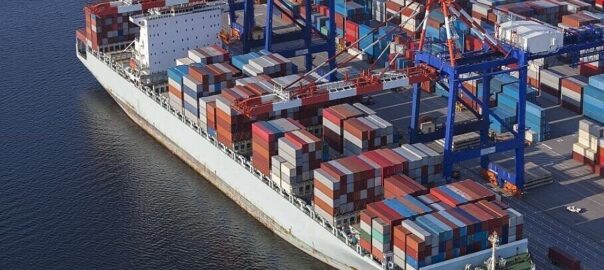
Iran has traded 134 million tons of non-oil commodities worth $65.5 billion in the first 11 months of the current Iranian calendar year (March 20, 2020-February 18, 2021), according to the head of the Islamic Republic of Iran Customs Administration (IRICA).
As reported by IRIB, during the mentioned period, 103 million tons of commodities worth $31.2 billion were exported to foreign destinations, while about 30.8 million tons of non-oil goods valued at $34.3 billion were imported, Mehdi Mir-Ashrafi said.
Iran’s top five non-oil export destinations during this period were China with $8.1 billion worth of exports, Iraq with $6.8 billion, the United Arab Emirates (UAE) with over $4.1 billion, Turkey with $2.2 billion, and Afghanistan with $2.1 billion.
According to the official, the mentioned five countries accounted for 72 percent and 75 percent of Iran’s total non-oil exports in the said period, in terms of weight and value, respectively.
Meanwhile, the country’s top five sources of imports during these 11 months were China with $8.8 billion, the UAE with $8.4 billion, Turkey with $3.8 billion, India with $2 billion, and Germany with $1.7 billion worth of imports.
The mentioned countries exported a total of 15.2 million tons of commodities to the Islamic republic to account for 50 percent and 72 percent of the country’s total imports during the said period in terms of volume and value, respectively.
The imports of non-oil goods in this time span decreased by six percent and 15 percent in terms of weight and value, respectively, compared to the same period last year.
Of the total imported commodities in the mentioned 11 months, some 21.4 million tons worth $11 billion were basic goods.
Like all other countries around the world, Iran’s trade with its foreign partners has been affected by the coronavirus pandemic, however, the situation is getting back to normal and the country’s trade is reaching its pre-pandemic levels. /T.T/
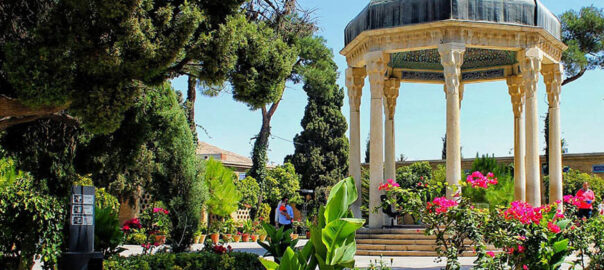
The Hafez Studies Center in Shiraz has organized a festival of story writing with the central theme of the great Persian poet Hafez.
“The festival aims to make the younger generation more familiar with the poetry and thoughts of Hafez and the ancient, original culture of the country,” the director of center Kavus Hassanli said in a press release published on Sunday.
“The center has organized varied programs. People derive a portion of their pride from their proud ancestors. Our history is a precious book whose golden pages cause the jealousy of other nations to arise,” he said.
“Today we have to make the best use of our precious cultural assets. Our great poet Hafez is a valuable treasure who has been praised by many contemporary world scholars,” he added.
“Fiction can be one of the ways to connect the young generation of today with the thoughts and poetry of Hafez, and we are planning to invite national writers to attend the festival with the central theme of Hafez,” he said.
Interested applicants are asked to submit their works to the Hafez Studies Center before August.
The stories written in Persian must be in connection with poetry, thoughts, life and time of Hafez.
Hafez, who is buried in his hometown Shiraz, is most famous for his Divan and among the many partial English translations of this work are those by Gertrude Bell and H. Wilberforce Clarke.
The extraordinary popularity of Hafez poetry in all Persian-speaking lands stems from his simple and often colloquial, though musical, language, free from artificial virtuosity, and his unaffected use of homely images and proverbial expressions. /T.T/