All posts by islam

European tourism industry owners keen on investment in Gorgan tourism sites: Official

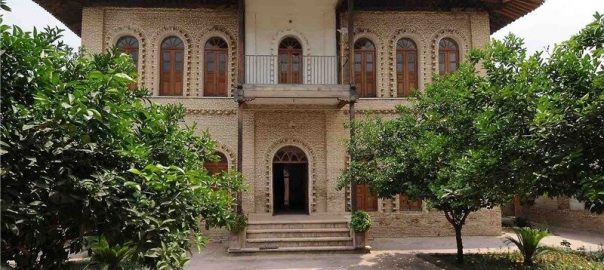
European investors including Italian tourism industry owners are considering investment projects in Gorgan for revival of Gorgan historic district and construction of the Seven Cities Market, Mayor of Gorgan Abdolreza Dadboud said on Saturday.

Stephano Santes, the Chief Executive Officer and some members of Italian tourism educational institutions attended in the historic district of Gorgan historical city, they also visited this city’s natural tourist attractions in Northern Iran, this activity is regarded as a good opportunity to introduce tourism capabilities of this region to foreign investors and to utilize the private sector to grow, develop and complete the tourism projects of this historic city.

Situated in the northeast of Iran, Golestan province is one of the best tourist destinations of the country in view of its enchanting natural attractions, wide ethnic diversity and numerous historical sites.

The province is home to international wetlands, dense forests, bubbling springs, and tens of waterfalls.
Golestan is undoubtedly one of the greenest regions of Iran. Peaceful coexistence among ethnic groups including Baluchis, Kazakh, and Sistanis yet is another source of attraction in the province.
A number of dialects are spoken in Golestan and people wear an array of attires in different designs and colors.

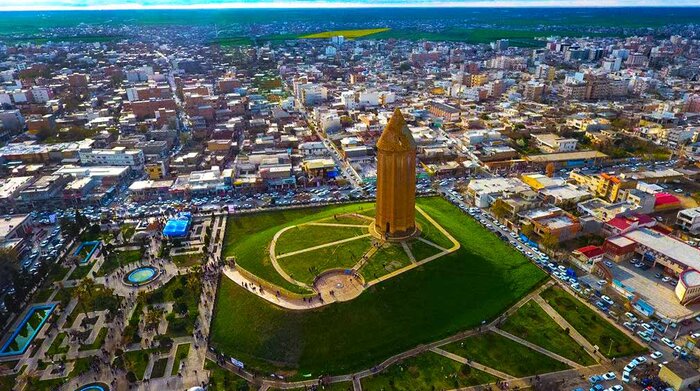
Naharkhoran Forest Park, Ziarat Village, Gonbad-e Kavous as the World’s tallest tower, Persian island of Caspian Sea, and The protected area of Jahan-Nama as Golestan’s Roof are some of tourist attractions of Golestan province in north of Iran.

The CEO of the Italian tourism educational institution in his meeting with Gorgan city officials said that the implementation of “responsible tourism” in addition to maintaining the traditions and the culture with the arrival of Italian and European investors will lead to the formation of economic productive firms in Gorgan.

“In addition to creating jobs, cultural interaction will also be strengthened, Stephano Santes added.

Responsible tourism is any form of tourism that can be consumed in a more responsible way, minimizes negative social, economic, and environmental impacts are its aims in tourism industry.

Responsible tourism generates greater economic benefits for local people and enhances the well-being of host communities. Irna.

Yazd, the city of bicycles and baklava

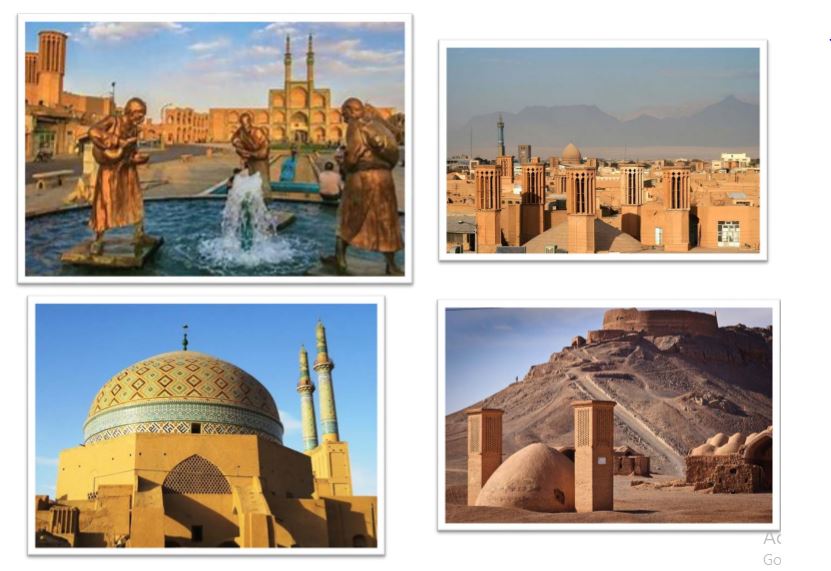
The city of Yazd, located in the centre of Iran, with its historical antiquity,takes tourists to the past like a time machine. The city was inscribed on the UNESCO World Heritage list in 2017. There are many historical wind wards and monuments in Yazd which are famous all over the world. Yadz Grand Mosque has very tall minaretes.

The most delicious and famous sweets are baked in Yazd. The original souvenirs of Yazd are sweet and baklava, herbal teas and Yazdi cashmere Termeh. One of the valuable, famous and unrivaled industries in Yazd is the gold smiting industry or art of jewellery. Yazd is gold and jewellery,in addition to special quality, are also appreciated in beauty and appearance, and for this reason, they are considered among the unique souvenirs of Yazd.The people of this city use bicycle for transportation more in their daily life due to respect for the environment and appreciation of the sky and the earth. If you travel to Yazd, you will experience all these beautiful places and unique culture along with the hospitality of the people of Yazd. to know more please  click bellow

1600836681824_YAZD

Sacred Defense Achievements Exhibition opened in Tehran

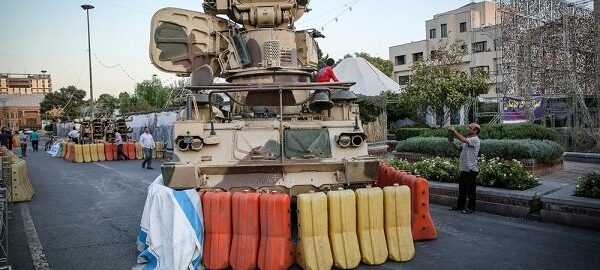
The Sacred Defense Achievements Exhibition was inaugurated in Tehran’s Sacred Defense Museum on Wed. in the presence of Parliament Speaker Mohammad Bagher Ghalibaf through videoconference.

The exhibition also was opened in eight provinces of the country concurrently.

In the inaugural ceremony of the exhibition, a number of 56 macro research projects developed in the field of Sacred Defense were unveiled after 13 years incessant activities.

Specialized sessions, street theater performance by Center for Performing Arts, specialized sessions in the presence of cultural, artistic and literary figures, showing specialized books in the field of self-sacrifice and martyrdom are among the programs produced in this edition of the exhibition.

Iran’s Chief of Staff Major General Mohammad Bagheri as well as other state and military officials attended the opening ceremony of the exhibition.

Sacred Defense Achievements Exhibition is open to the public view from 9:00 am to 16 and will run until Sept. 30.

Shahrivar 31 in the Iranian calendar (September 21 this year) is the beginning of the Sacred Defense Week in Iran when Iranians hold a week-long ceremonies, including military parades and putting on display latest achievements of the country’s defense industry, to honor the fallen soldiers and cherish the strength and resistance of the people during the eight years of war which eventually brought to an end through a UN-brokered cease-fire.

This year, Iran canceled a military parade due to the spread of coronavirus global pandemic.

MA/

Iran to export defense equipment with arms embargo lifted

IRGC Aerospace Force Commander Brigadier General Amir Ali Hajizadeh said on Monday that removal of the arms embargo will open a door for Iran to export its defense equipment.

He told reporters that today, Iran does not rely on foreigners in supplying its required weapons and is self-sufficient in this sector.

Being questioned about the US arms embargo, Hajizadeh said, the Islamic Republic’ plans and programs have not changed and “We are self-sufficient and if sanctions are lifted, the way to exports will be opened.”

“The removal of the arms embargo has several advantages, the first of which is a political victory for us,” he said.


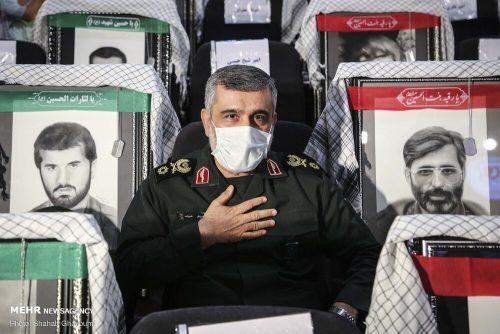
Brigadier General Amir Ali Hajizadeh attending a ceremony on Monday to commemorate war veterans in Tehran (Shahab Ghayoumi / Mehr News Agency)

The second is having a chance to export our defense equipment, he added. Answering a question about Trump’s recent remarks, Hajizdeh said: “As always the US can do nothing!”

Trump’s behavior towards the Islamic Republic has been tested, he said. “He has previously made some meaningless remarks for instance when he said the US would raid 52 point in Iran but in practice they did nothing.”

Under the 2015 nuclear deal that Iran struck with six major powers – the United Kingdom, China, France, Germany, Russia, and the US – the UN conventional arms embargo is set to expire on October 18.

The US, which abandoned that deal in May 2018, claimed it has triggered a “snap back,” or resumption, of all UN sanctions on Iran, including the arms embargo, which would take effect at 8 pm on Saturday night (00:00 GMT on Sunday).

This is while the other parties to the nuclear deal and most of the UN Security Council have said the US has no right to reimpose the UN sanctions and that the move has no legal effect.

MNA/

Dhaka festival to hold retrospective of Iranian filmmaker Puran Derakhshandeh

The 19th Dhaka International Film Festival will hold a retrospective of Iranian filmmaker Puran Derakhshandeh in January 2021.

Derakhshandeh, mostly known for her great attention to major social problems in Iranian society, will attend the festival that will take place in the capital of Bangladesh.

A number of Derakhshandeh’s award-winning movies, including “Hush! Girls Don’t Scream”, “Under the Smokey Roof”, “Eternal Children” and “Serial Dream”, will be reviewed during the festival.

She is scheduled to attend question and answer sessions that will be held after each screening.

Derakhshandeh graduated in film directing in 1975 from the Advanced School of Television and Cinema in Tehran. She started her professional career by making documentary films for IRIB channels in Kermanshah and Tehran.

Necessary preparatory work for the first-ever hybrid edition (having virtual as well as physical screenings) of the Dhaka International Film Festival is already underway.

During this 19th edition of the festival, the organizers plan to screen about 200 films from around 60 countries in various categories, including the Asian Cinema Section, Bangladesh Panorama Section, Cinema of the World Section, Children Films Section, Women Filmmakers Section, Short and Independent Films Section and Spiritual Films Section.

The 19th Dhaka International Film Festival organized by the Rainbow Film Society, will be held in Dhaka from January 16 to 24, 2021.

The screenings will be held at the Alliance Francaise de Dhaka, Star Cineplex, Bangladesh Shilpakala Academy, Central Public Library Auditorium and Bangladesh National Museum Auditorium. /T.T/


New museums added to UNESCO-tagged shrine ensemble in Ardebil

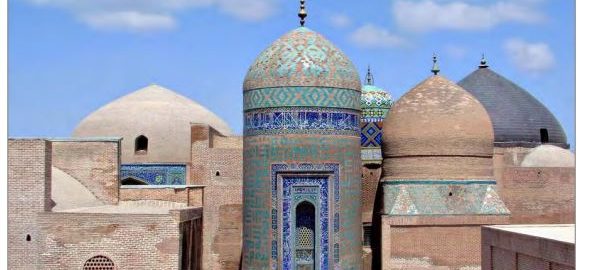
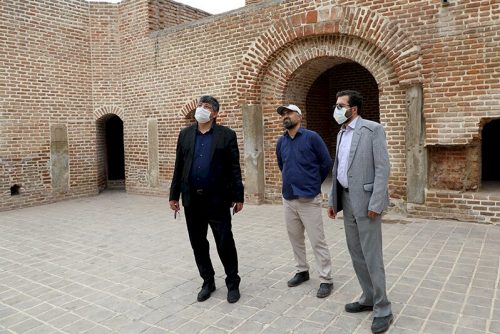
Five new museums have been added to the UNESCO-registered Sheikh Safi al-Din Khanegah and Shrine Ensemble, which is located in Ardebil province, northwest Iran.

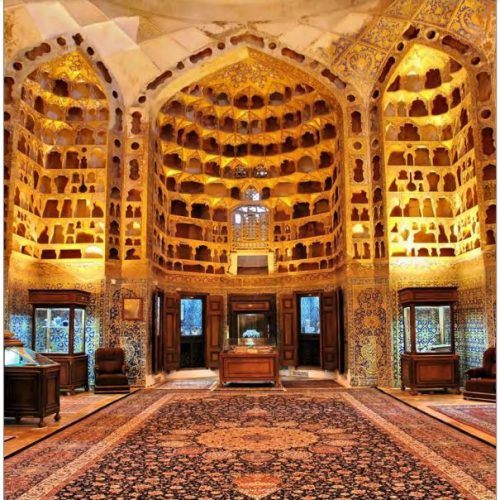
“Five museums of precious and semi-precious stones, coins, historical documents, earthenware and pottery pieces, and old photographs have been added to the shine ensemble and they will be opening to the public within the next coming days,” CHTN quoted provincial tourism chief Nader Fallahi as saying on Saturday.

Talking about the restoration work which is currently underway at the complex, the official explained that some 100 billion rials (about $2.3 million at the official rate of 42,000 rials) was allocated to a project for leveling of the surrounding area of the historical ensemble.

Some buildings around the complex have been purchased by the province’s Cultural Heritage, Tourism, and Handicrafts Department and are being demolished to expand the area around the historical complex, Fallahi added.

Named after Sheikh Safi al-Din, a Sufi philosopher and leader of Islamic mystic (1253-1334), the Khanegah and Shrine Ensemble is a microcosm of Sufism where arrays of harmonious sun-scorched domes, well-preserved and richly-ornamented facades and interiors, and, above all, an atmosphere of peace and tranquility have all made a must-see stopover while traversing northwest Iran. /T.T/

Tehran, Budapest call for scientific coop. amid COVID-19

Iranian and Hungarian officials held a consultative meeting through a webinar in order to discuss scientific cooperation between the two countries.

A virtual meeting was held with the presence of Iranian and Hungarian officials including the Iranian ambassador to Budapest, the Hungarian Ambassador in Tehran, chancellors of the University of Yazd, and the heads of science and technology parks as well as other scientific and political figures of the two countries.

Status of higher education in coronavirus, opportunities for scientific, research, innovation, development, and technology transfer cooperation and student exchange between Iran and Hungary as well as scholarship were the issues discussed in the consultative meeting of Iran-Hungary scientific cooperation.

In this video conference, Ataullah Kouhian, the deputy of the Centre for International Scientific Cooperation of the Ministry of Science, Research and Technology (MSRT), stressed on maintaining international students through special mechanisms such as e-learning, MOOCs, Skype sessions, webinars and added, “Exchange of doctoral students as well as faculty members are among the important issues that must be addressed between Iran and Hungary.”

In the end, the two sides agreed that the issues raised in this meeting be recorded, and a working group be formed to implement it.

MNA/

Iran has won the war against the whole world: The supreme leader

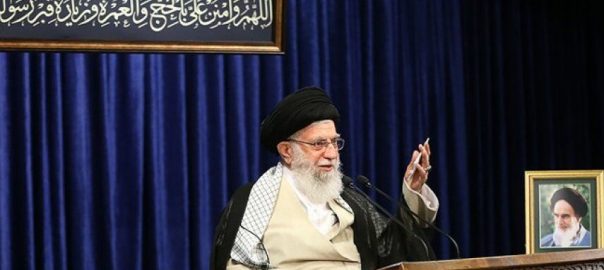
Leader of the Islamic Revolution Ayatollah Seyyed Ali Khamenei said Iran’s decisively victorious defense against foreign-backed forces of Iraq’s former dictator Saddam proved that invading the country is a “very costly” undertaking.

“When a nation shows that it has the diligence and power to defend itself and delivers a crushing response to invaders, invaders would then think twice before perpetrating any incursion against this country and its people, and realize that such an act of aggression would be very costly for them,” the Leader said on Monday.

Ayatollah Khamenei made the remarks via video-link during an event held in the capital Tehran to honor one million veterans of the country’s 1980-88 war against Saddam’s invading forces.

Successful engagement in the war, therefore, awarded the country its current level of security, the Leader noted, enumerating the rewards of the Holy Defense.

The name signifies Iran’s eight-year struggle under the leadership of the late founder of the country’s Islamic Republic, Imam Khomeini (may his soul rest in peace) against the Iraqi aggressor.

The invading forces took on Iran with untrammeled foreign support in 1980, just one year after the victory of the Islamic Revolution. The war lasted until 1988, leaving a treasure trove of memories of self-sacrifice and spiritual conviction in ultimate divine victory.

The Leader said the defensive struggle also equipped the Iranian nation with a sense of self-belief in its ability to fend for itself and put it on a course of technological and scientific development because it had to wade into many new areas to be able to buttress its defense capability.

The war taught us that “some things that appear to be impossible, are actually possible,” Ayatollah Khamenei stated.

Real warmongers

While specifying the actual goal of the warmongers as being the destruction of the country’s Islamic Revolution and its Islamic establishment, the Leader noted that Saddam and his Ba’ath party were just being used as “tools by powers, such as the United States, that had suffered serious blows from Iran’s Revolution.”

Others, like the Soviet Union, the Western military alliance of NATO, as well as some other Western and even European countries also contributed to the war because they were “concerned” about the emergence of a new phenomenon in the region that had been founded upon religion, Ayatollah Khamenei said.

Documents that surfaced afterwards showed the US had entered some agreements with Saddam before the war, the Leader remarked, adding that during the war too, Washington would generously provide the former Iraqi dictator with intelligence and arms support.

Ayatollah Khamenei reminded how weapon-laden vessels would dock at regional ports to shore up the invading forces against Iran on a daily basis during the wartime.

Imam Khomeini’s wartime leadership

Imam Khomeini, however, identified the main forces lying behind the war well, and aptly advised that the Iranian nation join the Armed Forces in fighting the invaders, the Leader said.

Imam Khomeini’s addresses at the time were marked by “truthfulness, innocence, acuity, and decisiveness,” while his leadership style featured appropriate discernment of the requirements of the battle’s different stages as well as proper moralizing of the Iranian servicemen, Ayatollah Khamenei recalled.

His leadership of the country during the war was also “very prudent,” Ayatollah Khamenei said, noting how his innovative wartime strategies would help the Armed Forces outflank the enemy at various stages.

In the meantime, Imam Khomeini brought about a “massive popular mobilization” during the war, helping recruit all the potentials that were being offered by the full spectrum of the country’s population into the battle, the Leader remembered.

This helped many potentials that lay latent in many people at the time to come to the fore, leading to emergence of many exceptional military, intelligence, and other leaders among the people, Ayatollah Khamenei said, citing the example of Lieutenant General Qassem Soleimani, former Commander of the Quds Force of Iran’s Islamic Revolution Guards Corps (IRGC), and many others.

The Leader said despite some attempts at casting doubt over Iran’s victory in the war, it should be known that the country’s triumph is “as bright as the sun” as neither did it lose a hand-span of its soil, nor did its leadership take a single step back.

This is while the former monarchical regime’s reign was marked by regular unauthorized intervention of foreigners, including during the World Wars, Ayatollah Khamenei noted.

‘National identity’

The Leader said Holy Defense constitutes part of the country’s national identity because it amounted to supreme manifestation of popular contribution.

The warfare, on the other hand, also betrayed the true and made-up face of the Western world to the Iranian people because it saw the entire Western front pool their forces to deny Iran everything and fortify its enemies to the limit, Ayatollah Khamenei said.

The Leader recalled how the Western countries would outfit the aggressors with chemical weapons, thus going back on all of their pro-human rights claims.

Ayatollah Khamenei finally called for the promotion and preservation of the memory of the heroic struggle, especially through creation of rich textual materials that could yield many other instances of content, such as plays and motion pictures.

Prior to the Leader’s remarks, Armed Forces Major General Mohammad Baqeri briefed the participants on the country’s ongoing and pending plans to honor the memory of the war.

He unveiled a stamp printed out to honor the war’s 40th anniversary, and announced that the country would be inaugurating as many as eight Holy Defense museums over the upcoming days.

“We are determined not to allow the distortion of the history of the Holy Defense that is an invaluable resource for the next generation of the country’s independence, esteem, and pride,” the military chief said. Parstoday.

 

Webinar on ‘The Role of Literature, Culture and Humanities in the Formation of Civilization’

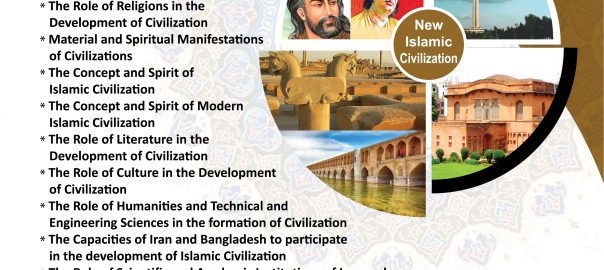
An international webinar titled: ‘The Role of Literature, Culture and Humanities in the Formation of Civilization’, to be held on 13th March, 2021, organized by Iran Cultural Center, Embassy of the Islamic Republic of Iran in Bangladesh with the participation of Scholars of the Universities of Iran and Bangladesh. Deadline of submission the abstract is 31st January, 2021. Interested researchers, teachers and students are invited to send the abstract on time through the mail: [email protected].

Topics of articles and lectures:

  • Factors for the Development and Decline of Civilization
  • Factors forthe Growth and Prosperity of Civilizations
  • The Role of Religions in the Development of Civilization
  • Material and Spiritual Manifestations of Civilizations
  • The Concept and Spirit of Islamic Civilization
  • The Concept and Spirit of Modern Islamic Civilization
  • The Role of Literature in the Development of Civilization
  • The Role of Culture in the Development of Civilization
  • The Role of Humanities and Technical and Engineering Sciencesin the formation of Civilization
  • The Capacities of Iran and Bangladesh to participate in the development of Islamic Civilization
  • The Role of Scientific and Academic Institutions of Iran and Bangladesh in the development of Civilization


Date of Webinar: 13 March 2021 (23 Isfand 1399)

Time: 10:00 am to 6:00 pm

Webinar Languages: Bangla, Persian, English

Deadline for submitting abstracts of articles and lectures: 31 January 2020 (12 Bahman 1399)

Official email: [email protected]

Telephone: 0088029611987 /0088029611903

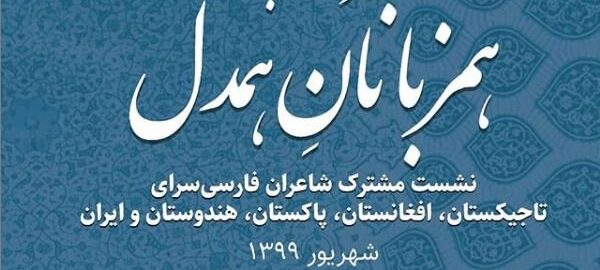
Literati to celebrate National Day of Persian Poetry and Literature

A group of literati from several Persian-speaking nations are scheduled to celebrate Iran’s National Day of Persian Poetry and Literature with an online program.

The program, which has been organized by the Iran Book and Literature House in Tehran, will commence at 5 pm on instagram.com/khaneyeketab on Wednesday on the eve of the day.

Poets from Iran, Afghanistan, Pakistan, Tajikistan and India will recite poems and deliver lectures.

The online meeting will be attended by Indian literati Abid Raza Naushad, Shafi Haider Rizvi, Sajid Rizvi and Syed Zaigham Abbas Naqvi, and Pakistani poets Mir Ali Jafari, Abbas Saqib, Ahmad Shahryar, Qari Afzal Imani and Zainul Abedin Khoy.

In addition, Tehran-based Afghan poet Mohammad-Sarvar Rajai and Tajik poet Shoh Mansoor Shohmirza will also recite works from some Persian poets.

Mohammad-Ali Bahmnai, Ali Davudi, Reza Esmaeili, Seyyed Akbar Mirjafari, Ali-Mohammad Maoddab, Esmaeil Amini and Gholamreza Tariqi will be attending the meeting.

The meeting will continue with reading a message sent by a grandchild of poet Muhammad Iqbal by Ahmad Shahryar. A message sent by Deputy Culture Minister for Cultural Affairs Mohsen Javadi is scheduled to be read.

The National Day of Persian Poetry and Literature is observed every year on the death anniversary of contemporary poet Mohammad-Hossein Behjat Tabrizi – Shahriar, which will fall on Thursday this year.

As the most prominent figure of contemporary Persian literature, Shahriar was mainly influenced by the poetry of Hafez, a Persian poet writing in the 14th century.

Shahriar, who also composed works in Azerbaijani, published his first book of poems in 1929 with prefaces by Persian literature scholars Mohammad-Taqi Bahar, Saeid Nafisi and Pejman Bakhtiari.

“Heidar Babaya Salam” is Shahriar’s most famous Azerbaijani poetry collection, which highlights his birthplace, the village of Heidar Baba.