All posts by islam

5th-century church being restored in northwestern Iran

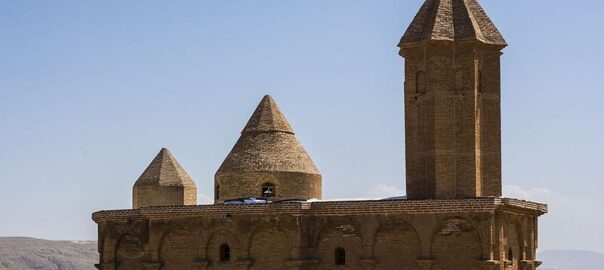
The ancient Saint John Church has undergone some rehabilitation works in the village of Sohrol, near Shabestar city in East Azarbaijan province, the deputy provincial tourism chief has announced.

The restoration involves the reinforcement of the main structure, filling small cracks, as well as erecting retaining walls for stabilizing soil from a potential landslide, Alireza Quchi said on Sunday.

Also known as Sohraqeh Church, the Armenian Catholic church was built in circa 5th century, but it was rebuilt on the older church foundation in 1840 by Samson Makintsev, a Russian general in the service of Iran during the Qajar era.

The historical monument was inscribed on the National Heritage list in 1968.

Iran is home to several ancient and historical churches. Christians, Jews, and Zoroastrians are the most significant religious minorities in the country with Christians constituting the bulk.

Iranian Azerbaijan was a center of several ancient civilizations. It formed part of Urartu and later of Media. In the 4th century BC, it was conquered by Alexander the Great and was named Atropatene after one of Alexander’s generals, Atropates, who established a small kingdom there. The area returned to Persian (Iranian) rule under the Sasanians in the 3rd century CE.

The provincial capital Tabriz embraces several historical and religious sites, including the Jameh Mosque of Tabriz and Arg of Tabriz, and UNESCO-registered Tabriz Historic Bazaar Complex to name a few. The city became the capital of the Mongol Il-Khan Mahmud Gazan (1295–1304) and his successor. Timur (Tamerlane), a Turkic conqueror, took it in 1392. Some decades later the Kara Koyunlu Turkmen made it their capital, it was when the famous Blue Mosque was built in Tabriz.

Tabriz retained its administrative status under the Safavid dynasty until 1548 when Shah Tahmasp I relocated his capital westward to Qazvin. During the next two centuries, Tabriz changed hands several times between Persia and the Ottoman Empire. During World War I, the city was temporarily occupied by Turkish and then Soviet troops. /T.T/

Iran leading the world in ‘science diplomacy’

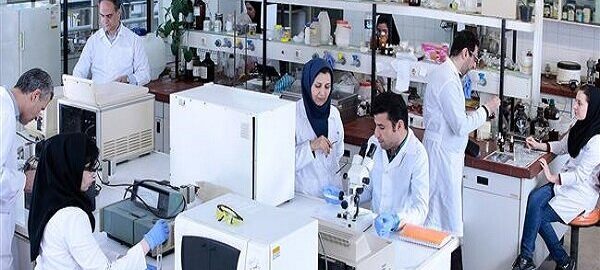
The rate of scientific contributions of Iranian researchers to the world increased from 17 percent in 2011 to 31 percent in 2020, becoming the world’s leading country in science diplomacy with 14 percent growth, according to scientific studies and analyses extracted from the Scopus International Citation Database.

Launched in 2004, Scopus is the largest abstract and citation database of peer-reviewed literature: scientific journals, books, and conference proceedings. Delivering a comprehensive overview of the world’s research output in the fields of science, technology, medicine, social sciences, and arts and humanities, Scopus features smart tools to track, analyze and visualize research.

The development of international scientific partnerships and diplomacy is one of the main policies of Iran, which is also emphasized by the country’s higher education system, Mohammad Javad Dehghani, head of the Islamic World Science Citation Center (ISC), said.

“One of the most important indicators of scientific participation is the share of the latest joint international scientific findings in the total scientific publications of the country,” he noted.

In 2016, the share of articles with international participation in total science production of the country was 20 percent, which reached 22-24-27-31 over the past 4 years, respectively, he stated.

After Iran, Poland, the United Kingdom, and Taiwan each had the highest growth in science diplomacy with 6 percent,” he said, adding, among Islamic countries, Malaysia had the highest growth after Iran, which was 5 percent.

The share of articles with international participation has accelerated from the total number of articles produced in all subject areas. But comparing 2019 with 2018, the fields of humanities and basic sciences have had the highest growth rate, he explained.

Dehghani went on to note that in 2019, about 30 percent of the scientific publications in the field of basic sciences with the participation of international researchers held the highest share among other fields.

After that, the articles of two fields of technology, engineering, and agricultural sciences are in the next position with 29 percent publications, then comes social science and medical science, he concluded.

Iranian universities on world ranking lists

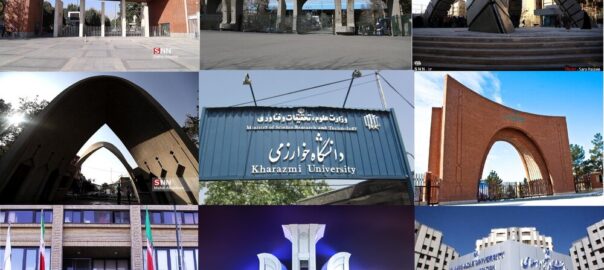
Most recently, the Islamic World Science Citation Database (ISC) published the results of the ISC World University Rankings 2019, according to which 35 Iranian universities were listed among the world’s top 2,000 in various subjects.

Also, forty-three Iranian universities were placed in the Islamic World University Rankings 2019 announced by the ISC.

With a scientific growth rate of 10.4 percent in 2019, Iran ranked second among the top 25 countries in the world, next to China with a growth rate of 12.9 percent, according to the Web of Science website.

In 2000, Iran’s share of scientific productivity was about 0.1 percent, which reached about 2 percent with a 20-fold increase in both Scopus and WoS citation databases.

According to statistics released by the International Web of Science Database, Iran’s citation rank has always been on the rise over the last eight years, from 24 in 2012 to 16 in 2019.

Iran ranks first in terms of the number of universities in the region and among Islamic countries, according to Shanghai Ranking’s Academic Ranking of World Universities (ARWU) 2020.

Two Iranian universities have been ranked among the top 100 universities in Asia, according to Webometrics Ranking of World Universities for July 2020.

Moreover, 7 Iranian universities have been listed among the best 1000 worldwide; including, Tehran University of Medical Sciences, Shahid Beheshti University of Medical Sciences, Sharif University of Technology, Tarbiat Modares University, Ferdowsi University of Mashhad, Isfahan University of Technology, Iran University of Science and Technology, came in 539th, 656th, 826th, 908th, 915th, 916th places, respectively, according to Webometrics Ranking of World Universities.

In June, THE Asia University Rankings 2020 ranked five Iranian universities among the top 100 universities worldwide.

The Center for Science and Technology Studies Leiden Ranking has placed 36 Iranian universities in the list of over 1,000 major universities worldwide in 2020 compared with 26 universities in 2019.

Also, five Iranian universities have been placed among the world’s top 1,000 universities announced by the prestigious Quacquarelli Symonds (QS) World University Rankings 2021. /T.T/

Enemies unable to stop Iran’s scientific progress: Advisor

Advisor to Vice President for Science and Technology Affairs said that enemies of the country cannot stop scientific progress and development of the Islamic Republic of Iran.

Speaking in an interview with IRNA on Tue., Parviz Karami reiterated, “Our enemies themselves know that they cannot stop the path of scientific growth and development of the country, because, Iranian scientists have trained students who will continue their path in their absence.”

While commemorating the name and memory of Iran’s prominent nuclear and defense scientist martyr Mohsen Fakhrizadeh, Karami added, “Although lack of Iranian prominent scientists like martyrs Fakhrizadeh, Ahmadi Roshan, Tehrani Moghadam, Shahriari, etc., who were the symbol of resistance, science and technology, is a great loss for us and noble nation of Islamic Iran, enemies should know that not only scientific growth of the country will not stop, but also it will continue with more strength.”

Enemies have left no stone unturned to stop the scientific progress of the country but all their malicious objectives have been foiled relying upon the talented youth and scientists of the country, the advisor emphasized.

Mohsen Fakhrizadeh was targeted on Friday in a multi-pronged attack involving at least one explosion and small fire by a number of assailants in Absard city of Damavand County, Tehran province. MNA/

Foreign investment in Aras Free Zone rises 78% in H1

Foreign investment attracted in Aras Free Trade-Industrial Zone (AFZ) in Iran’s northwestern province of East Azarbaijan has risen 78 percent during the first half of the current Iranian calendar year (March 20-October 21), compared to the first half of the past year, according to a provincial official.

Safar Shasfand, the deputy head of Aras Free Zone Organization’s for investment and economic affairs, announced that the zone attracted $25 million of foreign investment in the six-month period of this year, while the figure was $14 million in the same time span of the past year.

The official said that domestic investment has also risen 81 percent to 21.892 trillion rials (about $521.2 million) in the zone during the first half of the present year, from 18.102 trillion rials (about $431 million) in the first half of the previous year.

Reiterating that Aras Free Zone has been successful in attracting investment, and has a better performance in this due compared to the other free zones of the country, Shasfand said that the result is obvious in job creation and promotion of exports from the zone.

He further announced that 16 projects with the investment making of 8.97 trillion rials (about $231.5 million) will be inaugurated in the zone in the eleventh month of Bahman (January 20-Februaray 18, 2021), creating direct jobs for 405 persons.

The official has previously announced that AFZ exported commodities valued at $240 million to 10 countries during the first six months of the current year.

He mentioned dried fruits and nuts, plastic products, steel ingots, and production lines machinery as the main exported products and Azerbaijan, Turkey, Iraq, Kazakhstan, Afghanistan, United Arab Emirates, Armenia, Czech Republic, and Uzbekistan as the export destinations during the mentioned period of time.

Aras Free Trade-Industrial Zone is located in the northwest of Iran at the border point with neighboring Armenia, Azerbaijan and the Nakhchivan Autonomous Republic.

The establishment of free trade zones in Iran dates back to the Iranian calendar year 1368 (March 1989- March 1990) following the fall in the country’s oil income in the preceding year which prompted the government to promote non-oil exports.

The first two free trade zones of Iran were established in the south of the country. The first one was Kish Free Trade Zone established in 1368 on Kish Island in the Persian Gulf and the second one was Qeshm Free Trade Zone established the year after on Qeshm Island in the Strait of Hormuz.

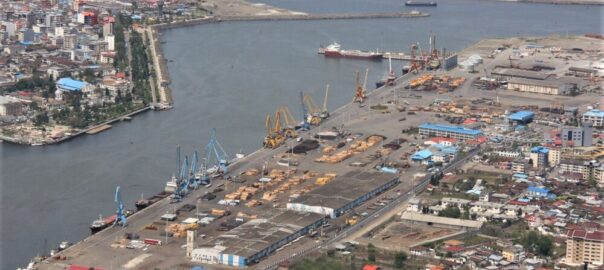
Some five other free trade zones have been also established in the country since then, including Chabahar in southeastern Sistan-Baluchestan Province, Arvand in southwestern Khuzestan Province, Anzali in northern Gilan Province, Aras in East-Azarbaijan Province and Maku in West-Azarbaijan Province, both in the northwest of the country.

Considering the important role that the free trade zones play in promoting the country’s export and employment, Iran is seriously pursuing the development of its existing zones and establishment of new zones as well.

More development measures in this field have been taking since the U.S. re-imposition of sanctions on the Iranian economy in November 2018, as Iran is reducing its dependence on the oil income while elevating its domestic production and non-oil exports.

Although the sanctions have disrupted Iran’s economic activities, they could not impede the development of Iranian free zones; in fact, the development of these zones has been even accelerated.

Many strides made for increasing activities in the free zones have played a significant part in boosting the country’s non-oil exports and brought prosperity in the other economic sectors. / T.T/

Iranian film ‘Warehouse’ wins at Brazil’s GIMFA

Iranian short film ‘Warehouse’ has won the Best Short Film and the Best Actor Awards at Gralha International Monthly Film Awards in Brazil.

Iranian short film ‘Warehouse’, directed by Hossein Torkjoosh, has won the Best Short Film and the Best Actor Awards at Gralha International Monthly Film Awards (GIMFA) in Brazil.

The short film has vied for awards in nine sections of the event, which was held online on November 30.

The storyline of Warehouse happens in the social sphere and with the focus on an incident in a paper waste warehouse. With the entrance of the police and consequent series of judgments, the story will be entangled with some challenges.

Warehouse experienced its first international participation in the Nukhu Award 2020, which was held online in New York City on October 10. / MNA/

Non-oil trade exceeds $44b in 8 months

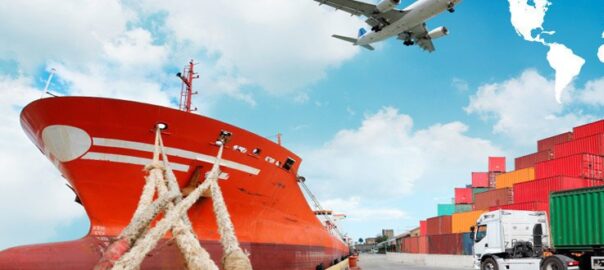
The value of Iran’s non-oil trade during the first eight months of the current Iranian calendar year (March 20-November 20) reached $44.6 billion, according to Head of the Islamic Republic of Iran Customs Administration (IRICA) Mehdi Mirashrafi.

In the mentioned eight months, Iran imported $23.1 billion worth of goods, while the exports stood at $21.5 billion, IRIB reported.

The total volume of traded goods was estimated at about 97.7 million tons, of which over 75 million tons were related to exports and about 21.8 million tons were imported goods.

According to Mirashrafi, the imports in the said period declined one percent and 18 percent in terms of weight and value, respectively.

The exports also experienced a fall of 14 percent and 19 percent in terms of weight and value, respectively.

Noting the downward trend of the country’s foreign trade is ending and the trade is getting back to normal, the official said: “As we announced in previous months, fortunately, the downward trend of our country’s exports is approaching normal conditions month by month, and we hope to have better conditions in terms of exports by the end of the year.”

Iran’s top five non-oil export destinations during this period were Iraq with over $5.3 billion worth of exports, China with the same amount, the United Arab Emirates (UAE) with over $2.7 billion, and Turkey with $1.6 billion as well as Afghanistan with $1.5 billion.

According to the IRICA head, the top five sources of imports during this period were China with $6 billion, the UAE with $5.4 billion, Turkey with $2.6 billion, India with $1.4 billion, and Germany with $1.1 billion worth of imports.

Most of the imported goods into the country in the mentioned time span were basic goods or raw materials, Mirashrafi stressed.

Also in the said period, 4,471,000 tons of goods were transited through Iran to the neighboring countries, showing a decrease of 15 percent compared to the same period last year.

Like all other countries around the world, Iran’s trade with its foreign partners has been affected by the coronavirus pandemic, however, the situation is getting back to normal and the country’s trade borders are opening one by one. /T.T/

Culturally-rich Fars province takes step to boost agritourism

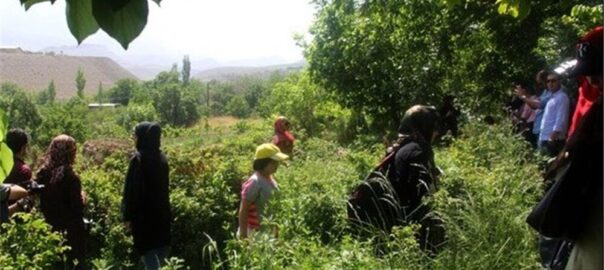
Iran’s Fars province, globally renowned for its vibrant cultural, historical, and archaeological gems such as Persepolis and Pasargadae, aims to jump-start agritourism as it is home to vast changing natural landscapes as well.

The provincial tourism department has issued two commercial activity licenses for two separate farms within a month letting those establishing agritourism-related businesses; a move that raises hopes for greater usage of the natural landscapes to develop rural tourism.

One of the licenses was issued to Delaram farm, situated in Kharameh country, some 75 km east of Shiraz, and the other to a farm located in Mohr county some 330 km southward of the capital city, according to the provincial tourism department.

The first farm is regarded as an exemplary place for the breeding of French dairy goats with a capacity of one thousand animals. And the second embraces various agricultural lands and greenhouses including ones for growing colored peppers, which are exported to Russia. Lemons, grapefruit, tangerines, and several flowers are also being produced on the farm.

Agritourism, a relatively new branch of the travel industry in which tourists stay with local people in rural areas abroad, is widely deemed as a means to materialize the national goal of ‘Surge in Production’.

Today, agritourism is regarded as a stimulus to the imbalanced economy of agriculture sectors and the tendency for emotional and nostalgic roots of the modern world citizens and due to factors such as visitor participation in farm activities, direct purchase of products, spending a night at a farm, curiosity and learning about the farm and agriculture products has been able to create a wide target population.

Farm/ranch recreation refers to activities conducted on private agricultural lands, which might include fee-hunting and fishing, overnight stays, educational activities, etc. This category of tourism is a subset of a larger industry known as agritourism. Agritourism is “a commercial enterprise at a working farm, ranch, or agricultural plant conducted for the enjoyment of visitors that generates supplemental income for the owner.”

Agritourism and nature-tourism enterprises might include Outdoor recreation (fishing, hunting, wildlife study, horseback riding), educational experiences (cannery tours, cooking classes, or tea or coffee tasting), entertainment (harvest festivals or barn dances), hospitality services (farm stays, guided tours, or outfitter services), and on-farm direct sales (u-pick operations or roadside stands).

Agritourism is a subset of a larger industry called rural tourism that includes resorts, off-site farmers’ markets, non-profit agricultural tours, and other leisure and hospitality businesses that attract visitors to the countryside.

Rural Tourism, however, differs from agritourism in two ways. First, rural tourism enterprises do not necessarily occur on a farm or ranch, or at an agricultural plant, they do not generate supplemental income for the agricultural enterprise.

To cite an example, we could refer to saffron farms in northeast Iran that are going to fame as a new destination for agritourism. Iranian Saffron is known as the “red gold”, saffron is a magical ingredient in Persian culture, from aromatic foods and colorful desserts, to the physical and spiritual medicine.

The ancient region of Fars, also spelled Pars, or Persis, was the heart of the Achaemenian Empire (550–330 BC), which was founded by Cyrus the Great and had its capital at Pasargadae. Darius I the Great moved the capital to nearby Persepolis in the late 6th or early 5th century BC.

The capital city of Shiraz is home to some of the country’s most magnificent buildings and sights. Increasingly, it draws more and more foreign and domestic sightseers flocking into this provincial capital which was the literary capital of Persia during the Zand dynasty from 1751 to 1794. / T.T/

Annual automobile exports exceed $5.7m

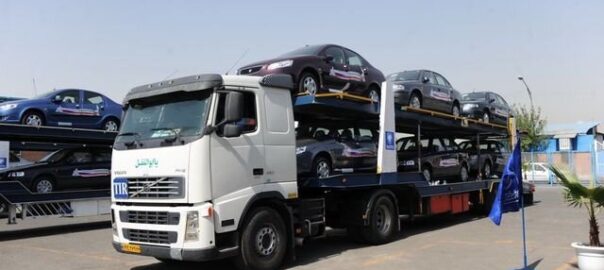
Iran exported 1,300 automobiles valued at $5,722,007 in the previous Iranian calendar year (ended on March 19), the spokesman of the Islamic Republic of Iran Customs Administration (IRICA) said.

The destinations for the mentioned products were nine countries namely Hong Kong, Taiwan, Syria, UAE, Spain, China, Iraq, and Turkey, according to Ruhollah Latifi.

He pointed out that Iraq with $3,122,900, Azerbaijan with $1,159,400, Syria with $981,825 of imports were the top three destinations for Iranian cars.

Hong Kong with $116,862, Spain with $96,362, Taiwan with $79,521, China with $36,600, Turkey with $7,000, and the UAE with $4,662 were other buyers of the mentioned products from Iran, Latifi added.

Car manufacturing in Iran rose 23.4 percent during the first six months of the current Iranian calendar year (March 20-September 21), compared to the same period of time in the past year, the data released by the Ministry of Industry, Mining, and Trade showed.

During this period, 425,925 passenger cars were produced in the country, registering a growth of 21.9 percent compared to the first six months of the previous year.

The production of trucks reached 39,519 units in the said time span, which has increased by 40.4 percent compared to the last year’s same period. T.T/

Maranjab: Combination of desert, nature and history

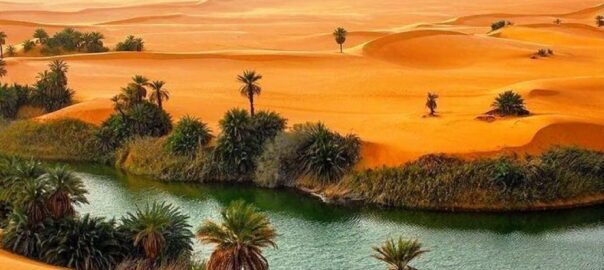
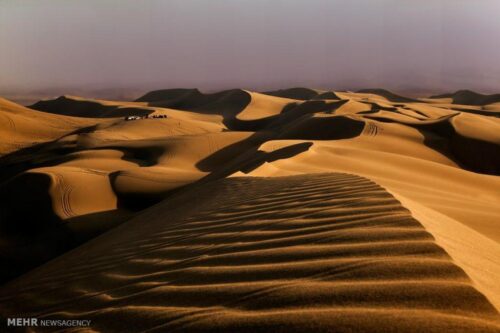
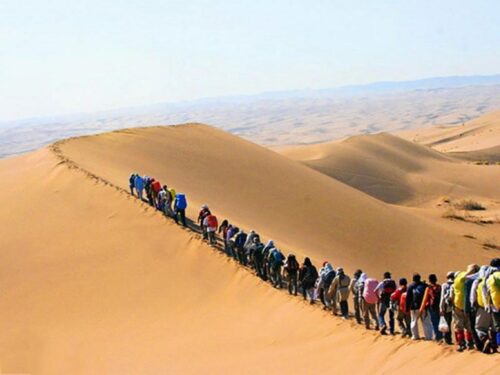
In addition to beaches, jungles, mountains and green areas, there are multiple and beautiful deserts in central parts of Iran. Beautiful Maranjab Desert is one of the most popular deserts of Iran that attracts many tourists from Iran and other countries every year.

This desert that is one of the best places for off-roads trips is located in the north of Aran and Bidgol city of Isfahan province. It is lead to salt lake from the north, Band-e Rig and Desert National Park from east, Masileh Desert, Hoz-e sultan and Moreh Lakes from west and eventually Aran and Bidgol from the south.

Average height of Desert is about 850 meters up to sea. The bulk of Desert is covered with sandy hills and Sabulous. Its vegetation consists mostly of Halophyte plants such as Tamarisk tree, Haloxylon, Zygophyllum.

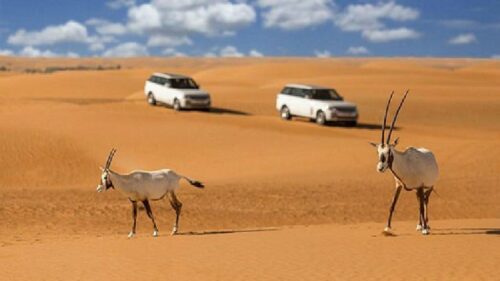
Some of the animals of this areas are wolf, heyena, Rüppell’s fox, Sand cat, Monitor lizard, Chameleons, types of lizard, Snake, Scorpion, See-see partridge, eagle and falcon.

High dunes, endless plains of desert, siah kouh (black mountain), beautiful sunrise and sunset, haloxylon jungles, salt lakes and super beautiful sky are main attractions of the desert. You can get to the heaven and touch the stars.

Salt lake

But salt lake of this area is counted one of the best attractions of this desert that with 647 square meters is located in 35 km far from the city. This lake is like the form of a triangle that its head is to north. Its base is about 65 km and height is about 60 km. Depth of it is variable from 5 to 54 meters.

In the rainfall month, depth of lake is about 2cm, but after sun radiation, quickly evaporates.

Jazireye sargardani

In the north east and middle of the lake, there is a low height mountain that is like the island and is surrounded with white crust of salt, that’s name is Jazireye sargardani. Because of rainfall, only one or two moth of year this lake is visible and in the remaining days of the year turns to salt marsh

Caravanserai

There is an ancient historical place in this desert, that’s name is Maranjab Caravanserai. History of that dated back to 350 years ago and safavid period. This Caravanserai with about 3500 Square meters area has 29 rooms. Despite the salt lake near of it, it has fresh water Qanat and very large pool. This karvasarei was built in Silk Road and connected khorasan, Isafahan and ray cities to each other.

To get this desert you should go to Kashan city. Go to Aran and bidgol city after kashan. In Imamzadeh Helal Ali holy shrine you ask people the route of desert.

Best time to visit of this desert is last days of autumn and before and after the early days of spring. There are rooms in karvansaraei to rest and there is possibility of using tent.

Some notes

– Don’t go this desert alone

– Have enough water and foods, compass, GPS and detailed maps of area with yourself

– Use local guides of area

– Notify others of you way before trip

– Don’t go out of road

– Protect the environment like your home. / T.T/