March 29, 2026

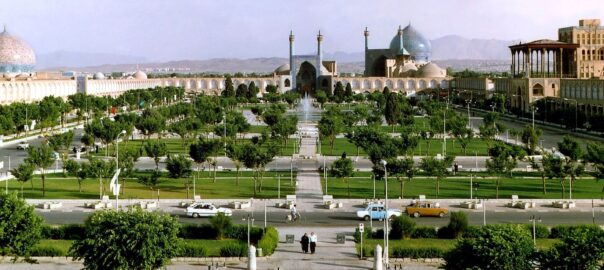
Naqsh-e Jahan Square, or Meidan-e Emam ( Imam Square), is the main tourist spot of Isfahan, one of the UNESCO World Heritage Site. This square is the first place to see while visiting Isfahan and it is full of tourists all over the year. Naqsh-e Jahan in Farsi means “The image of the world”.
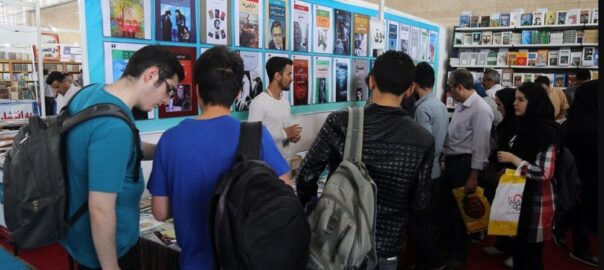
The Tehran International Book Fair, which once was canceled earlier in spring 2020 due to the pandemic, will go online from January 20 to 25, the organizers have announced.
Last year, the 33rd edition of Iran’s most important cultural event was scheduled to be held in April and Turkey was slated to be the guest of honor, however, the Ministry of Culture and Islamic Guidance canceled the fair due to a massive rise in the death toll from coronavirus in the country.
In a webinar held on Thursday, Iran Book and Literature House director Ayyub Dehqankar said that they believe the fair will give more opportunities to the readers that were probably not possible in a physical book fair.
“Iran Book and Literature House had several meetings with the National Headquarters for Coronavirus Control in Tehran and the decision was made to hold the fair in summer, however, with the rise in the death toll, it was decided that the fair be held online,” Dehqankar said.
“We observed the world online book fairs, while we also attended different international book fairs such as Bologna and Frankfurt. We are well aware that we can’t achieve all the goals of a physical fair, however, we believe that the virtual fair can provide some good opportunities,” he added.
“We always had limited spaces for the publishers both in the Imam Khomeini Mosalla, and Shahr-e Aftab Fairground, while the online fair will have no such restrictions, and any publisher that has been active for the past 4 years can request a virtual stand to offer its books, and this can be considered a big step towards fairness,” he added.
“The Iranian books will be offered with a 20 percent discount while the foreign books will have a 50 percent discount at the fair,” he asserted.
He noted that the books will be delivered to all the various cities across the country for free and also that the virtual fair will be open around the clock.
“So far, 1500 publishers have registered, and we hope to witness good growth in the first edition of the first virtual exhibit,” he concluded. /T.T/
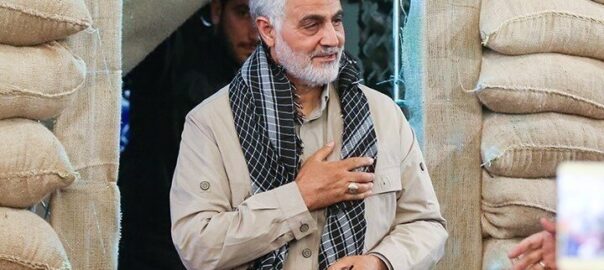
The Art Bureau’s Center for Dramatic Arts in Tehran has produced several teleplays on Commander Qassem Soleimani to be broadcasted on IRIB channels.
“The project named ‘Hero of the Nation’ contains seven teleplays, five of which are written based on true stories from the life of Hajji Qassem Soleimani,” Kurosh Zarei, the director of the center, said in a press release on Saturday.
“This is a new project. The first five are written and directed by Morteza Shahkaram, and the other two are written by Meysam Habibi and Mohammad-Amin Minui, and will be directed by Habibi,” added Zarei who is also the television director of the teleplays.
“The team has tried to produce a new project with a different atmosphere. The memoirs of this great man are so interesting and attractive that they will be very appealing to the audience. The military and moral characteristics of the Commander are so extensive that they need more and more works,” he explained.
“Working on projects on Hajji Qassem Soleimani should not be restricted to only his martyrdom anniversary, because he is such a great man who has done great things and acts like our mythical hero. We have closely witnessed his bravery and we need to produce works in different arenas on the Commander to better transfer his characteristics to other people,” he added.
“The teleplays have been recorded in a Chroma key background, a type of visual-effects and post-production technique for compositing (layering) two images together,” Zarei said.
The Art Bureau has organized several programs in memory of the Commander after his martyrdom on January 3, 2020.
The bureau launched a campaign named “My Hero” to remember Qassem Soleimani, a few days before the first anniversary of his assassination.
The campaign takes its name from an album the bureau released featuring nine ballads composed by Alireza Qazveh, Reza Yazdani, Ali-Mohammad Moaddab, Mohammad-Hossein Nemati, Faezeh Zarafshan, Milad Habibi, Mohammadreza Shafiei and Omid Mahdinejad.
Interested applicants can choose, recite and record the ballads and submit them to the bureau, while they can also produce short music videos or even perform and record the ballads in open areas.
The main goal of the campaign is to promote the album “My Hero” and also help the singing style of ballads find its way among the citizens.
The bureau has also organized a contest named “Sarve Ravan Photo Competition”, as people’s love of Soleimani is the main theme.
Photos of the personal ceremonies, which were held at homes by his fans to commemorate the first martyrdom anniversary of Soleimani during the COVID-19 era, and the decorations of the cities and the villages during such ceremonies are eligible for the contest. The top works will be awarded in April 2021. /T.T/
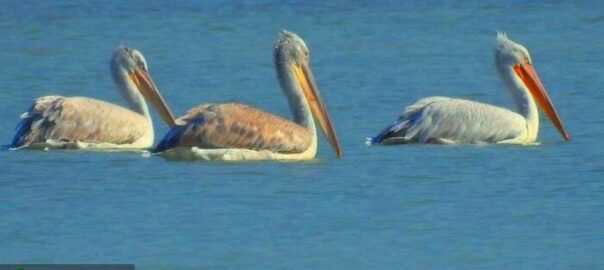
Shadegan wetland in the southwestern province of Khuzestan is now hosting flocks of migratory birds that came to spend the winter, IRIB reported on Saturday.
Shadegan wetland covers 530,000 hectares, 400,000 hectares of which has been designated as a Ramsar site (defined by the Ramsar Convention for the conservation and sustainable use of wetlands, recognizing the fundamental ecological functions of wetlands and their economic, cultural, scientific, and recreational value).
The wetland feeds on Marun and Karun rivers both crossing Kohgiluyeh and Boyer-Ahmad province, but after dam construction over the Karun river, the wetland went dry not receiving its water right.
After the torrential rains and flooding started on March 19, the wetland has been saturated.
Last winter (December 2019- March 2020), 150,000 migratory birds were observed in the wetlands and reservoirs of Khuzestan. And the highest number of birds was counted in Hour al-Azim wetland, the highest diversity in the Shadegan wetland, and the highest population decrease in Bandoon wetland.
On January 2, IRNA quoted Mostafa Kenarkoohi, the director-general of Khuzestan province’s veterinary department, as saying that a comprehensive plan for monitoring highly pathogenic avian influenza (HPAI) has been implemented across Shadegan wetland.
Fourteen types of indigenous and migratory birds are living in the wetland and they are monitored constantly in terms of health, he explained. /T.T/

Prioritizing nanotechnology in Iran has led to this country’s steady placement among the five pioneers of the nanotechnology field in recent years, and approximately 20 percent of all articles provided by Iranian researchers in 2020 are relative to this area of technology.
Iran has been introduced as the 4th leading country in the world in the field of nanotechnology, publishing 11,546 scientific articles in 2020.
The country held a 6 percent share of the world’s total nanotechnology articles, according to StatNano’s monthly evaluation accomplished in WoS databases.
There are 227 companies in Iran registered in the WoS databases, manufacturing 419 products, mainly in the fields of construction, textile, medicine, home appliances, automotive, and food.
According to the data, 31 Iranian universities and research centers published more than 50 nano-articles in the last year.
In line with China’s trend in the past few years, this country is placed in the first stage with 78,000 nano-articles (more than 40 percent of all nano-articles in 2020), and the U.S. is at the next stage with 24,425 papers. These countries have published nearly half of the whole world’s nano-articles.
In the following, India with 9 percent, Iran with 6 percent, and South Korea and Germany with 5 percent are the other head publishers, respectively.
Almost 9 percent of the whole scientific publications of 2020, indexed in the Web of Science database, have been relevant to nanotechnology.
There have been 191,304 nano-articles indexed in WoS that had to have a 9 percent growth compared to last year. The mentioned articles are 8.8 percent of the whole produced papers in 2020.
Iran ranked 43rd among the 100 most vibrant clusters of science and technology (S&T) worldwide for the third consecutive year, according to the Global Innovation Index (GII) 2020 report.
The country experienced a three-level improvement compared to 2019.
Iran’s share of the world’s top scientific articles is 3 percent, Gholam Hossein Rahimi She’erbaf, the deputy science minister, has announced.
The country’s share in the whole publications worldwide is 2 percent, he noted, highlighting, for the first three consecutive years, Iran has been ranked first in terms of quantity and quality of articles among Islamic countries.
Sourena Sattari, vice president for science and technology has said that Iran is playing the leading role in the region in the fields of fintech, ICT, stem cell, aerospace, and is unrivaled in artificial intelligence. /T.T/

Iranian short film, ‘Cooler’, directed bu Iman Sedigh received the commendation plaque and the statuette for the best short film of Indian Sprouting Seed International Short Film Festival.
The film is produced by Manouchehr Hadi and narrates a love story.
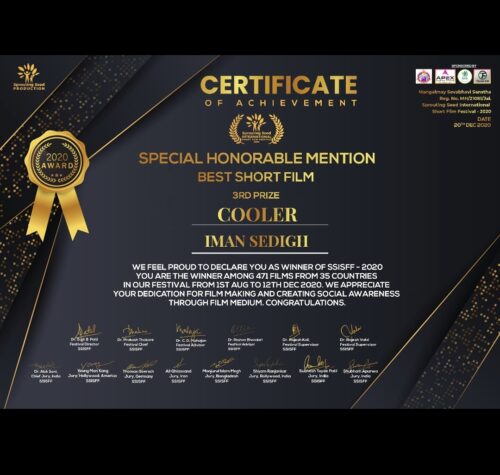
Sprouting Seed International Short Film Festival is the largest film event in India around the world.
It aims to draw attention to and raise the profile of films and, in doing so, contributes to the development of cinema and boosst the film industry internationally. /MNA/
Works that will be accepted by the Award, as in the past Includes the “Research Book”, “The Closed Report of the Research”, “PhD Dissertation” and “Master’s Thesis”. Works that have been completed since March 21, 2017 to March 19, 2020 can be submitted to the Farabi Award Secretariat or uploaded via the website. He added that Farabi international section also receives works on Iranian Studies and Islamic studies.
According to the Public Relations Department of the Secretariat of the 12th Farabi International Award, All researchers in the field of humanities on Iranian Studies and Islamic studies can register and sent their scientific works via the website: WWW.FARABIAWARD.IR
Dr. Mirzaie also stated that registration of works in the Farabi International Award website will be in two natural and legal forms and added: In addition to the fact that authors and researchers can register their works in the website or submitted to the Farabi secretariat; the publishers, universities, research centers, educational and scientific associations and groups can register their proposed works if they recognized those are well-qualified and worthy works to be introduced. Thus they will provide a platform for identifying the richest research works.
It is worth mentioning that the Farabi International Award is held annually by the Ministry of Science, Research and Technology, UNESCO, ISESCO, the National Elites Foundation, and the Institute for Social and Cultural Studies. /http://farabiaward.ir//
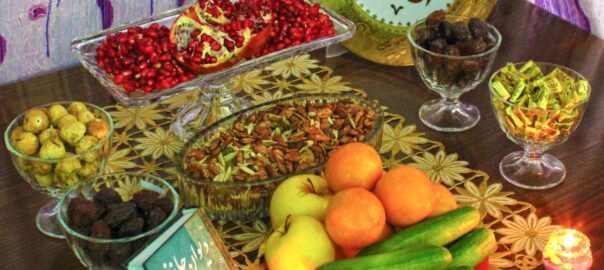
One of the most ancient Iranian festivals is Shab-e Yalda or Yalda Night. Iranian around the world celebrate this night with their families and friends on the 21st of December.
Shab-e Yalda, “Night of Birth”, “Birth of Mithra”, or Shab-e Chelleh is the Iranian winter solstice celebration which has been popular since ancient times.
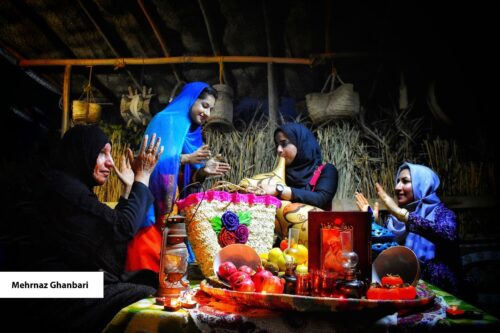
Yalda is celebrated on the Northern Hemisphere’s longest night of the year, that is, on the eve of the Winter Solstice. Depending on the shift of the calendar, Yalda is celebrated on or around December 20 or 21 each year.
In addition to Iran, countries such as Afghanistan, Tajikistan, Uzbekistan, Turkmenistan and some Caucasian states such as Azerbaijan and Armenia share the same tradition and celebrate Yalda Night annually at this time of the year.
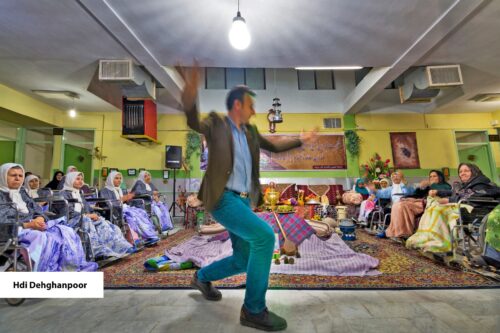
People celebrate Yalda Night for different reasons, the arrival of winter, the renewal of the sun and the victory of light over darkness.
People in ancient times knew that from the first day of winter on, days get longer and nights get shorter gradually. What’s more, they knew darkness as a symbol of evil.
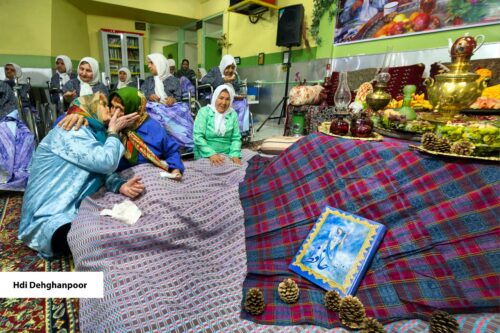
So, in fact, they considered the first morning after Yalda the day of victory of the sun and light over darkness and evil powers and celebrated it at this festival.
Nuts (ajil), and dried fruit (khoshkbar) are eaten on Iranian Yalda night. The special foods that are prepared for this night change from family to family and also depend on the availability of ingredients in different regions of Iran.
Among all the edibles, eating fruits such as watermelons, pomegranates, red apples, persimmons, and cooked beets are very popular.
So, it can be the color of these fruits as a color of sun, make them the integral parts of this ceremony.

Iran was ranked 19th among the world’s top steel ingot exporters while taking 53rd place for the exports of steel products in 2019, data provided by Trade Map website showed.
According to the mentioned website, in 2019, Iran ranked 159th among the world’s top 196 countries in terms of importing crude steel (ingots), IRNA reported.
The country ranked 53rd among 195 countries in the exports of steel products and it was ranked 85th out of 226 countries in global imports of steel products.
Based on the mentioned data, Iranian imports of crude steel and steel products in 2019 stood at $42 million and $302 million, respectively.
The country exported $312 million and $252 million worth of crude steel and steel products in the mentioned year, respectively.
Last year, the total production of crude steel (ingots) in Iran stood at 26.8 million tons and the total volume of steel products output reached 20.6 million tons, according to the mentioned website.
According to IRNA, foreign trade statistics for the first seven months of the current Iranian calendar year (March 20-September 21) show that the country exported 4,375,851 tons of steel ingot and products worth $1.59 billion of which 76.8 percent were billets and blooms.
The value of the steel exports in the said seven-months decreased by 37 percent compared to the same period in the previous year, the Industry, Trade, and Mining Ministry Data showed.
The total exports of steel ingots and products exceeded 10.5 million tons in the previous Iranian calendar year (ended on March 19).
As reported, the imports of steel products in the first seven months of the current fiscal year reached 633,665 tons, which shows a 51 percent increase compared to the same period last year.
The value of the imported commodities stood at $714.6 million in the said time span, also 32 percent less than the figure for the same period in the preceding year. /T.T/