All posts by islam

Call for The 29th I.R. Iran`s World Book Award issued

The 29th I.R. Iran`s World Book Award scheduled for February 2022 called ‎for books.‎

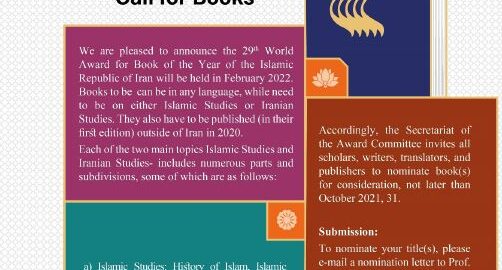
We are pleased to announce the 29th World Award for Book of the Year of the Islamic Republic of Iran to be held in February 2022. Books to be considered can be in any language, while need to be on either Islamic Studies or Iranian Studies. They also have to be published (in their first edition) outside of Iran in 2020.

Each of the two main topics Islamic Studies and Iranian Studies- includes numerous parts and subdivisions, some of which are as follows:

a) Islamic Studies: History of Islam, Islamic Civilization, Quranic and Hadith Studies, Islamic Theology & Philosophy, Islamic Mysticism, Islamic Law and Jurisprudence, Translation of Classic Islamic Texts, Islamic Economics, Contemporary Islamic Studies, Islamic Arts & Architecture, History of Science, etc.

b) Iranian Studies: History of Iran, Iranian Languages, Iranian Geography, Ancient Iranian Religions Civilization & History, Persian Literature, Iranian Arts & Architecture, History of Science in Iran, Iranian Anthropology, Translation of Great Iranian works, etc.

Accordingly, the Secretariat of the Award Committee invites all scholars, writers, translators, and publishers to nominate book(s) for consideration, not later than October 2021, 31.

Submission:

To nominate your title(s), please e-mail a nomination letter to Prof. Heydari, the I. R. Iran World Award for Book of the Year Secretary at [email protected]and send a copy of submitted book(s) to the following address:

www.bookaward.ir

,Book Award Secretariat,

Floor 1, No. 2, Khajeh Nasir Alley, the s. Baradaran-e Mozaffar St, Enghelab Eslami Ave, Tehran, Iran.

Tel: +9821-91006363

Fax: +9821-66415498
called ‎for books

‘The Reversed Path’ wins 2 awards at Shanghai Intl. FilmFest.

Iranian film ‘The Reversed Path’ directed by Abolfazl Jalili won two awards at the 24th Shanghai International Film Festival in China.

Written, Directed & Produced by Abdolfazl Jalili, ‘The Reversed Path’ has won the Best Director and Best Actor awards at the 24th Shanghai International Film Festival in China.

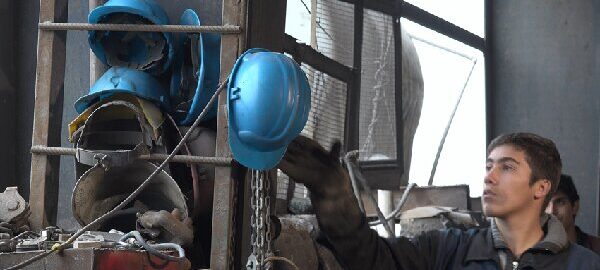
The synopsis of ‘The Reversed Path’ read, “Emkan is a 17-year-old teenager who has not seen his father for many years and his mother works late at night in a factory. He has a small recording camera and he decides to make a film to give a twist to his routine life, however, he is not very proficient. He tries his best to achieve his goal…”

Pouyan Shokri, Masoud Naji, Mahdiyar Asghari, Mohammad Hossein Pakdaman are among the cast members of the flick.

Founded in 1993, the SIFF is a competitive global event-driven by Shanghai’s efforts to become an international cultural hub. A total of 3,693 films from 108 countries and regions registered for last year’s event.

The 24th Shanghai International Film Festival (SIFF) was held on June 11-20, 2021.  / MNA/


IRGC-produced COVID vaccine to be unveiled in coming days

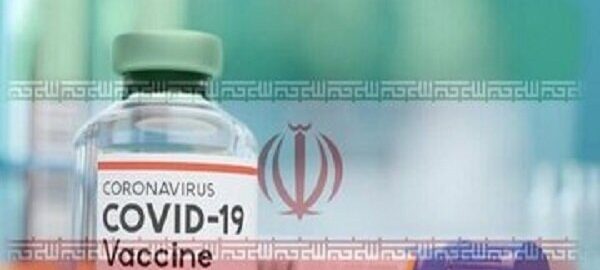
Chief of Staff of Iran’s Armed Forces Major General Mohammad Bagheri announced that the Covid-19 vaccine produced by the IRGC’s University of Medical Sciences will be unveiled in the next few days.

Announcing unveiling the IRGC-produced coronavirus vaccine, Major General Mohammad Bagheri said that all the facilities of the Armed Forces are mobilized to fight the coronavirus.

The Ministry of Defense-produce vaccine is in the second phase of clinical trials, and the vaccine produced by the IRGC’s University of Medical Sciences will be unveiled in the next few days, he added. /MNA/


Historical bazaar of Arak to bid for UNESCO status

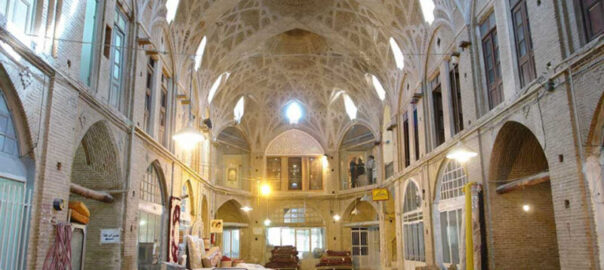
Iran is preparing a comprehensive dossier for the historical bazaar of Arak in central Markazi province to be submitted to the United Nations Educational, Scientific and Cultural Organization in near future, the provincial tourism chief has said.

The World Heritage List includes a quota for each country to add its historical sites and buildings, and Iran can also register up to two per year, Mostafa Marzban explained.

Thus, due to the historical value of the bazaar of Arak, it became a priority for inclusion in the global list, the official added.

The dossier, which includes the traditional marketplace, its passageways, stores, and attached buildings caravanserais inside, will be sent to UNESCO for being assessed as a World Heritage by the end of Iranian calendar year 1400 (March 2022), he noted.

He also noted that some 500 billion rials (about $12 million at the official exchange rate of 42,000 rials per dollar) will be required to restore the bazaar to its former state.

Covering an area of 14 hectares, the bazaar was built during the reign of Fath Ali Shah, a Qajar monarch who ruled from 1797 to 1834, by Yusef Khan Gorji and is considered the main core of the city.

In winter, the air inside the bazaar building is warm and pleasant due to the special architecture, while in summer it is quite cool.

Amongst the UNESCO-designated sites in Iran are “Arg-e Bam” (Bam Citadel) that represents an outstanding example of an ancient fortified settlement, “Bisotun” in western Kermanshah province, which is notable for its Achaemenid-era inscription carved on a limestone cliff, lavish “Golestan Palace” in downtown Tehran which is a masterpiece of the Qajar era (1789 to 1925), and millennium-old “Gonbad-e Qabus” which is a mudbrick tomb tower for Qabus ibn Wushmagir. /T.T/


ARWU puts 34 Iranian universities among world’s top 1,000

Some 34 Iranian universities and institutions were listed among the top 1,000 in the world, according to Shanghai Ranking’s Academic Ranking of World Universities (ARWU) 2021.

Starting from 2003, ARWU has been presenting the world’s top universities annually based on a set of objective indicators and third-party data. ARWU has been recognized as the precursor of global university rankings and the most trustworthy league table.

The Shanghai ranks the universities in 54 scientific fields (eight fields in natural sciences, four fields in life sciences, 22 fields in engineering, six fields in medical sciences, and 14 fields in social sciences) based on 5 indicators (Number of publications in the first quarter of journals, normalized citation impact, global collaboration; co-authorship, quality publications; published in top journals and conferences, and institute awards).

Shanghai Ranking is a fully independent organization dedicating to research on higher education intelligence and consultation, which has been the official publisher of the Academic Ranking of World Universities since 2009.

In its latest edition in 2021, there are 34 Iranian institutions, which have been mentioned 163 times in the list of top institutions in different fields.

University of Tehran 21 times, Islamic Azad University 17 times, Tarbiat Modares University 13 times, Amirkabir and Sharif University of Technology 12 times, and the Isfahan University of Technology 10 times were listed in 54 scientific fields.

In total, Iranian institutes have been able to gain a global position in 32 scientific fields.

The Shanghai rankings 2020 show the top 1,000 universities in the world, with Harvard and Massachusetts Institute of Technology first to second, respectively.

Performance in 2021

Most recently, thirty-six Iranian universities have been listed among more than 1,000 major universities worldwide, according to the Center for Science and Technology Studies Leiden Ranking for 2021.

The 2021 Times Higher Education Impact Rankings has listed 27 Iranian universities among the 1,115 most effective institutions worldwide.

Six Iranian universities have been placed among the world’s top universities announced by the prestigious Quacquarelli Symonds (QS) World University Rankings 2021.

Times Higher Education also has published its annual ranking of the world’s top universities for 2021, listing 47 Iranian universities, which shows an increase of 7 universities compared to the last year.

With 47 Iranian universities ranked among 1,527 top universities of 93 countries in the world in 2021 rankings, Iran achieved a great improvement in the academic field.

Some 21 Islamic countries were also listed in the ranking. However, Iran holds the highest share with 47 universities.

With a scientific growth rate of 10.4 percent in 2019, Iran ranked second among the top 25 countries in the world, next to China with a growth rate of 12.9 percent, according to the Web of Science website.

According to statistics released by the International Web of Science Database, Iran’s citation rank has always been on the rise over the last eight years, from 24 in 2012 to 16 in 2019. /T.T/

Iranian universities can admit up to 90,000 foreign students

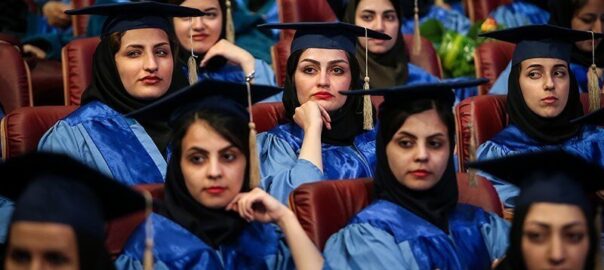
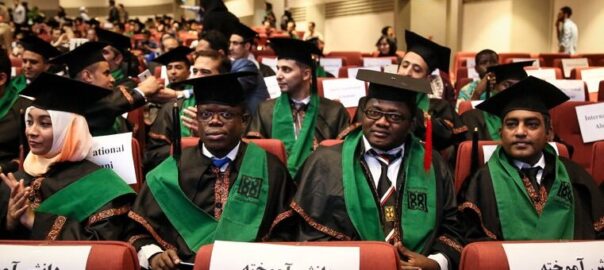
A total of 57,000 foreign students are studying in Iran, which can be increased to 90,000 considering the capacity of universities, Farid Rahimi, head of the non-Iranian students’ affairs at the Ministry of Science has stated.

According to the Sixth Five-Year National Development Plan (2016-2021), Iranian universities are projected to attract about 75,000 foreign students, IRNA reported on Saturday.

The universities have the capacity to admit up to 90,000 foreign students, however, it requires the creation of appropriate educational infrastructure, the expansion of diplomacy, appropriate publicity, and so on, Rahimi explained.

Currently, foreign nationals constitute 1.64 percent of the country’s student population.

According to the 20-Year National Vision Document (ending 2025), foreign students should account for 1.8 percent of the whole student population, which is likely to even reach 2 percent, Afshin Akhoundzadeh, an official at the Organization of Student Affairs, said.

“Some 57,675 foreign nationals from 133 countries are studying in Iranian universities, 30,600 of whom are studying in universities affiliated with the Ministry of Science, while 25,000 others are receiving education in Azad University, and about 2,000 in medical universities.”

Fifty-seven percent of the international students are studying for a master’s degree, 27 percent for a bachelor’s degree and 15 percent are educating to receive a Ph.D., while the remaining one percent study at other levels.

Law, Persian literature and computer engineering are the top three fields of study for foreign students in Iran, while civil engineering, business management, political science, English language and literature, Quran and hadith sciences, international relations, and electrical engineering, and other majors with the highest number of non-Iranian students.

In 2013, 35 centers were allowed to admit foreign students, which has increased to 77 in 2021.

Iranian universities shine at global rankings 2021

Most recently, thirty-six Iranian universities have been listed among more than 1,000 major universities worldwide, according to the Center for Science and Technology Studies Leiden Ranking for 2021.

The 2021 Times Higher Education Impact Rankings has listed 27 Iranian universities among the 1,115 most effective institutions worldwide.

Six Iranian universities have been placed among the world’s top universities announced by the prestigious Quacquarelli Symonds (QS) World University Rankings 2021.

Times Higher Education also has published its annual ranking of the world’s top universities for 2021, listing 47 Iranian universities, which shows an increase of 7 universities compared to the last year.

With 47 Iranian universities ranked among 1,527 top universities of 93 countries in the world in 2021 rankings, Iran achieved a great improvement in the academic field.

Some 21 Islamic countries were also listed in the ranking. However, Iran holds the highest share with 47 universities.

With a scientific growth rate of 10.4 percent in 2019, Iran ranked second among the top 25 countries in the world, next to China with a growth rate of 12.9 percent, according to the Web of Science website.

According to statistics released by the International Web of Science Database, Iran’s citation rank has always been on the rise over the last eight years, from 24 in 2012 to 16 in 2019. /T.T/

IRIB brings Chinese “Imperial Doctress” to Iranian homes

Islamic Republic of Iran Broadcasting (IRIB) has purchased the rights for the Iranian broadcast of the Chinese 2016 TV series, “The Imperial Doctress”.

The first part of the 50-episode series directed by Lee Kwok Lap was broadcast from IRIB’s Channel 5 on Saturday.

Starring Cecilia Liu, Zhang Zimu, Wallace Huo, Lou Yunhao, Huang Xuan and Wu Ze Jin Xi, the historical drama is based on the story of Tan Yunxian, a female physician during the Ming dynasty in China during the rule of Emperor Yingzong.

Tan Yunxian came from a long line of medical practitioners, her family having served as court physicians for several generations.

However, the practice for female physicians came to a halt when many were framed for abusing the form.

Still Yunxian was determined to learn medicine so she did so in secrecy. With her enthusiasm and persistence, Yunxian overcame many difficulties and rose through the ranks to become the most famous female doctor of the Ming Dynasty.

Along the way, she met and fell in love with Zhu Qizhen and Zhu Qiyu, two royal siblings with opposite personalities who entered into a rivalry for the throne.

The series aired every day on Jiangsu TV and Dragon TV, from 13 February to 9 March 2016.

The titular character in the drama series, Tan Yunxian, is a real-life historical figure who came from a renowned medical family.

She was one of the few female doctors that were known to exist in history. Before her death, she published a book titled “Sayings of a Female Doctor”, which was passed down through the generations.

However, the romance depicted in the drama between Tan Yunxian and the two Emperors is strictly fictional.

In reality, Tan Yunxian did not exist in the same time period as Zhu Qizhen and Zhu Qiyu, and naturally would not have been able to work at the Zhengtong Emperor’s Palace.

The character in the story is actually a combination of Tan Yunxian and the historical Empress Hang.

During the writing of the drama, screenwriter Zhang Wei consulted professional Chinese physicians regarding medical terminology and prescription use.

Lead actress Cecilia Liu reportedly took lessons with a traditional physician to learn the basics of Chinese medicine and treatment such as acupuncture, taking pulse and massage techniques in preparation for the role.

The series received positive feedback from the audience and topped Baidu’s charts of the most popular TV dramas in China.

It gained attention for its exquisite costumes, a showcase of traditional Chinese medicine and the performances of its leads. The series was also noted for featuring a well-respected female figure in China history. /T.T/

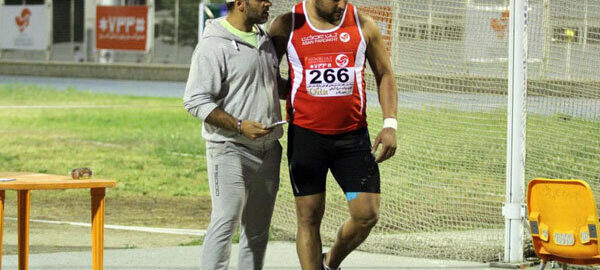
Hadadi can participate at Tokyo 2020, official says

Secretary general of Iran’s National Olympic Committee (NOC) Keykavous Saeidi says that Ehsan Hadadi has no problem taking part at the 2020 Olympic Games.

The media reports had suggested that the discus thrower would likely miss the Olympics due to the spinal injury. Hadadi has returned from the U.S. to get treatment in Tehran.

Now, the top official of Iran’s NOC says that Hadadi will participate at the Games.

“Based on what the Iran’s Athletic Federation has said, Hadadi is doing physiotherapy and it depends to his ability to participate at the Olympic Games. He has already secured his spot and will partake in the Games if he is completely ready,” Saeid said.

Saeidi also said the Iran’s flagbearer will be introduced the next week.

“All of Iranian athletes have been vaccinated for the Games. The Iranian delegation gets prepared according to the plan for the 2020 Tokyo Olympic Games,” he stated.

Iran has so far secured 63 quota places for the 2020 Olympic Games. /T.T/