All posts by islam

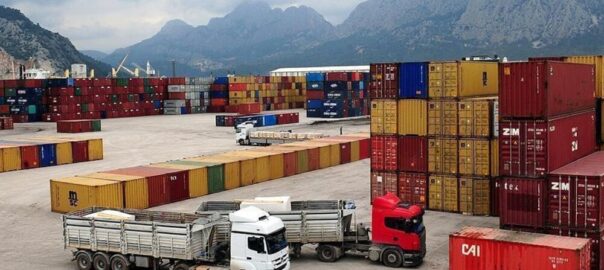
Non-oil trade with neighbors up 42% in 9 months yr/yr

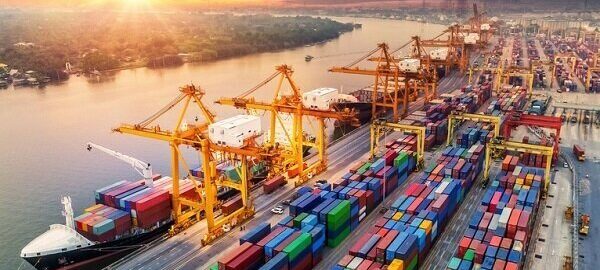
The value of Iran’s non-oil trade with its neighbors stood at $36.8 billion during the first nine months of the current Iranian calendar year (March 21-December 21, 2021) to register a 42 percent increase year on year, head of the Islamic Republic of Iran Customs Administration (IRICA) announced.

Alireza Moghadasi put the weight of non-oil trade with the neighboring countries at 75 million tons in the said time span, stating that trade with the neighbors also increased by 18 percent in terms of weight, IRIB reported.

According to the official, the neighboring countries accounted for 51 percent of value and 61 percent of the weight of the country’s total non-oil trade in the first nine months of the current fiscal year.

Moghadasi put the nine-month non-oil exports at 57.335 million tons valued at $18.766 billion, with a 24-percent rise in value and nine-percent growth in weight.

He noted that the exports to the neighbors accounted for 53 percent of the total value of the exports in the said time span.

He said major export destinations of the Iranian non-oil goods were Iraq, Turkey, the United Arab Emirates (UAE), Afghanistan, and Pakistan followed by Russia, Oman, Azerbaijan, Turkmenistan, Armenia, Kazakhstan, Kuwait, Qatar, Bahrain, and Saudi Arabia.

The official further announced that the Islamic Republic imported 17.682 million tons of non-oil commodities worth over $18 billion in the first nine months of the present year, with a 68-percent growth in value and a 62-percent rise in weight year on year.

The United Arab Emirates was the top exporter to Iran in the said period, followed by Turkey, Russia, Iraq, and Oman, he stated.

Moghadasi had earlier said the value of Iran’s total non-oil trade rose 38 percent in the first nine months of the current Iranian calendar year as compared to the same period of time in the past year.

According to the official, Iran traded over 122.5 million tons of non-oil products worth $72.1 billion with other countries in the mentioned period.

The official put the nine-month non-oil exports at 92.3 million tons valued at $35.1 billion, with a 40-percent rise in value and eight percent growth in weight.

The IRICA head further announced that the Islamic Republic imported 30.1 million tons of non-oil commodities worth $37 billion in the first nine months of the present year, with a 37-percent growth in value and a 20-percent rise in weight year on year.

Moghadasi said the value of Iran’s non-oil trade with foreign partners is expected to reach $98 billion by the yearend. / T.T/


Female Iranian crafter wins top prize at Intl. Craft Awards

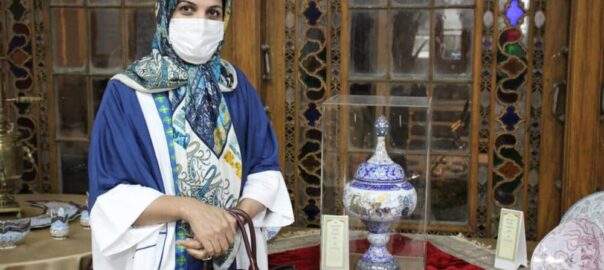
Iranian artist Shahrbanu Arabian was named the Female Craftsperson of the Year at the 5th edition of the International Craft Awards (ICA) 2021, an official with the tourism ministry has announced.

Arabian, who is a master of metalwork and Minakari (enamel), participated in the event with one of her exquisite works, a lavishly-decorated metal bowl designed for serving gaz (nougats with pistachios and almonds), CHTN quoted Vida Tavahodi as saying on Friday.

Minakari is an ancient art of painting natural motifs such as flowers and birds on the surface of metals, mostly copper.

Due to the outbreak of the coronavirus, the event was held virtually in India, but the artist will soon be awarded the prize at a ceremony, the official added.

The award for the Male Craftsperson of the Year went to Dalavayi Kullayappa from India, while Zohra Said from Morocco and Ismael Arturo Rodriguez Moreno from Mexico named Female Craft Designer of the Year and Male Craft Designer of the Year respectively.

ICA is organized by Craft Village, a social organization, based out of New Delhi, India, working towards training and promotion of handicrafts.

ICA sets a new benchmark in the world with the highest level of skill and design excellence. The awards provide an open platform for makers working in a wide variety of materials and media to have their work assessed by a professional jury and international craft experts.

These awards promote, inspire and encourage talent of the highest standards, making International Craft Awards an annual global feature.

With 14 entries, Iran ranks first globally for the number of cities and villages registered by the World Crafts Council, as China with seven entries, Chile with four, and India with three ones come next.

In January 2020, the cities of Shiraz, Malayer, and Zanjan and the village of Qassemabad were designated by the WCC- Asia Pacific Region, putting Iran’s number of world crafts cities and villages from ten to 14.

Shiraz was named a “world city of [diverse] handicrafts”. Malayer was made a global hub for woodcarving and carved-wood furniture. Zanjan gained the title of a “world city of filigree”. And Qassemabad village, which is nationally known for its traditional costumes, was also promoted to a world hub of handicrafts. Chador Shab, a kind of homemade outer garment for women, was, however, the main subject for the WCC assessment for the village.

The value of Iran’s handicrafts exports stood at $120 million during the first eleven months of the past Iranian calendar year 1399 (March 20, 2020 – February 18, 2021), Mehr reported. The country’s handicrafts exports slumped during the mentioned months in comparison to the same period last a year earlier due to the damage the coronavirus pandemic has inflicted on global trade.

The Islamic Republic exported $427 million worth of handicrafts during the first eleven months of the calendar year 1398. Of the figure, some $190 million was earned via suitcase trade (allowed for customs-free and tax-free transfer) through 20 provinces, according to data compiled by the Ministry of Cultural Heritage, Tourism and Handicrafts.

Ceramics, pottery vessels, handwoven cloths as well as personal ornamentations with precious and semi-precious gemstones are traditionally exported to Iraq, Afghanistan, Germany, the U.S., the UK, and other countries. /T.T/

Iran joins club of countries producing Omicron rapid test kit

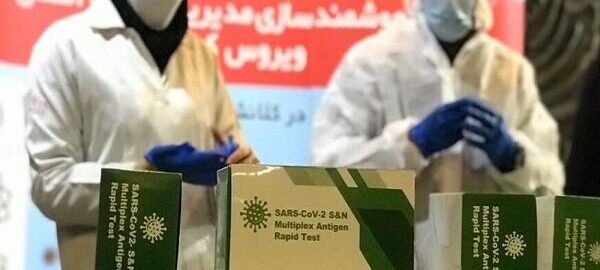
The chief executive of a knowledge-based company said that Iran is of the few countries in the world that succeeded in producing theOmicron rapid test detection kit and joined the group of three countries with this technology.

Speaking in an interview with IRNA on Tuesday, Dr. Sajjad Moraveji, CEO of Salamat Electronic Barakat Knowledge-based Company said that Iran is among rare countries in the world that managed to produce Omicron rapid test detection kit.

Presently, these kits are designed to identify new strains of COVID-19, and can detect other strains of coronavirus as well, he added.

It is possible to identify a new species of COVID-19 in 15 minutes with the help of these kits, he said, adding, “After testing, the barcode of the kit, patient’s national code, sampling national code and date and place of sampling are digitally registered and then, infection of people with Omicron is traced intelligently.”

Stating that Omicron rapid detection kit has been produced with the technical knowledge and know-how of expert domestic engineers, he added, “This technological product logical product has presently hit the domestic market.”

This kit has 92% accuracy and 98% sensitivity, which shows the very high accuracy of this Iranian product, Moraveji emphasized.

Elsewhere in his remarks, he put the daily production capacity of this kit at about 200 and stated that the company enjoys a high capacity to increase its production if needed./MNA/

Fifth Iranian innovation center to be launched in Turkey

Iran will soon inaugurate its fifth innovation center in Turkey aiming to find new markets for domestically-made high-tech products.

The inauguration will be concurrent with the second meeting of Iran and Turkey on commerce and technology which will be held in the city of Istanbul from February 27-March 2, ISNA reported on Tuesday.

Iran has already established innovation centers in Russia, Syria, China, and Kenya.

In December 2021, Marzieh Shaverdi, the manager of the Innovation and Prosperity Fund, said Iran will launch production lines of knowledge-based products in seven countries, namely Turkey, Armenia, Afghanistan, Bosnia and Herzegovina, Syria, Iraq, and Kenya.

The export support package for knowledge-based companies includes empowering, networking, and financing, IRNA quoted Shaverdi as saying.

Export empowerment includes training and consulting, providing export standards and licenses, and intellectual property, she explained.

The Vice Presidency for Science and Technology will provide special support to facilitate export for knowledge-based companies with quality products over the next 6 months.

Due to the necessity of Iran’s presence in the global technology markets and the high capability of knowledge-based and creative companies, the Vice Presidency for Science and Technology stepped into the field to pave the way for the presence in the global market, Mehdi Ghalehnoei, an official with the Vice Presidency, said in October 2021.

To this end, it has developed and implemented programs, policies, and support packages related to the development of export, planning to attract foreign investment, eliciting the participation of Iranians abroad, and connecting domestic capabilities to the global market are among the actions taken in this regard.

Exporting technological products of Iranian knowledge-based companies is one of the important and key programs of the Vice Presidency for Science and Technology, and in this regard, three houses of innovation and technology were inaugurated in Kenya, China and Syria.

And countries like Turkey, Iraq, Afghanistan, and Pakistan are set to host innovation houses in the near future.

Ghalehnoei said in February 2021 that, knowledge-based companies gained about $800 million in revenue from export in the past Iranian calendar year (March 2020-March 2021), and this year it seems to reach up to $2 billion.

“Africa, neighboring countries, Southeast Asia and Eurasia are our export target priorities, and we hope to create Iranian innovation and technology in all these areas,” he added.

The Innovation and Prosperity Fund affiliated with the Vice Presidency of Science and Technology has earmarked a sum of 170 trillion rials (nearly $700 million) to support knowledge-based companies over the past 4 years.

The Vice Presidency for Science and Technology has paved the way for research and production of technological products by supporting 7,000 projects over the past 8 years.

There are currently 6,263 knowledge-based companies operating in the country, offering advanced products and services in various fields of technology to domestic and foreign markets, and some of them have entered international markets, Siavash Maleki, deputy head of the Fund stated.

The fields of aircraft maintenance, steel, pharmaceuticals, and medical equipment, oil, and gas are among the sectors that researchers in technology companies have engaged in, leading to import reduction. /T.T/


Iran’s foreign trade records 25% growth in fall: IRICA

Spokesman for the Islamic Republic of Iran Customs Administration (IRICA) said that country’s trade value in the third quarter of the current Iranian calendar year (from Sept. 21 to Dec. 22) registered a 25% growth.

Seyyed Rouhollah Latifi said on Monday that Iran’s trade value in the 3rd season of the current year (autumn) recorded a 25% growth as compared to the same period last year.

He put the total foreign trade volume of the country in the first nine months of the current year at 122,452,000 tons, valued at $72.83 billion.

Iran’s total trade both imports and exports in the third quarter of the current year registered a nine percent decline and 25% increase in volume and value respectively.

He went on to say that 92.333 million tons of non-oil products, valued at $35.141 billion, were exported from the country in the first nine months of the current year, 32,337,000 tons of which, valued at $13.335 billion, were exported to other countries from Sept. 21 to Dec. 22, 2021.

Latifi said that 32,337,000 tons of goods, valued at $13.335 billion, were exported to other countries during fall.

Of total 30,119,000 tons of goods imported into the country, valued at $36.942 billion, in the first nine months of the current years, 10,981,000 tons of which, valued at $13.821 billion, were imported third quarter of the current year, showing a 30 and 37 percent hike in terms of weight and value respectively, IRICA spokesman added. /MNA/

Four Iranian futsal players nominated for 2021 world’s best

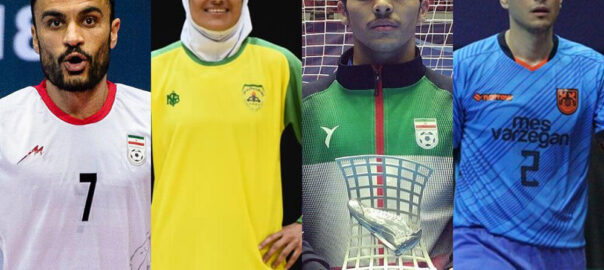
Four Iranian futsal players have been nominated for the best player in the world in 2021 in four categories. Launched in 2000, FutsalPlanet Awards, presented by magazine FutsalPlanet, aims to honour the best players of international futsal annually.

Aliasghar Hassanzadeh, who is now the most capped Iranian futsal player, has been nominated for the best men’s player in the world.

Hassanzadeh’s rivals are Cristian Alejandro Borruto (ARG), Erick Olim Mendonça (POR), Esteban Cejudo Guerrero (ESP), Carlos Vagner Gularte Filho “Ferrão” (BRA), Jovan Lazarevic (SRB), Alex Rodrigo da Silva Merlim “Babalu” (BRA/ITA), Jean Pierre Guisel Costa “Pito” (BRA) and Rodrigo Hardy Araújo (BRA).

Soheila Malmoli is nominated for the best women’s player in the world.

The Palayesh Naft Abadan player has to compete with Amanda Lyssa de Oliveira Crisostomo “Amandinha” (BRA), Emilly Micaela Marcondes (BRA), Janice Eloísa Da Silva (POR), Luana Verucia de Moura (BRA), Elizaveta Nikitina (RUS), Patricia González Mota “Peque” (ESP), Renata Adamatti “Renatinha” (BRA/ITA), Tatiane Debiasi Croceta “Taty” (BRA) and Débora Vanin “Miuda” (BRA) to win the accolade.

Iran futsal team custodian Alireza Samimi was nominated for the best men’s goalkeeper in the world.

The other nine candidates include Vietnam’s Ho Van Y (Vietnam), Andre Deko Pereira Coelho (Brazil), Didac Plana Oltra (Spain), Federico Perez Garrigos (Spain), Thiago Mendes Rocha Guitta (Brazil), Leonardo De Melo Vieira Leite Higuita (Brazil/Kazakhstan), Nicolas Sarmiento (Argentine), Dmitri Putilov (Russia) and Willian Felipe Dorn (Brazil).

Salar Aghapour has been also shortlisted for the best men’s young player.

Aghapour’s rivals are Antonio Pérez Ortega (ESP), Ernesto Claudino Gris (BRA), Kamil Gereykhanov (RUS), Marcos Elian Ferreyra (ARG), Miguel Angel Cano Mellado (ESP), Muhammad Osamanmusa (THA), Pedro Henrique dos Santos Damaceno Ribeiro “Pedrinho” (BRA), Anton Sokolov (RUS) and Izaquel Gomes ”Zicky” Te´ (POR/GNB). /T.T/


Iran leads the world in priority given to nano-sciences

The ratio of nano-articles to the total number of articles published in Iran is the highest in the world, highlighting the amount of attention and priority given to nano-sciences in the country.

According to StatNano, in 2021, nearly 202,000 nano-articles were issued in JCR- (Journal Citation Reports) indexed journals, accounting for approximately 8.2 percent of the total articles indexed in WoS (Web of Science). Alternatively stated, about 8 percent of all scientific publications across the globe are in the field of nanotechnology.

In terms of the ratio of nano-articles to the total number of articles, Iran still possesses the highest share in this index with 18.7 percent of the total articles falling in the category of nanotechnology.

The country published a total of 11,196 nano-articles in 2021, according to the database.

Saudi Arabia, Egypt, and China followed Iran with 17.4 percent, 16 percent, and 14.1 percent shares of nano-articles to the total number of articles, respectively.

The number of scientific articles is deemed a significant parameter for measuring and comparing the scientific development of individuals, universities, and countries and indicates their scientific efficiency.

More than 42 percent of the world’s nanotechnology publications by 2021 have been written and published by Chinese researchers. The United States, India, and Iran come next with 11.5 percent, 9.4 percent, and 5.5 percent, respectively.

China tops the list with more than 85,700 nano-articles, with around 14 percent of all the Chinese scientific articles falling into this category. Following China, the United States is in second place, having published about 23,200 articles (11.5 percent), while India and Iran would be in the next places with 9.4 percent and 5.5 percent, respectively.

Iran ranked 43rd among the 100 most vibrant clusters of science and technology (S&T) worldwide for the third consecutive year, according to the Global Innovation Index (GII) 2020 report.

The country experienced a three-level improvement compared to 2019.

Sourena Sattari, vice president for science and technology, has said that Iran is playing the leading role in the region in the fields of fintech, ICT, stem cell, aerospace, and is unrivaled in artificial intelligence.

Iran has created centers in six Asian countries for exporting nanotechnology products, including China, India, Indonesia, Syria, Turkey, and Iraq.

Nanotechnology’s trend of development is growing in Iran, as the number of nanoproducts and equipment developed in the previous Iranian calendar year (ended March 20, 2021) increased to 750, compared with 647 a year before.

Some 223 product manufacturing companies and 59 equipment manufacturing companies are active in the field of nanotechnology and by the end of last year, which developed a total of 750 products and equipment.

As of the start of a national plan to develop the nanotechnology sector 15 years ago, more than 5,283 billion rials (about $19 million) have been allocated to nanotechnology projects.

Iran’s nanotechnology products are generally classified into three groups of goods, services, and equipment, and the service sector has grown by nearly 130 percent over the past year (March 2020-March 2021).

Reports show that the largest share of the Iranian nano market, equivalent to 96 percent, belongs to goods. The service sector has grown by about 130 percent last year, from 443 billion rials (nearly $1.6 million) to 1 trillion rials.

Scientific progress

Studies show that Iran enters the year 2022 with the 15th rank in science production worldwide and it is expected to make progress over the next years as the coronavirus pandemic is going to ease.

According to the latest information on science production, Iran is ranked 15th in the world in the international system of Web of Science in 2021, with an h-index of 383, which indicates the quality of Iranian articles registered.

Iran’s scientific position in the Web of Science over the last 5 years shows that the production of conference papers has been on a downward trend during 2020 and 2021 due to the outbreak.

The share of Iranian science production from conference papers has dropped from 7.38 percent in 2017 to 1.26 percent in 2021.

Scientific studies and analyses extracted from the Scopus International Citation Database showed that the rate of scientific contributions of Iranian researchers to the world increased from 22.24 percent in 2017 to 35.6 percent in 2021.

Moreover, the SCImago ranking system deals separately with the ranking of countries in science production, ranking Iran as 40th in 2021 in terms of h-index. Also, in terms of the number of articles, Iran’s index is 376.

The SCImago rankings show that between 1996 and 2020, the United States, China, the United Kingdom, Germany, and Japan are in the top five. Iran also ranked 21st in the world and second in West Asia.

NATURE INDEX also shows that in 2021, considering that the latest update of this international system for science production reports has not been completed yet, Iran’s overall ranking is 35th, which was 33 in 2020. /T.T/

Six innovation centers to promote medicinal plants

The Vice Presidency for Science and Technology has created six innovation centers to develop the supply chain of medicinal plants in the country.

The innovation centers have been created in the cities of Tehran, Kermanshah, Ardebil, Hamedan, Yasouj, and Gonabad, aiming to pave the way for industries to have easier access to ideas and products in the field of medicinal plants, IRNA reported on Sunday.

Fifteen other requests [for creating innovation centers] are also waiting to be approved, the report added.

The Vice Presidency for Science and Technology has taken technological steps to flourish this ancient industry in the country. Among these measures, we can mention the development of a promotional package to develop the production and use of these products.

“Using the capacity of national media and supporting national and international exhibitions and festivals in the field of medicinal plants” and “Using the capacity of education to promote the importance of medicinal plants in primary to secondary education” are among other actions.

Also, “culture promotion and reform of society’s attitude towards traditional medicine and promotion of healthy lifestyle” and “establishment of a database of available traditional medicines” and “establishment of a system for registering traditional and herbal medicines and providing pharmaceutical information” have also been implemented.

Iranian traditional medicine is one of the most ancient forms of traditional medicine. It is grounded in the concept of four senses of humor: phlegm (Balgham), blood (Dam), yellow bile (Safra’), and black bile (Sauda’). The concept of four senses of humor is based on the teachings of Rhazes and Avicenna into an elaborate medical system.

Iranian traditional medicine strongly focuses on prioritizing health maintenance and disease prevention over treatment.

Iran has ranked fourth for publication of articles in the field of traditional medicine and medicinal plants in the world, ISNA quoted Nafiseh Hosseini, a Health Ministry official, as saying.

Iran also gained fifth place for knowledge production in traditional medicine and medicinal plants in the world in 2020, however this year, the country improved and placed fourth after India, China, and the United States, Hosseini added.

The progress has been made over the past 10 years, she noted.

The Vice Presidency for Science and Technology has so far registered 120 national standards for medicinal herbs and traditional medicine to support the industry.

So far, about 30,000 plant species are identified in the world, with Iran’s share of about 8,000 species that its plant diversity is more than the whole of Europe.

Currently, about 2,300 species of medicinal plants have been identified in the country, accounting for one-third of the medicines used in human societies, the share of world trade in these products is about $124 billion and Iran’s share is $570 million, which is only 0.5 percent of the total.

The per capita consumption of medicinal plants in Iran is about one kilogram of dried plants. In other words, 83,000 tons of medicinal plants worth 1.2 trillion rials (around $4.5 million) are consumed in the country, while in Europe this amount is 900 grams and in the United States is 2.5 kilograms. /T.T/


Iran oil revenues increased significantly in recent months: NIOC head

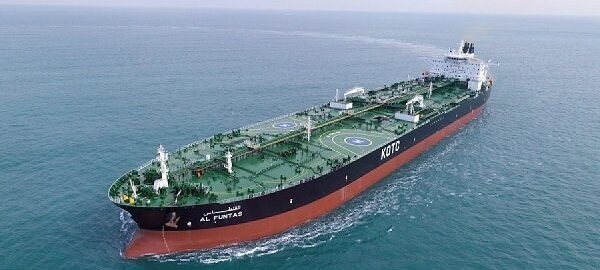
Head of National Iranian Oil Company (NIOC) Mohsen Khojasteh-Mehr has said the country’s oil revenues have increased significantly over the past few months and the country has received the payment for all its crude oil sales since the new government administration, Shana reported on Sunday.

“In the thirteenth government, part of the country’s lost oil markets has been revived and we have received the payment for all the oil we have sold so far,” Khojasteh-Mehr said.

According to the official, the private sector is also contributing greatly to the country’s current oil sales.