Iran football team defeated Lebanon 2-0 on Tuesday to end the 2022 FIFA World Cup qualification on high note.
In the match held in Mashhad’s Emam Reza Stadium, Sardar Azmoun opened the scoring in the 35th minute and Iran captain Alireza Jahanbakhsh doubled the lead in the 72nd minute.
Iran ended the campaign with 25 points in Group A.
South Korea sit second with 23 points with one game in hand.
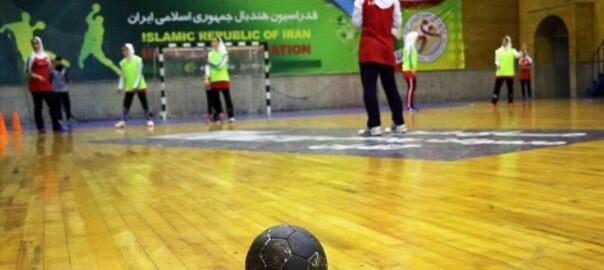
Iran defeated India 25-24 in the 2022 Asian Women’s Youth Handball Championship on Monday.
The Iranian team started the campaign with a 44-35 win over Uzbekistan on Friday and also edged Kazakhstan 20-19 in their second match.
The 2022 Asian Women’s Youth Handball Championship is being held from March 18 to 25 in Almaty, Kazakhstan under the aegis of Asian Handball Federation.
It acts as the qualification tournament for the 2022 Women’s Youth World Handball Championship, with top two teams from the championship directly qualifying for the event to be held in Georgia./ t.t/
The Persian New Year celebration, known as Nowruz, begins this year on Monday, March 21. Here is how Iranians celebrate the 13-day long holiday, and why the rite is still so popular after 3,000 years.
March 21, 2022, may not mean much to most people in the world, but it is a very special day for people in Iran, and a few other countries, as well. It’s the start of a 13-day long, 3000-year tradition called Nowruz, and I’m going to tell you what this ancient tradition is all about and why it is so dear to so many Iranian people and other ethnic groups in the world.
In technical terms, Nowruz is the day of the vernal equinox and marks the beginning of spring in the Northern Hemisphere. More accurately, the exactly calculated moment the Sun crosses the celestial equator and equalizes night and day is marked as the first day of Nowruz in the Iranian calendar, and that is why, unlike Christmas, Nowruz is celebrated at different times of the day or night, with families gathered to observe the rituals together.
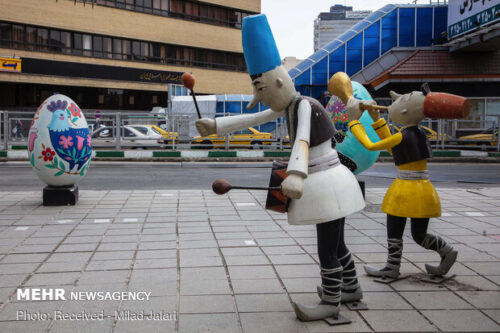
Nowruz symbols in Karaj, Alborz Province, Iran
There is this interesting superstition about Nowruz, which some people believe either in seriousness or in jest, that you have to be at your best at the time of Sal Tahvil; otherwise, you will be having an unlucky time throughout the year.There is no question that Nowruz holds a special place in the heart and memory of many Iranian people. And the wonderful thing about the Iranian New Year is that it is not celebrated only in Iran. Many countries along the Silk Road, such as Afghanistan, Tajikistan, Azerbaijan, and Turkey, celebrate Nowruz, and the rite is not exclusive to one culture or religion. It has the advantage of being so ancient and having not only survived but actually flourished well into the 21st century, that it is only logical for Nowruz to be so comprehensive, diverse, and all-around a happy, unifying occasion with all its variations and different traditions and customs.
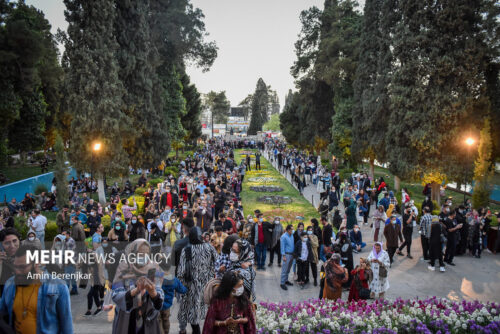
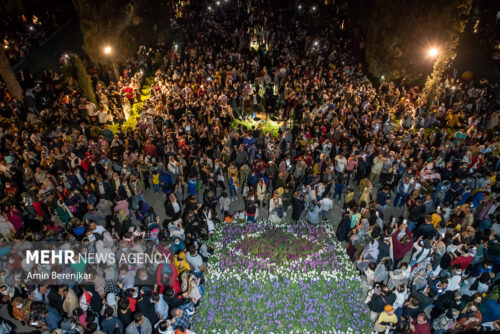
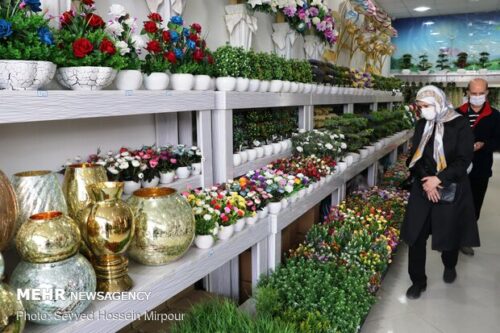
Buying spring flowers is a Nowruz tradition in Iran
Another interesting, and very common, Nowruz superstition is actually tied to the Chinese zodiac tradition of assigning an animal to each year in a twelve-year cycle. This year, which is 1401 on the Iranian calendar, is the Year of the Tiger.
Outside superstition, Nowruz is actually a UNESCO Intangible Cultural Heritage of Humanity, first inscribed on the list in 2009 through the initiative of Iran and joint cooperation of Azerbaijan, India, Kyrgyzstan, Pakistan, Turkey, and Uzbekistan. The case was later extended in 2016 to include five more countries – Afghanistan, Iraq, Kazakhstan, Tajikistan, and Turkmenistan.
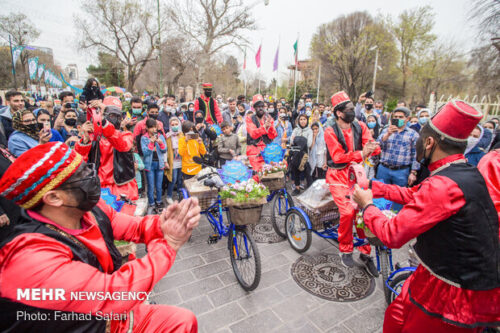
‘Hajji Firuz’, fictional character in Iranian folklore, carnival in Qazvin
The UN’s General Assembly recognized the International Day of Nowruz in 2010, describing it as a Spring festival of Iranian origin. On 15 March 2010, the US House of Representatives passed the Nowruz Resolution by a 384–2 vote, “Recognizing the cultural and historical significance of Nowruz…”
With an impressive number of over 187 million people in nearly a dozen countries observing Nowruz as a national holiday, the occasion is indeed a true cultural heritage to the world. But what does the celebration mainly include in Iran? Well, here are some of the most popular traditions:
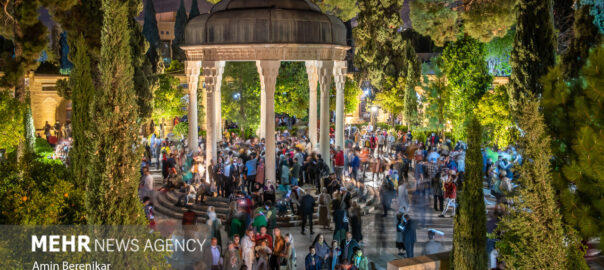
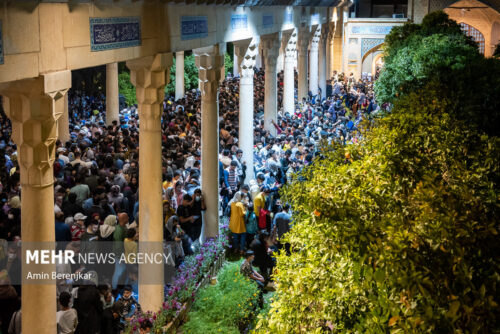
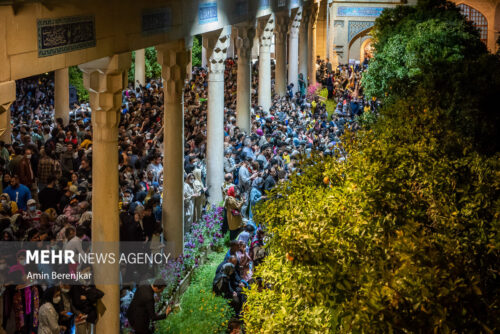
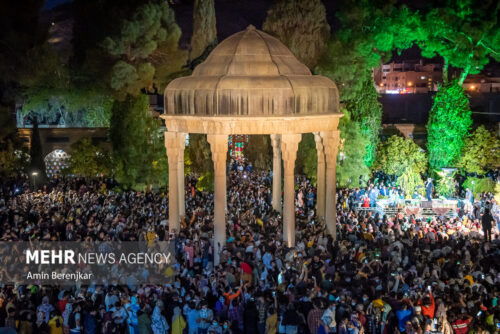
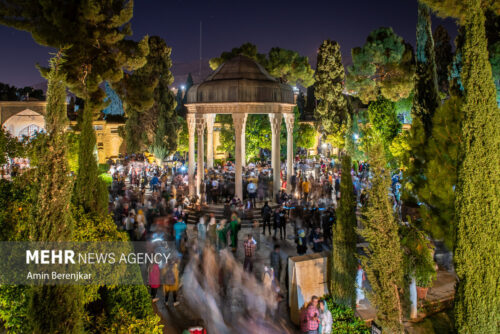
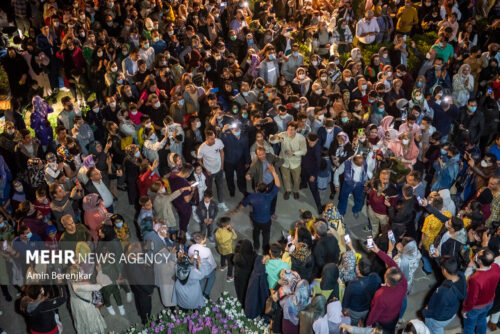
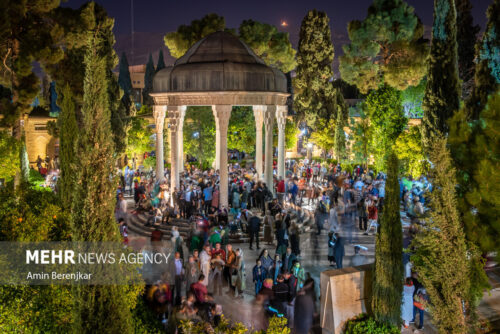
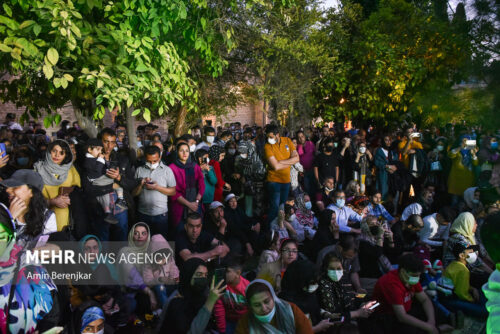
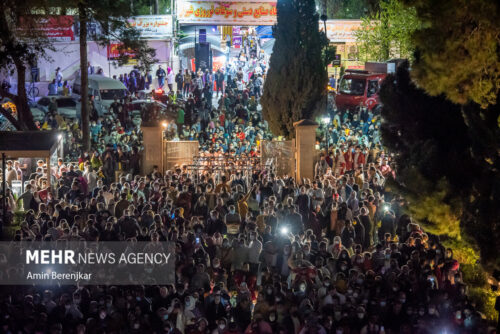
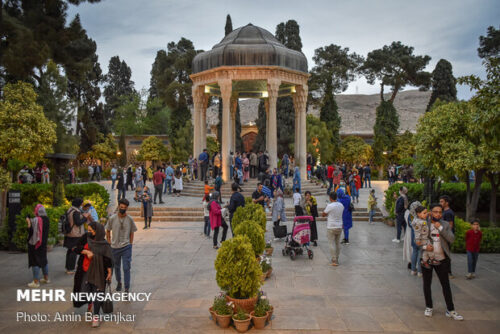
People traditionally flock to Tomb of Hafez in Shiraz to celebrate the New Year.
Housecleaning, done a few days before spring. The activity sometimes becomes monstrous, and every child’s nightmare, as it involves all members of the family to engage in vigorous activity to give a thorough scrub to the whole household, giving the walls a fresh paint, washing every piece of carpet and curtain in the house (which, if you have ever been to an Iranian home, it’s a lot!), and even buying new furniture or placing the old one in new arrangements around the house. Although the practice is not fun, it is a vital and unavoidable part of New Year’s preparations.
Chaharshanbe Suri, which falls on the eve of the last Wednesday of the year, and includes jumping over bonfires while singing ‘My sickly yellow paleness is yours; your fiery red color is mine.’ In the metropolis of Tehran, there will be lots of fireworks instead.
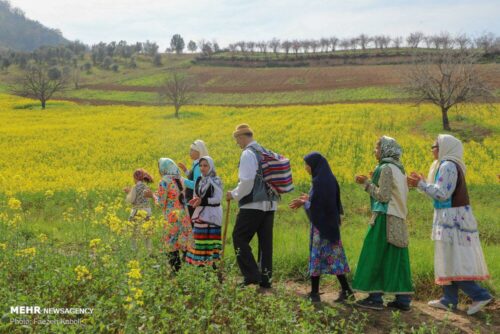
People in villages in Golestan province embrace the New Year by spending time in beautiful nature
Going to the cemetery on the last Thursday of the old year to remember the ones who have passed away, and are no longer with us to celebrate the coming year. People usually put hyacinths or sabzeh (sprouts, which are planted especially as a Nowruz decoration) on the tombs of their loved ones.
New Year shopping, where you hop from one shop to another to get yourself a nice, new outfit to wear for the entirety of the 13-day long holidays. Most of the time, it’s a last-minute thing where you have to assemble an acceptable outfit in just a few hours, shouldering your way through a large crowd at various shopping malls. Although with the pandemic, many Iranians took to online shopping and will probably continue the practice for Nowruz.
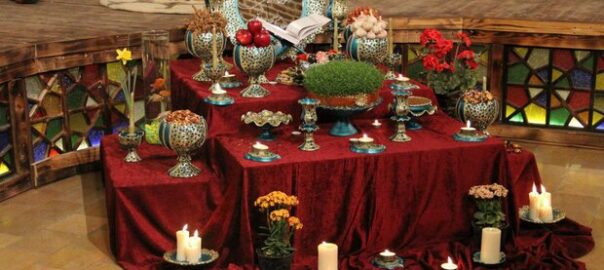
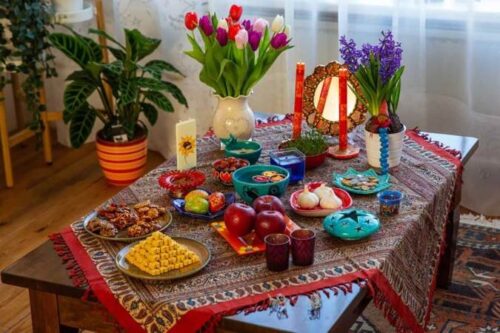
While the items are the same, each family designs its Haft-sin in a special way
Haft-sin (The Seven S’s), a traditional table setting that symbolizes life, fertility, and love as a whole, and requires all members of the family to gather around the moment the new year begins. The Seven S’s are:
1. Seeb (apple); symbol of beauty and love
2. Seer (garlic); symbol of health
3. Serkeh (vinegar) symbol of progress and change
4. Somaq (sumac); symbol of patience
5. Samanu (sweet pudding); symbol of abundance
6. Sabzeh (sprouts); symbol of rebirth
7. Senjed (Persian olive) symbol of stability and strength
Nowruz; a 3000-year tradition of felicity and connectedness
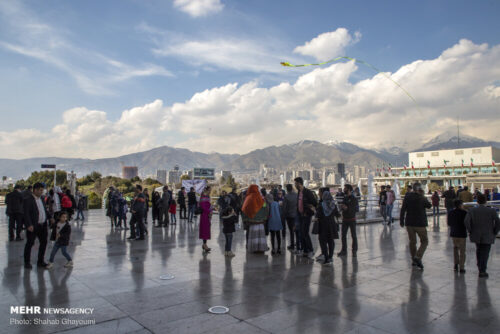
Tehran enjoying clean air during Nowruz
Tehran enjoying clean air during Nowruz
Eid Didani, or an intensive period of visiting your relatives. During Nowruz holidays, households are busy hosting relatives close and distant, with a wide variety of sweets and ajil (trail mix), baklava, nan berenji (cookies made from rice flour), exciting-looking confections, and generally everything your dietitian would be horrified to find out you have eaten. Last year, the pandemic put a damper on the whole Eid Didani practice, and it will most likely be the case this year, as well.
Eidi, which is the name given to the money the people you go to for ‘Eid Didadni’ give you as a gift. However, the tradition may have gone out of practice in some families, and adults are less eligible to receive eidi. Eidi usually has a spiritual worth, as opposed to a monetary one, so don’t be offended if the only thing you can buy with your eidi is just a sandwich.
Travelling, or a perfect excuse for ditching the whole ‘eid didani’ tradition. Some families would take the opportunity of the long holidays to visit other cities, or other countries if they can afford the atrocious travel costs. Of course, with the coronavirus pandemic still very much present, traveling to certain cities has been banned during Nowruz.
New Year Cuisine, which you can have at any other time of the year, of course, but which taste especially better during Nowruz. They include Ash-e reshteh (a noodle soup), Kuku sabzi (herbs and vegetable soufflé) served for dinner on New Year’s, Reshteh polow (rice cooked with noodles), Sabzi polow with fish, and dolma (cooked vegetables, meat and rice rolled in grape leaves).
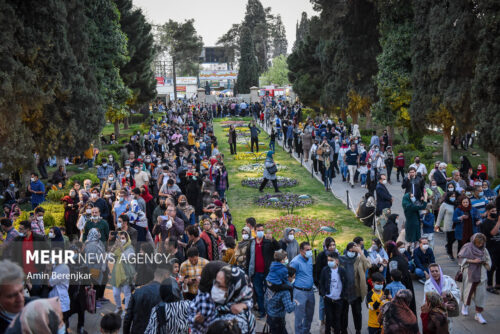
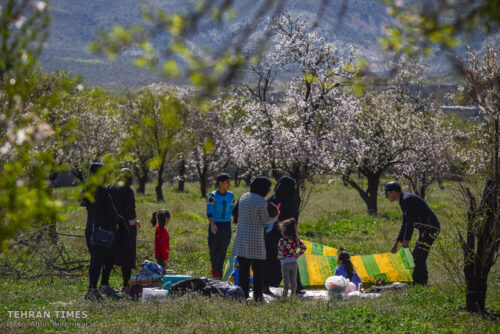
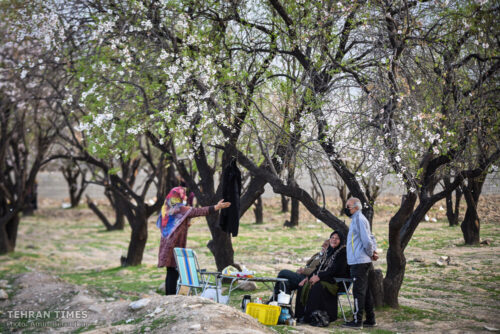
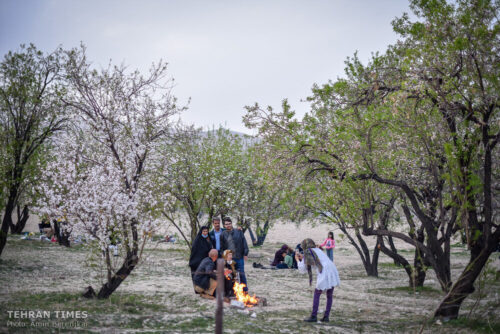
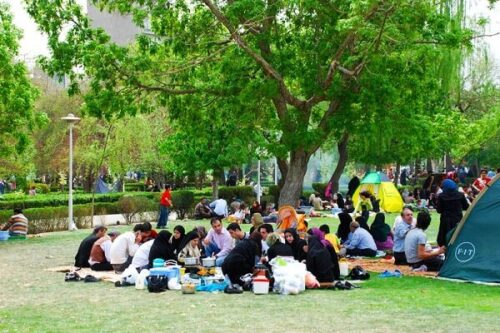
A typical Sizdah Be-dar outing in Tehran
And last but definitely not least, Sizdah Be-dar, the last day of the Nowruz holidays, which falls on the 13th of Farvardin, and the number is considered to bring bad luck in Persian folklore. The idea of Sizdah Be-dar (literally, Thirteen Outdoor) is to spend time picnicking outdoors, and throwing away your Sabzeh because it is considered a bad omen to still have it when the Nowruz holidays are over.
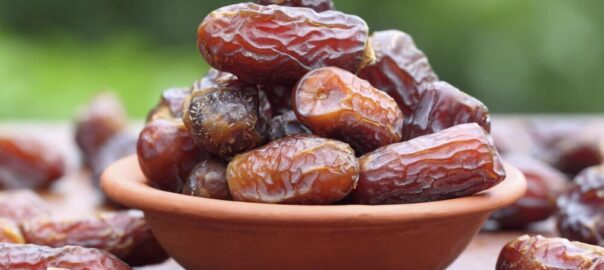
The value of Iran’s exports of date rose 5.3 percent during the first 11 months of the current Iranian calendar year (March 21, 2021-February 19, 2022), as compared to the same period of time in the past year, an official with Agriculture Ministry announced.
Zahra Jalili-Moqadam, the director-general of the ministry’s office of tropical and subtropical fruits, also said that Iran exported over 292,000 tons of dates during the 11-month period of this year, which was 4.5 percent more than the amount in the same period of time in the last year.
As stated by the head of National Association of Iranian Dates (NAID), there is the capacity for the export of $1 billion of dates from the country in a year.
Rashid Farokhi had said that despite the drought and low rainfall, the annual date production is anticipated to reach 1.2 million tons in the current Iranian calendar year (ended on March 20).
Every year, 30 percent of the product is exported and the rest is consumed in the domestic market, he added.
Every year, up to 1.2 million tons of various types of dates are produced in 203,763 hectares of land in Iran, making the country the second largest producer in terms of production and area under cultivation and the fifth largest exporter. /T.T/
The Monstra-Lisbon Animation Festival that opened on Wednesday in the Portuguese capital has selected five movies by Iranian filmmakers to screen in its different categories.
“The Fourth Wall” by Mahbubeh Kalai and “People and the Moon” by Yunes Kaffashian will be screened in the short competition.
“The Fourth Wall” is about a stuttering boy who transforms an Iranian kitchen into a fantastic cosmos. The father’s body becomes a refrigerator, the mother’s belly a washing machine whose spin cycle gives birth to a screaming baby. Even birds on tiles and detergents have a surprising life of their own.
This exuberant animation, dotted with real-life elements – fried eggs, broken plates, pieces of cheese – develops a subtle wit, ironizing ingrained family patterns.
The movie produced at the Documentary, Experimental and Animation Film Center has previously received the Mephisto 97.6 Award for the best animated film at DOK Leipzig, Germany’s major international festival for documentary and animated films.
The 31st edition of Animafest Zagreb, a Croatian international festival for animated films, honored the film with the Zlatko Grgic Award.
“People and the Moon” shows that the moon always has an important presence when one is in love.
“Stars in the Rain” and “Sympathy Syndrome” have been chosen to be screened in the Family Program category.
Directed by Sara Namju, “Stars in the Rain” follows passengers on a train who see a boy boarding on a rainy day. His presence is like a brief miracle.
“Sympathy Syndrome” by Maral Alizadeh tells the story of a kid who is at home, but the desire to see the beauty of the city makes him leave the house. Why does being outside worry them?
“Anima”, a production from the Documentary, Experimental and Animation Film Center, has been selected for the Perspective section.
Directed and written by Mahbubeh Mohammadzaki, the short animation is about a man who has a problem with his character and is in conflict over his differences with other people. / T.T/
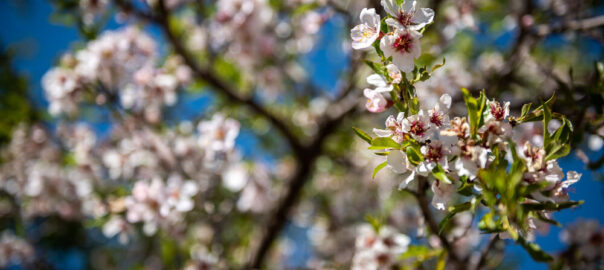
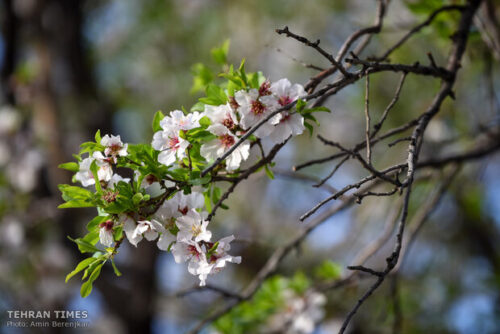
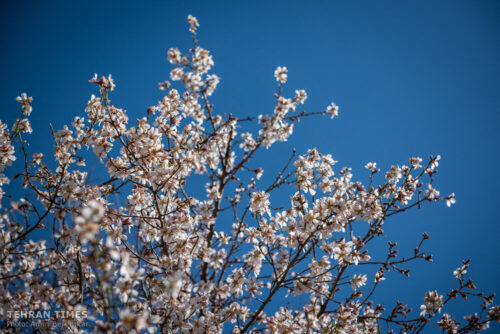
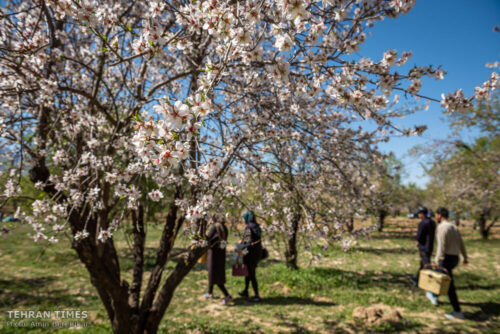
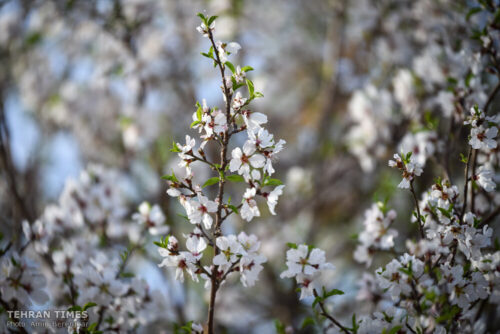
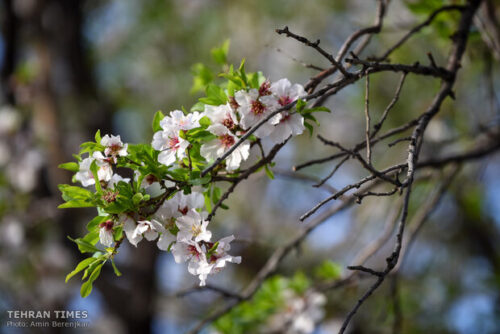
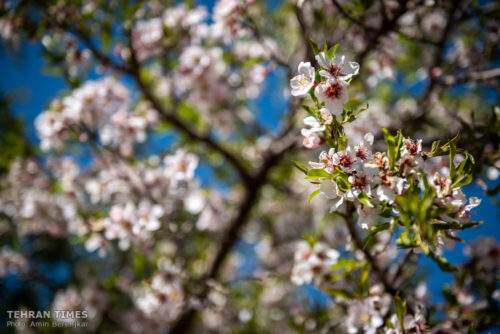
Flowers are pictured during an almond blossom season in Sarvestan county of Fars province, southern Iran, March 4, 2022. In this time of year, orchards of almond and pomegranate herald the arrival of spring as they greet travelers on the sides of the road in the Maharlou region, which is situated about 30 km eastward of Shiraz. /T.T/
Up to five million travelers are estimated to visit the southern province of Hormozgan, the province’s governor has announced.
“There will be a lot of travelers in the province over the upcoming holidays, roughly three to five million people, and in this regard, there should be an increased monitoring process,” IRNA quoted Mehdi Dusti as saying on Tuesday.
The province needs to prepare its tourism facilities to welcome tourists and travelers, the official added.
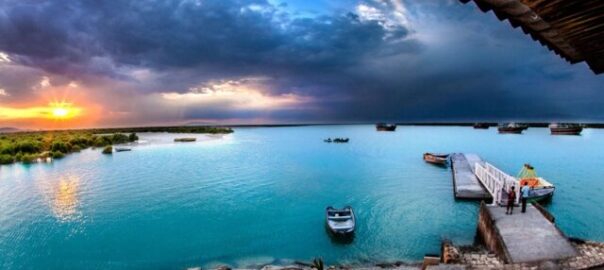
Known as the province of islands, Hormozgan province is located on the northern coasts of the Persian Gulf. It embraces scenic islands among which Kish, Hormuz, Hengam, and Qeshm are the most beautiful ones and top tourist destinations in southern Iran.
Over the past couple of decades, the coral Kish Island has become a beach resort where visitors can swim, shop, and sample a laid-back and relatively liberated local lifestyle. It is home to free-trade-zone status, with ever-growing hotels, shopping centers, apartment blocks, and retail complexes.
Hormuz, which is mostly barren and hilly, is situated some eight kilometers off the coast on the Strait of Hormuz, which attracts many tourists by its colorful mountains, silver sand shores, and great local people.
Hengam Island has scenery rocky shores, serene sunset, and kind natives, which can attract travelers who enjoy a relaxing trip by spending time on this tranquil island.
Qeshm Island is a heaven for eco-tourists as it embraces wide-ranging attractions such as the Hara marine forests and about 60 villages dotted mostly across its rocky coastlines. The island also features geologically eye-catching canyons, hills, caves, and valleys, most of which are protected as part of the UNESCO-tagged Qeshm Island Geopark, itself a haven for nature-lovers. /T.T/
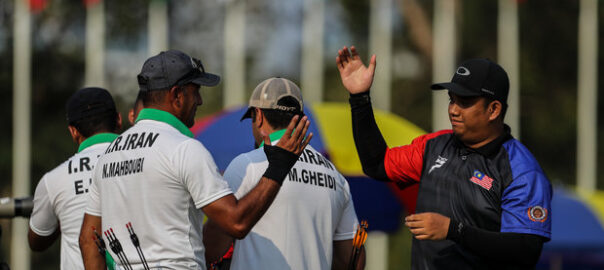
On the final day of Archery Asia Cup 2022 in Thailand, the Iranian archery team won two gold and four bronze medals.
Iran’s compound team with the combination of Gisa Baybordi and Hesamuddin Kowsar defeated Malaysia by 154-145 and won the gold medal.
Mohammad Saleh Palizban won a gold medal at the final of the men’s compound competition defeating India 145-126.
The men’s compound team, consisting of Hesamuddin Kowsar, Mohammad Saleh Palizban, and Hamzeh Nekouei, won the qualifying match against Bangladesh 232-226 and won the bronze medal.
The Iranian women’s compound team, consisting of Gisa Baybordi, Vida Halimian, and Kowsar Khoshnoodikia, won the ranking match against Kazakhstan 224-215 and won a bronze medal.
Hesamuddin Kowsar won the bronze medal in the men’s compound competition defeating the Indian team 147-147.
Gisa Baybordi won the bronze medal in the women’s compound match defeating the archer from Thailand with a result of 146-143. /MNA/
Iranian photographers have won gold and silver medals at the 1st FKNS SLM Circuit, a circular exhibition of photography in Montenegro.
The exhibition was organized in Podgorica from February 21 to 28 with contributions from the Federation Internationale de l’Art Photographique (FIAP), the Photographic Society of America (PSA) and several other centers in the categories of monochrome, nature, woman man child, portrait and open color.
“Cry Underwater” by Mohammad Esteki won the PSA Gold Medal in the open monochrome category.
The photo shows a man attending an Islamic mourning ritual in Iran.
In this section, “Siren” by Arlen Keshishian received a FIAP honorable mention.
Esteki also obtained the PSA Gold Medal in the woman man child category for his photo “Nushin” that depicts a woman walking in a central Iranian city.
Ahmad Khatiri’s photo “Prayer in Warzones” won a Salon honorable mention in this category.
He also was honored with the Salon Silver Medal in the nature category for “Brave Looking” that shows a fox gazing into the camera.
In this section, Esteki was awarded a Salon honorable mention for “Esferjan”.
In the portrait category, Esteki received a Salon honorable mention for “Margaret”.
Winners were chosen by a jury composed of Ali Samei from Iran, Tianyi Xiong from China and Serbian photographer Zoran Djordjevic, who was also the chairman of the exhibition.
The exhibition was also organized in Luxemburg and Serbia. The Serbian city of Novi Sad hosted the event from February 15 to 22 and the Luxemburg exhibit took place in Kaerjeng from February 17 to 24.
In the Serbian exhibition, Esteki won an honorable mention for his photo “Old History” in the portrait category, while Seyyed Ehsan Mortazavi received an honorable mention for “The Magic Window” in the open color section.
An honorable mention in the open color category of the Luxembourg exhibition went to Esteki’s “Hard Man”, while Kiarang Alaei’s “The Alley” won the same honor in the open monochrome category. /T.T/


 A typical Sizdah Be-dar outing in Tehran