All posts by islam

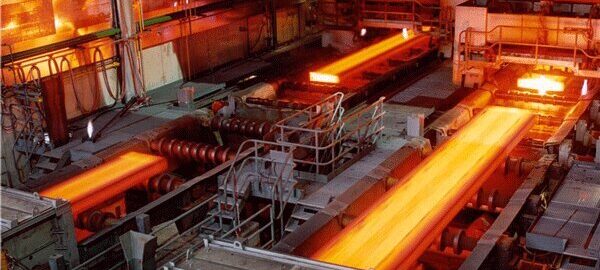
Iran ranks first among world’s top 10 steel producers

Iran’s steel production achieved the highest growth rate among the top 10 steel producers in the world in January and February 2022.

Iranian Mines and Mining Industries Development and Renovation Organization (IMIDRO) announced that the total production of Iranian crude steel reached 5.3 million tons in January and February 2022.

According to IMIDRO, Iran’s steel production in February reached 2.5 million tons, which is 3.7 percent more than the same period in 2021.

India with 6.6 percent and Germany with 1.1 percent growth ranked second, third places after Iran.

In 2021, China with 1032.8 million tons, India with 118.1 million tons, and Japan with 96.3 million tons are the first to third-largest steel producers in the world, followed by the United States with 86 million tons, Russia with 76 million tons, South Korea with 70.6 million tons, Turkey with 40.4 million tons, Germany with 40.1 million tons, Brazil with 36 million tons and Iran with 28.5 million tons which ranked fourth to tenth. /MNA/

Iranian short film awarded in US Big Water Film Festival

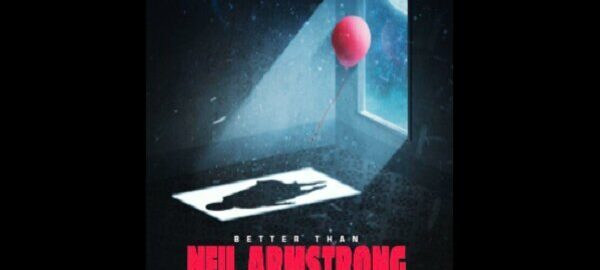
Directed by Alireza Ghasemi, the Iranian short film “Better than Neil Armstrong” won the prize of the Audience Favorite at the Big Water Film Festival.This is the 21st international prize for Ghasemi’s short film.

The synopsis of ‘Better than Neil Armstrong’ reads, “Four kids start their journey to the moon with the mission of finding a mysterious place called The Redland but the gates of Redland are being guarded by a mischievous snake.”

Some of the short film’s cast includes Asal Shakeri, Golnoosh Ghahremani, Kian Alipanah, Nooshika Khodashenas, and Ilia Hasani.

The Big Water Film Festival takes place on the shores of Lake Superior, in Ashland, Wisconsin and surrounding communities.

The 14th Annual Big Water Film Festival, shown virtually over eight weeks, is now completed. /MNA/

Iran’s trade with Caspian Sea littoral states rises 39%

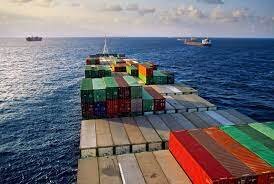
The value of Iran’s trade with the Caspian Sea littoral states rose 39 percent during the 11-month period from March 21, 2021 to February 19, 2022, as compared to the same period of time in the previous year, the spokesman of the Islamic Republic of Iran Customs Administration (IRICA) announced.

Ruhollah Latifi put Iran’s trade with the mentioned countries at about seven million tons valued at over $3 billion in the 11-month period of this year, rising also 23 percent in terms of weight from that of the preceding year.

Importing 1.035 million tons of products worth $539 million from Iran, and exporting 3.262 million tons of goods worth $1.451 billion from the Islamic Republic, Russia was the top trade partner of Iran among the other Caspian Sea littoral states in the said 11-month period, the official stated.

As previously announced by the deputy head of IRICA, the value of Iran’s non-oil trade rose 38 percent during the 11-month period.

Foroud Asgari said that Iran traded over 149.4 million tons of non-oil products worth $90 billion with other countries in the mentioned period.

He noted that the weight of trade in the mentioned period also grew by 12 percent in comparison to the figure for the previous year’s same 11 months.

The official put the 11-month non-oil exports at 112.658 million tons valued at $43.517 billion, with a 40-percent rise in value and 10 percent growth in weight.

The Islamic Republic imported 36.777 million tons of non-oil commodities worth $46.577 billion in the 11 months of the present year, with a 36 percent growth in value and a 19 percent rise in weight year on year, according to the official./T.T/

“White and Colorful” by Mohammadreza Masumi wins Greenstorm Global Photography Award

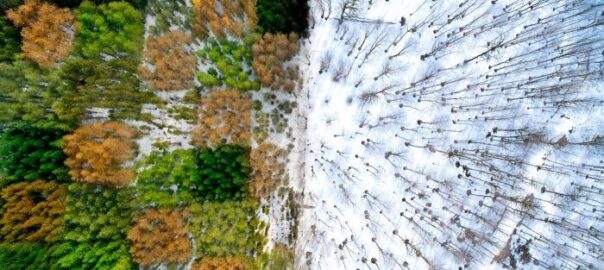
“White and Colorful” by Iranian photographer Mohammadreza Masumi has won the 13th edition of the Greenstorm Global Photography Award, the organizers announced last week.

The award is organized in collaboration with the Greenstorm Foundation in Koch, India every year with the United Nations Environment Program (UNEP).

The theme for this year’s contest was “Restore Green Lineage” based on the UNEP theme for 2021 World Environment Day — Ecosystem Restoration.

“White and Colorful” was selected as the winner through a public poll, in which thousands of photography enthusiasts and laypeople from all over the world participated.

“Masumi’s winning entry depicts a breathtaking sight of a man-made forest in Iran spreading through the region of Khalkhal. It exhibits a remarkable human attempt to restore the balance of nature by revitalizing the environment,” Greenstorm Foundation said in a press release.

The photo has previously won the gold medal of the International Federation of Photographic Art (FIAP) at the 2nd Issyk-Kul International Exhibition of Photography in Kyrgyzstan.

The Greenstorm Foundation also announced Jophel Botero Ybiosa from the Philippines as the first runner-up, while Hadi Dehqanpur, also from Iran, was chosen as the second runner-up for the award.

Speaking during the award ceremony, former international diplomat and MP from Thiruvananthapuram in Kerala, Shashi Tharoor said that environmental degradation affects everyone regardless of their political or ideological affiliations.

“They have cross-sectoral implications, public health dimensions, impact on the economy and the workforce of today’s India. Solving this crisis may well prove to be the single most important moonshot of our generation,” he noted.

Twenty-five photographs curated by an eminent jury comprising jury chair Prathap Suthan from New Delhi, Mumbai-based wildlife photographer Aishwarya Sridhar and landscape architect Michael Little from Bengaluru were competing for the awards.

The photos were chosen from 3,519 submissions by photographers from 42 countries, including the U.S., England, Canada, Algeria, Brazil, Iran, Malaysia, South Korea, Morocco and Vietnam.

Greenstorm Foundation is a not-for-profit public trust formed to impact appropriate behavioral changes among people through the power of creativity. /T.T/

Iran to face England and U.S. in 2022 World Cup

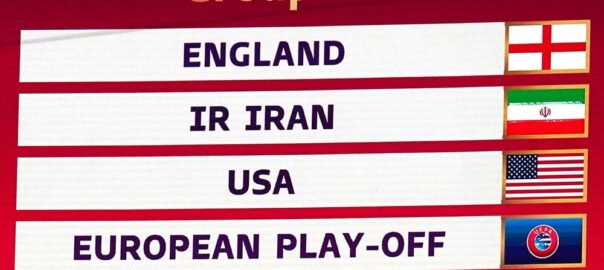
Iran national football team learned their fate at the 2022 FIFA world Cup. In the draw ceremony held in Doha Friday night, the ‘Persian Leopards’ are drawn in Group B along with England, the U.S. and the winners of Scotland vs Ukraine, who then face Wales in the final.

Iran will play England on Nov. 21.

The National Team will face UEFA Path A on Nov. 25 and meet the U.S. four days later.

The 2022 World Cup will take place in Doha, Qatar from Nov. 21 to Dec. 18.

Those Qatar 2022 groups in full
Group A: Qatar, Ecuador, Netherlands, Senegal

Group B: England, Iran, the U.S., Scotland/Wales/Ukraine

Group C: Argentina, Saudi Arabia, Mexico, Poland

Group D: France, UAE/Australia/Peru, Denmark, Tunisia

Group E: Spain, Costa Rica/New Zealand, Germany, Japan

Group F: Belgium, Canada, Morocco, Croatia

Group G: Brazil, Serbia, Switzerland, Cameroon

Group H: Portugal, Ghana, Uruguay, South Korea /T.T/

Iran improves rank in health technology

Based on innovative indicators of health technology development in 2021, Iran was ranked 60th among 132 countries, which shows an improvement of 60 steps compared to 2014, the deputy health minister for research and technology, has announced.

A total of 1,670 knowledge-based firms are operating in the health sector, ISNA quoted Younes Panahi as saying on Thursday.

He added that there are 13 science and technology parks and 95 technology growth centers in the field of health, while 343 technological products have so far been licensed, and 335 inventions in medical sciences have been patented.

A total of 1,670 knowledge-based firms are operating in the health sector. The health technology development is evaluated by the Global Innovation Index with seven indicators, including institutional structure, human capital and research, infrastructure, market and business complexity, technological knowledge, and creativity, he explained.

Indicators of innovation in higher education, graduation, access to information and communication technology, indigenous infrastructure, gross capital formation, production of knowledge and inventions, scientific and citational articles, gross domestic product, and national industrial projects, are Iran’s strengths in the 2021 evaluation.

Referring to new plans to promote product sales in the health sector, he noted that the ratio of production of products and services to articles should increase 10 times and the ratio of inventions to total articles is planned to increase by 30 times.

The Innovation and Prosperity Fund has paid a total of 240 trillion rials (nearly $960 million) to support knowledge-based companies over the last [Iranian calendar] year (March 2021-March 2022).

Technology advancement

Today, the country’s knowledge-based ecosystem accounts for more than 3 percent of GDP. And the figure is projected to reach 5 percent, however, the main goal is to step toward a 10 percent share in GDP, Sattari told Fars on February 13.

The share of knowledge-based companies in the country’s economy has exceeded 9 quadrillion rials (about $34 billion), and since 2019, it has experienced a growth of more than 450 percent, he stated.

The knowledge-based ecosystem is a newly-emerged ecosystem but has so far been able to solve many of the country’s problems.

The Innovation and Prosperity Fund affiliated with the Vice Presidency of Science and Technology has earmarked a sum of 170 trillion rials (nearly $650 million) to support knowledge-based companies over the past 4 years.

There are currently 6,263 knowledge-based companies operating in the country, offering advanced products and services in various fields of technology to domestic and foreign markets, and some of them have entered international markets, Siavash Maleki, deputy head of the Fund, stated.

The fields of aircraft maintenance, steel, pharmaceuticals, medical equipment, oil, and gas are among the sectors that researchers in technology companies have engaged in, leading to import reduction. /T.T

Iran’s oil production back to pre-sanction level: oil min.

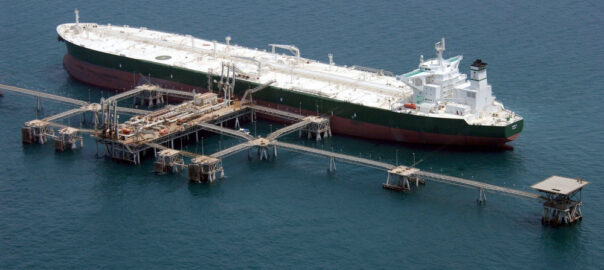
Iranian Oil Minister Javad Oji said that the country’s crude oil production has reached the pre-sanction level.

Saying that the current capacity of Iran’s oil production has reached more than 3.8 million barrels per day (bpd), the minister said, “We hope that through the efforts of all those active in this sector, we will reach higher figures in the exports of crude oil, gas condensate, oil products, and petrochemicals in [the current Iranian calendar year] 1400 (started on March 21)”.

“By taking effective measures in onshore and offshore oil fields, drilling new wells, repairing wells, rebuilding and modernizing facilities, and oil collection centers, the current oil production capacity has reached before the sanctions, and we have no problem in performance and this amount of production”, Oji added.

“Iran’s oil exports have risen under the toughest sanctions and without waiting for the outcome of the Vienna talks,” the minister had said in mid-March.

The increase was thanks to “different methods used to win contracts and finding different buyers,” the official added.

“The rise had even increased the bargaining power of our team in Vienna,” he said, without elaborating.

Tehran’s oil exports have been limited since former U.S. President Donald Trump in 2018 exited the 2015 nuclear accord and reimposed sanctions.

Iran views U.S. sanctions as illegal and has said it will make every effort to sidestep them.

The Islamic Republic’s oil exports have risen to more than one million barrels per day for the first time in almost three years, based on estimates from companies that track the flows, reflecting increased shipments to China.

Iran increased exports in 2021 despite the sanctions, according to estimates from oil industry consultants and analysts. But they remained well below the 2.5 million bpd shipped before sanctions were reintroduced.

Back in January, Head of National Iranian Oil Company (NIOC) Mohsen Khojasteh-Mehr said the country’s oil revenues have increased significantly over the past few months and the country has received the payment for all its crude oil sales since the new government administration.

“In the thirteenth government, part of the country’s lost oil markets has been revived and we have received the payment for all the oil we have sold so far,” Khojasteh-Mehr said.

According to the official, the private sector is also contributing greatly to the country’s current oil sales. /T.T/

Raeisi stresses development of knowledge-based firms

President Ebrahim Raeisi described development of knowledge-based economy as one of the country’s priorities and emphasized the quantitative and qualitative development of the complex.

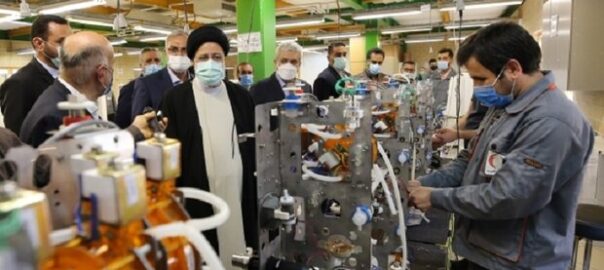
President Ebrahim Raeisi made the comments on an inspection visit to the Pardis Science and Technology Park located in the Pardis town near the capital Tehran on Tuesday.

On the visit, the president unveiled five knowledge-based pharmaceutical products developed by domestic Iranian companies.

Raeisi described the development of knowledge-based economy as one of the country’s priorities in the path of growth and development and emphasised on the quantitative and qualitative development of the complex.

Recalling the emphasis of the Leader of the Islamic Revolution Ayatollah Seyyed Ali Khamenei on the development of knowledge-based production in his message on the occasion on Nowruz to name the new Iranian year of 1401 earlier this month, the President called the position of science and technology parks in the realization of this naming important and called on all actors of the knowledge-based ecosystem to play an active role.

The President also stressed the need for easy and cheap supply of medicine to the people during his visit to pharmaceutical companies.

Also during the visit, five knowledge-based pharmaceutical products were unveiled in the presence of the President.

On the visit to Aria Teb Firooz Knowledge-Based Company, Raeisi was briefed about the production stages of haemodialysis machines. The company has an annual production capacity of 2,000 haemodialysis machines.

The President also visited various departments of Bio-Fermentation Pharmaceutical Company and the quality control laboratory of probiotic products and pharmaceutical supplements. /MNA/

‘Sizdah Be-dar’, celebration to bid farewell to Nowruz

An Iranian National Nature Day, locally known as ‘Sizdah Be-dar’, is held on the 13th day of Farvardin (the first month of the Iranian calendar) to bid farewell to the Nowruz holidays.

The celebration of Nowruz needs a happy ending to make it perfect, so on the last day of this celebration people go outdoors to celebrate the end of the Nowruz holidays.

On the 13th day of Farvardin, which falls on April 2 in normal years and April 1 in leap years, every Iranian people try to spend and enjoy this day in the best possible way.

‘Sizdah Be-dar’ is known on the Iranian calendar as Nature Day and is one of the official holidays.

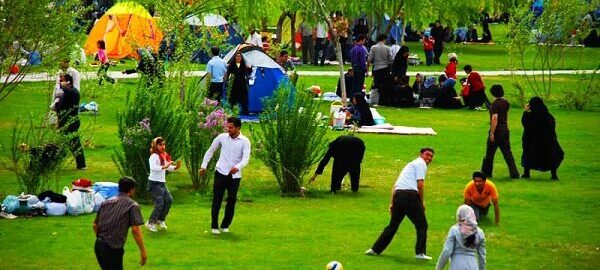
Tens of millions of people will mark the 13th day of the Persian New Year or Nowruz, leaving their houses to picnic in parks and countryside all over the world. The occasion has deep roots in Iranian history.

As in many other cultures, the number thirteen is unlucky in the Iranian tradition. Iranians believe that by going outdoors, they welcome the spring, and leave behind all the bad luck associated with the number thirteen.

Like many Iranian celebrations, ‘Sizdah Be-dar’ has its own customs.

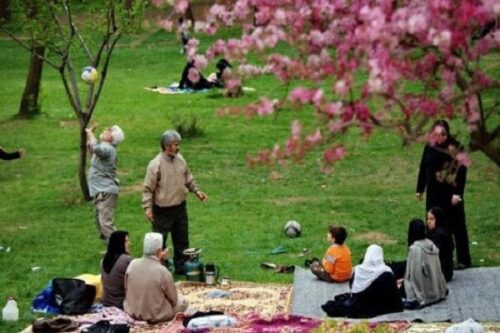
On the eve of ‘Sizdah Be-dar’, many are thinking about choosing an appropriate place to spend the day. Some choose parks, some go to the countryside and others come together in a garden to celebrate the day. Usually, several families plan to gather in a place to spend the day outdoors. It is believed that joy and laughter clean the mind from all evil thoughts, and a picnic is usually a festive, happy event.

Before leaving the house, they disassemble the Sofreh-ye Haft Sin, the centerpiece of Nowruz, a special table with seven foods or items beginning with the letter ‘S’ in Persian.

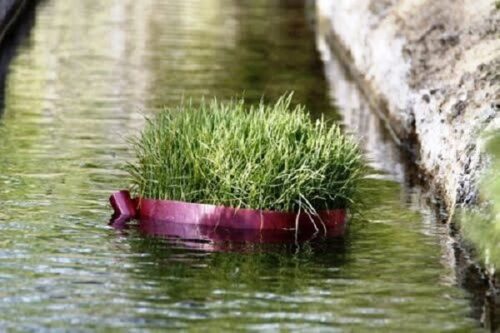
The Sabzeh (green sprouts have grown especially for Nowruz and placed on the Haft Sin) is taken and thrown into a flowing stream of water, accompanied by a wish that any misfortune is washed away for the coming year.

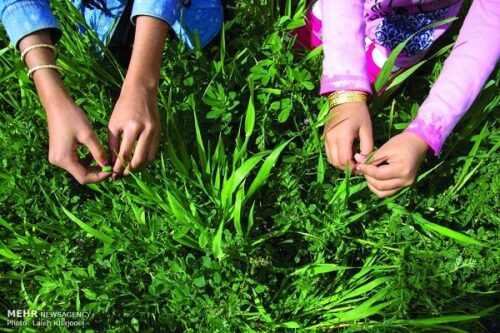
Unmarried girls pray for good fortune and success in finding a husband by knotting blades of grass in the fields as a tradition to mark ‘Sizdah Be-dar’. The knotting of the grass represents love and the bondage of a man and a woman.

People spend the day playing traditional games, singing, dancing, listening to music, chatting, or simply resting along the banks of the river. The joy of the day is supposed to ward off an evil that the unlucky number thirteen might bring along with it.

All kinds of food and delicacies are prepared with tea, local drinks, fruits, bread, cheese, and fresh herbs, and noodle soup called ‘ash-e reshteh’ are favorites.

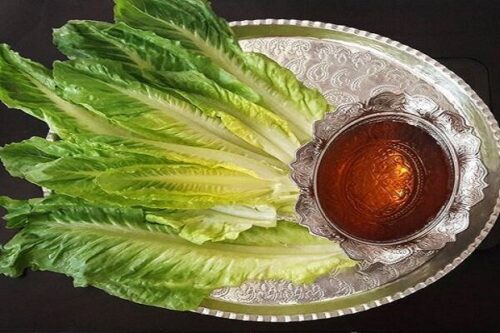
‘Kahoo Sekanjabin’ is one of the special crisp prepared for this special day. ‘Sekanjabin’ is a drink made using vinegar and honey which is used with lettuce.

The lie of the Thirteen is the Persian version of the prank-playing April Fools’ Day which is observed on the day of ‘Sizdah Be-dar’. Pranks have reportedly been played on this holiday since 536 BC in the Achaemenid Empire.

‘Sizdah Be-dar’ is celebrated by all. It marks the end of the Nowruz festivities and ends with the setting of the sun. Schools and offices re-open the following day, and life resumes, leaving behind the previous year’s bad occurrences, with a new and positive outlook for the coming year. / MNA/


IRCS granted prestigious international award

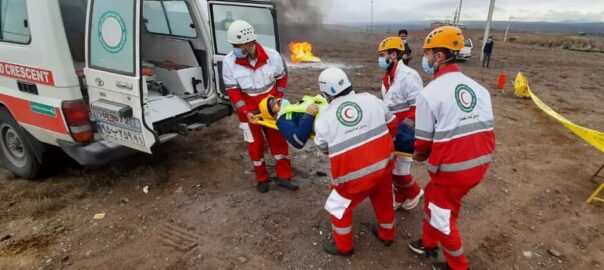
The Iranian Red Crescent Society (IRCS) has been honored by the Henry Davison Award, a prestigious international prize intended to recognize outstanding service in improving the lives of vulnerable people by mobilizing the power of humanity.

The International Federation of Red Cross and Red Crescent Societies (IFRC) will present the award to the IRCS during the 23rd session of the General Assembly, which is to be held in Geneva in the month of June.

The IRCS had received the award in 2005 for its philanthropic activities to relieve survivors of a strong earthquake measuring 6.6 on the Richter scale that struck the southeastern city of Bam on December 26, 2003.

It is considered one of the deadliest and most tragic quakes that have jolted Iran as it claimed at least 26,000 lives. Some figures even suggest that the fatalities reach some 43,000.

President of the International Federation of Red Cross and Red Crescent Societies (IFRC), Francesco Rocca, has appreciated the Iranian Red Crescent Society (IRCS) as one of the strongest communities in the world.

At present, the Iranian Red Crescent Society provides medical services to people in 13 Asian, African, and Latin American countries.

Currently, some 14 medical facilities are offering humanitarian, relief, and health services to the deprived people in 13 countries, including Azerbaijan, Afghanistan, the United Arab Emirates, Bolivia, Ivory Coast, Sierra Leone, Ghana, Congo, Kenya, Lebanon, Mali, Niger, and Ecuador. / T.T/