All posts by islam

Painter Abdolhamid Qadirian named Islamic Revolution Artist of the Year

Painter Abdolhamid Qadirian has been named the Islamic Revolution Artist of the Year. He was honored with the title on the closing day of the Islamic Revolution Art Week on Friday during a special ceremony attended by the managers of the Art Bureau of the Islamic Ideology Dissemination Organization (IIDO), the organizers of the event.

Qadirian received the title for his artwork “Girls of the Sayed Al-Shuhada School”, which he created in memory of the children killed in the terrorist attack on the Sayed Al-Shuhada School in Afghanistan in May 2021.

Earlier on Thursday, he was honored along with five other artists in different media as the top visual artists of the year by the organizers of the Islamic Revolution Art Week.

“During the [1980-1988 Iran-Iraq] war, the culture of Imam Hussein (AS) spread nationwide and became strengthened and we benefitted from it, and, as a result, numerous books on the war were published,” said Qadirian after receiving his award from IIDO director Hojjatoleslam Mohammad Qomi.

“At present, the nature of the war has changed and the perspective on the war, which has been expressed by the Leader of the Islamic Revolution, is different,” he added.

“In this new situation, we need a new wing to fly toward the brilliant future; we need a fountain of knowledge to enable us to fly. Therefore, it’s time to consider the powerful and eternal wing of belief in Imam Mahdi (AS) as the promised Savior,” Qadirian stated.

“I hope we can make good use of the belief in Imam Mahdi (AS) as much we used the culture of Imam Hussein (AS),” he said in conclusion.

In his short speech, Qomi expressed his thanks to the founders of the Islamic Revolution Art Week, which celebrated its eighth anniversary this year.

“Organizing this event as the standard-bearer of the school of revolutionary art has now increased in importance,” he said.

The Islamic Revolution Art Week is organized every year to commemorate the martyrdom anniversary of documentarian Morteza Avini.

He was killed by a landmine in 1993 during his last trip to the former Iran-Iraq war zone in southwestern Iran while making a documentary about soldiers who were still listed as missing in action. /T.T/

One million medical tourists arrive in Iran per annum

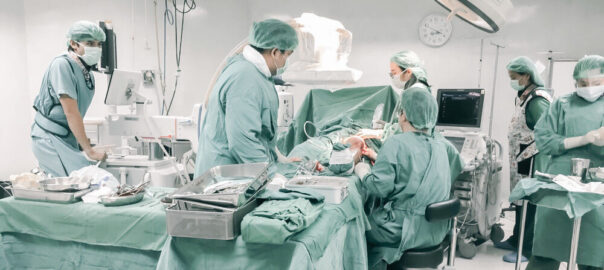
The Islamic Republic of Iran hosts an average of one million medical tourists each year. “About one million medical tourists, mainly from the neighboring countries, arrive in Iran annually,” Mohammadreza Tarjoman who presides over the Health Ministry’s tourism office has said.

“The majority of inbound medical passengers come from the neighboring countries including Iraq and Afghanistan,” the official said in an address to a press conference held in Tehran on Friday.

Talking about hospitals and clinics, he said a selection of 200 Iranian medical centers have permission to accept foreign patients.

Many domestic experts believe that medical tourism in Iran is a win-win opportunity both for the country and foreign patients, as they are offered affordable yet quality treatment services and the country gains considerable foreign currency.

Iran is ranked 46th worldwide in the field of medical tourism, the official noted.

“The coronavirus pandemic has caused a 73 percent decrease in medical tourism during the past two years,” Tarjoman added.

He went on to say that Iran attaches great importance to medical tourism marketing, adding “We are planning to hold international meetings and conferences to attract more medical tourists.”

The First International Conference on Medical Tourism will be held in the northeastern Iranian province of Golestan from June 14-17, he said.

Iran’s two most popular medical tourist cities are Tehran and Mashhad, but the coronavirus outbreak has significantly reduced the number of travelers.

According to available data, Mashhad played host to about 24,300 foreign travelers who reportedly spent some $48 million to use medical services during the past Iranian calendar year, which ended on March 20.

“Last year (1400), Mashhad received 24,300 foreign medical travelers who were either hospitalized or gained outpatient treatments,” said Davood Khoshashkan who presides over the medical tourism department at Mashhad University of Medical Sciences.

“Mashhad eyes to earn some $400 million from medical tourism per year…. Our estimate is to host 200,000 medical travelers per year that would collect a revenue of $400 million.”

Khoshashkan believes that Iran has immense potential to become a hub for medical tourism, adding, for example, Turkey’s revenues from medical tourism surpass Iran’s as the neighboring country possesses lesser medics and hospitals yet it does not have pilgrimage capacities.

Although the Islamic Republic has favorable conditions in terms of competitive price, presence of skilled physicians, and low waiting time among the studied countries, other medical tourism infrastructures are not enough invested. For example, until 2017, Iran has not been able to obtain a JCI license even for one hospital, and the average per capita physician/nurse index is much lower than the global one.

Experts say, to promote medical tourism, it is necessary to recognize the strategic medical tourism status of each province in the country, supply a specialized workforce, provide high-quality services, improve infrastructure, and promote a positive attitude toward authorities to support medical tourism industry.

Amongst Iran’s trump cards are the presence of credible surgeons and physicians, cutting-edge medical technologies, high-tech medicine and diverse specializations, super affordable procedures, and finally its hospitable people.

The Islamic Republic has set goals to exceed its yearly medical travelers to around two million in [calendar year] 1404 (March 2025-March 2026). /T.T/

29th Tehran International Holy ‎Quran Exhibition Kicks Off

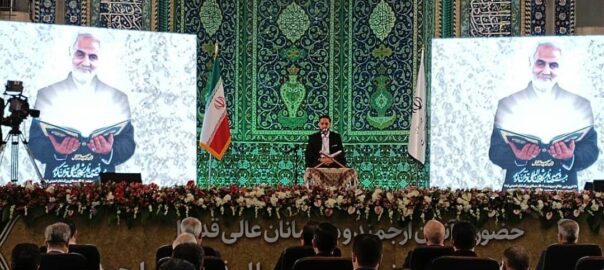
The 29th Tehran International Holy ‎Quran Exhibition kicked off in the Mosalla of Imam Khomeini in Tehran with Mohammad Baqer Qalibaf, the Parliament Speaker, ‎Mohammad Mehdi Esmaili،, Minister of Culture and Islamic Guidance, and Yousef Nouri, Minister of Education, attending the opening ceremony.

Qalibaf delivered a statement addressing the ceremony during which he said the Quran has persuaded the Palestinian youth to stand firm against the Israeli occupation regime and fight them in the heart of the Zionist regime.

He criticized some Arab countries for normalizing their relation with the Israeli regime, saying: “After more than seven decades, young people who have not seen Israeli crime and occupation in early years, defend Palestine.”

He continued “In a situation where all countries are trying to keep the name of Palestine alive, the light of the Quran in the hearts of Palestinian youth has made them hate the Zionist regime.

Quran is a common language among the Muslims, and holding such exhibitions can make Muslims closer to each other and affect their lives for the better, said the official, adding that needed funds and capacities have been prepared for such holy events by the officials.

Tehran International Holy Quran Exhibition is an annual event organized during the holy month of Ramadan ‎to introduce the Quranic achievements of Iran and other countries.‎ In 2020, the exhibition was canceled due to the outbreak of COVID-19, ‎and the previous edition in 2021 was held virtually.‎ /IB/

Rosewater festival held in southeast Iran

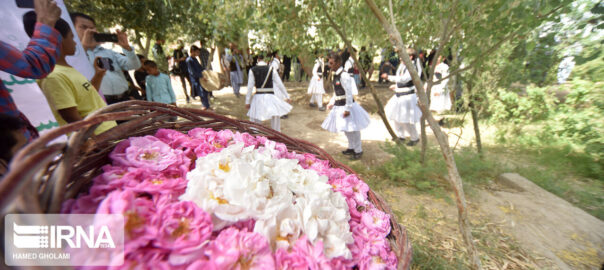
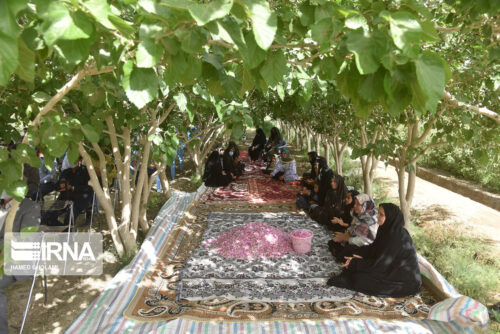
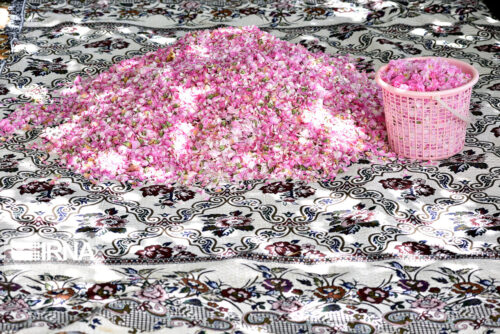
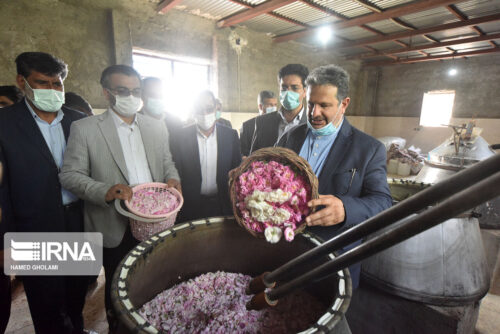
A rosewater distillation festival, commonly known as “Golab-giri”, was held in Nahur village, Zabol county, the southeastern province of Sistan-Balouchestan on Friday, Zabol’s tourism chief has said.

Traditional music performances, recitation of Shahnameh, the epic masterpiece of Persian poet Ferdowsi, and Sistan’s sword dance were parts of the festival, CHTN quoted Sadeq Mirhosseini as saying on Saturday.

The efforts of gardeners in revitalizing rose flower gardens in this region are especially meaningful due to the droughts here, the official added.

Organizing such seasonal festivals could boost tourism and attract more domestic travelers and foreign tourists to the region, he noted.

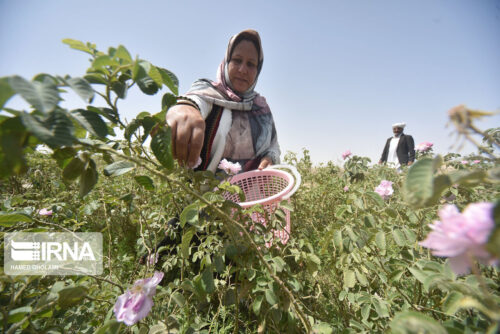
Golab or rosewater is obtained from a particular kind of Rose, known as Mohammadi roses in Iran. Harvesting flowers seems to be the most important part of the process. They should be picked from dawn through morning very carefully. The petals are put into massive copper pots and boiled, and then the extracted water is kept in special bottles. The longest the distillation is, the better will be the quality of the rosewater.

Golab is used nationwide in diverse traditional dishes to flavor them or consumed as a religious perfume as well. The holy month of Ramadan, which started yesterday, is one of the bestselling months for the product.

The distillation of flowers and herbs has a deep history in Iran. Many believe traditionally distilled rosewater is of higher quality than that produced in factories probably due to shorter time intervals between the harvest and distillation practices.

The collective province — Sistan in the north and Baluchestan in the south — accounts for one of the driest regions of Iran with a slight increase in rainfall from east to west, and an obvious rise in humidity in the coastal regions. In ancient times, the region was a crossword of the Indus Valley and the Babylonian civilizations.

The province possesses special significance because of being located in a strategic transit location, especially Chabahar which is the only ocean port in Iran and the best and easiest access route of the middle Asian countries to free waters. The vast province is home to several distinctive archaeological sites and natural attractions, including two UNESCO World Heritage sites, namely Shahr-e-Soukhteh (Burnt City) and Lut desert. /T.T/


Iran beat Kyrgyzstan 8-1 in AFC Futsal Cup qualifiers

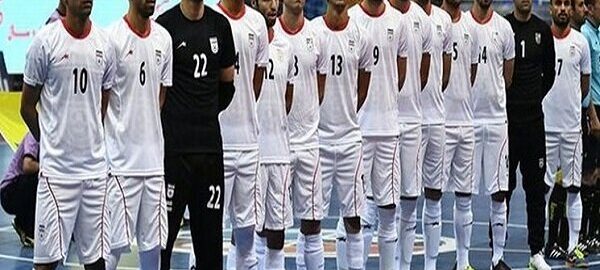
Iran’s national futsal team defeated Kyrgyzstan in the last match of the qualifying round of Asian Cup on Tuesday and advanced to the final round of the competitions.

In the last match of preliminary stage of Asian Futsal Cup, Iran’s national futsal team played against the host team of Kyrgyzstan at 18:30 in Gazprom Hall of the capital Bishkek and could trounce Kyrgyzstan with spectacular victory of 8-1 and advanced to the final stage of these competitions.

Iran’s national futsal team won its first match in the Asian Championship qualifiers against the Maldives 17-0 on Sunday.

In its second match, Iran’s national futsal team gained a decisive victory against the team of Turkmenistan in the Asian Championship qualifiers on Monday. /MNA/

Moscow seeking to expand pharmaceutical coop. with Tehran

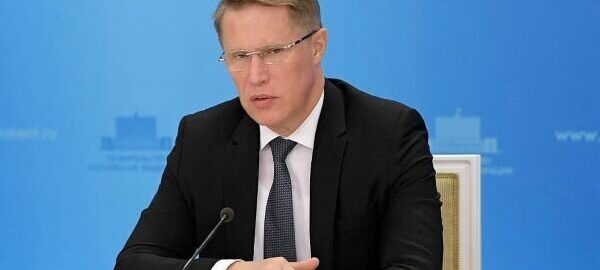
Referring to the advanced achievements of Iran in the production of pharmaceutical products, the Russian Minister of Health said that Moscow intends to expand bilateral relations with Iran in this field.

Speaking in an interview with RIA Novosti news agency, Mikhail Murashko said that Moscow-Tehran bilateral contacts in the field of pharmaceutical cooperation are regular, stressing that such cooperation will continue.

Referring to the advanced achievements of Iran in the production of pharmaceutical products, he said that his country intends to expand bilateral relations with Iran.

Earlier this week, the Iranian ambassador to Moscow Kazem Jalali discussed the development of Iran-Russia cooperation in the field of health, medicine, and medical equipment with Sergei Glagolev, Deputy Minister of Health of the Russian Federation.

Jalali, in this meeting, called for comprehensive development of health cooperation with this country, referring to the good and constructive cooperation between Tehran and Moscow in combating COVID-19. /MNA/

Iran to cooperate with Qatar in holding World Cup

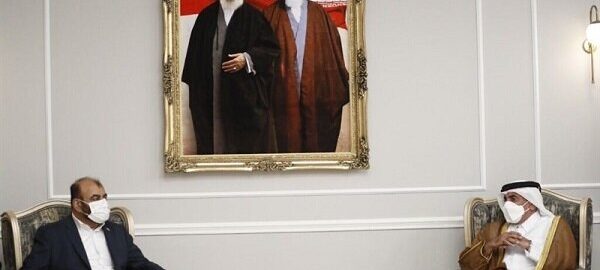
Qatari Minister of Transport and Communications Jassim bin Saif Al Sulaiti has said that Iran will cooperate with his country in holding the 2022 world cup.

Jassim bin Saif Al Sulaiti made the comments during his visit to the Iranian Kish Island in the Persian Gulf where he met with Iranian Minister of Roads and Urban Development Rostam Ghassemi.

Al Sulaiti said that “One of the important issues for cooperation between Iran and Qatar is the issue of the World Cup through which we can remove bilateral obstacles to expanding the overall bilateral relations between the two countries.”

The Qatari minister stressed that Iran is a major player in the region and has an influential role in the region with which Qatar is willing to establish ties in the fields of land, sea and air.

He added the Doha-Tehran bilateral relations in the field of the world cup lays the ground for the development of various relations, including industrial relations between the two countries, which will bring good and blessings to the two countries and will be much broader than the previous ones.

The Iranian Minister of Roads and Urban Development said that Iran is seriously pursuing the implementation of bilateral agreements signed during President Raeisi’s visit to Doha, and added that Iran is fully prepared to receive World Cup fans in various fields and to support and cooperate with Qatar in holding the event./MNA/

Iran to host neighboring countries to solve environmental problems

The Department of Environment (DOE) will host a meeting of officials from neighboring countries in the near future to strengthen and develop regional environmental relations.

Strengthening environmental diplomacy by establishing regional institutions for combating dust, water pollution, and regional and international convergence in countering environmental hazards are the main tasks of the DOE.

President Ebrahim Raisi has ordered the DOE and other relevant agencies to eliminate the dust problem through diplomacy and international forums and in cooperation with neighboring countries.

Accordingly, the DOE organized a meeting of ministers and senior officials of neighboring countries and representatives of related international organizations to discuss the issue.

This meeting will soon be held with the cooperation of the related organization, in an effort to achieve an international document on various environmental problems in the region and their destructive effects on neighboring countries.

SDSs affecting Iran

Dust events originate predominantly in arid or semi-arid environments, which account for some 33 percent of the total world land area. In fact, the northern hemisphere generates some 90 percent of global airborne mineral dust, where it is also deposited.

Most “dust storm” occurrences are in the region beginning on the west coast of North Africa and extending through West Asia into Central Asia. North Africa is the main dust source area, alone responsible for generating more than 50 percent of the total desert dust in the atmosphere and almost five times as much as the second main source, the Arabian Peninsula.

In Iran, internal dust sources estimated at 34.6 million hectares, generate an average amount of 4.22 million tons of dust per year, of which 122.7 kilograms are raised per hectare annually.

Of this area, about 1.4 million hectares are from arid wetlands and about 2.5 to 3 million hectares are in habitats managed by the Department of Environment.

A study conducted in 6 provinces of Khuzestan, Ilam, Kermanshah, Sistan-Baluchestan, South Khorasan, and Hormozgan showed that this phenomenon has incurred a loss of about 590 trillion rials (nearly $2.1 billion) in a 3-year period.

€370 million to combat SDSs

In the past four years, about €370 million has been spent by the National Development Fund to combat SDSs, which had good results, but it seems that the annual credit is declining as conditions improve, Ali Mohammad Tahmasebi, head of the national working group for SDSs mitigation, said in March.

During the [Iranian calendar] year 1399 (March 2019-March 2020), €100 million was earmarked in this regard, but the next year’s budget bill has proposed €20 million for SDS mitigation, which experts believe will even destroy those measures, he explained.

“However, various measures have been taken to fight the phenomenon, including, planting seedlings on about 26,000 hectares of dust centers in the past three years, as well as managing grazing in 2 million hectares of the protected areas and natural resources.”

Conservation agriculture (sustainable agriculture) was conducted on 160,000 hectares of farming lands, in addition to 100,000 hectares of dredging, he concluded./T.T/

Hamedan where nature meets culture

Hamedan never falls short of offering exciting ideas to its visitors. Astonishing archaeological sites, scenic nature, tranquil gardens, vaulted domed bazaars, and more importantly its hospitable people are amongst the highlights of the Iranian city.

Known in classical times as Ecbatana, Hamedan was once one of the world’s greatest cities of ancient times. Pitifully little remains from antiquity, but significant parts of the city center are given over to excavations, and there’s a scattering of historical curiosities.

Sprawling on a high plain, mountainous Hamedan is graciously cool in August but snow prone and freezing from December to March. In summer the air is often hazy, but on a rare, clear spring day there are impressive glimpses of snow-capped Alvand Kuh (3580m), sitting aloof above the ragged neocolonial cupolas of Imam Khomeini Sq.

The archaeological site of Tepe Hegmataneh, which corresponds with the ancient city of Ecbatana, has a circumference of 1.4 kilometers with an area of about 40 hectares. Ecbatana was, in fact, a city on the site of which stands the modern city of Hamedan. The view of distant mountains from the archaeological hill is pleasantly rewarding, especially in the late afternoon, however, what lies below is an ancient Median and Achaemenid city. Small sections have been excavated over the last century, most extensively in the 1990s. There’s a smart museum nearby, as well as two Armenian churches, now part of Hamadan University.

Ecbatana was first excavated in 1913 by the French Assyriologist Charles Fossey. Excavations have been limited due to the modern town covering most of the ancient sites. In 2006, excavations in a limited area of Hagmataneh Hill failed to discover anything older than the Parthian period (247 BC – 224 CE), but this does not rule out older archaeological layers existing elsewhere within the vast site.

For history buffs and culture lovers, Ganjnameh is a can’t-miss destination while in Hamedan. Meaning “Treasure Epistle”, Ganjnameh features sets of cuneiform inscriptions written in three languages of ancient Persian, Elamite, and Babylonian. Dating back to the age of Achaemenid Kings Darius I (521-485 BC) and Xerxes I (485-65 BC), the inscriptions were first studied in detail by the French painter and archaeologist Eugene Flandin, who was accompanied by Pascal Coste.

The right inscription, belonging to Xerxes I, reads: “The Great God [is] Ahuramazda, greatest of all the gods, who created the earth and the sky and the people; who made Xerxes king, and outstanding king as an outstanding ruler among innumerable rulers; I [am] the great king Xerxes, king of kings, king of lands with numerous inhabitants, king of this vast kingdom with far-away territories, son of the Achaemenid monarch Darius.”

An adjacent 9-meter-high waterfall becomes a popular ice-climbing spot in wintertime. In contrast, the Alvand summit can be reached as a day trip in summer. The relaxed ambiance of the site, which is located just a short drive from the city, also opens up an opportunity for hiking on the side of Mount Alvand.

The 12th-century Gonbad-e Alavian (“Alavian Dome”) is a prime example of the Persian-Islamic architecture of the time. Its brick tower remains famous for the whirling floral stucco added in the Ilkhanid Mongol era; this ornamentation is described by British travel writer Robert Byron in his travelogue “The Road to Oxiana”.

In its small cellar, there are tombs of two elders of the Alavian family. The interior area is formed of six rooms with arches. Cube-shaved graves covered with turquoise bricks are in the center. A rectangular plaque with stucco honeycomb patterns and flower motifs is hung above the entrance of the structure. The outer frame of this plaque bears stucco reliefs of Quranic inscriptions in the Kufic calligraphy hand.

Masjed-e Jameh (The Friday Mosque of Hamedan) is one of the oldest in Hamedan. The mosque is rectangular, and formerly had four porches of which three have remained. This structure comprises two areas for nocturnal prayers, a brick dome, and a large and pleasant courtyard with a huge pool in the center. The disused south iwan (entrance) leads into a hall over which there’s an impressively large brick dome. The north iwan is lavished with patterned blue tile work that continues on four of the mosque’s six minarets. Some areas are restricted to men only. The monument is located near Imam Khomeini Sq. and to the west of Ekbatan Avenue. A vaulted passage of a historical bazaar leads into the courtyard of the large Qajar-era mosque.
The iconic Bu-Ali Sina (Avicenna) Mausoleum dominates his namesake square and resembles a concrete crayon pointing to the heavens. It was loosely modeled on Qabus’ 1000-year-old tower in Gonbad-e Kavus, which is a UNESCO World Heritage. There is a single-room museum of Avicenna memorabilia, his tombstone, a small library, and a display of medicinal herbs. Avicenna (born 980, near Bukhara, Iran [now in Uzbekistan]—died 1037, Hamadan, Iran), was a Muslim physician, the most famous and influential of the philosopher-scientists of the medieval Islamic world. He was particularly noted for his contributions in the fields of Aristotelian philosophy and medicine. He composed the Kitab al-Shifa (Book of the Cure), a vast philosophical and scientific encyclopedia, and Al-Qanun fi al-Tibb (The Canon of Medicine), which is among the most famous books in the history of medicine.

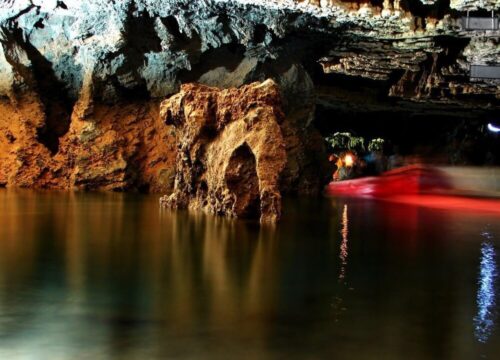
Some 70 km northwest of Hamedan, is situated the entrance to the amazing Ali Sadr Cave, a gigantic water-filled cavern wieldy believed to date from the Jurassic era. The cave embraces a huge matrix of sunless channels, ponds, grottoes, and water passages which are stretched along with imposing rock formations and stalactite-covered tops in a span of several kilometers. Sightseeing there is connected with traversing in well-lit labyrinths of waterways via paddle boats, walking on subterranean islets, as well as observing rock carvings of hunting scenes, artifacts, paintings, and vessels that are associated with prehistorical troglodytes.

Traversing darkened Jurassic caverns by boat and walking across subterranean islands may be an unmatched visit to nature. / T.T/

Iran to become one of exporters of space services in region

Iranian Minister of Communications and Information Technology (ICT) said that Islamic Republic of Iran will be turned into one of main exporters of space-related services in the region in the very near future.

Speaking on the sidelines of his presence in the meeting of Parliament Industries and Mines Commission on Monday, Issa Zare’pour reiterated that Iran will be turned into one of the main exporters of space services both in region and Islamic countries.

The ICT minister called implementation of different phases of the national information network as one of the main programs of his ministry and stated, “With the planning made in this regard, it was decided to implement about 70% of the national information network in the current year in 1401 (started March 21, 2022).”

Elsewhere in his remarks, Zare’pour referred to the planning adopted in ICT in the field of digital economy and noted, “We are trying to add one percentage point to the share of digital economy in the total gross domestic product (GDP) in the current year.”

“We have several satellites at hand for launching into the orbit. Islamic Republic of Iran should soon become one of the exporters of space services to the region and Islamic countries, because we are one of the top 10 countries that can build homegrown satellites. These satellites are also launched with a domestically-produced launcher,” ICT minister emphasized.

MNA/