All posts by islam

Iran among top 5 countries in nanotechnology

Iran is among the 5 eading Countries in Nanotechnology, according to the Iranian Vice Presidency for Science and Technology said in a statement on Sunday.

According to the Iranian Vice Presidency for Science and Technology, Iran’s place among the top 5 countries in the field of nanoscience production is one of the significant achievements of the formation of the nanotechnology and innovation ecosystem in Iran, which has been confirmed in an international study. This international study compares countries and scientific and technological institutes according to a new index entitled “Focus on Emerging Areas of Technology”.

The vice presidency stated that Iran is one of the leading countries not only in terms of the volume of nanoscience production but also in terms of the quality of scientific achievements in that field.

This shows that Iran, not only Tehran has ranked fifth in the world in terms of nanoscience production, but also has the greatest focus, along with four other developed countries, on the most emerging and advanced fields of science and technology.

According to the criterion, China is clear at the top while the other countries of the United States, South Korea, India and Iran are in second to fifth places. In the ranking, Iran is higher than all European countries, as well as Japan while they have spent billions of dollars in the field of nanotechnology.

A report released by the United Nations Economic Commission for Africa in April 2020 highlighted the development of nanotechnology in Iran.

The report identifies Iran as a leading in nano-policy after the United States, China, and the European Union, and cites some of Iran’s nano-development programs, citing Iran’s approach to networking nano-laboratories to provide research infrastructure as a model for African countries. According to the report, Iran, along with developed countries such as the United States, China, the United Kingdom, Russia and the European Union, has the highest number of national standards developed in the field of nanotechnology. /MNA/

Iranian cheetah gives birth to three cubs

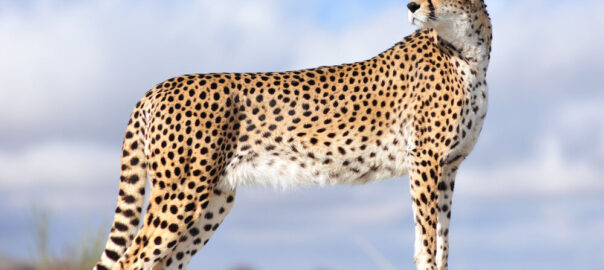
The Iranian cheetah named “Iran” gave birth to three cubs two years after she was released in natural habitat.

Head of Iran’s Department of Environment Ali Salajegheh said on Sunday that a veterinary team had been monitoring “Iran” for a week before they concluded that she had completed her pregnancy period.

The team took the cheetah to give birth by C-section in a field hospital because “Iran” couldn’t bear it naturally due to the specie’s physical condition, according to Salajegheh.

He also said that Iran and her cubs are in good condition and under special care.

This is the first Asiatic cheetah labor in captivity, the official said, expressing hope that the endangered species could be protected by keeping the cubs alive and increasing the population in captivity and then in a semi-captivity setting.

Less than 20 cheetahs have so far been spotted in the main cheetah habitats in Iran, mainly Semnan, Kerman, Yazd, Razavi Khorasan, North Khorasan, and South Khorasan provinces.

The number is a wakeup call for the cheetah species, Salajegheh noted, adding that Iran’s Department of Environment has planned to save the species with the help of three cheetahs Koushki (male) and Delbar and Iran (females).

These cheetahs now live in Turan National Park in Semnan Province, northern Iran. /MNA/

27 Iranian universities among world’s most influential

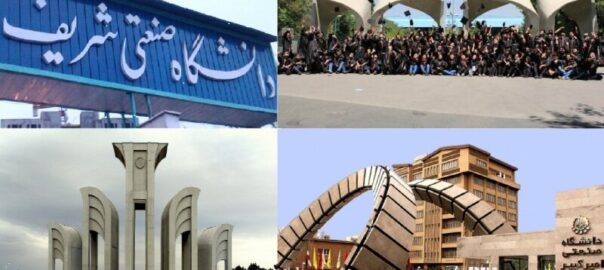
The 2022 edition of the Times Higher Education Impact Rankings, based on universities’ contributions to delivering the UN’s Sustainable Development Goals (SDGs), listed 27 Iranian universities.

There are among 1,524 institutions from 110 countries featured in the Impact Rankings 2022, based on their impacts on the 17 United Nations’ SDGs. Each university was rated on four goals of research, stewardship, outreach, and teaching.

Iran University of Medical Sciences is ranked among the top 200 universities, with a ranking of 82, which is followed by Semnan University of Medical Sciences and Isfahan University of Medical Sciences.

Shahid Beheshti University of Medical Sciences, Kordestan University of Medical Sciences, University of Mohaghegh Ardabili, Ahvaz Jondishapur University of Medical Sciences, University of Kashan, Kashan University of Medical Sciences and Health Services, University of Kordestan, Sharif University of Technology, Tarbiat Modares University, University of Tehran, are the next ten universities with the highest rate of global impact.

The 2021 THE Impact Rankings has also listed 27 Iranian universities among the 1,115 most effective institutions worldwide.

Academic quality

Most recently, the Webometrics Ranking of World Universities 2022 has ranked 694 Iranian institutions among 30,000 top universities across the world.

There are among 1,524 institutions from 110 countries featured in the Impact Rankings 2022, based on their impacts on the 17 United Nations’ SDGs.

Also, 59 Iranian universities have been listed among the top 3,000 institutions in the world in terms of academic quality, according to the 2021-2022 report released by University Ranking by Academic Performance (URAP).

The Quacquarelli Symonds (QS) Graduate Employability Rankings 2022 list has been released, which included three Iranian universities out of a total of 550 institutes worldwide that highlighted graduate employment processes.

Meanwhile, 41 Iranian universities in engineering sciences and 12 universities in computer sciences have made a place among the top 1,188 universities in the world with the announcement of Higher Education World University Rankings 2022 by subject.

It also has introduced 59 Iranian universities among the top institutions in World University Rankings 2022.

The THE Education Young University Rankings 2021 listed 26 Iranian institutions among the world’s best universities that are 50 years old or younger.

Moreover, 34 Iranian universities and institutions were listed among the top 1,000 in the world, according to Shanghai Ranking’s Academic Ranking of World Universities (ARWU) 2021. /T.T/

Iran marks national Shiraz Day

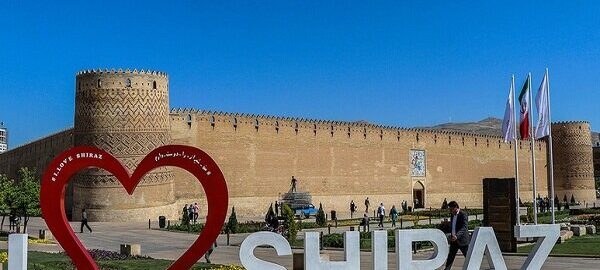
The 15th day of Ordibehesht in the Iranian calendar that falls on May 5 has been designated as Shiraz Day due to its historical and cultural importance as well as its unique beauty.

Shiraz, as the city of prominent Iranian poets Saadi and Hafez, and with a great background in the history and culture of this land, has a special place among Iranians.

It is one of the most historic cities in Iran, a spectacular city with many gardens and historical monuments that hosts thousands of tourists annually.

The beautiful city of Shiraz, well-known as the city of poetry, the city of orange and bergamot, has been added to the list of UNESCO world cities, as the World City of Handicrafts, after evaluations by the World Crafts Council.

On the occasion of national Shiraz Day, every year special programs are held by Shiraz Municipality on this day. Some local musicians hold concerts and sing traditional and folk songs which nowadays are forgotten. Women from rural areas wearing special costumes serve visitors traditional foods and bread they cook.

Location

Shiraz is one of the biggest cities in Iran and the most significant city in the center of Fars province. It is located in the southwest of Iran in the Zagros mountainous area, a highly important protection for the strategic location of Shiraz.

History

There is no definitive record of its existence prior to the late 7th century CE, but few archaeological finds dating from 1933 and beyond indicate that the site or vicinity of Shiraz was likely settled in the pre-Islamic era as early as the 6th century BCE.

The modern city was founded or restored by the Umayyads in 693 and grew prominent under the successive Iranian Saffarid and Buyid dynasties in the 9th and 10th – 11th centuries, respectively. It was the capital of Persia during the Zand dynasty from 1750 until 1800.

Vakil Mosque
Etymology

According to historical documents, the name of ‘Shiraz’ was inspired by the writings on Elamite clay tablets dated 2000 BC. The name Shiraz also appears on clay sealings found at a 2nd-century CE Sassanid ruin, east of the city. By some of the native writers, the name Shiraz has derived from a son of Tahmuras, the third Shāh (King) of the world according to Ferdowsi’s Shāhnāma.

Climate

The average annual temperature in Shiraz is 18°C and the average annual rainfall in this city is 337 mm. Its summer is warm but the autumn and winter are not so cold.

Eram Garden
Culture

Shiraz has a rich cultural and historical background and is known as the city of poets, literature, flower, and garden in Iran.

Shiraz is the city of Love and Literature and the origin of the first samples of Persian gardens is a unique example of the hospitality and warmness of its people

Many famous Iranian poets and philosophers were born in Shiraz and have played an important role in making Shiraz famous, including Saadi, Hafez, and Mulla Sadra.

In the 13th century, the Shiraz became known as the City of Sciences (Dar-ol- Elm) due to the prosperity of science, culture, and art.

Wooden handicrafts like inlay, that may be more famous than all other handicrafts in shiraz, wood carving, marquetry, pottery and ceramic handicrafts like pottery making, mosaic faience, Cuerda Seca, metal works like silver works and chasing, hand-woven products like Kilim and Gabbeh, mat weaving, along with a traditional glass blowing with a long history, felting, stucco, Giveh weaving, and miniature painting, made Shiraz awarded world city of handicrafts in 2020, along with three other cities and villages of Iran.

Shirzai Faloodeh
Traditional Foods

The same as other cities in Iran, Shiraz has its own traditional cuisines.

‘Shirazi salad’ is a delicious and famous salad available throughout Iran, made with cucumbers, tomatoes, onions, and a simple lemon juice and olive oil dressing.

‘Kalam polo’ is a traditional food cooked only in Shiraz. It is made of rice, meatballs, chopped cabbage, and some other vegetables and spices.

‘Ashe Sabzi’ is a kind of soup made of vegetables and meat.

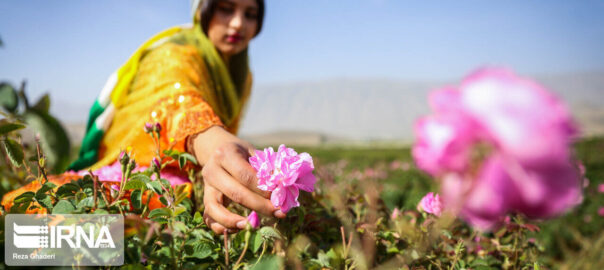
‘Shirazi Faloodeh’ is a traditional Iranian cold dessert similar to a sorbet. It consists of thin vermicelli-sized noodles made from starch in semi-frozen syrup containing sugar and rose water. Faloodeh is often served with lime juice.

Narenjestan or Qavam Garden
Best Time to Visit

The best time to go to Shiraz is in May when the streets are full of orange blossoms perfume. Shiraz’s climate is usually pleasant during this month. Visiting one of the most beautiful cities in Iran will take at least three or four days to explore all the city’s landmarks.

Tourist Attractions

Shiraz is considered as one of the most important tourist centers of Iran with beautiful and picturesque attractions that attract many domestic and foreign tourists every year.

Here is a list of the most popular attractions you will find in the historical city of Shiraz.

Shah Cheragh holy shrine
Shah Cheragh:

Shah Cheragh is a holy monument in Shiraz. It is the tomb of Ahmad and Muhammad the sons of Imam Musa Kazim (the 7th Imam of Shia) and brothers of Imam Reza (the 8th Imam of Shia).

It was built during the reign of Atabakan of Fars in the 12th century.

Narenjestan or Qavam Garden:

It is a traditional and historical house in Shiraz which dates back to the Qajar era. Due to the abundance of sour orange trees, it is called Narenjestan.

Mausoleum of Saadi Shirazi
Tomb of Saadi:

Saadi’s tomb is located in southern Shiraz. His mausoleum, also called Saadieh, is one of Iran’s major tourist attractions. The tomb was first built in the 13th century. However, after being destroyed in the 17th century, it remained untouched until the present-day building was constructed in the 1950s.

Many Persian elements have been used in its architecture. It is also a National Heritage Site.

Every year, a number of literati and scholars from around the world gather at the mausoleum on April 20 to commemorate the great Persian.

Eram Garden:

It is a historic Persian garden that belonged to the leaders of the Qashqai tribe before being confiscated by the central government. The garden, and the building within it, is located at the northern shore of the Khoshk River in the Fars province.

They are open to the public as a historic landscape garden. They are World Heritage Site and protected by Iran’s Cultural Heritage Organization.

Mausoleum of Hafez Shirazi
Tomb of Hafez:

Mausoleum of Hafez, commonly known as Hafezieh, are two memorial structures erected on the northern edge of Shiraz, Iran, in memory of the celebrated Persian poet Hafez.

The tomb, its gardens, and the surrounding memorials among other great figures are a focus of tourism in Shiraz.

Arg of Karim Khan:

The Arg of Karim Khan or Karim Khan Citadel is a citadel located in downtown Shiraz. It was built as part of a complex during the Zand dynasty. It is named after Karim Khan and served as his living quarters. It is rectangular in shape and resembles a medieval fortress.

Nasir ol Molk Mosque:

It is one of the most beautiful and photographed pieces of architecture in Shiraz which was built during the Qajar dynasty at the end of the 19th century. It is one of the most unique and different mosques in Iran. The mosque is famous for its colored glasses and its tiles are unique in their kind.

Mostly known as the “Pink Mosque” because its tiles are beautifully decorated with pre-eminently pinkish rose color, it is also called the “Mosque of colors,” the “Rainbow Mosque” or the “Kaleidoscope Mosque”.
Afif-Abad Garden:

It is a museum complex that was constructed in 1863. It contains a former royal mansion, a historical weapons museum, and a Persian garden, all open to the public.

Vakil Mosque:

One of the most important artistic and historical buildings, which have remained from the Zand period, is Vakil Mosque. It was used as a place for Friday prayer a few years ago. The tile workes in this building are one of the best that shows the art of Iranian tile workers and the painters in the 12th century A.H.
Vakil Bazaar:

It is the main bazaar of Shiraz located in the historic center of the city. This bazaar had been built with the order of Karim Khan Zand (Iranian King) at about 200 years ago.

It has beautiful courtyards, caravanserais, bathhouses, and old shops which are deemed among the best places in Shiraz to buy all kinds of Persian rugs, spices, copper handicrafts, and antiques.

Vakil Bath:

It is the most famous Bath in Shiraz which is one of the Karim Khan Zand monuments built by his order in the Shah Square neighborhood, next to the Vakil Mosque.

This large bathroom has the most advanced principles of Zand’s architecture. One of the interesting parts of this bathroom is a special place named “Shahneshin” that was special to Kings.

Vakil Bath has been repurposed as a restaurant and later as a museum of ethnography to identify the culture and traditions of people in Shiraz.

Qur’an Gate

It is a historic gate located at the northeastern entrance of the city, on the way to Marvdasht and Isfahan.

By the time of the Zand dynasty, it had sustained a lot of damage, so it was restored and a small room on top was added, in which were kept hand-written Qur’ans by Sultan Ibrahim Bin Shahrukh Gurekani.

Travelers passing underneath the gates were believed to receive the blessing of the Holy Book as they began their trip or journey from Shiraz. /MNA/


Elderly, vulnerable people to get fourth dose of Covid vaccine

People aged 70 years and above and people with underlying diseases or immunodeficiency will receive the fourth dose of the coronavirus vaccine, according to the National Headquarters for Coronavirus Control.

In the last meeting, the National Headquarters for Coronavirus Control approved that in order to strengthen the safety level of at-risk groups, all people over 70 years of age and people with underlying diseases or immunodeficiency are asked to inject the vaccine in addition to the previous doses, Abbas Shiravjen, the Headquarters spokesman twitted on Saturday.

So far, 64,321,868 people have received the first dose, 57,535,805 people the second dose, and 27,14,796 people the third dose of the vaccine. So far, 148,872,469 doses have been injected across the country.

Iran is the sixth country in the world and the first country in West Asia to gain the ability to produce the Coronavirus vaccine. On April 5, Hamid Souri, an epidemiologist warned the seventh wave of Covid-19 may hit the country in mid-May.

Given the genetic changes that have taken place in BA.2 omicron, a more contagious variant; vulnerable people in the community are still at risk, and there is no evidence that the epidemic is disappearing, he further noted.

An epidemic is eliminated when the incidence of the virus in the community is limited and enters the eradication phase, he also added.

no cities in high-risk red zones

According to the latest announcement, no cities are at high risk of Covid infection.

The highest category on Iran’s coronavirus risk scale is the red zone, which reaches lower risk areas by orange, yellow, and blue zones.

Some 33 towns are in the orange zones, 321 in the yellow category, 94 cities are in blue zones, and no cities are red.

Iran is the sixth country in the world and the first country in West Asia to gain the ability to produce the Coronavirus vaccine.

Considering that five coronavirus vaccines have so far been produced domestically, Mohammad Reza Shanehsaz, the former head of the Food and Drug Administration, said in June 2021 that Iran is one of the few countries that has all vaccine production platforms.

A total of 21 knowledge-based companies are operating to produce 50 million doses of vaccine monthly and 600 million doses annually, IRNA quoted Bahram Daraei as saying on March 9.

Health Minister Bahram Einollahi has said the country is currently exporting domestically-made vaccines for coronavirus to ten African countries. /T.T/

Iranian scientist receives intl. award for water management

Iranian scientist Mohammad Karamouz has been recognized with the 2022 Julian Hinds Award for his original outstanding contribution to environmental science, mainly water resources development and management.

The American Society of Civil Engineers (ASCE) has honored Karamouz, Ph.D., P.E., D.WRE, F.ASCE, with the 2022 Julian Hinds Award for original outstanding contribution in hydrology, hydraulics, irrigation and drainage, planning and management, hydroelectric power and reservoir operation, flood and drought, and climate change over a 36-year period of teaching, research, consulting, and leadership.

Karamouz has had a long and illustrious career in water resources engineering. He was the principal investigator of a $3.8 million international project in hydraulics (flood plain, reservoirs/dams, hydropower), hydrological, and water resources planning in arid and semi-arid regions of the Middle East, including Iran.

He worked at New York University (NYU) as a research professor and the director of an environmental engineering program from 2009 to 2014, initiating a major university collaboration effort after Superstorm Sandy among NYU, Stony Brook, Cornell, Columbia, and City College that became The New York State Resilience Institute for Storms and Emergencies (NYS RISE).

Karamouz has contributed to the water field in three very significant areas of education and capacity building, research, and practical applications. He is one of those rare individuals who have bridged the gap between academics and practice in arid and semi-arid regions of the U.S. and the Middle East.

Karamouz served as the key figure in founding and maintaining the first Ph.D. program in water resources management in Iran.

The Julian Hinds Award is given to recognize the author or authors of that paper judged to make the most meritorious contribution to the field of water resources development. The award may also be made to an individual for notable performance, long years of distinguished service, or specific actions that advance engineering in the field of planning, development, and management of water resources./T.T/

Iran-China joint scientific program enters new phase

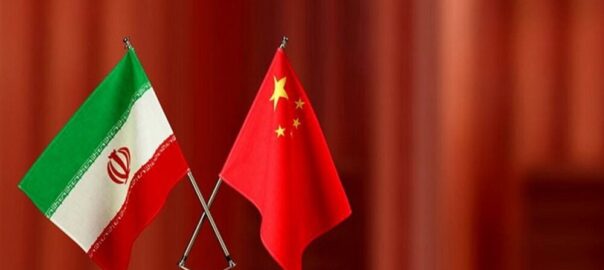
The Silk Road Science Fund (SRSF), an organization operated jointly by the Iranian Vice Presidency for Science and Technology and the Chinese Academy of Sciences, has launched the seventh edition of a program to provide support for joint scientific activities by Iranian and Chinese researchers.

The SRSF has issued a call for joint projects from the Iranian and Chinese researchers and technical experts that will receive support from the Iran National Science Foundation (INSF) -a department of the Iranian Vice Presidency for Science and Technology- and the Chinese Academy of Sciences (CAS).

The program will sponsor joint research and development projects and hold joint workshops between the two countries’ researchers.

A maximum of six joint research projects will receive approval to benefit from the fund’s support in the fields of water science and advanced materials within the framework of research and development projects.

The call for projects will be open until June 19, as the Iranian researchers can submit their joint proposals in the Silk Road Science Fund’s online system.

The final results on the projects qualified to receive support from the fund will be announced in early October, and the joint research projects will officially kick off in January 2023.

Science diplomacy at highest level

Data from the Scopus International Citation Database show that Iran’s scientific diplomacy has reached more than 34 percent since the beginning of 2021, the highest level in the past 20 years.

Science diplomacy is the use of scientific collaborations among nations to address common problems and build constructive international partnerships. It is a form of new diplomacy and has become an umbrella term to describe a number of formal or informal technical, research-based, academic, or engineering exchanges, within the general field of international relations.

Comparing the rate of 2020 with 2019, Iran with a growth of 12.5 percent and with a slight difference from India has gained second place in the world in terms of the growth of world science diplomacy, Mohammad Javad Dehghani, head of the Islamic World Science Citation Center (ISC), said.

In 2011, the share of Iranian articles with international participation was about 16.5 percent, which increased to 19.7 percent in 2016 and gradually in the following years, so that in 2020 and 2021, reached 30.5 and 34.2 percent, respectively, he added.

The share of Iranian articles with international participation has had significant growth of 209 percent during an eight-year period (2013-2020), becoming the Islamic world’s leading country in science diplomacy, according to the Scopus International Citation Database./T.T/

Resistance leaders hail Palestinians’ struggle

On Tuesday, the Resistance leaders, Ayatollah Seyyed Ali Khamenei and Sayyid Hassan Nasrallah, spoke out against the barbarity of the Israeli regime and supported the resistance of the Palestinian fighters, trying to attract the attention of the global community to the Palestinian question.

In his meeting with the university students late on Tuesday, Leader of the Islamic Revolution Ayatollah Khamenei touched on various issues going on in the world, but he dedicated the last part of his speech to international Quds Day, which falls on April 29 this year.

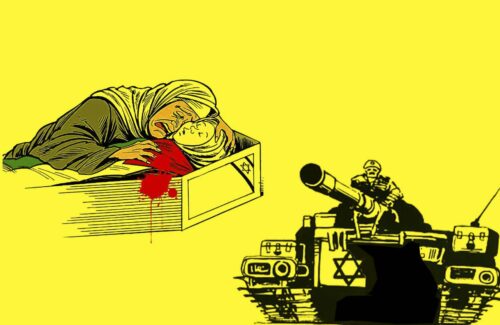
Referring to the forthcoming Quds Day, the Leader of the Islamic Revolution considered this year’s Quds Day different from previous years and said, “This year, Quds Day is different from other years. Palestinians have made great sacrifices both last Ramadan and this Ramadan. The Zionist regime is committing the worst crimes. They commit every crime they want, and the U.S. and Europe support it.”

Ayatollah Khamenei called the Palestinian people powerful while oppressed, and praised the struggle of the Palestinian youth who do not allow the Palestinian cause to be forgotten.

He added, “Quds Day is a good opportunity to express sympathy and solidarity with the oppressed Palestinian people and give them a morale-boosting.”

He also strongly criticized the silence of some Islamic countries on the issue of Palestine, noting, “Unfortunately, Islamic states have behaved very badly (in this regard) and are not even willing to talk about the issue of Palestine. Some of them think that the way to help Palestine is to establish relations with the Zionists, while this is a grave mistake.”

Referring to the great mistake made by the Egyptian government more than 40 years ago that established relations with the Zionists, the Leader of the Islamic Revolution asked, “Does the Islamic world want to repeat the same mistake of Anwar Sadat?”

He then critiqued those countries that copied the same strategy of Sadat, saying, “Normalization with the Zionist regime will harm the copycats and the Palestinians.”

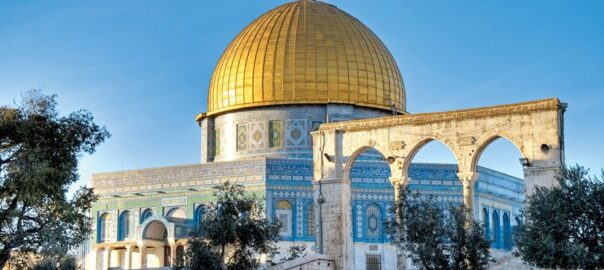
Emphasizing that establishing relations with the Zionist regime will not be of any use, Ayatollah Khamenei said, “We hope that with God’s grace, the conclusion of resistance in Palestine will be a happy ending, and that the Palestinians regain domination of their land and Al-Aqsa Mosque soon.”

On the same day, Hezbollah’s Secretary-General Sayyid Hassan Nasrallah gave a key speech about the resilience of the Palestinian fighters.

Nasrallah said, “The most important reason for what we are exposed to in Lebanon, as well as to what countries and resistance movements in our region are subjected to, is everyone who belongs to this movement (of resistance), to this axis, to this idea, to this origin, to this goal, faced siege and sanctions and restrictions. We are subjected to these sanctions at the international, regional and domestic levels, and the sanctions’ main goal is to abandon Quds, Palestine, the logic of resistance, and the culture of resistance.”

Speaking at the “Al-Quds Forum 2022 – the Equation,” Nasrallah said that war in Quds means a “regional war.”

“Today, we’re standing on the verge of great and final victory,” he said, declaring that the axis of resistance is prepared to make whatever sacrifices that are necessary to realize the prospect.

“Quds is our model and goal,” he said and urged that the axis of resistance be rather called “the al-Quds axis” due to the centrality of the holy city to unity among the axis’ members.

Nasrallah, meanwhile, warned that the global arrogance’s strategy on the issue of Palestine rested on “killing time” so the Palestinian and other Muslim nations end up forgetting and despairing of the Palestinian cause.

“However, what is actually taking place is contrary to their desire,” Nasrallah said.

He then concluded his speech by saying that the resistance movement will continue its path regardless of how great the sacrifices, threats, difficulties and dangers will be.

“God willing, we will continue together hand in hand and shoulder to shoulder. All the resistance factions, all the resistance movements, all the peoples of the resistance, and all the countries of the resistance will break all restrictions and nullify all conspiracies. All the daggers that try to stab in our backs and in our chests will fall. Our real battle that will create complete freedom for the holy Quds, and Quds will remain the title, the goal, and the foundation of the axis,” he stressed.

Similarly, Ismail Haniyeh, chairman of the Hamas Political Bureau stated that resistance was the Palestinian nation’s preferred option, citing effective Palestinian operations across the occupied West Bank since the start of Ramadan.

As a result, he argued, issues like the occupation and the right of Palestinians to return to their homeland “cannot be handled at the negotiating table.”

Realizing this, the Zionist regime began restoring relations with several regional powers in order to “legitimize its existence and its objectives for the destruction of the Palestinian cause,” Haniyeh remarked.

According to Haniyeh, Tel Aviv was also attempting to exploit the situation in Ukraine as a smokescreen for its intentions for al-Quds and the al-Aqsa Mosque.

“However, all of the regime’s efforts to manipulate the Palestinian nation have failed,” he said, adding that “our nation does not tolerate distortion of the al-Aqsa Mosque’s identity and the historical realities that apply to it.”

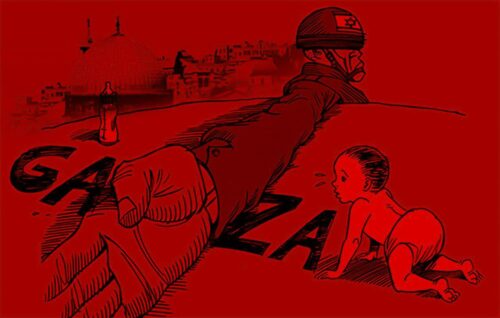
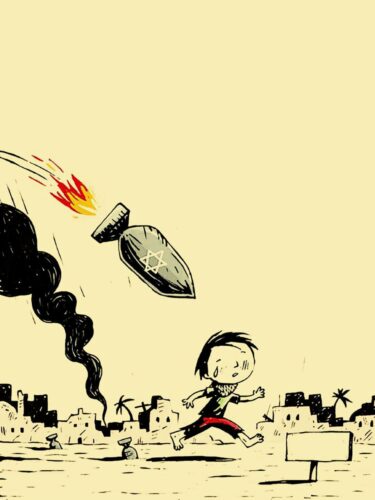
The Palestinian conflict has been ongoing on since World War II, but the global community has chosen to be silent despite flagrant violations of Palestinians’ basic rights. But now the world is turning its attention to Palestine.

In a significant development, UN human rights experts called on the international community to take immediate and effective steps to protect and sustain the six Palestinian civil society groups that were designated as “terrorist organizations” by the Israeli regime in October 2021.

In a press release by the Office of the High Commissioner of the United Nations Human Right body, the UN experts dubbed the Israelis’ move to designate civil society groups as terrorist organizations as a “disturbing designation.”

“Israel’s disturbing designation of these organizations as ‘terrorist organizations’ has not been accompanied by any public concrete and credible evidence,” said the human rights experts. “We note that the information presented by Israel has also failed to convince a number of governments and international organizations that have traditionally provided funding for the indispensable work of these six organizations.”
Recently, a four-year study by Amnesty International partly revealed the true color of the Israeli regime and called on the international organizations to bring the Israeli officials to justice. But the million-dollar question is, will the world listen?

Amnesty International’s rigorous study and legal analysis, conducted in cooperation with other experts, shows that Israel pushes ahead with its malicious behaviors toward Palestinians through enacting laws and practices that ensure continued harsh discrimination.

Specific unlawful acts performed under a totalitarian ideology and supremacy with the goal of preserving it constitute the crime against humanity of apartheid, according to international criminal law. The Apartheid Convention and the Rome Statute define these crimes as unlawful killing, torture, forcible transfer, and denial of basic rights and freedoms.

Massive seizure of Palestinian land and property, unlawful killings, forcible transfer, severe movement restrictions, and the denial of nationality and citizenship to Palestinians are all components of a system that amounts to apartheid under international law, according to the comprehensive report titled “Israel’s Apartheid against Palestinians: Cruel System of Domination and Crime against Humanity.” This system is upheld by transgressions that Amnesty International determined to be apartheid as a crime against humanity, as defined by the Rome Statute and the Apartheid Convention.

Amnesty International has urged the International Criminal Court (ICC) to include apartheid as a crime in its ongoing investigation in the OPT, and all governments to use universal jurisdiction to prosecute perpetrators of apartheid crimes.

For committing the crime of apartheid against Palestinians, Israeli authorities must be held accountable.

In this regard, as Iran’s leading international daily, the Tehran Times will host its first online event, dubbed “Remember Palestine.” The event will focus on various aspects of the Palestinian cause as the Islamic world’s number one issue.

The event is aimed to commemorate the chivalrous Palestinian fighters, as well as the free-spirited people around the world who take the issue of injustice done to the Palestinians seriously. It also explores various aspects of Intifadas, as well as the issue of human rights violations in Palestine.

It will also promote awareness on the plight of Palestinians whose land has been under Israeli occupation immediately after World War II. “Remember Palestine” will be held on Friday, April 29, which coincides with international Quds Day, and will end on May 15, known as Nakba Day (Day of Catastrophe).

To register and know more about event categories and submission topics, visit event.tehrantimes.com. /T.T/