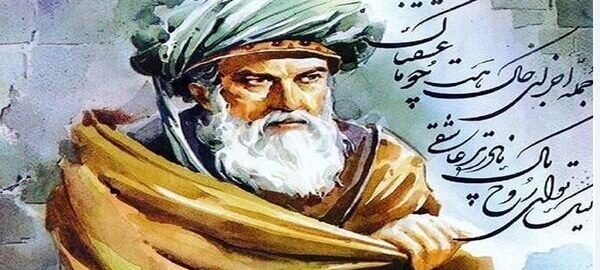
All posts by islam

Iran marks National Day of Rumi, greatest mystical poet

Mehr 8 in the Iranian calendar corresponding with September 30 is considered a significant cultural event for Iranians to commemorate the prominent Iranian poet Jalal ad-Din Muhammad Rumi who is known to everyone.

The land of Iran is the cradle of countless famous people and poets; one of the most famous Iranian poets is Jalāl ad-Dīn Muhammad Balkhī, who is known as Mawlānā, Mawlawī, and more popularly simply as Rumi.

He is widely known by the sobriquet Mawlānā/Molānā in Iran and popularly known as Mevlânâ in Turkey. Mawlānā is a term of Arabic origin, meaning “our master”, and is also frequently used for him.
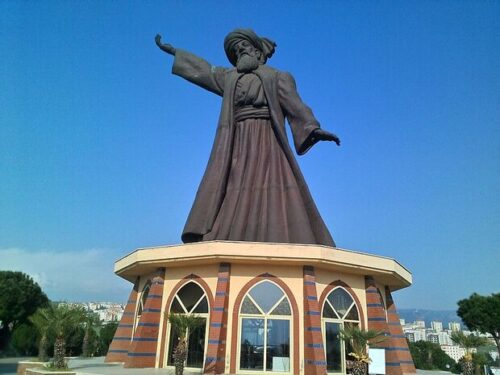

23 meters high statue of Rumi in Buca, İzmir, Turkey

Rumi was born to native Persian-speaking parents on the Eastern shores of the then Persian Empire on September 30, 1207, in the city of Balkh which is now part of Afghanistan, and finally settled in the town of Konya, in what is now Turkey.

Rumi’s life story is full of intrigue and high drama mixed with intense creative outbursts. Rumi was a charming, wealthy nobleman, a genius theologian, a law professor and a brilliant but sober scholar, who in his late thirties met a wandering and holy man by the name of Shams on November 30, 1244, in the streets of Konya.
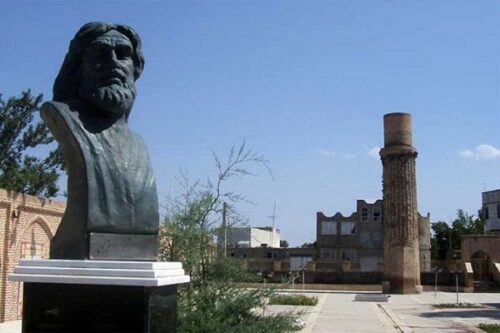

Tomb of Shams Tabrizi, Khoy, West Azerbaijan province, Iran

For months the two mystics lived closely together, and Rumi neglected his disciples and family so that his scandalized entourage forced Shams to leave the town in February 1246. Rumi was heartbroken, and his eldest son, Sulṭan Walad, eventually brought Shams back from Syria. The family, however, could not tolerate the close relation of Rumi with Shams, and one night in 1247 Shams disappeared forever. In the 20th century, it was established that Shams was indeed murdered, not without the knowledge of Rumi’s sons, who hurriedly buried him close to a well that is still extant in Konya.

After Shams was extinguished, Rumi fell into a deep state of grief and gradually out of that pain outpoured nearly 70,000 verses of poetry almost all in Persian that are collected in two epic books. These thousands of poems, which include about 2,000 in quatrains, are collected in two epic books. The first collection is devoted to his mentor Shams named, Divan-e Shams-e Tabrizi. It took him 15 years to complete this collection.
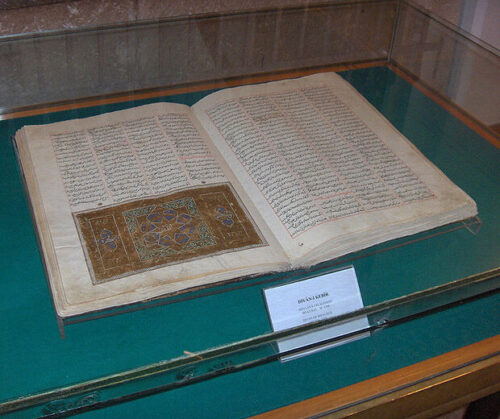

Manuscript of Divan-e Shams-e Tabrizi at Mevlana Museum, Konya, Turkey

After the first collection, he devotes the last ten years of his life to creating Masnavi Ma’navi. A work filled with anecdotes, life lessons, moral stories, stories from all three Abrahamic religions, and popular topics of the day.

Rumi and Shams stayed together for a short time, about 2 years in total, but the impact of their meeting left an everlasting impression on Rumi and his work. In Rumi’s own words, after meeting Shams he was transformed from a bookish, sober scholar to an impassioned seeker of universal truth and love. Rumi was totally his own man. He was an utterly brilliant artist and a true genius who after the death of his mentor Shams became unstoppable.

Due to the fact that Rumi recited poetry for about 25 years and 70,000 verses, he has covered every morsel of emotion, thought, idea and topic. Therefore, he can’t be pinned on one statement. His work has an all-embracing universality. A call from an independent soul yearning for true freedom from dogma and hypocrisy.
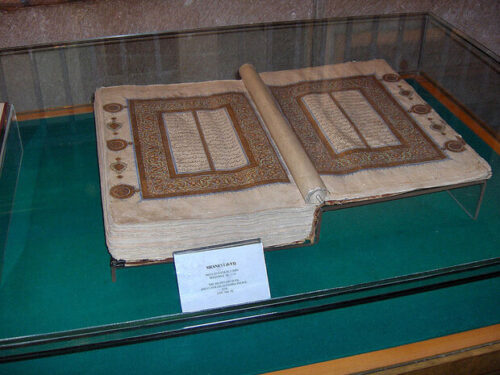

Manuscript of Masnavi Ma’navi at Mevlana Museum, Konya, Turkey

Rumi also had three prose works. The prose works are divided into The Discourses, The Letters, and the Seven Sermons.

Fihi Ma Fihi provides a record of seventy-one talks and lectures given by Rumi on various occasions to his disciples. It was compiled from the notes of his various disciples, so Rumi did not author the work directly.

Majāles-e Sab’a contains seven Persian sermons (as the name implies) or lectures given in seven different assemblies. The sermons themselves give a commentary on the deeper meaning of the Qur’an and Hadith. The sermons also include quotations from poems of Sana’i, ‘Attar, and other poets, including Rumi himself.

Makatib is a collection of letters written in Persian by Rumi to his disciples, family members, and men of state and influence. The letters testify that Rumi kept very busy helping family members and administering a community of disciples that had grown up around them.
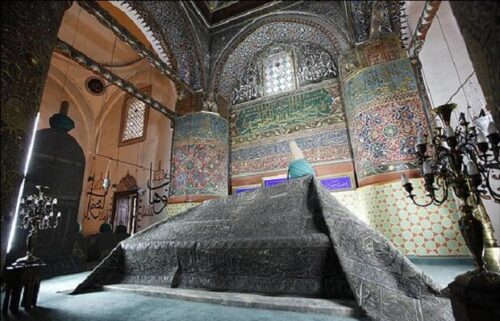
Tomb of Rumi, Konya, Turkey
Rumi believed passionately in the use of music, poetry and dance as a path to reaching God. For Rumi, music helped devotees to focus their whole being on the divine and to do this so intensely that the soul was both destroyed and resurrected. Rumi encouraged Sama, listening to music and turning or doing the sacred dance. In the Mevlevi tradition, Sama represents a mystical journey of spiritual ascent through mind and love to the Perfect One. In this journey, the seeker symbolically turns towards the truth, grows through love, abandons the ego, finds the truth and arrives at the Perfect. The seeker then returns from this spiritual journey, with greater maturity, to love and to be of service to the whole of creation without discrimination with regard to beliefs, races, classes and nations.

He died on 17 December 1273 in Konya. His death was mourned by the diverse community of Konya. Rumi’s body was interred beside that of his father, and a splendid shrine, the Green Tomb was erected over his place of burial. Upon his death, his followers and his son Sultan Walad founded the Mevlevi Order, also known as the Order of the Whirling Dervishes, famous for the Sufi dance known as the Sama ceremony.

Georgian Queen Gürcü Hatun was a close friend of Rumi. She was the one who sponsored the construction of his tomb in Konya. The 13th century Mevlâna Mausoleum, with its mosque, schools and living quarters for dervishes, remains a destination of pilgrimage to this day.

Rumi is also timeless and placeless. The world has embraced Rumi not because of where he was born or where he grew up or what religion he belonged to but because of what he represents.

By the end of the 20th century, his popularity had become a global phenomenon, with his poetry achieving wide circulation in Western Europe and the United States.

December 17 is the day of Rumi’s death. In Konya, a special commemoration ceremony for Rumi is held every year from December 7th to 17th.

In a ceremony known as Sama, dancers wear long white robes with full skirts. On the dancers’ heads sit tall conical felt hats. The dancers, who fast for many hours before the ceremony, start to turn in rhythmic patterns, using the left foot to propel their bodies around the right foot with their eyes open, but unfocused. This is sought through abandoning one’s nafs, ego, or personal desires, by listening to music, focusing on God, and spinning one’s body in repetitive circles, which has been seen as a symbolic imitation of planets in the Solar System orbiting the sun.

In Iran, the 7th day of Mehr and the 8th day of Mehr – the eighth month on the Iranian calendar, which fell on September 28 and 29 this year – have been designated as the National Day of Shams Tabrizi and National Day of Rumi respectively to commemorate these two great poets and figures of Iran and the world.

Here are some lines from his poem ‘Listen to the reed’, translated by Reynold A. Nicholson, 1926:

“Listen to the reed how it tells a tale,
complaining of separations.
Saying, “Ever since I was parted from the reed-bed,
my lament hath caused man and woman to moan.
I want a bosom torn by severance,
that I may unfold (to such a one) the pain of love-desire.
Everyone who is left far from his source
wishes back to the time when he was united with it.
In every company, I uttered my wailful notes,
I consorted with the unhappy and with them that rejoice.
Everyone became my friend from his own opinion;
none sought out my secrets from within me.
My secret is not far from my plaint,
but ear and eye lack the light (whereby it should be apprehended).
The body is not veiled from soul, nor soul from the body,
yet none is permitted to see the soul.
This noise of the reed is fire, it is not wind:
whoso hath not this fire, may he be nought!
‘Tis the fire of Love that is in the reed,
’tis the fervour of Love that is in the wine.”

MNA/
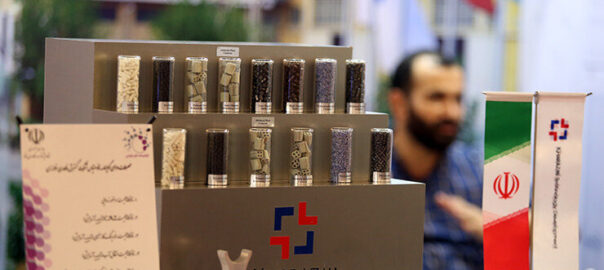
Iranian nanotechnology products expand markets in 6 countries

The Vice presidency for Science and Technology has supported Iranian companies to expand their markets for nanotechnology products in six countries.

The overseas representatives of the Vice presidency office in different countries are marketing and networking the sale of Iran’s nanotechnology products.

Currently, the products are being exported to six countries of Italy, Turkey, Thailand, the Philippines, Armenia, and Syria.

Their efforts in Italy have led to negotiations to register the activities of one of the knowledge-based companies and to export semi-industrial and industrial electrospinning machines.

Also, negotiating for the export of diagnostic kits to Syria is one of these achievements.

In Thailand, the cooperation agreement with 2 Iranian technology companies for the export of synacorcumin products has been extended.

A sum of 45 billion rials (around $160,000) has been paid to support 256 nanotechnology companies over the past Iranian calendar year (March 2021-March 2022).

Some 1,498 support services worth 45 billion rials (around $160,000) have been provided to 256 companies holding a nanoscale certificate.

————Nanotechnology improvement

One of the industries that have experienced good growth in Iran in recent years, proving the country’s scientific development, is the nanotechnology industry, a subject area that has brought Iran to the world’s fourth place.

Currently, nanotech products are produced and marketed in more than 15 industrial fields based on domestic technologies and are being exported to 49 countries from five continents.

Over the past year (ended March 20), the total sale of Iranian nanoproducts has been equal to 115 trillion rials (nearly $425 million).

The expansion of nanotechnology export programs in recent years and the establishment of bases for exporting nanotechnology products to China, India, Indonesia, Syria, Turkey, and Iraq have provided the opportunity for the entry of Iranian nanotechnology goods, equipment, and services into global markets.

Some 42 percent of the products in this field are related to construction, more than 17 percent to the field of oil, gas, and petrochemicals, 13 percent to the field of automobiles, and over 10 percent to the field of optoelectronics.

Some 270 companies are active in the nanotechnology field and it is predicted that their revenue will reach up to 80 trillion rials (nearly $310 million), Vice President for Science and Technology, Sourena Sattari, announced.

Iran’s ranking in nanotechnology articles citation in 2019 has significantly improved compared to 2018, as it moved 26 levels higher, according to StatNano’s statistics collected from the WoS database.

Based on a report Nanotechnology Publications report, Iran ranked 38 worldwide for the average number of times the nano-articles have been cited in the Journal Citation Reports in 2019, while in 2018, it was placed 64.

It also ranked 4th for the highest number of nano-article publications. /T.T/

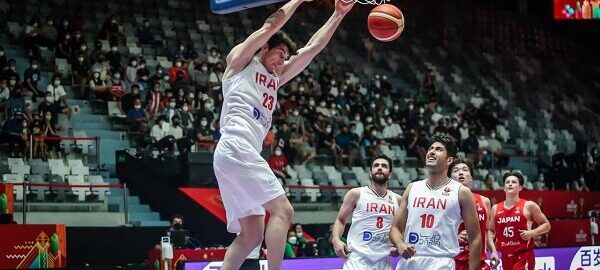
Iran basketball ranks 21st in new world rankings

The national Iranian men’s basketball team has ranked in the 21st place in the world, according to the latest FIBA rankings.

After the 2022 Asian Cup and FIBA EuroBasket 2022, the Fédération Internationale de Basket-ball (FIBA) announced its latest rankings of the national teams of different countries in the world.

The national Iranian men’s basketball team has ranked 21st in the latest edition of Fédération Internationale de Basket-ball (FIBA) rankings. Iran ranked 25th in the previous rankings.

The national teams of USA, Spain, Australia, Argentina, France, Serbia, Slovenia, Lithuania, Greece and Italy are in the first to tenth places in the new FIBA ranking.

According to the latest rankings, Bahrain moved 18 spots up, and the Qatar national team is in 89th place after moving up 14 spots. /MNA/

Iran ease past Indonesia in AFC Futsal Asian Cup opener

Defending champions Iran started the 2022 AFC Futsal Asian Cup with a 5-0 win over Indonesia in Group C on Wednesday.

Saeid Ahmad Abbasi opened the scoring for Iran in the first half and Mahdi Asadshir and Moslem Oladghobad also were on target before the interval.

Ahmad Abbasi scored his second goal in the second half and Hossein Tayebi made the scoreboard 5-0.

Iran will meet Chinese Taipei and Lebanon on Sept. 30 and Oct. 2, respectively.

The competition is being held in Kuwait from Sept. 27 to Oct. 8 / T.T/

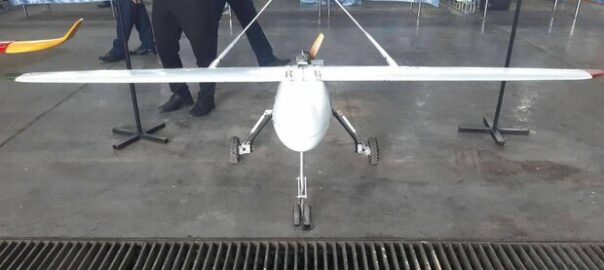
Iran Air Force unveils ‘Shahab’ training drone

The Islamic Republic of Iran Air Force unveiled the ‘Shahab’ training drone for the first time. On the occasion of Sacred Defense Week, the “Shahab” training drone that can be used for surveillance purposes, was unveiled at the Eqtedar (Strength) exhibition in which all types of manned and unmanned aircraft of the Islamic Republic of Iran Air Force are showcased.

The surveillance drone can fly at the height of 11 thousand feet for 8 hours and its flight radius is 10 km which can be increased to 200 km for reconnaissance missions.

The unmanned aerial vehicle also has an inverted V-shaped tail in order to maintain its balance during takeoff, flight and landing.

Shahab drone is an upgraded and advanced version of its predecessor Safir (Envoy) and is significantly lighter. /MNA/

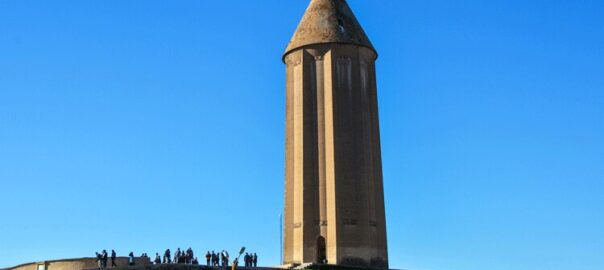
$200,000 allocated to restore Gonbad-e Qabus

A budget of 60 billion rials ($200,000) has been allocated to restore UNESCO-registered Gonbad-e Qabus, an official with the tourism ministry has said.

In order to facilitate tourists’ visits, the budget will be spent on restoring and organizing the UNESCO-designated structure, CHTN quoted Nader Zeinali as saying on Saturday.

Located in Iran’s Golestan province, the brick tower is of high architectural importance as an exemplar and innovative design of early-Islamic-era architecture.

The UNESCO comments that it bears testimony to the cultural exchange between Central Asian nomads and the ancient civilization of Iran.

UNESCO also credits Gonbad-e Qabus as “an outstanding and technologically innovative example of Islamic architecture that influenced sacral building in Iran, Anatolia, and Central Asia.”

The long-lasting structure capped by an eye-catching conical roof boasts intricate geometric principles and patterns which embellish parts of its load-bearing brickwork.

Two encircling inscriptions in Kufic calligraphy date the tower to 1006-7 CE while commemorating Qabus Ibn Voshmgir, Ziyarid ruler and literati (reigned 978–1012).

Narratives say the tower has influenced various subsequent designers of tomb towers and other cylindrical commemorative structures both in the region and beyond. /T.T/


Shiraz to host Pars intl. tourism exhibit

The southern city of Shiraz in Fars province will be hosting the 12th edition of the Pars international tourism exhibition in mid-December, the provincial tourism chief has said.

Handicraft exhibitors and tourism marketers from various parts of Iran as well as some other countries are planning to attend the four-day event, which will be inaugurated on December 14, CHTN quoted Seyyed Moayyed Mohsen-Nejad as saying on Monday.

The exhibit will turn the spotlight on gastronomy tourism, nature tourism, religious tourism, as well as hospitality and travel services, Iranian handicrafts, and traditional arts, the official added.

Experts expect Iran to achieve a tourism boom after the coronavirus is contained, believing its impact would be temporary and short-lived for a country that ranked the third fastest-growing tourism destination in 2019.

The Islamic Republic expects to reap a bonanza from its numerous tourist spots such as bazaars, museums, mosques, bridges, bathhouses, madrasas, mausoleums, churches, towers, and mansions, of which 26 are inscribed on the UNESCO World Heritage list. Under the 2025 Tourism Vision Plan, Iran aims to increase the number of tourist arrivals from 4.8 million in 2014 to 20 million in 2025.

With 14 entries, Iran ranks first globally for the number of cities and villages registered by the World Crafts Council, as China with seven entries, Chile with four, and India with three ones come next. For instance, Shiraz is named a “world city of [diverse] handicrafts”, Malayer is a global hub for woodcarving and carved-wood furniture, while Zanjan has gained the title of a “world city of filigree”.

Celebrated as the heartland of Persian culture for over 2000 years, Shiraz has become synonymous with education, nightingales, poetry, and crafts skills passed down from generation to generation. It was one of the most important cities in the medieval Islamic world and was the Iranian capital during the Zand dynasty from 1751 to 1794.

Shiraz is home to some of the country’s most magnificent buildings and sights. Increasingly, it draws more and more foreign and domestic sightseers flocking into this provincial capital.

Eram Garden, Afif-Abad Garden, Tomb of Hafez, Tomb of Sa’di, Jameh Mosque of Atigh, and Persepolis are among the historical, cultural, and ancient sites of Shiraz that are of interest to domestic and foreign tourists.

The UNESCO-registered Persepolis, also known as Takht-e Jamshid, whose magnificent ruins rest at the foot of Kuh-e Rahmat (Mountain of Mercy), was the ceremonial capital of the Achaemenid Empire. It is situated 60 kilometers northeast of the city of Shiraz in Fars Province.

The ancient city is also home to some magnificent historical gardens such as Bagh-e Narenjestan and Eram Garden, which are top tourist destinations both for domestic and international sightseers. /T.T/

Iran futsal looking for 13th title in Asia

Iran national futsal team are ready to start the 2022 AFC Futsal Asian Cup when the Persians meet Indonesia in their opening match on Wednesday.

Team Melli have won 12 titles out of 15 editions so far.

Vahid Shamsaei’s team are drown in Group C along with Lebanon, Indonesia and Chinese Taipei.

Iran will meet Chinese Taipei and Lebanon on Sept. 30 and Oct. 2, respectively.

Hossein Tayebi, who currently plays in Spanish club Palms, will be a key man in the team. The Iranian fans hope the 33-year-old reproduces his 2018 performance, where he scored 14 goals to earn the top scorer award.

“We will participate in the competition with a young team and I am sure they will make splash in Kuwait,” Shamsaei said.

“The young players can follow in the footsteps of the former stars. They are fully prepared for the competition,” he added. The competition will be held in Kuwait from Sept. 27 to Oct. 8 /T.T/

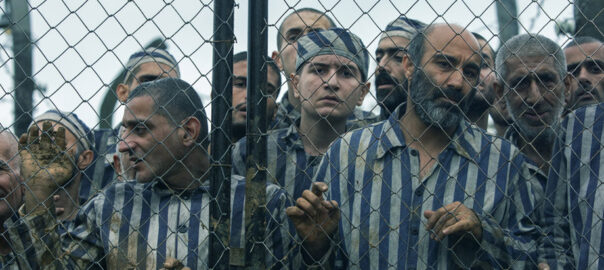
Iran’s Oscar submission “World War III” to compete in Tokyo festival

“World War III”, Iran’s submission to the international feature award at the 2023 Oscars, will be competing in the 35th Tokyo International Film Festival.

The winner of the Orizzonti Award for Best Film at the 79th Venice International Film Festival in Italy will be screened in the official competition of the festival, which will take place from October 24 to November 2 in the Japanese capital.

At Venice, the film also won Mohsen Tanabandeh the award for best actor for his portrayal of Shakib, a homeless day laborer who never got over the loss of his wife and son in an earthquake years ago.

Over the last couple of years, he has developed a relationship with a deaf and mute woman, Ladan. The construction site on which he works today turns out to be the set for a film about the atrocities committed by Hitler during WWII. Against all odds, he is given a movie role, a house and a chance at being somebody. When Ladan learns about this, she comes to his workplace begging for help. Shakib’s scheme to hide her goes tragically wrong and threatens to ruin his newfound status and what seemed to be the opportunity of a lifetime.

Earlier last week, Iran picked “World War III” directed by Hooman Seyyedi to represent the country in the international competition of the 96th Academy Awards.

“Butterflies Live Only One Day” by Iranian director Mohammadreza Vatandoost will also be screened in the Asian cinema competition of the Tokyo International Film Festival.

The film follows an old woman who has taken a vow of silence and talks to no one. She only has one big goal: to receive the government’s permission to enter the island as someone is waiting for her there. But after thirteen years, an entry permit has not been granted to her.

The Japanese love story “Fragments of the Last Will” by Zeze Takahisa will open the Tokyo festival and it will wrap up with “Living”, a co-production between the UK and Japan by Oliver Hermanus. /T.T/

Iran edge Uruguay in friendly

Iran national football team edged past Uruguay 1-0 in a friendly match thanks to the Mehdi Taremi’s second half goal on Friday.

Substitute Taremi opened the solitary goal of the match in the 79th minute at the NV Arena in Sankt Pölten, Austria.

Darwin Nunez and Luiz Suarez made some scoring chances but Iran goalkeeper Alireza Beiranvand kept a clean sheet in the first half.

Substitute Amir Abedzadeh also did brilliantly to save the goal in the second half.

Iran, headed by Carlos Queiroz, are scheduled to meet Senegal on Tuesday.

Team Melli have been drawn in Group B along with England, the U.S. and Wales. /T.T