All posts by islam

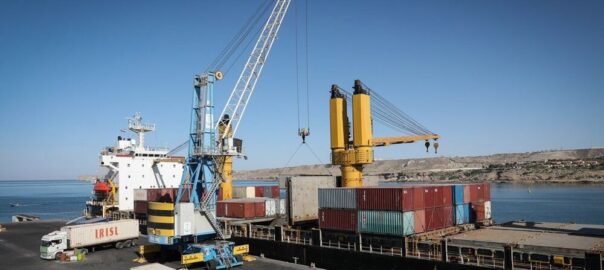
Iran’s export to India increases 40% in 8 months yr/yr

The value of Iran’s export to India increased by 40 percent in the first eight months of 2022, from the same period of time in 2021, IRNA reported citing the data released by the Indian Ministry of Commerce and Industry.

As reported, Iran exported commodities worth $407 million to India in the eight-month period of this year, while the figure was $290 million in the same time span of the past year.

Petroleum products and fruits were the major products Iran exported to India in the said period. Iran exported $102 million worth of petroleum products and $101 million of fruits to India in the mentioned time span.

During January-August of the present year, India’s export to Iran also increased 56 percent to stand at $1.384 billion, while the figure was $886 million in the first eight months of 2021.

Rice and tea were India’s major products exported to Iran in the said period during which the country shipped $913 million worth of rice and $63 million worth of tea to the Islamic Republic.

According to the Indian Ministry of Commerce and Industry, the value of trade between Iran and India stood at $1.791 billion during January-August 2022, rising 52 percent from $1.176 billion in the same period of time in 2021.

Based on the mentioned data, India’s imports from Iran in August doubled compared to the same month in 2021 reaching $46 million. India imported $23 million worth of goods from Iran last August.

India’s exports to Iran in August also increased by 80 percent to reach $141 million from last August’s $78 million.

In late May, Iranian Ambassador to India Ali Chegeni said that Iran and India are trying to diversify the channels of payments to expand bilateral trade.

In an exclusive interview with Financial Express Online, Chegeni said, “We are trying to diversify the channels of payments and accordingly wish to extend and expand an already existing mechanism in order to cover all of the goods and services including all of the non-oil goods and to achieve this”.

“During the past two years, because of Covid restrictions, we pursue the issue via virtual dialogues and currently, our officials are following the matter through the exchange of delegations”, the envoy stated.

“We want to develop our economic and trade relations beyond energy and petrochemical products. Due to the complementarity of Iran and India’s economies, an extensive range of non-oil trade exists between the two sides including trade on goods and services, investment, tourism, education, and … which may pave the way for multiplying our economic relations ten times more than current relations in mid and long terms”, Chegeni said. /T.T/

Iran’s women’s football team beat Belarus

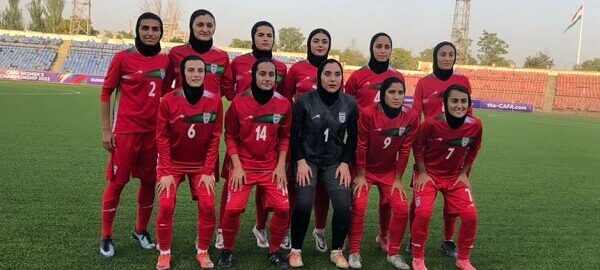
Iran’s women’s football team defeated Belarus 1-0 in a friendly match held in Tehran on Saturday. Melika Motevalli scored the sole goal of the match in the 45th minute.

Team Melli are also scheduled to play the European team on Tuesday at the Ararat Stadium.

These friendlies are part of the National Team’s preparation in their 10-day training camp which has started on Nov. 6.

Under leadership of Azmoun, Iran finished runners-up at the 2022 CAFA Women’s Championship in July. /T.T/

Iran still provides services to refugees despite sanctions: UNHCR

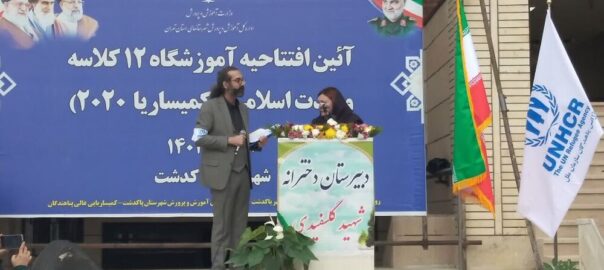
Despite the sanctions and economic pressures, Iran continues its comprehensive policy of providing services to refugees, and this is appreciable, UNHCR’s Officer in Charge, Inna Gladkova, said.

She made the remarks at the inauguration ceremony of a 12-class school for foreign nationals, which was built in Pakdasht county, Tehran province.

The school was built with the participation of the United Nations High Commissioner for Refugees and the Ministry of Education.

Iran is home to over 800,000 registered refugees and some 2.6 million undocumented Afghans.The best solution and the most stable support system for refugees is that have access to schools and education just like Iranian nationals, she stated, IRNA reported.

Iran has taken effective and continuous measures to include all refugees, and the UNHCR also declares its readiness to fulfill its obligations, she noted.

In the provision of educational services, there are different aspects, she said, adding, school construction, equipping schools, providing teachers and human resources, and providing quality educational services are the main and important work done by the Ministry of Education.

There are many needs in the field of education, but in the last 10 years, the High Commissioner for Refugees has built only 95 schools in Iran, but the need is definitely more than this, she also said.

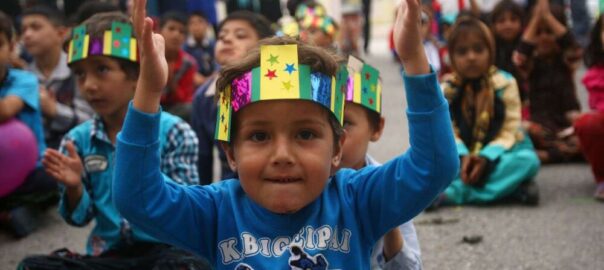
Iran is home to over 800,000 registered refugees and some 2.6 million undocumented Afghans. Today, more than 500,000 Afghan children- including undocumented Afghans and those who have newly arrived in Iran following the Taliban-takeover-are benefitting from Iran’s inclusive education policies, one of the most progressive in the world. /T.T/

West Azarbaijan a haven for migratory birds

With more than 70 water habitats, including seasonal and permanent wetlands, lakes, dams, and rivers, West Azarbaijan has become one of the safe passages for migratory birds in the west of the country.

West Azarbaijan is one of the top three destinations for migratory birds in the country, much like Mazandaran and Golestan in the north and Khuzestan in the south.

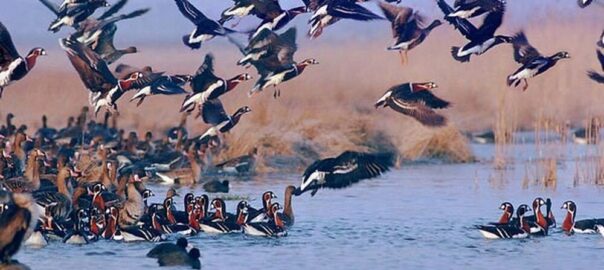
With 45 seasonal and permanent wetlands and 14 important dams, West Azarbaijan has become one of the safe provinces for native and migratory birds, including, greylag goose, greater white-fronted goose, lesser white-fronted goose, red-breasted goose, ducks, swans, pelicans.

With 45 wetlands and 14 dams, West Azarbaijan is a haven for birds, including geese, ducks, swans, and pelicans.Every year, 300,000 migratory birds spend winter in this province at the beginning of the autumn season, Saeed Shahand, head of the provincial department of environment, told IRNA on Sunday.

Considering the current conditions of Lake Urmia and the importance of autumn rains for the birds’ wintering, necessary efforts have been made to dredge the wetlands of Lake Urmia in the south as well as the wetlands in the north of the province to facilitate water flow, he explained.

He went on to say that the first group of migratory birds to the province include hunting birds such as eagles, falcons, saker falcons, lesser kestrel, and vultures, then the cranes join them, and the last group of birds is ducks and swans.

So far, 300 species of aquatic birds have been identified in this province. During the migration seasons, more than 200 different species of migratory birds enter West Azarbaijan every year.

One of the important characteristics of the province’s wetlands is the hatching of endangered species such as the white-headed duck, and the marbled duck, Omid Yousefi, head of the wildlife monitoring department of West Azarbaijan said.

Two very important species such as the common crane and the greylag goose breed only in West Azarbaijan, and this has made the province’s wetlands especially important in terms of biodiversity compared to other neighboring provinces, he highlighted.

A number of wetlands in the province, including Brazan and Qoupi Baba Ali, Habadov, Soldoz, Sangi Naghdeh, and Norozloi Miandoab, are part of the Ramsar and international conventions, he stated.

The preliminary works for the registration of two wetlands, Shiblu-Poldasht and Boralan in Mako, have been done at the Ramsar Convention site due to the favorable water condition and good habitat of birds, he said.

Registration of wetlands in the Ramsar site can increase the sensitivity of local communities and authorities to protect these wetlands, and international support is provided for their protection, he emphasized.

Kani Barazan wetland, an important habitat

Located in the northwestern province of West Azarbaijan, Kani Barazan was once recorded as the first bird-sighting site in the country and birdwatchers call it Iran’s bird paradise.

Stretching to 907 hectares, Kani Barazan wetland is home to various bird species including, flamingo, little cormorant, great white pelican, stilt, sternidae, great crested grebe, graylag goose, lesser white-fronted goose, heron, common shelduck and etc.

Its high capabilities, diverse vegetation, and the annual migration of 200,000 species of birds have made this wetland a precious bird-watching site for nature lovers.

So far, 75 species of water birds belonging to 11 families have been identified in this wetland, which will reach more than 180 species counting terrestrial species.

Drought and lack of water rights caused the loss of 70 percent of the wetland, causing negative environmental effects with the beginning of the bird migration season.

The water of this wetland is supplied from the Mahabad river, the spring of “Qarahdagh” village, the speed of water entry is in a good condition due to dredging.

One million cubic meters of water will be released from Mahabad Dam to restore the Kani Barazan International Wetland, said Farouq Sokhanvar, the director of Mahabad city’s department of environment.

Currently, the water of the Mahabad dam is released with a flow rate of one cubic meter per second to help restore the Kani Barazan International Wetland, he stated.

Unique birdwatching sites in Iran

Iran is decorated with impressive wetlands that hold a great share of aquatic and bird species and wildlife. Anzali wetland, Qeshm Island, Urmia Lake, and Miankaleh Peninsula are among the most important locations for bird watching in Iran.

Miankaleh International Wetland in Mazandaran, called the birdwatching paradise of Iran, stretches to a total area of 68,000 hectares, which is home to at least 130 species of migratory species with a population of 1.5 million.

Being an impressive bird-watching destination, the wetland displays a variety of bird species such as otters, all kinds of fish-eating ducks (common goldeneye and Mergus), pelicans, flamingos, cormorants, common pheasants, partridges, mute swan, tundra swan, and coots. Ashuradeh was introduced and registered as one of the world’s first biosphere zones in 1975.

Gomishan wetland in Golestan province is home to over 20,000 water birds, and more than 20 species of birds, which supports three IUCN Red List vulnerable species of waterbirds, i.e., Pelecanus Crispus, Aythya nyroca, and Vanellus gregarious, as well as the vulnerable mammal Phoca (Pusa) caspica; it is also an important staging area for the fish subspecies Rutilus rutilus caspicas.

Located at the foot of the Zagros mountains in north-western Iran, Zarivar is a freshwater wetland hosting over 74 bird species, which is designated as a Ramsar Site.

The site provides a suitable breeding and resting place for birds and other wetland animals, and due to the relatively extensive reed beds, it is an important overwintering site for northern migratory birds. / T.T/

“Mom”, “Absence”, “Lipar” win awards at Asian Film Festival Barcelona

The Iranian movies “Mom”, “Absence” and “Lipar” have garnered awards at the 10th edition of the Asian Film Festival Barcelona in Spain.

“Mom”, also known as “Maman”, brought the award for best director for Arash Anisi in the official section during the closing ceremony of the festival last week.

The acclaimed drama portrays a woman, who lost all the nice things she once had, including her name, her job and her husband, years ago after the outbreak of the war. Now she works as a taxi driver and lives with her three children in a small apartment. In order to proceed with her maternal authority, she decides to keep her children away from each other, and of course from a plot of land that she owns. Just when she gets rid of the wife of her youngest son, her other son decides to marry one of her companions. The story thus unfolds in two parallel worlds: in the real world and in the world recreated in the film script that her youngest son is writing.

Earlier last week, the film’s stars Roya Afshar and Erfan Ebrahimi won the awards for best actor and supporting actor at the Les Rimbaud du Cinema festival in France.

In the Asian Film Festival Barcelona panorama section, “Absence” won the best screenplay award.

Written and directed by Ali Mosaffa, the film is about Ruzebeh, who travels from Tehran, far from his troubled family life, to Prague, Czech Republic, immersing himself in an investigation that follows his father’s path as a communist expatriate in Czechoslovakia, in his quest to understand better his father, who started a new life in Eastern Europe after the 1953 coup. Yet each clue he finds deepens the mystery surrounding the man he thought he knew.

“Lipar” by Hossein Rigi received the award for best screenplay.

It follows Barakat, a Baloch teen, who is very interested in the cinema industry, especially Bollywood. He is trying to find his life’s vague secret to find an answer to his questions.

In the official competition, the Chinese drama “Return to Dust” by Li Ruijun was selected as best film, while “When Pomegranates Howl”, a co-production between Afghanistan and Australia by Granaz Musavi, won the best screenplay award. /T.T/

Iranian judokas win two golds at 2022 IBSA Judo World Championships

Meysam Banitaba and Vahid Jeddi claimed two gold medals on Day 1 of the International Blind Sports Federation (IBSA) Judo World Championships, underway in Baku, Azerbaijan.

The competition has brought 250 athletes from 41 countries together at the Heydar Aliyev Arena.

Banitaba emerged victorious over Turkey’s Abdurrahim Ozalp in the J1 -60kg final match.

Jeddi defeated Ukraine’s Rufat Mahomedov in the final match of the J2 -73kg.

The competition started on Tuesday and will run until Thursday. /T.T/

Persian-language film “Winners” named best at Raindance festival

The Persian-language drama “Winners” has been picked as best UK feature at the 30th Raindance Film Festival in London.Directed by the Iranian-British filmmaker Hassan Nazer, the film was shot entirely in Iran with an all-Persian-language cast.

Set in a poor Iranian village, the story of “Winners” is about children who work hard to support their families. Their little hands scour through massive piles of junk in search of hidden treasures. One day, nine-year-old Yahya and his friend Leila find a precious golden statue. Sharing a passion for cinema, Yahya’s boss Nasser Khan decides to help them find the owner as the curious item leads Yahya on an adventure-filled journey that doubles as a loving ode to the history of Iranian cinema.

The film supported by Scottish public body Creative Scotland is the UK’s submission to the international feature award at the 2023 Oscars.

It previously won the audience award at this year’s Edinburgh International Film Festival in Scotland.

The Raindance Film Festival announced the winners last Friday.

“Gentle” by Laszlo Csuja and Anna Nemes from Hungary won the Raindance Discovery Award.

In this film, Edina, a female bodybuilder is ready to sacrifice everything for the dream she shares with her life partner and trainer Adam: to win Miss Olympia. The odd love she finds on her way makes her see the difference between her dreams and her true self.

“Leslie” by American director Michael Morris was selected as “Film of the Festival” and its star Andrea Riseborough won the Best Performance award.

The Spirit of Festival Award went to the British mockumentary “Swede Caroline” directed by Finn Bruce.

The Korean drama “Swallow” by Hee-il Leesong was named best international feature.

In this film, a mother disappears. A son faces the truth that was hidden for thirty years. In 1983, a twisted love story among a woman, a revolutionary, and a fraktsiya unfolds.

The award for best documentary went to “My Name Is Andrea”.

Directed by Pratibha Parmar, “My Name Is Andrea” is a hybrid documentary drama based on the life of the writer, Andrea Dworkin who decades before #MeToo called out sexism with revolutionary flair.

The Raindance Film Festival is the largest independent film festival in the UK. It is officially recognized by the Academy of Motion Picture Arts and Sciences USA, the British Academy of Film and Television Arts and the British Independent Film Awards. /T.T/

Science and technology tourism regulated

The regulation for promoting science and technology tourism has been compiled with the aim of introducing scientific capacities and advances to the Iranian nation.

The regulation is awaiting the government’s approval to take effect.

In terms of science production, Iran ranks first in the West Asian region and ranks 15th in the world, and the production of highly cited scientific articles in Scopus in 2021 has reached 77,351 degrees. This figure was equal to 71,971 in 2020 and 64,988 in 2019.

Also, 841 Iranian researchers are among the top one percent of most cited researchers in the world, based on the Essential Science Indicators (ESI) database.

In general, the number of highly cited Iranian researchers in the top 1% of the world has grown significantly since 2018.

The plan aims to introduce capacities and advances in the science and technology sector.

The number of Iranian scientists on this list in 2018 was 249, which increased by 340 percent in four years, as it reached 841 in 2022.

Science and technology tourism is designed with the aim of introducing the capacities and advances of science and technology in all regions of Iran to the people, Mohammad Mahdi Zolfaqarzadeh, director of policy and planning office of Cultural and Social Affairs of the Ministry of Science, told IRNA.

When Iranian families travel to a city; apart from visiting historical monuments, natural resorts, museums, etc., they should also visit science and technology areas using the facilities considered in the regulations, he explained.

This regulation must be implemented in cooperation with the Ministry of Cultural Heritage, Tourism and Handicrafts and the Plan and Budget Organization, he noted.

If the progress and capabilities of the country are narrated correctly, artistically, and elegantly, its function is not only to inform; Rather, it can have more effective effects, including creating hope and giving identity to elites and students, he highlighted.

The program includes the visit of university students and professors to the scientific and cultural developments achieved in the set of higher education institutions affiliated with the Ministry of Science, he added.

Iran second most innovative country in region

According to the Global Innovation Index (GII 2022) report, Iran is the second most innovative country in the Central and South Asian region and the third among low-middle income countries.

With 7 ranks of promotion compared to 2021, Iran has been ranked 53rd in the world, second in the Central and South Asian region, and third in low-middle income countries, and for the second consecutive year, the innovation development rate is higher than expected.

Science, technology advancement with knowledge-based ecosystem

Today, the country’s knowledge-based ecosystem accounts for more than 3 percent of the GDP. And the figure is projected to reach 5 percent, however, the main goal is to step toward a 10 percent share in GDP, Sattari told Fars on February 13.

The share of knowledge-based companies in the country’s economy has exceeded 9 quadrillion rials (about $34 billion), and since 2019, it has experienced a growth of more than 450 percent, he stated.

The knowledge-based ecosystem is a newly-emerged ecosystem but has so far been able to solve many of the country’s problems.

The Innovation and Prosperity Fund affiliated with the Vice Presidency of Science and Technology has earmarked a sum of 170 trillion rials (nearly $650 million) to support knowledge-based companies over the past 4 years.

There are currently 6,263 knowledge-based companies operating in the country, offering advanced products and services in various fields of technology to domestic and foreign markets, and some of them have entered international markets, Siavash Maleki, deputy head of the Fund, stated.

The fields of aircraft maintenance, steel, pharmaceuticals, medical equipment, oil, and gas are among the sectors that researchers in technology companies have engaged in, leading to import reduction. /T.T/

200,000 Afghan refugees eligible to study in Iranian schools

The Ministry of Interior has announced to the Ministry of Education a list of 200,000 Afghan children who have the conditions to study in Iranian schools.

The Ministry of Education has the capacity and potential to provide them with educational conditions and facilities equal to other Iranian students, Ali Hamedi, an official with the Education Ministry, said.

Of course, the children and their families will decide whether to enroll in schools and continue education, he stated.

Iran spends about $77 million every year on the education of foreign national students.“We are trying our best to make Afghan students living in Iran go to school, and one of our approaches in this field is to help develop and increase standard educational physical spaces,” he noted.

Our annual fund is partly financed by the Ministry and partly by the United Nations High Commissioner for Refugees. If we allocate it to schools where only Afghans study, we cannot provide education to those who study with Iranian nationals, he explained.

Afghan students can also take the exam of elite educational centers and compete in equal conditions with other Iranian students and continue their studies in exceptional talents schools, he stated.

In the current school year which began on September 23, about 300,000 new foreign students enrolled in Iranian schools.

For the time being, 560,000 foreign students are studying in schools across the country, Education Minister Yousef Nouri said.

Iran is home to over 800,000 registered refugees and some 2.6 million undocumented Afghans. Today, more than 500,000 Afghan children- including undocumented Afghans and those who have newly arrived in Iran following the Taliban-takeover-are benefitting from Iran’s inclusive education policies, one of the most progressive in the world.

Many of the refugees living in Iran are second and third-generation, according to the UNHCR.

Iran spends about 20 trillion rials (nearly $77 million) every year on the education of foreign national students residing in the country, the head of the international affairs department of the Ministry of Education Gholamreza Karimi said in March 2020.

Significant increase in refugee literacy

The literacy rate among refugees has increased significantly in recent decades. So that the literacy rate of Afghan immigrants in Iran is higher than the number of literate people in Afghanistan, according to a report published in June by the research center of the Iranian Parliament (Majlis).

According to the Population and Housing Census of the National Statistics Center in 2016, the population of refugees officially residing in Iran was 1.654, of which Afghan, Iraqi and Pakistani immigrants constitute the majority of international immigrants. In fact, 95 percent of the immigrants in Iran are “Afghan”, 2 percent are “Iraqi” and about 1 percent are “Pakistani”.

The research center of the Iranian Parliament, in a report published in June, addressed the issue of the education of immigrant children.

Only about 10 percent of the first generation of refugees who entered Iran in the early 1980s were literate before arriving, which has now reached 64 percent. In the early 2010s, the literacy rate among refugees was about 52 percent, but by the end of the 2010s, it had risen to 64 percent.

The literacy rate is much higher in the second and third generations of immigrants. Some 76 percent of Afghan youth aged 15 to 29 in Iran are literate.

The literacy rate of Afghan immigrants living in Iran is higher than the number of literate people in Afghanistan itself. So, the literacy rate of the second generation of Afghan immigrants in Iran is much closer to the literacy rate of Iranians.

In the academic year 2020-2021, out of the total number of non-Iranian students, 1610 are preschoolers, 335,963 students are in the first and second elementary school, 104,458 were in the first year of junior high school, and 55,590 in the second year of junior high school. One-third of enrolled students are undocumented and illegal residents. /T.T/

Iran beat U.S. to qualify for Sitting Volleyball World Championship semis

Iran swept past the U.S. 3-0 (25-18, 25-15, 25-17) on Tuesday to book a place in the semifinals of the 2022 Sitting Volleyball World Championship.

Team Melli had previously defeated Iraq, Kazakhstan and Croatia in Pool B.

Iran will play winners of Brazil and Ukraine in the semifinal.

The competitions are being held in Bosnia and Herzegovina’s capital Sarajevo and will run until Nov. 11. /T.T/