All posts by islam

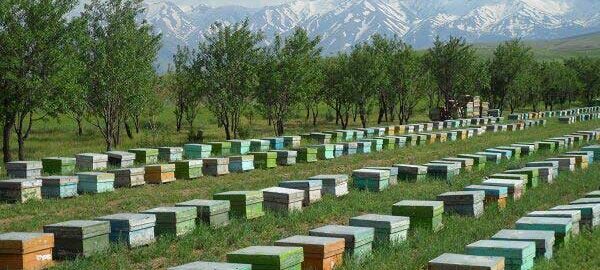
Iran’s honey exported to 22 countries

A total of 1,330 tons of honey worth $2.5 million were exported from Iran to 22 countries in 10 months. According to the head of the Agriculture and Food Industries Commission of Iran Chamber of Cooperatives Arsalan Qasemi, a total of 1,330 tons of honey worth $2.5 million were exported from Iran to 22 countries during the first 10 months of the current Iranian year (March 21, 2022-Jan. 20).

The exports stood at 1,800 tons worth $5.6 million in the last Iranian year (March 2021-22), he added, Financial Tribune reported.

China, Bahrain, Kuwait, Qatar, Oman, Germany, the UK, Canada, Hong Kong, Australia, Indonesia, Malaysia, Iraq and Lebanon are among the main destinations of Iranian honey.

MNA/

Iran’s oil, gas incomes surge 40%

Iranian Oil Minister Javad Oji has said the country’s incomes from the sales of oil, natural gas, gas condensate, and petroleum products in the first 10 months of the current Iranian year (March 21, 2022-January 20, 2023) increased by 40 percent compared to the same period last year.

Addressing an open session of the parliament  Oji said that 70 million barrels of gas condensate were exported in the mentioned time span, Mehr News Agency reported.

According to the official, the goals set in the current year’s national budget bill for the exports of oil and gas will definitely be achieved by the yearend.

He noted that the National Iranian Oil Company (NIOC) has already sold enough oil and gas and petroleum products to realize the budget goals by 100 percent, however collecting the revenues needs more time.

In remarks in November 2022, Iranian President Ebrahim Raisi highlighted the failure of the enemy’s policy of maximum pressure, saying the country’s oil export has reached the pre-sanction levels.

Earlier this week, the U.S. Energy Information Administration (EIA) in a report put Iran’s average oil production in 2022 at 2.54 million barrels per day (bpd), 140,000 bpd more than the previous year. Iran’s oil production in 2021 was about 2.4 million bpd.

Qajar-era palace reopens doors to public following years of closure

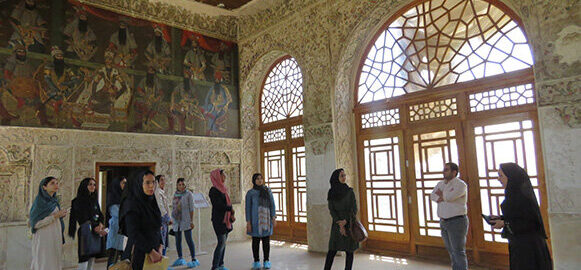
After years of being closed, the Qajar-era (1789-1925) Soleymanieh Palace in Karaj, Alborz province, has reopened its doors to the public, a local tourism official has said.

Previously, there was the only access to this palace during Noruz holidays (Iranian New Year) for years, ISNA quoted Yahya Darai as saying on Friday.

There have been restorations made to the historical monument in preparation for reopening, but more rehabilitation work is needed so that it can become a museum palace, the official added.

A former royal residence in Karaj, the Soleymanieh Palace is notable for the paintings inside depicting several Qajar kings and their sons and brothers. On the banks of the Karaj River, the building was built by order of Fath Ali Shah (r.1797–1834) in a large garden.

As stated in the narratives, the building was constructed in honor of the birth of Soleyman Mirza, Shah’s 34th son.

There once stood a five-story Safavid tower nearby, but it was demolished and now only the first floor remains.

The palace was registered on the national heritage list in 1949.

Alborz province is surrounded by Mazandaran, Tehran, Markazi, and Qazvin provinces. Its name is driven by the Alborz Mountains. A significant part of the mountains is located in the northern part of the province.

Historical resources and documents, as well as archeological studies, indicate that Alborz has a rich culture dating back to prehistoric times. /T.T/

Iran’s export to Africa rises 19% in 10 months on year

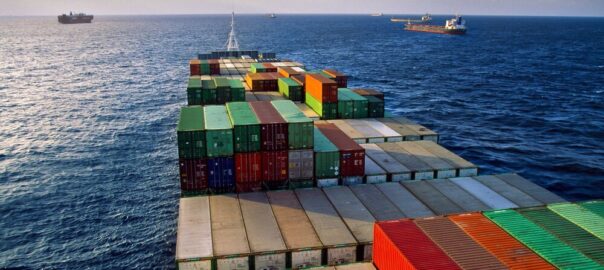
The value of Iran’s non-oil export to Africa rose 19 percent in the first 10 months of the current Iranian calendar year (March 21, 2022-January 20, 2023), as compared to the same period of time in the past year, the vice president of Iran and Africa Merchants Club Ruhollah Latifi said.

Latifi noted that Iranian traders exported over 2,247,619 tons of commodities worth $1,108,357,000 to African countries in the mentioned 10-month period, IRIB reported.

According to the official, Iran exported commodities to 45 African countries and the exports also increased by nine percent in terms of weight.

Latifi put the total Iran-Africa trade in the said 10 months at 2.330 million tons valued at $1.188 billion, of which the share of Iran’s import was 84,280 tons valued at $79.685 million.

The trade between Iran and Africa increased by 11 percent in terms of weight and 22 percent in terms of value in the said period, Latifi said.

According to Latifi, imports from Africa increased by 70 percent and 79 percent in terms of weight and value, respectively.

The official named South Africa, Mozambique, Ghana, Sudan, Nigeria, and Kenya as the main export destinations and Tanzania, Kenya, South Africa, and Ghana as the major sources of imports for Iran among the African countries in the first 10 months of the present year.

Latifi earlier said that trade between Iran and Africa reached $1.250 billion last year with a 100 percent growth, and considering the current trend of trade with the African continent the figure is expected to reach $1.7 billion by the end of the current year (March 20, 2023).

Head of Iran’s Trade Promotion Organization (TPO) Alireza Peyman-Pak has also said the country is taking the necessary steps to increase annual trade exchanges with African countries to $5 billion by the Iranian calendar year 1404 (begins in March 2025).

Peyman-Pak said the trade with the mentioned countries is expected to reach $2.5 billion by the end of the current Iranian calendar year (March 20, 2023).

Referring to the preparation of the country’s trade development roadmap at the beginning of the work of the 13th administration, the official said: “In this roadmap, major factors including exports and the share of different sectors are specified, and in the case of Africa, the priorities and targets for trade with different countries and the requirements for reaching these targets are determined.”

Peyman-Pak put the share of African countries in Iran’s export basket at $1.2 billion, saying: “Africa’s annual imports amount to about $580 billion, and our share of this figure is still small despite all the efforts. We have managed to export $1.2 billion to this market.”

He further mentioned the capacities of the mentioned continent for the export of technical and engineering services and said: “The total exports of technical and engineering services to Africa is currently $300 billion; But our share last year, despite a slight increase reached only $200 million, which is still small.”

According to the TPO head, in order to increase the level of trade with Africa certain infrastructure including transportation and direct shipping lines, as well as proper legal, commercial, monetary, and banking relations must be provided, and TPO has been recently focusing on providing such requirements to facilitate trade with Africa.

“To solve the transportation problems, four countries have been selected in East, West, South, and North of Africa, to launch air and shipping lines,” he said. /T.T/

Nanotechnology, a paragon of success in Iran

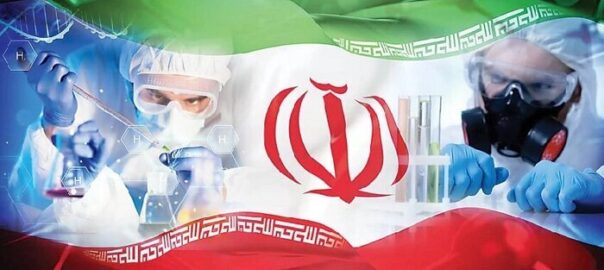
The nanotechnology sector is a prime example of success in Iran, an arena consisting of expert and program-oriented human resources with significant goals that shines like a jewel in the innovation and technology ecosystem of the country.

With the support of talented academicians and knowledge-based companies, the nanotechnology sector has indigenized many technologies to solve the main challenges of the country in various areas, including industry.

Producing coronavirus diagnostic kits by Iranian knowledge-based companies and receiving requests for buying the product from around 40 countries are among the notable achievements of the nanotechnology sector.

ICU ventilators for Covid-19 patients, face masks and laser thermometers, household appliances, cars, medicine and medical supplies, textiles, air purifiers, catalysts, power plant filters, oil well drilling equipment, valves and pipe fittings, water disinfectants, and waterproof coatings are among the products that have been produced by domestic nanotechnology companies.

The national document on promoting the application of nanotechnology has outlined the path to achieving the major goals of the development of nanotechnology in the country.

According to the document, 12,199 articles by Iranian researchers related to nanotechnology were indexed in the Web of Science (WoS) in 2021, which was equivalent to 41.5 percent of all articles published in the nanotechnology sector.

This share of the nanotechnology articles placed Iran fourth in the world in 2020 and 2021.

It is noteworthy that before the establishment of the national headquarters for nanotechnology development in 2000, the country ranked 58th in the world and 6th in the Middle East with publishing just eight articles.

Iran currently ranks fourth in nanotechnology in the world after the United States, India, and China

Currently, 66 Iranian universities accept students in the master’s program and 22 universities in the doctoral program in various fields of nanotechnology.

The expansion of exports in recent years and the creation of bases in China, India, Indonesia, Syria, Turkey, and Iraq have provided a platform for the entry of Iran’s nanotechnology goods, equipment, and services into the world markets.

So far, Iranian nanotechnology products have been exported to 49 countries from five continents. The sale of nanotechnology equipment in the past Iranian calendar year (March 2021-March 2022) grew by about 59 percent.

Textiles, with an export value of nearly four million dollars, have the most diversity in terms of destinations by being exported to more than 20 countries.

After textiles, the most diverse export destinations have been nanotechnology equipment. However, in the fields of optoelectronics, automobiles, oil, and gas, the destinations have been limited to one or two countries.

On November 28, 2022, President Ebrahim Raisi declared to implement the national document for promoting the application of nanotechnology.

Consisting of 7 articles, the ten-year document aims to train human resources and provide infrastructure for the development and commercialization of technology. Priority industrial areas are water and environment, energy, agriculture, health, and construction.

In this document, Iran was targeted to be among the top 15 nanotechnology countries in the world and aimed to generate wealth and improve people’s lives.

In order to continue the nanotechnology progress, the upcoming national document has been compiled with new goals and approaches such as being a reference in science and technology, industrialization, maximum impact of nanotechnology in priority industrial areas, and entry of nano products into the global markets and the promotion of people’s lives.

By 2033, the advancements of nanotechnology in Iran will improve the quality of life and the production of wealth. The country moves towards global authority in science and nanotechnology by producing innovative products while having a stable place in the market of other countries. /T.T/

Iran’s Fasihi wins gold at 2023 Asian Indoor Athletics Championships

Farzaneh Fasihi of Iran claimed a gold medal in the 10th Asian Indoor Athletics Championships in Astana, Kazakhstan.

In the women’s 60 meters run, Fasihi finished first with 7.28 seconds. Kazakhstan’s Olga Safronova won a silver medal with a time of 7.32 seconds, while Indonesian Valentin Vaneza came third with 7.37 seconds.

The 2023 Asian Athletics Indoor Championships is to run through Feb. 12 in the Kazakh capital.

The tournament has brought over 500 athletes from 31 countries together. / T.T/

440 industrial projects being inaugurated during Ten-Day Dawn

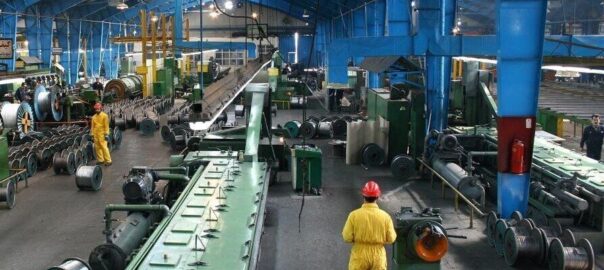
Some 440 industrial projects are going operational in Iran during the Ten-Day Dawn (February 1-11), which marks the 44th anniversary of the Islamic Revolution, Deputy Industry, Mining, and Trade Minister Mehdi Baradaran announced.

According to Baradaran, seven of the mentioned projects worth 10 trillion rials (about $25.2 million) are going to be inaugurated in Khuzestan Province which create direct job opportunities for over 600 people in this province, IRIB reported.

Regarding the supportive measures, the official said: “These measures are being taken in the industrial estates and are in the form of the allocation of land and suitable infrastructures, which there is a growing trend in this field, regarding facilities and provision of primary resources, especially in the field of petrochemical, chemical and metal products.”

“We have this promise for the owners of the industry that there will be no price increase in the cost of production in the coming months”, the deputy minister further stated.

As announced by the head of Iran Small Industries and Industrial Parks Organization (ISIPO), 1,191 idle production units have been revived in the industrial estates and zones of the country since the beginning of the current Iranian calendar year (March 21, 2022).

Referring to the addition of many lands to industrial estates last year, Ali Rasoulian noted: “This year, we focused on providing infrastructure for these lands, and infrastructure was provided for 2,151 hectares of lands.”

The official also announced that 2,170 idle production units have returned to the production cycle since the current government took office in August 2021.

According to Rasoulian, who is also the deputy industry, mining and trade minister, this approach is very important since the country has been dealing with the most severe international sanctions for many years; and while it relies more than ever on domestic production. /T.T/

Folios of rare Quran manuscripts on view at Tehran exhibit

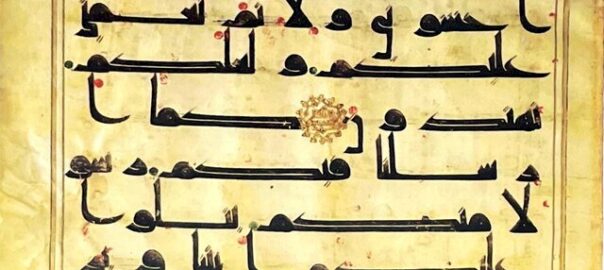
Folios of two rare Quran manuscripts are on display in an exhibition at Tehran’s Malek National Library and Museum, to commemorate the birthday anniversary of Imam Ali (AS), , CHTN reported on Sunday.

The folios, which are preserved at the Malek museum, feature verses of surahs Al-An’am and Al-Baqarah in the Kufic calligraphy, the report added.

The show will be running for two weeks.

The Malek National Library and Museum is one of Iran’s major centers for rare Persian and Arabic manuscripts, which is located in the vicinity of Bagh-e Melli and is affiliated with the Astan-e Qods Razavi Museum and Library in Mashhad.

Hossein Aqa Malek (1873-1973) was the owner of the Malek National Museum. The museum was once Malek’s private mansion. He handed it over to the government to convert it into a museum. /T.T/

Women shine in scientific research

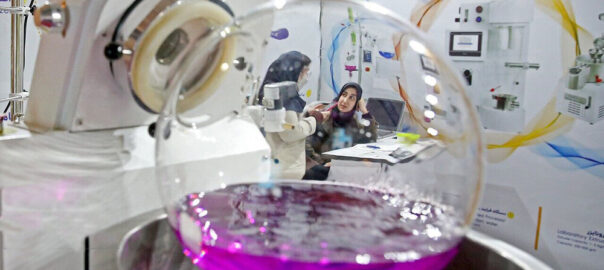
Iranian women have proven they can contribute greatly to the advancement of science, as 345 female researchers are on the Highly Cited Researchers list of the world.

The lists of top and influential researchers are published every year by various citation databases. The global index categorizes researchers based on different criteria, including the number and citations to their articles.

The larger number of researchers from each country indicates the scientific authority of the country in the international arena.

It is noteworthy that the number of Iranian researchers in the top one percent of highly cited scientists has increased from 685 in the past Iranian calendar year 1400 (March 2021-March 2022) to 840 in the current year.

And the number of researchers of the top two percent of highly cited scientists has increased from 1,870 last year to 1,941 this year.

Iranian women have also played their role in the scientific authority of Iran, and in the list of 2,795 Iranian highly cited researchers, which includes researchers in the top 0.1 percent, top 1 percent, and top 2 percent, there are 345 Iranian women scientists.

Domestic support

The national budget bill for the next Iranian calendar year 1402, which starts on March 21, has increased the budget for women’s affairs by over 50 percent compared to the current year’s budget.

Some 580 billion rials (about $1.5 million) has been proposed by the budget bill for the next year compared with 320 billion rials (about $800,000) for the current year, ISNA reported.

President Ebrahim Raisi submitted the administration’s draft of the national budget bill for the next Iranian calendar year 1402, which starts on March 21, to the Majlis on January 11.

The proposed budget amounted to about 52.616 quadrillion rials (about $131 billion), with a 40 percent rise from the current year’s budget.

The president mentioned stable economic growth, people’s livelihood, observing justice, and efficiency of the government system as the main approaches of the budget bill and stated: “In this bill, the establishment of a progress and justice fund in all provinces is foreseen so that the development credits of the provinces are paid systematically.”

The National Headquarters for Women and Family Affairs has approved six plans to support families and empower women and improve their status in society.

The formation of a loan guarantee fund for women heads of households was one of the plans of the National Headquarters for Women and Family Affairs.

Due to the fact that many female breadwinners could not use business loans due to the lack of a guarantor, the fund was established to help them.

According to official statistics, there are 3.5 million female heads of households, but according to unofficial statistics, the figure reaches more than 6 million.

A plan is entitled ‘Upgrading the structure of the vice president and advisors related to the vice presidency for women and families.’

Highly cited researchers

According to the 2022 list of Highly Cited Researchers revealed by Clarivate, 12 Iranian researchers are among the most cited researchers.

The exceptional individuals designated Highly Cited Researchers 2022 have published multiple highly cited papers, ranking in the top 1% by citations for field and year over the last decade. Of all the world’s researchers, they are one in 1,000.

The analysts use both quantitative and qualitative analysis to identify influential individuals from around the globe and across many research fields. This year, 6,938 scientists and social scientists from nearly 70 countries were recognized.

In the previous edition of the highly cited researchers list, 15 researchers were from Iranian institutions, but in the 2022 edition, 12 Iranian researchers have been included.

In November 2022, the Essential Science Indicators (ESI) database listed 841 Iranian researchers among the top one percent of most cited researchers in the world.

The highest number of researchers were included in the engineering category amounting to 229 scientists, followed by clinical medicine with 140, and the multidisciplinary category with 150 people.

In October 2022, Stanford University listed 1,870 Iranian researchers among the top 2 percent of the most-cited scientists in the world, which has grown significantly compared to past years.

Despite U.S. sanctions, the international activities of Iranian scientists have increased year by year, so that more than 35 percent of Iranian articles in Scopus have been multi-national projects, the deputy science minister, Peyman Salehi, has said.

Science diplomacy is the use of scientific collaborations among nations to address common problems and build constructive international partnerships.

In 2021, Iranian scientists published more than 77,000 scientific articles in the Scopus database, ranking 15th worldwide.

The country also ranked 15th and 16th in the world in terms of scientific references. /T.T/

Fajr film festival to open as intl. lineup remains unpublicized due to “overseas war”

The 41st edition of the Fajr International Film Festival opens tomorrow as the organizers have refused to announce the international lineup in order to handle global media pressure on the entries to withdraw from the event.

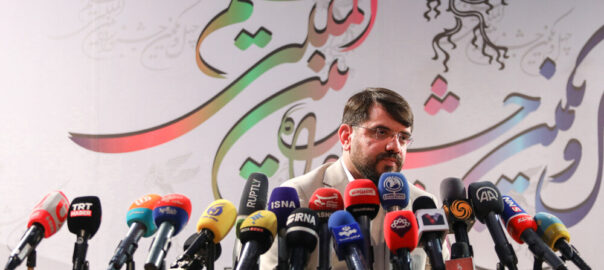
Speaking at a press conference on Monday, the festival president Mojtaba Amini called the global media pressure an “overseas war” launched to undermine the festival.

The festival is a major film event, which is organized every year to celebrate the anniversary of the Islamic Revolution.

In calls published on social media and some Persian television networks broadcasting from abroad, groups of Iranian film celebrities have asked their colleagues to boycott the festival in support of the unrest that arose against the Iranian government from September 2022.

“We have been in a critical situation. The overseas media have started severe attacks and they still are continuing,” said Amini who is most famous for producing the controversial TV series “Gando” on the true story of the major espionage case of Jason Rezaian, an Iranian-American journalist who served as Tehran bureau chief for the Washington Post.

“We have taken effective measures to help the festival ship dock in the port with the very least amount of damage,” he added.

“The intent of the overseas war is to cause damage to the international section of the festival. To counteract that effort, we want to run it peacefully,” he noted.

Amini said that he has intentionally avoided making any comments about the marginal issues over the past few months to help the festival affairs go well, and added that the international lineup will be announced in the upcoming days.

He noted that his “silence” about the issues was his “prudence” to avoid any harm to the entries and those cineastes who have submitted their works to the event.

Twenty-six movies by filmmakers from 25 five countries have been selected from 588 submissions to be showcased in the international competition of the festival.

Amini called himself a “film guy” and asked Iranian cineastes to set aside ideological differences to help the festival go on well, emphasizing that the organizers welcome everybody.

“Let’s unite to make everybody feel happy and attempt to raise hopes and awareness,” he said in conclusion.

Fajr’s international section categories split from the festival in 2014, when the Cinema Organization of Iran, which is affiliated with the Ministry of Culture and Islamic Guidance, the main organizer of the event, announced that the international competition would be held separately from the national section for the first time in 2015.

Following the management changes in the Cinema Organization of Iran in 2021, the new director of the organization, Mohammad Khazaei, ordered that the Fajr national and international film festivals be combined again for 2022. /MNA/