All posts by islam

Iran’s exports to Islamic states rise by 17%: Official

Iran has recorded a 17% increase in exports to Islamic nations since the beginning of the current Iranian calendar year (started on March 21, 2024), the head of the Iran National Standards Organization said.

Speaking at the 18th National Quality Award ceremony on Sunday evening, Mahdi Eslampanah stressed the importance of this growth, saying, “We managed to develop foreign trade by fostering a common language.”

The achievement reflects Iran’s advancements in standardization, he further said.

Eslampanah also explained that the model for the National Quality Award was created from scratch to meet Iran’s and the Islamic world’s specific needs, rather than adapting an existing international model.

The 18th National Quality Award ceremony brought together various dignitaries including members of Iran’s parliament, heads of industry chambers, business leaders, manufacturers, entrepreneurs, and quality inspectors.  /MNA/

Iranian inventor ranks first at SVIIF 2024 for lung cancer treatment

Iranian inventor Mostafa Shamluie has been ranked first at the Silicon Valley International Invention Festival (SVIIF) 2024 for producing an antibody to treat lung cancer.

Shamaluie, from the western city of Hamedan, told IRNA that he led an 11-member team to the festival, which is the largest innovation exposition in the US, after a university in California approved his initial plan to produce the antibody.

He said he was ranked the first from among 1,200 people taking part in the festival from 40 countries.

Shamaluie explained that his invented treatment uses Hypochlorous acid (HOCl) in a sustainable and controlled way to reduce side effects./ IRNA/

GII 2024: Iran moves up in technology output, business sophistication

According to the 2024 edition of the Global Innovation Index (GII) report, the Islamic Republic of Iran’s ranking in knowledge and technology output, as well as business sophistication has improved from 55 and 117 in 2023 to 49 and 110 in 2024, respectively.

Also, the country’s ranking in market sophistication and infrastructure has risen by two positions from 19 and 97 in 2023 to 17 and 95 in 2024.

However, Iran’s ranking in creative output, human research, and capital, as well as institutions has lowered compared to 2023.

The Global Innovation Index ranks the world’s leading economies according to their innovation capabilities.

According to this year’s report, Iran ranks second among the countries of the Central and Southern Asian region, unchanged compared with the last two years.

India and Kazakhstan ranked first and third, respectively.

Iran ranks 5 among the 38 lower-middle-income group economies, which has improved compared to the 2023 ranking (6).

However, the country’s ranking, among the 133 economies featured in the GII 2024, has dropped from 62 in 2023 to 64 this year.

Switzerland secured the first rank in the GII 2024 report with a score of 67.5 for the 14th consecutive year, closely followed by Sweden and the U.S. at the second and third positions with scores of 64.5 and 62.4, respectively.

As stated in the 2024 edition, over the past four years (2020-2024), the statistical confidence interval for the ranking of Iran in the GII 2024 is between ranks 56 and 80.

Iran performed better in innovation outputs (48) than in innovation inputs (85) in 2024.

Published by the World Intellectual Property Organization (WIPO), the report ranks Iran first in Market capitalization, and Trademarks by origin.

It ranks 3, 5, 8, 17, 19, 23, and 35 in Software spending, Gross capital formation, Graduates in science and engineering, market sophistication, Domestic market scale, Intangible asset intensity, and Tertiary education, respectively.

Iran (Islamic Republic of) ranks highest in Market sophistication (17), Knowledge and technology outputs (49), Creative outputs (52), and Human capital and research (64).

Iran (Islamic Republic of) ranks lowest in Institutions (133), Business sophistication (110), and Infrastructure (95).

The GII has ranked Tehran as the world’s 38th–largest science and technology (S&T) cluster this year, down from 35 last year, according to a report released on Tuesday by the UN’s WIPO. / T.T /

Iran produces medicine that increases cancer patients’ lifetime

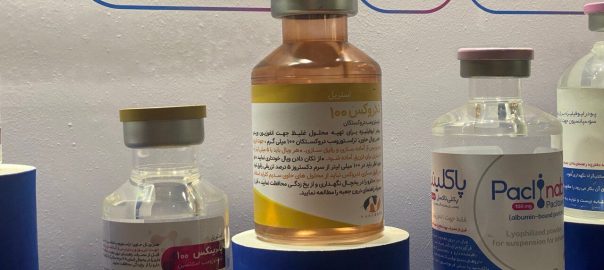
Iranian researchers have managed to produce the latest version of cancer medicine Tederox, which helps patients live longer. The medicine has been produced by a pharmaceutical knowledge-based company and was unveiled at the Iran Nano 2024 Exhibition that was held in Tehran from November 3 to 6.

Speaking with IRNA on Thursday, Ali Aghajani, who is a pharmacist and the business development manager at the company, said that thanks to having a targeted nature of treatment, the newly-produced version of Tederox can increase the lifetime of cancer patients while reducing the common side effects of cancer medications.

He said that the production of this drug took four years to be completed./IRNA/

Iranian students win gold medals in ISIF 2024

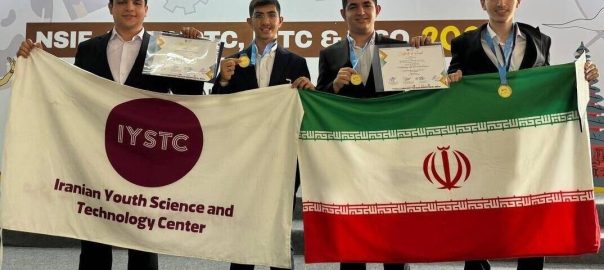
Iran grabbed five gold medals and two special awards in the International Science and Invention Fair (ISIF) 2024, which was held in Indonesia from November 5 to 10.

The competition brought together 1,980 teams from 24 countries competing in eight fields including technical- engineering, chemistry and nanotechnology, biotechnology and environment, energy engineering, physics and astronomy, artificial intelligence and technology, social sciences, education, and educational technologies, IRNA reported.

Participants from different countries like Indonesia, Malaysia, Romania, the Czech Republic, Russia, Turkmenistan, Iran, Thailand, Vietnam, South Africa, the United Arab Emirates, India, Hong Kong, and China attended the competition either online or in person.

Three Iranian teams participated in person, while the two other teams attended the competition virtually.

The team made up of Ilia Majidzadeh and Parsa Karimi won a gold medal in technical engineering; they also received a special award from the Malaysian Invention and Innovation Association.

The other team consisted of Amir Abbas Kavoosi, Amin, and Artin Salari also grabbed a gold medal in technical engineering.

Moreover, Nima Sohrabi won a gold medal in artificial intelligence technology and a special award from Romania.

The team comprised Artin Radmatin, Niki Abtahi, Baran Bahman, Sarina Nosrati, and Mohammad-Hossein Ezzati in environment, and the team consisted of Baran Derakhsandeh Daryasari, Paniz Khaljifar, Golshid Shirvani, and Yasman Saeedi in biotechnology managed to win two gold medals.

Recent achievements

A total of 18 students from Iran attended the 47th WorldSkills Competition, winning 9 medals including a silver medal and medallions for excellence.

The competition was held from September 10 to 15 in Lyon, France. Some 1,500 competitors from more than 65 countries and regions around the world gathered in Lyon to compete in different skills.

Hasan Mohammadi and Hamid-Reza Hamidi won the silver medal, IRIB reported

Iran grabbed a gold medal, two silver medals, and a bronze medal at the 36th International Olympiad in Informatics (IOI), ranking 9th among 96 countries.

Hosted in Alexandria, Egypt, the event started on September 1 and concluded on September 8, IRNA reported.

Each participating country selected a team of up to four contestants to represent their nation.

The team competed in a two-day competition. Each contestant competed individually to maximize their score by solving three algorithmic problems within five hours.
Iranian students attended the event online and ranked ninth globally.

In a remarkable achievement, Iranian students won five gold medals, ranking first in the 17th International Olympiad on Astronomy and Astrophysics (IOAA) which was held from August 17 to 27 in Vassouras, state of Rio de Janeiro, Brazil. / T.T/

Technical-engineering services export stands at $700m in 7 months

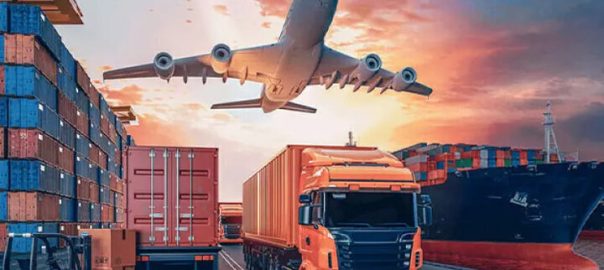
The value of Iran’s technical-engineering services stood at $700 million during the first seven months of the current Iranian calendar year (March 20-October 21), the Islamic Republic of Iran Customs Administration (IRICA) has announced.

According to the chairman of the board of directors of Iran Power Industry Syndicate, Iran has good capacities for exporting technical and engineering services overseas, which is important in realizing an eight percent growth of Iran’s economy.

All the capacities, whether domestic or foreign, should be used optimally to materialize an eight-percent economic growth in the country, Payam Baqeri said in early May. Focusing on exporting technical and engineering services is one of the areas that can help boost the economy to a great extent, he emphasized.

The member of the Iran Chamber of Commerce, Industries, Mines and Agriculture (ICCIMA) went on to say that exporting technical and engineering services can yield foreign currency for the country as well.

In addition, exporting technical and engineering services creates a good opportunity for the country to sell the manufactured products in the target markets, he stated.

Baqeri pointed to a recent inauguration of the Uma Oya Dam and Power Plant in Sri Lanka and added that the multi-purpose project, which was designed and built by Iranian companies, is among the country’s main projects in the field of exporting technical and engineering services.

Exporting technical and engineering services in the current year named “Production Jump with People’s Participation” is a need that should be taken into serious consideration, he stressed.

In late April, the chairman of the Board of Directors of the Iran Water Industry Federation said the country exported $1.8 billion worth of technical and engineering services over the past two years.

Stressing the importance of exporting technical and engineering services, Reza Haj Karim said giant steps have been taken in the administration of President Ebrahim Raisi in the field as compared to the previous years.

Domestic knowledge-based companies have a high potential to export technical and engineering services and can do even better with due support from the government, he underscored.

Haj Karim further noted that Sri Lanka, Indonesia, and East Asian countries are among those whose economic growth is higher than the world average so this Asian market can be a lucrative market for Iranian domestic companies.

As a leading country in the water and electricity industry, Iran stands in the first rank in the region in the export of technical and engineering services in this industry, and this shows the high technical and engineering knowledge and ability of Iranian specialists and companies.

Thanks to the efforts of the country’s specialists in the years after the victory of the Islamic Revolution, Iran is now among the top five power plant turbine manufacturing countries in the world. /T.T/

Iran has various defense systems to respond to major threats

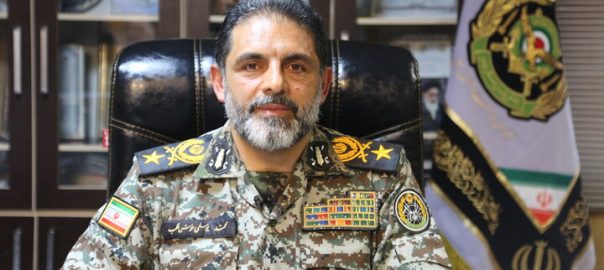
Deputy coordinator of the Iranian Army Air Defense Force told Mehr News Agency that the Islamic Republic has various defense systems to respond to diverse and massive threats.

Air defense creates authority by producing power and this leads to the formation of deterrence against enemy threats, Mohammad Khoshghalb said in an interview with Mehr News Agency.

He stressed that a large part of the Air Defense Force equipment is domestically-built.

“Today, we have a very favorable situation in the field of detection. Regarding radar and detection systems, we use radars in different frequency bands and in different ranges, and we have maximum accuracy and minimum errors in the field of detection,” he underlined, adding that regarding identification, they do a multi-layered operation.

Regarding interception, the Airf Defense Force uses all tools, including ground and air bases to take a suitable tactical action if necessary, he added.

“Today, we have various and numerous engagement systems to respond to diverse and high-volume threats that are in different ranges, variable altitude layers, and frequencies,” Khoshghalb further emphasized.

Regarding defending the defense systems and special and sensitive places, Iran has favorable capacities and facilities, he said elsewhere in his remarks, adding that the country also owns systems that operate very well in detecting hypersonic threats.

Answering a question regarding the Israeli regime’s threats, he said that Iran has previously proven that it will not compromise with anyone who wants to cross its lines, and it would give a serious response to anyone who aims to do so.

“We will not allow the enemy to enter the stage of action,” he emphasized. /MNA/

Iran receives first signals from Kowsar, Hodhod satellites

The two domestically-made satellites launched by Iran on Tuesday in cooperation with Russia have begun transmitting signals, indicating their perfect condition and orbiting.

Receiving the signals has several meanings. Firstly, the launch was completely successful, and secondly, the operation of the satellite and its successful separation from the carrier, said Hossein Shahrabi, the CEO of Omidfaza, a private Iranian company behind the manufacturing and launching of the two satellites.

For us, this reception means the complete opening of the satellite antennas and their successful exit from the carrier, he added.

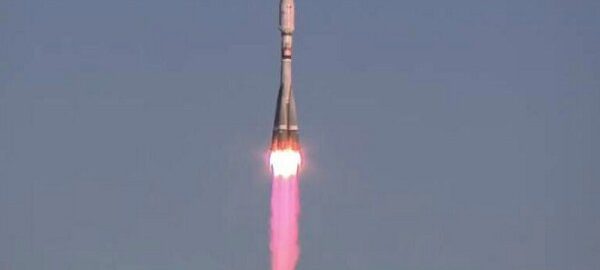
The satellites named Kowsar and Hodhod were launched into space from eastern Russia using a Soyuz rocket carrier in the early hours of Tuesday and were successfully placed into the 500 km orbit of Earth.

The data and images from the two satellites will be suitable for use in agriculture, land surveying, transport, and the environment.

The great advantage of the Hodhod satellite is that its mission is to create a platform for providing narrowband Internet of Things (IoT) services, with international coverage and in remote areas, including forests, mountains.

The launch reflects the growing space cooperation between Moscow and Tehran as well as another achievement of the Islamic Republic in aerospace technology. / MNA/

Iran among top nuclear technology countries: AEOI chief

The head of Atomic Energy Organization of Iran (AEOI) said the country has become one of the top countries pocessing nuclear technology thanks to dedicated and round-the-clock efforts of its talented youths.

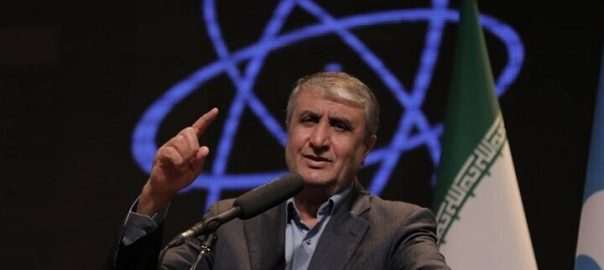
Addressing a meeting with students and professors of Shiraz University on Saturday, Mohammad Eslami said Iran has achieved considerable progresses in nuclear science and technology.

“Now we have succeeded in obtaining computing codes and software used in the design and construction processes,” the Iranian nuclear chief stressed. These codes are used in the production of atomic products, he underlined.

He noted that great efforts have been made in the AEOI during recent years to pass the “research phase and enter the industrial phase” and this process is advancing.

Elsewhere in his remarks, the AEOI chief stressed the importance of making progress in the fields of science and technology which will lead to the country’s development and progress in all fields.

“With the flourishing of science and technology, deterrence will be created and no one will think of aggression, so it is necessary to make more efforts not to be dominated by others,” the AEOI head added.

Over the past years, Iran has recorded many achievements in its peaceful nuclear energy program in defiance of US sanctions and other hurdles created by the Western countries, he continued.

As one of the first signatories to the Nuclear Non-Proliferation Treaty (NPT), Iran has also been closely cooperating with the International Atomic Energy Agency (IAEA).

Regarding the unveiling of the light water training reactor simulator in Shiraz, Eslami added this simulator is one of the accelerating capacities in the field of research and human resource training, and students’ skills will increase through continuous work with this simulator. /MNA/

Annual exports of nano-products up 110%

Secretary of Iran Nanotechnology Innovation Council Emad Ahmadvand said that the country’s export of nano-products in the previous Iranian calendar year (ended on March 19) increased 110 percent compared to a year earlier.

As IRIB reported, Iranian producers exported $145 million of nanotechnology products in the mentioned year, according to Ahmadvand.

Iran had exported $69 million worth of nanotechnology products between March 21, 2022, to March 21, 2023, he noted.

The official said the total value of Iran’s nano-products in the previous year stood at $1.62 billion, of which about 91 percent was sold in domestic markets and only nine percent was exported.

Ahmadvand further pointed out that sales of nano-made products in Iran in 2023 increased by 104 percent compared to 2022.

The nano-coating technologies, nano-composites, and nano-catalysts accounted for the major share of the domestic market, he added.

Presently, Iranian-made nanotechnology products are exported to 49 countries in the world, of which about 60 percent is exported to Iraq, Syria, India, China, and Turkey, the secretary of Iran Nanotechnology Innovation Council pointed out./ T.T/