All posts by islam

First image of Iranian-made Daylaman destroyer released

The first image of the Daylaman destroyer built by the military experts at the Iranian Ministry of Defence and Armed Forces Logistics which will soon join the Navy fleet, has been released.​

According to the announcement of Brigadier General Mohammadreza Ashtiani, the Minister of Defense and Armed Forces Logistics, the unveiling and joining of the destroyer to the Navy is scheduled to take place on the occasion of Navy Day.

This destroyer is one of the Mowj class destroyers with a weight of 1500 tons, which has many advantages over the previous variants.  /MNA/

Iranian films, series, animation selected for Saudi Arabia’s Red Sea International Film

A total of seven Iranian productions will participate in the 3rd Red Sea International Film Festival in Jeddah, Saudi Arabia, from November 30 to December 9. Three feature films, two short films, one animation and one series are the works from Iran included in the festival lineup, ISNA reported.

“Roxana” written and directed by Parviz Shahbazi will represent Iran in the main competition section. It is the story of a young gambler who finds an unexpected romance with a talented girl artist. Determined to turn his life around, he strives to become a better, more useful person.

Mahsa Akbarabadi, Yasna Mirtahmasb, Maedeh Tahmasbi, Behrang Alavi, Rambod Motalebi, Niloofar Kookhani, and Shahram Abdoli are in the cast.

In its world premiere at the 36th Tokyo International Film Festival in October, the film won the Best Actor Award for Yasna Mirtahmasb.

Competing in the Shorts Competition section, two short flicks from Iran will vie for the award, including “Suitcase” by Saman Hosseinpour and Ako Zand-Karimi and “Titanic, Suitable Version for Iranian Families” by Farnoosh Samadi.

“Suitcase” is about a Kurdish refugee who lives in his suitcase far from his own homeland. In it he carries memories of his family. When someone steals the suitcase in the tumult of the foreign city center, he loses his home a second time.

The 15-minute flick won the best script award at the 11th Parma International Music Film Festival in Italy and the Audience Award at Kobani International Film Festival in Germany in September.

Meysam Damanzeh, Rezvan Khodami, Elena Sahami and Ava Moslemkhani are in the cast of the short work.

Samadi’s short film depicts a complex and combative exchange at an Iranian broadcaster over a certain Hollywood blockbuster, which disguises deeper ruptures.

The cast includes Sadaf Asgari, Hamed Advay, Mohammad Heidari, Amirreza Rajbaran, Melika Pazouki, Mojtaba Batvandi, Mohammad Asna, and Behnaz Jafari.

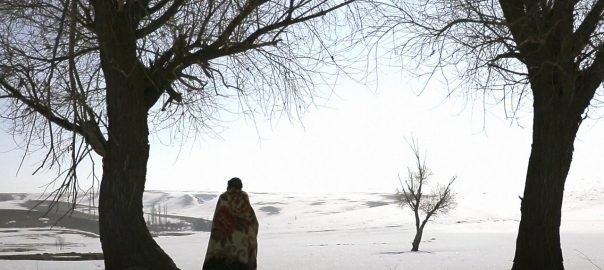
“The Last Snow” by Amirhossein Asgari will be screened at the Festival Favorites section. It is about Yousef, a successful and committed veterinarian who lives in a village. When his daughter’s friend, Khorshid, disappears, all the villagers look for her sympathetically until a secret is revealed.

Premiered at the 40th Fajr Film Festival, it earned 9 nominations, winning 4 awards. Amin Hayai, Ladan Mostofi, Majid Salehi, Nooshin Masoudian, Mohammad Sadegh Malek, and Mehdi Mehraban are in the cast among others.

The animated movie “3 Little Kungpoo Goats” by Kianoush and Farzad Dalvand and feature film “Captain” by Mohammad Hamzei are the Iranian works in the Families and Children section of the Red Sea Festival.

A joint production of Iran and China, the animation shows a jungle where there is a fragile ceasefire between predators and preys. One day the wolf who is exhausted by vegetarian recipes decided to find a legal detour to hunt some little goats without breaking the truce. But he doesn’t know that these little goats are the students of the Martial School that trains self-defense to little animals.

“Captain” revolves around an 11-year-old boy named Isa who is absolutely convinced that he will soon be playing for the Iran national football team. Nothing can shake his confidence. Not even the fact that he lives in the cancer section of a hospital and gets weaker from treatment to treatment.

Pejman Bazeghi, Pante’a Panahiha, Amirhossein Bayat, Bahar Nouhian, Arghavan Shabani, Shayan Deramipour, and Parham Gholamlou play in the 90-minute film deals with the themes of hope and forgiveness.

The series “Actor” written and directed by Nima Javidi is also present in the Series section of the event.

Blending drama, mystery and black comedy, the series is a dazzling story about two impecunious actors Ali and Morteza who turn the world into their scene. The duo put their acting talents to original use, hopping from a staged marriage proposal to a graduation ceremony, via an array of receptions and functions. But things don’t always go as planned as they find themselves in increasingly daring and dangerous situations, while simultaneously trying to deal with the problems in their own lives.

The cast includes Navid Mohammadzadeh, Ahmad Mehranfar, Hasti Mahdavifar, Hanieh Tavassoli, Hooman Barghnavard, Gelareh Abbasi, Arash Falahatpisheh, Roya Javidnia, Mehraveh Sharifinia, and Farideh Sepahmansour among others.

The series has so far received an honorable mention from Seriencamp Festival in Germany earlier this year in June and the grand prize of Series Mania Festival in France in March. It also won the best screenwriter award at the 18th Seoul International Drama Awards in South Korea in September.

Launched in 2019, the Red Sea International Film Festival mainly focuses on new storytelling trends, as well as emerging talents from Saudi Arabia, the Arab world, the West Asia, and the rest of the Global South. /T.T/

Iran’s Nasiri snatches gold at 2023 Junior World Weightlifting Championships

Alireza Nasiri of Iran claimed a gold medal at the 2023 Junior World Weightlifting Championships. He came first in the 96kg weight class after lifting a total of 371kg (166+205) in the tournament.

Turkmenistan’s Shahzadbek Matyakubov seized the silver with 367kg and Masashi Nishikawa of Japan won the bronze with 362kg.

The competition has started in Guadalajara, Mexico on Nov. 15 and will run until Nov. 23.

The 2023 Junior World Weightlifting Championships have brought together 229 athletes from 44 countries. /T.T/

Iran 13th biggest wheat producer in world

Iran is the largest wheat producer in the world in 2023, producing 14 million tons of wheat, according to the statistics of the US Department of Agriculture.

In its latest report on the situation of grain production in the world, the department said Iran produced over 14 million tons of wheat in the 2023 Crop Year, showing an 800,000-ton hike compared to the same period last year.

Iran’s wheat production in 2023 registered a six percent growth compared to last year’s corresponding period, the report added.

Iran had produced 13.2 million tons of wheat in 2022.

In 2023 countries in the world produced 782 million tons of wheat in total, indicating a seven million tons slump compared to a year earlier.

China became the world’s biggest wheat producer in 2023, producing more than 137 million tons of wheat in this period, followed by the European Union and India. /MNA/

Tehran University plans to build branch in India

The president of the University of Tehran (UT) has said that establishing a branch of the university in India is one of the plans of the university in line with the expansion of the university program.

The President of the University of Tehran (UT) Seyyed Mohammad Moqimi made the comments in a meeting with the Indian Ambassador Rudra Gaurav Shresth in Tehran on Tuesday.

Referring to the cultural similarities between Iran and India, the UT president emphasized the need to develop scientific, academic, economic and political relations between the two countries.

“The University of Tehran is developing international cooperation with considering neighboring countries that share common viewpoints with the Islamic Republic of Iran as a priority,” Moqimi said, adding that, “In this regard, we have started activities to set up Tehran University branch in Iraq and we have made agreements with Iraqi governmental and non-governmental sectors in order to set up Tehran University branch in different cities of Iraq.”

The UT President of Tehran University further stated that holy Najaf is the first city targeted in Iraq for the establishment of the first branch of the University in the neighboring country, adding that, “In Syria, we have also started a joint cooperation with Damascus University in order to establish a branch of Tehran University in that country. Also, at the Georgia branch of Tehran University, we are going to enroll students from February 2024.”

Referring to the experience of holding seven meetings of presidents of major Iranian and Russian universities in Tehran and Moscow, he announced the planning to create the same experience between the major universities of Iran and China, with the two universities of Tehran and Nanjing at the center of the activities, and by proposing to hold a meeting of presidents of universities between Iran and India.

“I suggest that a joint university parliament be formed between major universities of Iran and India, its secretariat should be located in Tehran University,” Moqimi added.

The ambassador of India Shresth, for his part, welcomed the suggestion to establish the branch of Tehran University in India, and considered the idea of the president of Tehran University to establish a joint university parliament between India and Iran as a promising idea for progress in bilateral cooperation. /MNA/

Iran ranks 13th in agricultural sector scientific production

Iran has moved from 15th to 13th in the global ranking of scientific production in the agricultural sector, according to the deputy minister of agriculture.

Mojtaba Khayyam Nekouei, who also heads the Agricultural Research, Education and Extension Organization (AREEO), said this on Monday, adding that scientific productions are important in the agricultural sector.

He described the sustainability of food security in the country as the most important goal in the agricultural sector, stating that becoming knowledge-based and increasing productivity are the most important components of food security.

He said more than 25 percent of the scientific productions of the country in the agricultural sector belong to the AREEO, the outcome of which can be witnessed in boosting agricultural production.

Currently, Iran stands at the first rank in the West Asia region in terms of scientific production in the field of agriculture, Khayyam Nekouei said, adding that the speed of scientific production should be accelerated in order to attain the appropriate scientific status in the international arena.

Turning to Iran’s accession to international treaties including the Shanghai Cooperation Organization (SCO), he noted that Iran can become an authentic scientific source in the agricultural sector in SCO and ECO member states. / MNA/

Tourist arrivals in Iran jump 40 percent y/y

Foreign arrivals to Iran during the first seven months of the current Iranian year were up 40% compared to the same period last year, the deputy tourism minister said.

“In the first seven months of this year, the arrival of overseas tourists to the country increased by 40% compared to the same period last year,” Ali-Asghar Shalbafian said.

He says the rate of tourist arrivals, mainly from Iran’s neighboring countries, has been “promising”.

The official said Iran enjoys a considerable share of arrivals from its neighboring countries.

“The tourism ministry has put in a great deal of effort to both ease arrivals and diversify its tourism sources,” he added. “For example, travelers from Iraq and Turkey can easily visit Iran in their own cars and such a facilitation is to be provided for travelers from Armenia in the near future.”

According to available data, the Islamic Republic saw 3.35 million foreign arrivals in the first half of the current Iranian year, which soared 38 percent year on year.

Pursuing a border-easing scheme, the Iranian government mulls abolishing visa requirements for passport holders from 68 countries. The country seeks to encourage overseas travelers, though available evidence suggests it will not be finalized to be implemented shortly.

Shalbafian says the visa waiver incentive will mostly be granted to neighboring countries as well as those considered emerging markets with a considerable population and per capita income.

The tentative list includes Argentina, South Africa, Indonesia, Jordan, Uruguay, Uzbekistan, Estonia, Slovakia, Slovenia, Ecuador, Algeria, UAE, Bahrain, Bolivia, Bosnia and Herzegovina, Brazil, Belarus, Bulgaria, Burkina Faso, Paraguay, Peru, Tanzania, Tajikistan, Thailand, and Turkmenistan.

Tunisia, Czech Republic, Russia, Romania, Japan, Ivory Coast, Singapore, Senegal, Sudan, Seychelles, Chile, Serbia, Saudi Arabia, Ghana, Finland, Cyprus, Kyrgyzstan, Kazakhstan, Qatar, Cameroon, Croatia, South Korea, Colombia, Comoros, Kuwait, Guinea, Poland, Luxembourg, Libya, Lithuania, Malaysia, Maldives, Hungary, Macedonia, Mexico, Mauritius, Mali, Madagascar, Niger, Vietnam, Yemen, Greece, and India constitute other states whose nationals may be granted visa-free access.

The number of tourist arrivals is estimated to reach six million by the end of the current year (March 19, 2024), Shalbafian said last month. “With the [steady] increase in the arrival of foreign tourists, it is expected the number of international arrivals will reach about 6 million by year-end.”

According to available data, Iran’s tourism had constantly been growing before the COVID-19 pandemic, reaching more than eight million visitors in the Iranian calendar year 1398 (started March 21, 2019).

Based on the latest United Nations World Tourism Organization (UNWTO) World Tourism Barometer, foreign tourist arrivals in Iran reached some 2.93 million between January and July 2023.

The average statistics of Iran’s tourism from January to August 2023 is 50% lower than the same period in 2019 based on the barometer that tracks the sector’s post-pandemic recovery throughout 2023 up to the end of July.

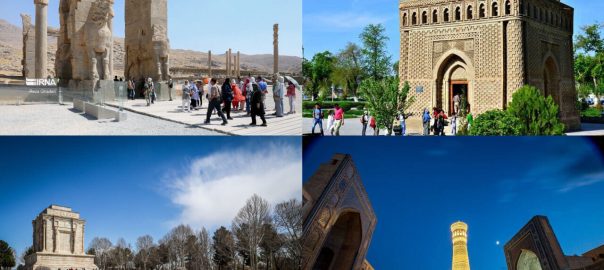
The Islamic Republic expects to reap a bonanza from its numerous tourist spots such as bazaars, museums, mosques, bridges, bathhouses, madrasas, mausoleums, churches, towers, and mansions, of which 27 are inscribed on the UNESCO World Heritage list.T.T

Iran’s non-oil export to Pakistan rises 62% in 7 months on year

The value of Iran’s non-oil export to Pakistan increased by 62 percent during the first seven months of the current Iranian calendar year (March 21-October 22), as compared to the same period of time in the past year, the spokesman of the International Relations and Trade Development Committee of Iran’s House of Industry, Mining and Trade announced.

Ruhollah Latifi said that Iran exported non-oil commodities worth $1.14 billion to its neighbor Pakistan in the seven-month period of this year.

He also announced that Iran imported commodities valued at $352.64 million from Pakistan during the first seven months of this year, with 39 percent drop year on year.

The official has previously announced that Iran’s non-oil export to Pakistan increased by 18 percent in the previous Iranian calendar year (ended on March 20).

Pakistan was Iran’s fifth largest export market in the previous calendar year, importing non-oil products worth $1.488 billion from Iran, Latifi said in May.

He added that Iran imported non-oil goods worth $842 million from Pakistan last year, up 170 percent from the previous year.

The intertwining of economic, security, and transit relations between Iran and Pakistan has made the relations of the two countries beyond the neighborhood and turned them into strategic partners with common interests at the regional level.

Having more than 900 kilometers of joint border can lead to closer and more cooperation between the two countries in areas such as transit corridors and bilateral trade.

Iran and Pakistan signed a Memorandum of Understanding (MOU) in mid-January to facilitate bilateral trade between the two countries.

The MOU was signed by the former Head of Iran’s Trade Promotion Organization (TPO) Alireza Peyman-Pak and Head of the Trade Development Authority of Pakistan (TDAP) Muhammad Zubair Motiwala.

Based on the MOU, which was signed on the sidelines of Iran’s Exclusive Exhibition in Karachi, the parties pledged to exchange business information, support each other’s private sectors, and provide the conditions and context for the presence of their trade delegations in the other country.

Speaking at the signing ceremony, Peyman-Pak said that signing this MOU was indicative of the two sides’ determination for removing the obstacles in the way of bilateral trade and prepare the ground for the businesspersons of both sides to bolster cooperation.

He considered the holding of exclusive exhibitions, exchanging trade delegations, and investment in joint production units as positive steps for knowing the capacities and needs of the two countries and expressed hope that such events would continue.

Also, during a meeting between the previous Head of Tehran Chamber of Commerce, Industries, Mines, and Agriculture (TCCIMA) Masoud Khansari, and Chief Executive of Trade Development Authority of Pakistan (TDAP) Muhammad Zubair Motiwala in Tehran in mid-May, the two sides expressed the need for the expansion of relations between the private sectors of the two countries.

Speaking at the meeting, Motiwala announced the readiness of his organization for long-term and progressive interaction with TCCIMA in order to facilitate the commercial exchanges of the two sides’ economic enterprises.

He stressed the need for continuous exchange of trade delegations with the aim of introducing the economic and market cooperation capacities of the two countries and identifying the goods and services needed by the markets of both sides.

According to the official, the chambers of commerce in the two countries can provide the basis for the expansion of interaction between the private sectors of the two countries.

Motiwala also considered the revision and modification of the tariffs on commodities traded between the two countries as necessary to increase the level of economic cooperation, and in this regard, he reminded that Pakistan is taking serious measures.

Khansari for his part, welcomed the ideas presented by the Pakistani side and emphasized the need for amending the tariffs on goods exchanged between Iran and Pakistan.

“A complete list of commodities needed by the markets of the two countries has been prepared by the Tehran Chamber of Commerce which has been compiled by the data provided by reliable companies,” Khansari said.

As the latest step in line with broadening economic and trade ties between the two sides, Iranian Foreign Minister Hossein Amir Abdollahian and his Pakistani counterpart Bilawal Bhutto Zardari inked a five-year strategic plan document for trade cooperation between the two neighboring countries from 2023 to 2028, in Islamabad.

Amir Abdollahian and Bilawal discussed the latest bilateral political, economic, and defense issues, including the development of trade ties during the meeting.

“Under the government of Iran’s President Ebrahim Raisi, the volume of trade exchanges between the two countries has increased by more than 50 percent,” Amir Abdollahian said in the meeting, adding that Iranian and Pakistani officials want to see further expansion of ties in the future, given existing capacities.

Bilawal, for his part, called for the formation of a strategic committee to follow up on agreements on the expansion of cooperation. /T.T/

Iran’s priorities for UNESCO listings unveiled

Iran’s Cultural Heritage, Tourism, and Handicrafts Minister has implicitly unveiled the country’s top four candidates for possible UNESCO registrations.

Ali Darabi, the deputy minister for cultural heritage, prompted the speculations when he named four special assistants for developing dossiers and pursuing cultural heritage elements, ISNA reported on Friday.

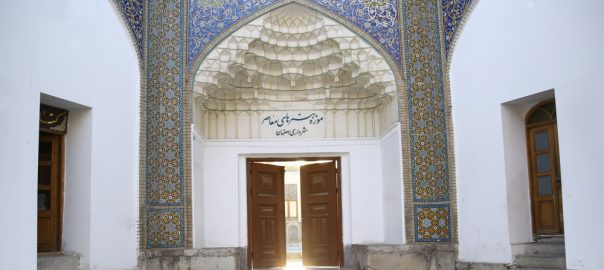
The cited properties revolved around Iranian mosques, Persian Asbads (vertical windmills), the Masuleh cultural landscape and the Falak-ol-Aflak fortress.

Late in October, the tourism minister Ezzatollah Zarghami said his ministry seeks to win a UNESCO label for a selection of its historical mosques. “We in the Ministry of Cultural Heritage, Tourism and Handicrafts are compiling a dossier for [a selection of] historical mosques for [a possible] registration in UNESCO’s tangible World Heritage list,” Zarghami said.

The minister said mosques along with other religious places have long been a distinctive element of the Iranian culture that should be preserved. “In Iranian and Islamic culture, mosques are blessed places of faith and cultural heritage and we must do our best to protect them,” he said.

In every corner of Iran, cascades of photogenic domes and minarets can be seen as inseparable elements of mosques, some of which are widely known as timeless benchmarks of Islamic architecture.

Six years after being added to UNESCO’s tentative list of World Heritage properties, Iran’s collection of ancient windmills is still not prepared for a final assessment. An Asbad uses a smart technique to grind grains, a technique that goes back to ancient times when the people living in the eastern parts of Iran invented it in an attempt to adapt themselves to nature and transform environmental obstacles into opportunities.

Such a primitive yet significant machine is believed to bear testimony to the human being’s adaption to nature by transforming environmental obstacles into opportunities.

Qale Falak-ol-Aflak is a Sassanid era (224–651) fortress that measures approximately 300 by 400 meters, with a height of about 40 meters above the surrounding area. The unmissable eight-towered fortress dominates Khorramabad as one of the most visited travel destinations in the region for both domestic and foreign sightseers.

Masouleh is a picturesque historical village that is famed for its Lego-shaped earthen houses built on another’s rooftop. Archaeological evidence indicates the history of human presence in mountains near Masouleh dates back to the late Bronze Age (2000-1500 BC), which is older than previously believed.

Iran seeks to reap a bonanza from its numerous tourist spots such as bazaars, museums, mosques, bridges, bathhouses, madrasas, mausoleums, churches, towers, and mansions, of which 27 are inscribed on the UNESCO World Heritage list. /T.T/

Iran’s “Laleh” wins award at Milano sports film festival

“Laleh” by Los Angeles-based Iranian filmmaker Asadollah Niknejad won the FICTS award at the 40th edition of Milano International FICTS Fest, an event for sports movies and TV, which was held in Milan, Italy from November 7 to 11.

The film tells the true story of the first female Iranian race car driver, Laleh Seddiq, who defied gender norms and societal expectations to pursue her dream of racing cars.

Set in post-revolution Iran, “Laleh” follows the protagonist’s journey as she faces opposition from her family, society, and even the authorities, who view racing as a male-dominated sport. Despite these challenges, Laleh remains determined to achieve her goals, pushing boundaries and breaking barriers along the way.

The Federation Internationale Cinema Television Sportifs (FICTS) is the organizer of the event, which was the final phase of the World FICTS Challenge that runs in 20 countries around the world including Iran. /T.T/