All posts by islam

Cafe Bazaar on 28 Million Phones

Cafe Bazaar, Iran’s most popular local Android app store, announced over the Iranian weekend (Thursday-Friday) that its app has now been installed on over 28 million Android devices. Speaking in a news conference, Hesam Armandehi, the local app store’s CEO, noted the growth in the application’s revenue has grown 120% over the past 12-month period (ending March 19), according to the press release released to local technology site, Techrasa. The CEO noted that the uptake in installations of the app was largely due to the growth in 3G LTE, a mobile communications standard. The emergence of 3G as a competitor to regular WiFi signals is part of a growing trend by the operators to offer more competitive services.
Armandehi announced the group’s upcoming Panjshanbeh (Thursday in Farsi) Bazaar, which will allow the company to meet many of the local app developers who work in Tehran and surrounding cities. The event, the second such event, is an annual gathering of mobile app developers from the Islamic Republic and is the largest of any kind in the country.

/financialtribune.com/

Iranian banks are now connected to SWIFT

According to the CEO of the Bank of Industry and Mine, Iranian banks are now connected to SWIFT, the Society for Worldwide Interbank Financial Telecommunication. Ali Ashraf Afkhami, said that SWIFT is now open to Iranian banks, Bourse Press reported. In 2012, SWIFT cut off Iranian banks subjected to EU sanctions over Iran’s nuclear energy program, shutting down a major avenue of doing business with the outside world. However, Iranian banks, their overseas branches and affiliates were officially removed from SWIFT’s sanctions list on January 17 after Iran’s nuclear accord with the six world powers came into effect. Afkham added that although Iranian banks could open LCs on the first day of the implementation of the nuclear deal, they had to resort to the traditional method for opening LCs because they had access only to the pre-sanctions’ passwords for LCs. “Even though reconnecting to SWIFT took almost three weeks, it is now ‘routinely’ processing transactions for Iranian banks.”

/financialtribune.com/

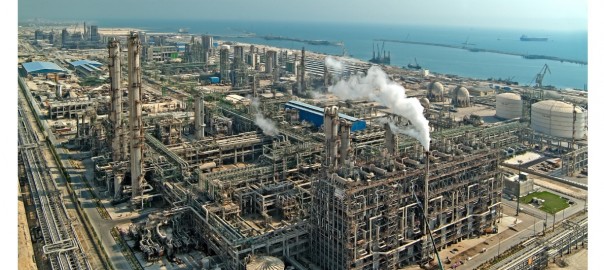
Iran’s gas condensate output up 20% in 11 months

The production of gas condensate in Iran rose 20 percent in the first eleven months of the current Iranian calendar year (March 21, 2015-February 19, 2016), compared to the same period of time in the past year, said Abdulhossein Samari, the operations manager of the National Iranian Gas Company (NIGC).

The production of Gas condensate, a light form of crude oil produced in association with natural gas, reached around 234 million barrels in the 11-month period, the Islamic Republic of Iran Broadcasting (IRIB) reported on Saturday.

During the mentioned time, Samari said, the output of sulfur also jumped seven percent in comparison with the last year’s figure which stood at 917,000 tons.

According to him, Iran produced over 21.251 million barrels of liquefied petroleum gas (LPG) during the period, showing a 35 percent growth relative to the last year’s record.

In the 11-month time span, the official added, the gas refining capacity surged seven percent to 162.5 billion cubic meters.

Iran aims to nearly double gas production to reach one billion cubic meters per day in less than two and a half years.

With its 34 trillion cubic meters of natural gas, Iran has the biggest gas reserves in the world.

The country intends to enhance gas production by increasing foreign and domestic investment, especially in its South Pars gas field.   /Tehran Times/

Iran’s Anti-Drug Efforts to Benefit World

Iran’s top human rights official said all countries will benefit from the Islamic Republic’s efforts against drug trafficking.

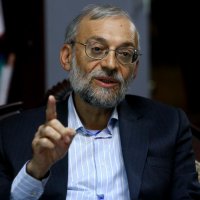
“Iran takes into consideration all the adverse consequences of drug trafficking”, Mohammad Javad Larijani, secretary-general of Iran’s High Council for Human Rights, said in a meeting with Zeid Ra’ad Al-Hussein, the UN high commissioner for human rights, in the Swiss city of Geneva on Friday, according to Press TV.

“The battle against drug smugglers is a serious issue in Iran that should be heeded at an international level because the whole world will in practice benefit from the fight,” Larijani said.

Despite high economic and human costs, the Islamic Republic has been actively fighting drug trafficking over the past three decades.

Iran has spent more than $700 million to seal the borders and prevent the transit of narcotics destined for European, Arab and Central Asian countries. The war on drug trade originating from Afghanistan has claimed the lives of nearly 4,000 Iranian police officers over the past 34 years.

In December 2015, Interior Minister Abdolreza Rahmani Fazli and the United Nations Office on Drugs and Crime Executive Director Yury Fedotov signed an agreement in the Austrian capital Vienna to fight the flow of narcotics into Iran from neighboring countries, mainly Afghanistan.

Iran, which has a 900-kilometer border with Afghanistan, has been used as the main conduit for smuggling Afghan drugs to drug kingpins in Europe.

Larijani said Iran and the UNHCHR have always maintained positive cooperation and called for enhanced mutual interaction.

Front Line

Hussein said Iran lies on the frontline of the fight against the scourge of drugs.

He expressed his keenness to pay a visit to Iran and hold talks with judicial and human rights officials of the country.

The UN human rights chief regretted the the deplorable situation in the Middle East and the consequences of war and violence in the region.

Hussein said the UN plans to examine problems created for refugees, mainly Muslims from Middle East states, and to protect the rights of refugees and minorities in Europe.

Thousands of refugees, mostly fleeing war and poverty in the Middle East, are trapped in Greece, which has been the main gateway for refugees into wealthier European states.

The exodus has prompted several EU states and Balkan countries to impose restrictions on their borders.

The United Nations and other world organizations say the refugee crisis in Europe is quickly turning into a humanitarian disaster, calling for the implementation of a relocation plan for thousands of stranded refugees.

/financialtribune.com/

Iran to Become Mideast’s Next Economic Superpower

With international sanctions on Iran being lifted, the country boasts one of the most advanced and diversified economies in the Middle East and North Africa region, a leading online publication that provides analysis on political risk and geopolitics for the business community said.
Global Risk Insights added that Iran will become the next Middle Eastern economic superpower by 2025.
The Iranian nuclear deal struck at Vienna last year will undoubtedly lead to a tectonic shift in the Middle Eastern balance of power, allowing Iran to confidently reenter the international fray.
Discussions concerning the emergence of a reenergized Iran persist, with the Saudis in particular fearing an Iranian domination of the Middle Eastern landscape for the foreseeable future. Unshackled economically, Iran is more than likely on course to become a regional economic superpower over the next 10 years, with growth rates of around 3.5% expected this year. This would place Iran as the second fastest growing economy in the MENA region.
According to the International Monetary Fund, since 2011, sanctions have wiped off between 15-20% from Iranian GDP.
In addition to this, the nuclear deal will also unfreeze billions of Iran’s overseas assets (estimates range from anywhere between $50 billion and $150 billion). This infusion of liquidity into the Iranian economy, coupled with the fact that Iran is already MENA’s most diversified economy, provide the ingredients for Iranian economic superpower status by 2025.
Additionally, Iran will also be able to add a further 1.5 million barrels of oil per day to the world markets. While it will not be able to match Saudi Arabia’s overall oil output, Tehran does hold a distinct advantage over its rival by virtue of the fact that the House of Saud, despite recent efforts to diversify, remains a one-trick pony heavily reliant on petrodollars to prop up its economy.
Buffeted by international sanctions, Iran remains rich in natural resources. Iran’s economic future appears bright, with circumstances conducive to regional superpower status by 2025.

> Iran’s Geopolitical Standing

Understanding Iran’s Middle Eastern role over the next decade cannot be disentangled from its relationship with Riyadh.
Though Saudi Arabia fears a normalization of the US-Iranian relationship, while both Iran and Saudi Arabia continue to look for incremental advantages in their relative positions across the region. The Saudi-Iranian tensions will continue to dominate the regional landscape.
Vali Nasr, one of the world’s preeminent scholars on Shia Islam, argues that Saudi Arabia and Iran will continue to tussle for power and the collapse of the Arab world has intensified this battle for predominance.
As the winds of change sweep through the region, the Saudis’ insecurities have heightened, with the Saudis fearful of American move towards the Iranians in the form of the nuclear agreement.
Riyadh sees the deal as Iran returning to the region, which in turn will see an Iran that is very difficult to contain. Saudi Arabia has also lost its position as America’s premier ally in the region.
All of these factors explain why the Saudis continue to use the sectarian card, in order to create Sunni hostility against rising Iranian influence. This is a tactic by which the Saudis are hoping to block the rising Iranian influence.
Iran has obvious potential to dominate the MENA region economically, as its economy heats up post-sanctions. Its well-diversified economy will enjoy the benefits of a return to international trade, aiding it in its quest for regional dominance.

/financialtribune.com/

Iran, Turkey ties to boost region stability: Rouhani

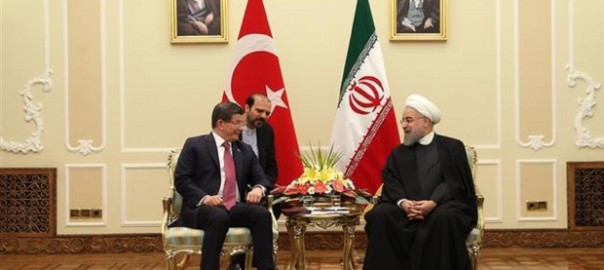
Iranian President Hassan Rouhani says cooperation between Iran and Turkey will play a positive role in the settlement of regional issues, urging the two countries to focus their efforts on the fight against terrorism.

“Iran and Turkey have common objectives and interests and must strengthen the foundations for peace and stability in the region through [improving] bilateral cooperation and focusing on the fight against terrorism as a common enemy,” Rouhani said in a meeting with visiting Turkish Prime Minister Ahmet Davutoglu in Tehran on Saturday.

He stressed the importance of fighting terrorism as a common threat to all nations and said foreign countries have never sought to solve regional problems and only seek to meet their own interests.

“We believe that regional problems should be settled by regional countries and nations and Iran-Turkey cooperation will undoubtedly play a constructive role in establishing sustainable peace in the region,” the Iranian president pointed out.

He pointed to numerous commonalities between the two neighboring countries and said Tehran and Ankara can take “constructive and effective” steps to boost unity in the Muslim world.

Rouhani said Iran and Turkey both agree that the future of every country should be decided by its own people, territorial integrity of countries should be respected, war should be stopped and aid should be provided to refugees.

He noted that regional problems have failed to affect Tehran-Ankara relations and added that no obstacle can hinder the expansion of mutual ties in line with common interests.

The Iranian president said Tehran and Ankara enjoy great potential to expand ties in different sectors including transportation, energy, trade, joint investment, tourism, science and technology and expressed the country’s readiness to bolster cooperation with Turkey.


Turkey ready for Iran anti-terror ties: Davutoglu

The Turkish premier, for his part, said Ankara is determined to open a new chapter in relations with Tehran in different areas.

He said Iran and Turkey enjoy great capacities for increasing their level of cooperation.

Davutoglu also expressed Turkey’s readiness to cooperate with the Islamic Republic in the campaign against terrorism.


The Turkish premier arrived in Tehran at the head of a high-ranking political and economic delegation Friday night for a two-day official visit.

Iran’s Vice President Es’haq Jahangiri earlier on Saturday officially received Davutoglu in Tehran. During a joint news conference with Jahangiri, the Turkish premier said Tehran and Ankara must develop a “common perspective” in order to help end the crises plaguing the region.

“It is extremely important for Turkey and Iran to develop some common perspectives in order to end our region’s fight among brothers, to stop the ethnic and sectarian conflicts,” the Turkish PM said.

Tehran and Ankara may have differences over regional issues, “but we cannot change our history or our geography,” he added.

Jahangiri, for his part, said the restoration of peace to the Middle East is in the interest of both Iran and Turkey.

The Iranian official highlighted the two neighbors’ determination to enhance their bilateral relations, particularly in the economic sector.

Davutoglu’s visit is the highest level trip by the officials of the two neighboring countries for almost a year after President Recep Tayyib Erdogan paid an official visit to Tehran in April 2015.

Navy Flotilla Docks at Tanzania Port

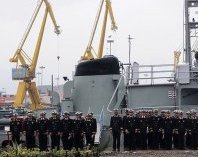
An Iranian Navy fleet has docked at Tanzania’s Port city of Dar es Salaam in line with the Islamic Republic’s strategy of expanding its naval presence in the high seas. The flotilla, comprising of Shahid Naqdi, Lavan and Bushehr warships, berthed at the African port on Tuesday as part of Iranian naval forces’ training program, Press TV reported. Speaking to reporters, Ambassador in Dar es Salaam Mehdi Aqa-Jafari said the visit is aimed at conveying the Iranian nation’s message of peace and friendship to East African countries, particularly Tanzania.

The envoy added that the flotilla’s four-day stay indicates good relations between the two countries and their keenness to improve cooperation, particularly in defense. Aqa-Jafari emphasized that Iran’s strong presence in the north and west of the Indian Ocean is in line with the country’s plans to help improve international peace and security.

“The Islamic Republic of Iran’s close relations with African countries play an important role in maintaining stability and security as well as safe and secure shipping in the region,” he said.

/financialtribune.com/

China’s GAC in Search of Iran Partner

Hoping to expand into new markets, Guangzhou Automotive Group Company has announced intentions to move into the Iranian and Russian markets.

According to Yibada, a Beijing-based website, the Chinese company intends to set up manufacturing facilities in the two markets and announced that it is looking for a local partner to construct the plant after studying the Russian market for a year and a half.

For Chinese automakers, Russia and Iran are key export markets. But when the Russian economy slid, sales of Chinese brands fell nearly 53% in 2015 to 39,085 vehicles, according to Automotive News China.

In Iran, Chery Automobile Company is the largest exporter among Chinese carmakers, with sales of about 40,000 vehicles in 2015. GAC’s CEO Wu Song, however, did not reveal details about GAC’s proposed assembly plant or the models to be produced in the plant in Iran.

It is likely that the facility would assemble cars for the Trumpchi brand, which GAC launched in 2010, the report said.

Last year, Trumpchi’s global sales rose 45% to 195,134 vehicles, which included 1,455 vehicles shipped overseas.  GAC’s export markets include the UAE, Kuwait, Lebanon and Qatar.

The Iranian market is currently cluttered with low-cost Chinese branded vehicles with local assemblers joining in on the action to produce a range of small, medium and large cars, including models like the Haima S7 and the FAW large sedan.

The report added that although GAC appears to be focused on Iran and Russia, it has also shown some interest in the US market, although Americans are wary of Chinese cars.

At the Detroit Auto Show in 2015 and 2016, GAC showcased the Trumpchi GS4 crossover.

Wu also told the press at the Shanghai Auto Show in April that the company planned to launch the GS4 in the US in 2017.

Wu did not disclose more details, but the report said GAC has not recruited dealers in the US yet.

GAC, based in Guangzhou, has joint ventures in China with Toyota Motor Corp., Honda Motor Co. and Fiat Chrysler.

/financialtribune.com/

New Battle Tank to Go on Display

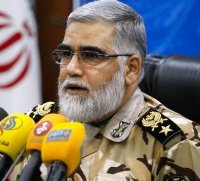
A senior commander announced that the Islamic Republic is set to unveil a domestically manufactured battle tank in the coming days. The Karrar (Striker) tank will be unveiled in the coming days in a ceremony attended by Defense Minister Hossein Dehqan, Commander of the Iranian Army Lieutenant General Ahmad Reza Pourdastan told reporters on Thursday, according to Press TV. He added that the battle tank will join the army soon. Pourdastan said Iran plans to purchase T-90 tanks from Russia, too. Last April, the army unveiled the Aqareb battle tank, which is equipped with a 90-mm-caliber cannon and can carry four military personnel. It features a state-of-the-art fire control system, an independent suspension system and eight active wheels. Pourdastan also said the border areas are completely secure, stressing that the country faces no issues at border areas, particularly those in the east. The Islamic Republic “is a peace-loving nation in the region and poses no threat to other countries,” added Pourdastan, stressing, however, that the armed forces stand fully ready to counter any enemy threats.

UNESCO registers two Perisan literary works

The United Nations Educational, Scientific and Cultural Organization (UNESCO) has registered two Iranian literary works on its Memory of the World Program.

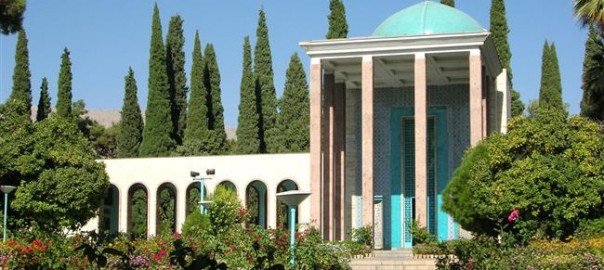
Famous Persian poet Sa’adi’s collections of works and Persian geographer Abu Ishaq Estakhri’s ‘Masalik al-Mamalik’ (Traditions of Countries) were registered during the 12th meeting of UNESCO’s International Advisory Committee held in Abu Dhabi earlier this month.

Estakhri’s book was registered jointly by Iran and Germany, since the Persian version is kept at Iran’s National Library, while the Arabic version is housed at a library in Germany.

Estakhri was a Persian geographer and cartographer of the 10th century, who created the earliest known account of windmills. His ‘Traditions of Countries’ has also been translated into German.

Sa’adi’s ‘Kulliyat’ is the complete collection of works by the great medieval Persian poet, who is often referred to as the Master of Prose and Poetry in the Persian literature.

He is best-known for his books ‘Boustan’ and ‘Golestan’ as well as  a number of masterly odes portraying human experience. Andre du Ryer was the first European who presented Sa’adi to the West by means of a partial French translation of ‘Golestan’ in 1634.

Sa’adi is known worldwide for one of his aphorisms, which adorns the entrance to the Hall of Nations of the United Nations building in New York.

Nine Iranian works have so far been registered on UNESCO’s Memory of the World Program, including a collection of selected maps of Iran in the Qajar Era and the collection of works by 12th-century Persian poet Nizami Ganjavi.

/ press tv/