All posts by islam

Iran successfully tests missile with 2-ton warhead

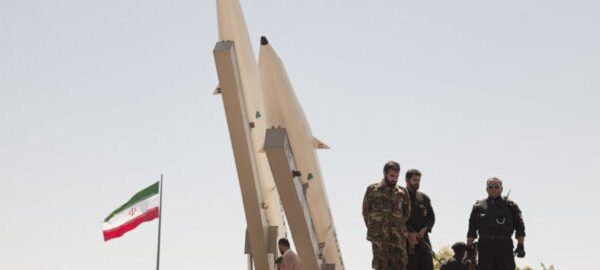
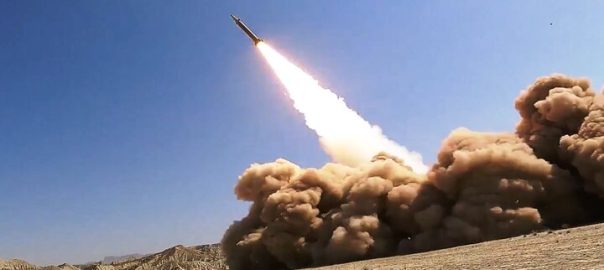
Iran’s defense minister says the country has successfully tested a missile equipped with a two-ton warhead, marking a new achievement in its military capabilities.

Brigadier General Aziz Nasirzadeh, Iran’s Defense Minister, announced on Wednesday that the country successfully conducted a missile test last week featuring a two-ton warhead, hailing it as a major step forward in Iran’s defense capabilities.

Speaking to reporters after a cabinet meeting, Nasirzadeh said, “We have made very good progress in defense affairs. Our operational forces are fully equipped.”

“Our most recent achievement came last week when we successfully tested a missile carrying a two-ton warhead, with excellent results.”

The test is part of Iran’s broader efforts to enhance its military readiness and defense power amid ongoing regional tensions.

MNA/

Iran INS-guided missile part of ‘new models’ of confrontation

A high-ranking Iranian military official has hailed a newly-unveiled GPS-independent ballistic missile as a key piece of defensive hardware that is in the service of the “new models” of confrontation with the enemies.

Deputy Head of Science, Research, and Technology at the General Staff of the Iranian Armed Forces, Brigadier General Mohammad Mehdinejad Nouri made the remarks on Thursday, as quoted by Press TV.

He was addressing the capabilities of the country’s Qassem-Basir missile, which was unveiled by Defense Minister Brigadier General Aziz Nasirzadeh on May 4.

The official identified the projectile as an instance of “significant achievement” in the field of cyber technology, as well as the areas of designing and manufacturing military equipment.

“Whether on the ground, at sea, or in space, these achievements contribute to the Islamic Republic’s defensive deterrent power, and enhance the capabilities of its [military] equipment against any potential threat from the enemy,” he noted.

He commended the missile’s non-reliance on the Global Positioning System (GPS), pointing to its rather using its own Inertial Navigation System (INS).

Mehdinejad Nouri noted that such technology used to be available only to the United States and a few other countries, praising Iran’s “capable experts” for harnessing the know-how.

He also reminded that the world’s GPS services’ global navigation and control systems were also being controlled by the US and some other countries, suggesting that Qassem-Basir’s independence from GPS complicated the work of those seeking to track and destroy the projectile.

Therefore, he remarked, the Islamic Republic could now “strike designated hostile positions, even without the need for GPS, whether in times of war or disruption of [navigation] systems.”

Mehdinejad Nouri additionally lauded the Iranian Armed Forces for entirely indigenizing such missiles’ new generation from the designing stage to ultimate manufacturing.

“Currently, inside the Islamic Republic, the designing and production of all pieces of equipment that are required for military engagement, especially drones, missiles, vessels, tanks, and other equipment, are made by domestic experts,” he said in the same context.

“This successful and promising path continues.”

The official also underlined the Islamic Revolution Guards Corps (IRGC)’s development last year of the Shahid (Martyr) Bagheri homegrown drone carrier vessel as a case in point when it came to the advancement of the country’s naval firepower.

MNA/

Iran’s non-oil exports reach $8.2b in 2 months

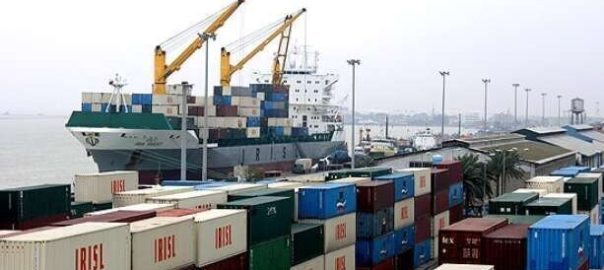
Iran exported 24.6 million tons of non-oil goods worth $8.24 billion in the first two months of the current Iranian calendar year (March 21–May 21), according to the head of the Islamic Republic of Iran Customs Administration (IRICA).

Foroud Asgari, who also serves as deputy economy minister, said the volume of exports rose by 4.4 percent year-on-year, although the total value saw a marginal decline of 0.11 percent. The average customs value of each exported ton fell by 4.3 percent to $335.

Among the major non-oil exports were liquefied propane ($643 million), natural gas ($455 million), liquefied butane ($452 million), petroleum bitumen ($419 million), and methanol ($388 million).

Petrochemical products accounted for 5.7 million tons valued at $2.22 billion, reflecting a four percent increase in volume and a three percent rise in value compared to the same period last year.

China remained Iran’s top export destination, receiving $2.43 billion worth of goods, followed by Iraq ($1.5 billion), the United Arab Emirates ($1.09 billion), Turkey ($673 million), Afghanistan ($374 million), Pakistan ($322 million), and Oman ($305 million).

Asgari also provided data on imports, which reached 5.9 million tons worth $8.47 billion in the same two-month period. While the import volume rose by 1.16 percent, the value dropped by 7.8 percent year-on-year.

The average value of imported goods stood at $1,431 per ton, down nine percent from the previous year.

Top imports included unrefined gold ($860 million), corn feed ($657 million), rice ($289 million), sunflower seed oil ($215 million), and soybeans ($211 million).

Iran’s main import partners were the UAE ($2.6 billion), China ($2.2 billion), Turkey ($1.37 billion), Germany ($308 million), India ($291 million), the Netherlands ($215 million), and Switzerland ($190 million).  / T.T/

Bushehr Nuclear Power Plant ready to be utilized

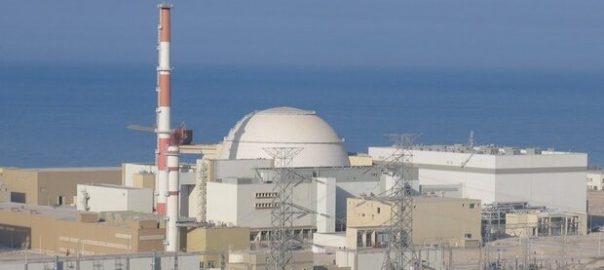
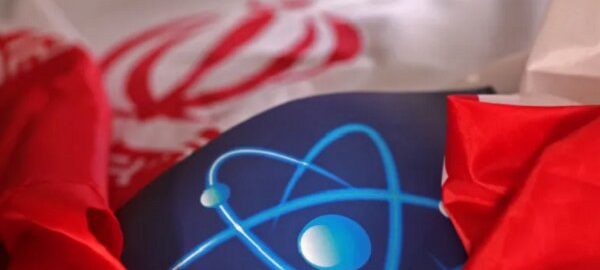
Iran’s Bushehr Nuclear Power Plant has completed fuel loading and maintenance, positioning it to be ready for utilization.

The Head of Bushehr Nuclear Power Plant announced the completion of fuel loading and preparation of the plant for operational startup, stating, “We are ready to start electricity production from the (Iranian) month of Tir (starting from June 22).”

According to Mehr News Agency, Reza Banazadeh said during a press briefing that energy production at the nuclear power plant is an essential national need of great importance that must be specially prioritized.

“The preparation stages at Bushehr Nuclear Power Plant have been completed, and the plant is ready to enter the re-operation phase. According to the Ministry of Energy’s schedule and requirements, electricity generation will commence.”

Banazadeh also spoke about water supply plans at the Bushehr Nuclear Power Plant, saying, “The completion and operation of the plant’s 75,000 cubic meter desalination unit will play a key role in providing drinking water for the local population.”

MNA/

Role of new Iran-China rail line in changing global order

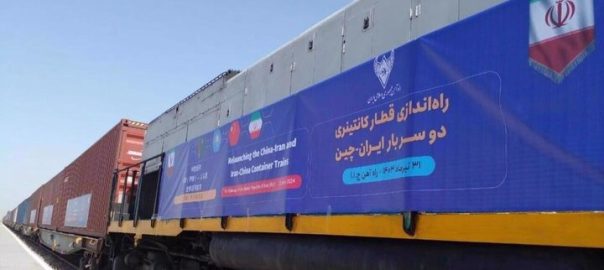
A new commercial rail route linking China and Iran has officially launched with the arrival of the first cargo train from the eastern Chinese city of Xi’an at Aprin Dry Port near Tehran.

Missing from the headlines amid the fifth round of indirect talks with the US, a freight train from China rolled into Iran last week at a time of a simmering war of corridors.

The train from the eastern Chinese city of Xian arrived at the Aprin dry port near Tehran with a cargo of solar panels in time for Iran’s ardent push to expand its renewable power capacity.

The event flies in the face of President Donald Trump’s administration which Reuters has said – whether truly or falsely – is considering stopping and inspecting Iranian oil tankers at sea.

With the rail line far from any American military presence, Iran can export oil and import goods from China with the ease of mind if the sea trade is disrupted.

Ninety percent of Iran’s exports to China are oil-based products such as petrochemicals, petroleum products and gases, or mining-based products such as copper concentrate, iron concentrate, and the like.

While these goods are difficult to transport on rail and must be transported by ship, the new route offers a vital just in case solution to keep bilateral trade from the tentacles of US hegemony.

Trump has vowed to restore a “maximum pressure” campaign to isolate Iran from the global economy and drive its oil exports to zero.

The rail mode shortens the delivery time for goods to 15 days, compared to 30 days via the maritime route and helps China evade the Malacca Strait chokepoint.

The Malacca Strait is a narrow waterway where a significant portion of China’s crude oil imports from West Asia and Africa pass through. But with the Red Sea having turned into a battle zone between Yemen’s resistance forces on one side and Israel and its allies on the other, shipping costs have jumped 250%, according to BBC, and transit has declined by 70 percent.

The new line – part of the evolving East-West Corridor linking China to Iran, the Persian Gulf littoral states, Africa and ultimately Europe – presents one of the most secure trade routes currently in play.

On May 12, railway officials from Iran, China, Kazakhstan, Uzbekistan, Turkmenistan, and Turkey met in Tehran to advance a transcontinental rail network linking Asia to Europe.

The six nations agreed on competitive tariffs and operational standards to streamline regional rail services and boost trade connectivity.

China and Iran have expanded trade and economic relations in recent years. Both countries share a strategic view to counter US global hegemony, having faced sanctions and other pressures from the American side for years.

Iran is part of China’s One Belt One Road (BRI) initiative, which seeks to re-establish overland trade routes once known as the Silk Road.

The rail link integrates Iran into the trillion-dollar BRI and lays the groundwork for deeper political and economic ties. Its genesis lies in a historic 25-year economic cooperation agreement worth $400 billion which they signed in 2021.

The successful implementation of the rail project demonstrates the strength and potential of Iran’s logistics infrastructure in attracting international cargo.

It can serve as a model for developing and strengthening international trade routes and a successful example of regional and international economic integration.

Its advantages over some competing corridors such as the trans-Caspian Middle Corridor which includes China, Kazakhstan, Azerbaijan, Georgia and Turkey will increase Iran’s transit position in the region, facilitate trade and promote the Islamic Republic’s economy and entrepreneurship.

In general, the implementation of the East-West Corridor plan under the New Silk Road and the North-South Corridor plan via Iran can enhance the country’s position in the new regional order.

In a broader perspective, the China-Iran rail connection project is a strategic alternative to the India–Middle East–Europe Economic Corridor (IMEC) project which aims to turn Israel into a gateway for trade in goods and energy in West Asia.

The IMEC starts in India and stretches to the UAE, Saudi Arabia, and Jordan, before reaching the Israeli occupied territories and Europe through the Mediterranean Sea.

In other words, the Iran-China rail project should be seen in the context of a major corridor war of Iran and China with the United States that is set to determine the future of the new world order.

Lying ahead is improving the transport and customs infrastructure along the corridor to help further facilitate trade and the movement of goods.

Also, efforts to increase the number of trains and improve transportation schedules will help strengthen this corridor and create wider trade networks.

MNA/Press TV

Iran to produce 20,000 megawatts of nuclear electricity

The head of the Atomic Energy Organization of Iran (AEOI) has said the Islamic Republic has launched a plan aimed at the production of as much as 20,000 megawatts of electricity from its peaceful nuclear energy activities.

Mohammad Eslami made the remarks during a meeting held in the capital Tehran on Tuesday to address the organization’s productivity levels.

“This immense project has effectively been launched, and executing companies have been developed to move the endeavor forward with government support,” he said, Press TV reported.

Eslami noted that, throughout the past two decades, Leader of the Islamic Revolution Ayatollah Seyyed Ali Khamenei had emphasized the importance of achieving such a goal. “And we are working towards achieving this goal,” the top nuclear official stated.

Speaking last February, Eslami said the prospect was to be enabled by 2041.

Adding to his Tuesday remarks, he cited an instance of the country’s successful nuclear activities, saying the Bushehr Nuclear Power Plant in southern Iran “has produced 72 billion kilowatt-hours of electricity over the past 10 years.”

This has “saved an equivalent of 110 million barrels of oil, while the facility’s construction cost had amounted to approximately one billion euros,” the official stated.

Activating massive capacity for agricultural product irradiation

Elsewhere in his remarks, Eslami pointed to the country’s efforts at enabling irradiation of as much as 500,000 tons of agricultural products.

“Annually, about 30% of agricultural products are turned into waste. With the help of irradiation, the wastage is reduced, and exported goods are no longer returned, which directly impacts household economics.”

Irradiation serves as the process of exposing agricultural products to radiation, commonly used to reduce spoilage, extend shelf life, and prevent pest infestation.

The Islamic Republic has been steadily advancing its nuclear energy program, despite facing illegal and unilateral sanctions on the part of the United States and its allies.

Also, last year, Eslami announced the construction of a new nuclear power plant in Iran’s southern coastal province of Hormozgan with an investment of $15 billion.

He noted at the time that the project for construction of the Iran-Hormoz Nuclear Power Plant was “much bigger” than the nuclear power plant in Bushehr, a 1,000-MW plant built by Russia and handed over in September 2013 after years of delay.

While leading its ambitions, the country has also continued to work closely with the International Atomic Energy Agency (IAEA), and adhered to its obligations under the Nuclear Non-Proliferation Treaty (NPT).

MNA/

Iranian athletes take two gold in 2025 Asian Championships

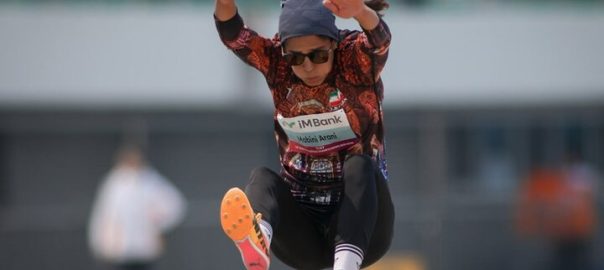
Iran’s Reyhaneh Mobini and Mohammadreza Tayebi won two gold medals at the 2025 Asian Athletics Championships Day 3 on Thursday.

In the women’s long jump, Mobini Arani clinched gold with a 6.40m effort, according to Tehran Times.

Indian jumpers Ancy Sojan Edappilly and Shaili Singh won the silver and bronze medals with 6.33m and 6.30m, respectively.

In the men’s shot put, Tayebi took the gold with a throw of 20.32m, China’s Xing Jailiang seized the silver with 19.97m, and the bronze medal went to Mohammed D Tolu from Saudi Arabia with 19.92m.

The event is being held in Gumi, South Korea.

/MNA

Esfahak village gains UNESCO research chair for earth architecture

The village of Esfahak in South Khorasan province has been awarded one of UNESCO’s 34 prestigious research chairs, marking an achievement for the local and national cultural heritage and scientific communities.

The announcement was made by Mohammad Arab, head of the Cultural Heritage, Tourism, and Handicrafts Office of Tabas county, who confirmed that Esfahak has secured a seat on UNESCO’s Research Commission.

The distinction was granted in recognition of the village’s innovative work in earth architecture and its scientific contributions through the Esfahak Mud Center (E.M.C.), led by architect and researcher Pouya Khazaeli.

Esfahak, one of UN Tourism’s Best Tourism Villages, has drawn international attention for its sustainable reconstruction and architectural preservation efforts. The nomination dossier for global recognition included extensive scientific research conducted by the E.M.C., which played a key role in earning the UNESCO research seat.

“The awarding of this chair is not only a great honor for Esfahak and its people, but it also highlights the village’s scientific and cultural potential on a global stage,” said Arab. “It reflects the dedication of the local community, especially its youth, and will help introduce Esfahak’s achievements to more specialized tourism audiences and researchers worldwide.”

UNESCO’s research chairs promote higher education and collaborative knowledge production across the globe in fields such as education, science, and culture. Each chair is established within a university or research institution for a renewable four-year term and must include a distinguished academic leader, researchers, faculty, and students working together in a specialized area of study.

Arab emphasized that Esfahak’s chair will focus on sustainable and traditional building practices, aiming to serve as a model for similar communities around the world while enhancing academic cooperation, knowledge sharing, and cultural tourism.

Last year, Esfahak was named one of the Best Tourism Villages for 2024 by UN Tourism. Moreover, the village won a TO-DO Award in 2020. The award is annually presented by the German Institute for Tourism and Development.

Severely damaged by the 1978 earthquake that struck Tabas, Esfahak was once deemed uninhabitable, with residents living in temporary tents. Later, they built makeshift wooden rooms, known as Otagh-e-Choobi (wooden rooms), as they began rebuilding their lives.

With a commitment to sustainability and cultural preservation, villagers re-established the community over the years, developing eco-lodges and restoring traditional homes using ancient adobe techniques.

Esfahak’s transformation into a cultural and eco-tourism destination has garnered attention for its unique architecture and sustainable practices, earning the village the prestigious Asia Architecture Award. Today, it attracts tourists from across the world, drawn to its picturesque adobe structures and commitment to preserving local identity.

Since 2021, the Best Tourism Villages initiative has aimed to promote sustainable tourism in rural areas, focusing on preserving natural landscapes, cultural heritage, and indigenous lifestyles, including gastronomy and local values. / T.T/

Iran unveils 1st locally-made ECT cancer-treatment device

The prototype of the Iranian-made Electrochemotherapy (ECT) device was unveiled in Tehran Monday with the participation of the chancellor of University of Tehran and head of Science and Technology Park of the university.

Electrochemotherapy (ECT) is a safe, targeted, cancer treatment that uses a very low dose of chemotherapy combined with electric pulses to destroy the cancer.

Experts from a knowledge-based company, located in the Science and Technology Park of Tehran University, have succeeded in launching the first national production line of electroporation (ECT) devices in Iran.

The production line of the first indigenous electrochemotherapy ablation system (a new method of targeted treatment of cancerous tumors) is an achievement that, relying on local technical knowledge and utilizing international standards, has brought Iran into the group of countries with this advanced technology in cancer treatment.

With the launch of this production line, Iran has become the first country in Asia that joins the UK and Italy in producing this new technology. The electroporation device uses electrical pulses to increase the permeability of cancer cells and significantly enhance the effectiveness of anti-cancer drugs.

MNA

Nahid-2 telecommunications satellite to be launched soon

The head of Iran’s Space Research Center says Nahid-2 satellite will be launched into the space in the very near future. Speaking in an interview with national Iranian TV correspondent on Friday, Vahid Yazdanian pointed to the launch of satellites, adding, “We have defined a set of research satellites that aim to test various satellite subsystems, which account for more than 97 percent of satellite subsystems produced domestically.”

The Research-1, 2, 3 and 4 satellites are satellites being built in cooperation with the private and academic sectors, he emphasized.

Nahid-2 (meaning Venus) is the advanced version of Nahid-1, a telecommunication satellite through which Iran can enter the space communication industry.

Since 2005, Iran has joined the club of space countries by sending the Sina-1 satellite, which was sent into orbit with the help of Russia. Since then, the Iranian Space Agency has put planning for the use of space and the expansion of space technologies in the country using local knowledge and international cooperation on the agenda.

Earlier, Iran’s minister of information and communications technology (ICT) had said that three equipped space bases would be launched in the country by the end of the current Iranian calendar year (started March 21, 2025).

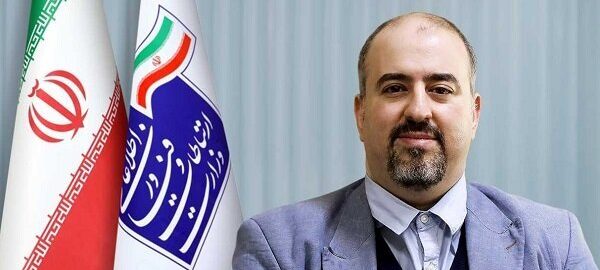
Speaking on the occasion of “World Telecommunication and Information Society Day” on Saturday, Sattar Hashemi stated that developing satellites and launching giant projects, including Chabahar, Salmas and Chenaran satellite bases, would be commissioned before the termination of the current Iranian calendar year. /MNA/