All posts by islam

Iran loses to India in the Kabaddi World Cup final

Iran finished in second place after losing to powerhouse India 38-29 in the Kabaddi World Cup final on Saturday.

Seven-time defending champions Indians proved their supremacy after trailing 12-18 at the half-time in Ahmedabad, India.

Star raider Ajay Thakur emerged as the key player for the team as he guided team to this scintillating win with his crucial 12 points. Although Iranian skipper Meraj Sheykh gave a tough fight with his 5 points, but couldn’t take his team to be at the winning side.

Speaking after the victory, Ajay declared, “India is always number one in kabaddi.” He added, “This is the most wonderful moment of my career.”  / Tehran times /

Increased engagements to benefit both Dhaka, Tehran

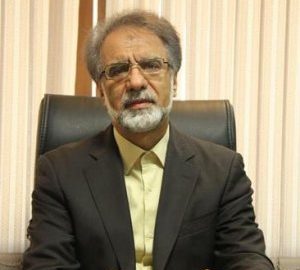
Iranian envoy S Javad Mazloumi tells The Independent

HUMAYUN KABIR BHUIYAN: There should be more understanding as well as engagements between the peoples of Bangladesh and Iran in the interest of both the nations, which share many things in common especially religion and culture, according to S Javad Mazloumi, an envoy of the Iranian government.

In an exclusive interview with The Independent at the residence of the Iranian ambassador’s residence in Gulshan on October 22, he lamented that peoples of both the nations know much less about each other than they should. “We need to introduce Iran in Bangladesh in much better manner. Same applies to Bangladesh. This will help both the countries in many ways,” said Mazloumi, who also works as a representative of Iran’s Supreme Leader Ayatollah Ali Khamenei.

“We have many things in common espe cially in terms of religion, culture and civilisation. And, Persian language and literature are very familiar in Bangladesh,” he said, adding, “We have a very good cooperation in these sectors, but this could be much better.”

The Iranian envoy also talked about trade and investment, cooperation in education through exchange programmes and good practices, bilateral, social, regional and international cooperation, economic cooperation, connectivity and Bangladesh’s relations with Saudi Arabia, an adversary of Iran.

To a question, he said that Iranian people know little about Bangladesh and if Bangladesh can be made familiar with the Iranians, Bangladesh could be a place for Iranian investors in the changed situation after the lifting of international sanctions against Tehran.

Mazloumi described the political relations with Bangladesh as very good, saying that there is no contentious issue between the two countries.

He also laid emphasis on introducing direct air link between Bangladesh and Iran to increase people-to-people contacts.

Expressing a little disappointment over the current state of exchange in education sector, the envoy said that currently less than 100 Bangladeshi students study in different universities in Iran while only five Iranian students study in Bangladesh.

“This figure can be much higher,” he added, hinting that Iran is ready to offer more scholarships for the Bangladeshi students, but Bangladesh will have to reciprocate in some way. Mazloumi placed great emphasis on regular visits of scholars from both the countries along with political leaderships.

“We and Bangladesh both belong to the Muslim ummah. There is scope of better cooperation in social sector through exchange of better practices,” he said.

As there is no sanction against Iran, there is potential for increased and substantive cooperation in trade, commerce and economy.

The representative of the Iranian supreme leader was full of praise for Bangladesh for peaceful coexistence of all sectarians in Bangladesh, including the Shia community.

“I did not come across a single Bangladeshi with unfavourable views about Iran. Same thing is true in case of Iranian people towards Bangladesh. I have seen a desire among the peoples of the two countries to construct a cultural bridge,” he said. He expressed optimism that the future of the relationship between Dhaka and Tehran is good.

When asked if Dhaka’s relations and deep engagements with Iran’s adversary Saudi Arabia troubles Tehran, the envoy replied, “No. Every country has the right to engage with any country that will serve its purpose. We respect every country’s decision to engage with other countries.”

Mazloumi also said that Tehran has no objection to Dhaka’s joining in Saudi-led coalition against terrorism and violent extremism and support for the Saudi-led military campaign in Yemen. However, he added that Tehran believes that it is up to the people of Yemen to take decision about their affairs. / The Independent /

No country can set conditions for ‘independent’ Iran: Zarif

Iranian Foreign Minister Mohammad Javad Zarif says no foreign state can impose conditions on an “independent” country like Iran.

“No one can set conditions for Iran and Iran is an independent country,” Zarif told reporters on Saturday.

He made the remarks in response to an earlier demand by German Economy Minister and Vice Chancellor Sigmar Gabriel who told online weekly magazine Der Spiegel on Friday that Iran could have normal and friendly relations with Germany “only when it accepted Israel’s right to exist.”

Gabriel plans to visit Iran at the head of a large delegation of business executives to discuss possible business deals after last year’s historic nuclear agreement, known as the Joint Comprehensive Plan of Action (JCPOA), between Tehran and the P5+1 group of countries.

As part of the deal, Iran has agreed to limit certain aspects of its nuclear program in exchange for the removal of all nuclear-related sanctions against the Islamic Republic.

Zarif dismissed the German official’s call and said, “Our policies are clear and [officials of] different countries travel to Iran in the knowledge that that the country’s policies are constructive.”

“Our country is the main country fighting against terrorism in the region,” the top Iranian diplomat said.

He added that Iran has been resisting foreign bullying over the past 37 years “while it is a peace-seeking country.”

“Iran is a country that has stood up to Daesh and terrorism; therefore, having relations with Iran should be an honor for all,” Zarif said.

Iran’s Foreign Ministry spokesman Bahram Qassemi also on Saturday rejected Germany’s demand and emphasized that Tehran would never drop support for the Palestinians.

“Ties between the Islamic Republic of Iran and Germany are based on mutual respect and interests, and no precondition would be acceptable in this regard,” Qassemi said.

The Iranian spokesperson added, “The Islamic Republic considers defending the rights of the people of Palestine to be a fixed plank of its foreign policy and will never and under no circumstances forsake the Palestinian cause.”

Germany had been Iran’s biggest European trading partner for decades before a series of sanctions were tightened against the Islamic Republic under the pretext of its nuclear program.

Almost immediately after the conclusion of the deal, the German government sent Gabriel to Tehran at the head of a major delegation to discuss post-sanctions business opportunities in the Islamic Republic. / Press tv /

Iran’s H1 gas condensate exports up 25% y/y

Half-yearly gas condensate exports from Iran’s South Pars gas field rose by 25 percent compared to the same period last year, Shana quoted a gas official as saying on Saturday.

According to Masoud Hassani, the managing director of South Pars Gas Complex (SPGC), during the first six months of the current Iranian calendar year (March 20-September 21) the company has exported 76 million barrels of gas condensate to the world markets.

The official noted that during the mentioned period, SPGC has sent 1.35 million tons of liquefied petroleum gas (LPG) to other countries as well.

According to Iran’s custom administration, during the first six months of the current Iranian calendar year gas condensate was reported to be the main non-oil export product with a total value of $3.496 billion.

South Pars field, which Iran shares with Qatar in the Persian Gulf, is estimated to contain a significant amount of natural gas and condensate, accounting for about eight percent of the world’s reserves.

The huge offshore field covers an area of 9,700 square kilometers, 3,700 square kilometers of which are in Iran’s territorial waters in the Persian Gulf. The remaining 6,000 square kilometers are situated in Qatar’s territorial waters. / Tehran times /

Iran JCPOA commitments carried out to the letter: IAEA

The head of the International Atomic Energy Agency (IAEA) says that Iran has carried out its commitments to the historic nuclear deal known as the Joint Comprehensive Plan of Action

“I can certify that Tehran respects its commitments to the letter. The Iranians are doing what they promised the international community,” said IAEA Director-General Yukiya Amano during an interview with the French daily Le Monde on Saturday.

The July 2015 Joint Comprehensive Plan of Action (JCPOA), struck between Iran and Britain, China, France, Germany, Russia and the United States, envisaged Tehran scaling back its nuclear program in return for the lifting of all nuclear-related sanctions on the Islamic Republic.

“The deal is being implemented since January without any particular problem,” he noted. “There was a small incident in February: the stock of heavy water very slightly exceeded the limit set — 130 tones. But we immediately signaled that to Iran which took all the necessary measures.”

In September, the IAEA once again confirmed Iran’s commitment to the landmark nuclear agreement, with Amano at the time noting that the agency would continue evaluating the absence of undeclared nuclear material and activities in Iran.

In a quarterly report on Iran on September 8, Iran’s commitment to the nuclear agreement was confirmed by the IAEA which is tasked with overseeing the implementation of the JCPOA.

Since January, the IAEA has released regular reports confirming the peaceful nature of Iran’s nuclear activities and Tehran’s commitment to the agreement. / press tv /

“Red Peace” wins award at Cyprus film festival

Iranian director Rahim Toofan’s short film “Red Peace” received the Golden Aphrodite Award for best director in the veteran’s short film category of the Cyprus International Film Festival (CYIFF), which was held in Paphos, Cyprus from September 14 to 25.

The film tells the story of Syrian war refugees who take advantage of a Turkish border guard’s love for a Syrian girl and as they meet, the refugees safely cross the border.

The girl finds out about her family’s secret business of ?facilitating the passage of refugees and is caught in a dilemma of love or treachery. / Tehran times /

Iran to produce 3 types of missiles by yearend: Defense minister

Iran’s defense chief says the Islamic Republic is set to unveil three new types of missiles in the coming months, adding that state-of-the-art ballistic missile Zolfaqar has been put on the production line.

Brigadier General Hossein Dehqan made the announcement at a plenary session of the parliament (Majlis) on Sunday.

Iran is observing the Sacred Defense Week, which marks the 36th anniversary of the eight-year Iraqi war against the country.

“We will begin manufacturing three fundamental products in the area of missile [development] by the end of the year,” said the Iranian minister, stressing that the latest defense achievements will greatly promote the country’s defense might.

“These three missiles include Qadir, Sejil (solid-fuel long-range models) as well as high-precision Khorramshahr,” he added.

He further announced that Iran has now launched the production line of precision-guided solid-fuel anti-radar jamming missile Zolfaqar.

Zolfaghar, with a range of 750 kilometers, is a multiple reentry vehicle (MRV) missile capable of carrying several warheads.

It is the latest generation of Iran’s long-range missiles and can carry out precision strikes against targets on the ground and airport tarmacs.

The missile was unveiled during a recent large-scale naval parade in Iran’s port city of Bandar Abbas.

Iran is now capable of designing and producing missiles with any range as well as any level of precision and destructive power when it comes to cruise types and the ones using solid or liquid fuel, he added.

In the future, Iran will develop ground-to-ground ballistic missiles that can hit maritime targets far away, Dehqan pointed out.

“In the area of missile defense, we know no limits to our might, and that is why we will continue to boost our defense power as scheduled,” Dehqan said.

He said Iran is the only country that enjoys peace and stability in a region severely troubled by violence, adding that the Islamic Republic is the standard-bearer of the fight against terror and leaves no stone unturned to restore calm to the region.

In recent years, Iran has made major breakthroughs in its defense sector and attained self-sufficiency in producing important military equipment and systems.

Iran has also conducted military drills to enhance the defense capabilities of its armed forces and to test modern military tactics and state-of-the-art army equipment.

The Islamic Republic maintains that its military might poses no threat to other countries, stating that its defense doctrine is merely based on deterrence. / press tv /

Italy’s ‘Euro’ warship docks in southern Iran to boost friendly military ties

An Italian Navy frigate has docked at Iran’s southern port city of Bandar Abbas in line with the two countries’ plan to boost friendly military relations.

The warship, dubbed Euro, arrived in Bandar Abbas, the capital of Hormozgan Province, on Saturday for a four-day stay.

In a meeting with Italy’s ambassador to Tehran, Mauro Conciatori, and the country’s military attaché, Commander of Iran’s First Naval Zone Admiral Hossein Azad said the Italian frigate has been dispatched to the Islamic Republic with the purpose of improving political, cultural and military relations.

“Given the international nature of naval forces in all countries across the world, naval units comprising warships and air [force] units are dispatched to other countries each year in the form of a fleet,” the Iranian commander added.

He noted that such visits are aimed at enhancing international maritime interactions and conducting joint naval maneuvers between two or more countries.

Iran’s Navy has also an active presence in the international scene by holding naval meetings and making various voyages while hosting the warships of different countries every year, the commander said.

He added that the enemy has always sought to undermine Iran and spread Iranophobia; however, different countries dispatch their military and naval forces to Iran and participate in joint projects as the high level of security in the Islamic Republic has been proved to neighboring and regional countries and the entire world.

Meanwhile, the Italian Navy said the frigate was part of a mission by the European Union to fight piracy.

It added that the visit comes as part of the resumption of “historic and excellent relations” between the Iranian and Italian navies.

In recent years, the Iranian Navy has increased its presence in international waters to protect naval routes and provide security for merchant vessels and tankers.

In line with international efforts against piracy, the Iranian Navy has been also conducting patrols in the Gulf of Aden since November 2008 in order to safeguard merchant containers and oil tankers owned or leased by Iran or other countries.

Iran’s Navy has managed to foil several attacks on both Iranian and foreign tanker ships during its missions in international waters. / press tv /

Iranian shot putter claims bronze at 2016 Paralympics

Iran’s shot putter Javid Ehsan Shakib seized a bronze medal in the F57 event with a throw of 14.13m on Saturday.

Guoshan Wu claimed gold with a throw of 14.42m while Janusz Rokicki came second to win the silver with 14.26m.

This was Iran’s 22nd medal in 2016 Paralympic games. Iranian delegation has claimed 22 medals so far in the competition, seven gold, 8 silver and 7 bronze medals.

China is on top of the medal count table with 237 medals: 105 golds, 81 silvers and 51 bronzes. Great Britain, Ukraine and USA stand second to fourth respectively.

Iran has participated at the 2016 Summer Paralympics with 111 athletes in 12 sports.

The Iranian delegation finished in 11th place in the previous edition, winning 10 gold medals, seven silvers and seven bronze medals. / Tehran times /

Iran marks Sacred Defense Week with military parades

Various divisions of Iran’s Armed Forces are holding annual military parades on the first day of the Sacred Defense Week, which marks the 36th anniversary of the eight-year Iraqi war on Iran.

The parade in Tehran, held in an area near the mausoleum of Imam Khomeini, features military units from the Army, the Islamic Revolution Guards Corps (IRGC) as well as the Police Force.

Similar rallies were also held in other Iranian provinces to commemorate the occasion.

During the parade in southern Tehran, Iranian Armed Forces showcased their latest achievements in the area of defense, including various missile defense systems.

Among the military equipment showcased during the event was the S-300 missile defense system as well the domestically-built Emad ballistic missile successfully test-fired in October.

Units of the Army’s ground forces also put on display a series of defense hardware, including a new generation of the Zolfaghar battle tanks, the Fajr rocket-launching vehicles and the Kia’an 120mm self-propelled guns.

Meanwhile, Iran’s southern waters near the port city of Bandar Abbas have also been the scene of another large-scale naval parade featuring 500 vessels, submarines, fighter jets and helicopters.

During a military parade by ground forces in Bandar Abbas, Iran’s state-of-the-art Zolfaghar missile defense system was unveiled.

Zolfaghar is a multiple reentry vehicle (MRV) missile capable of carrying several warheads.

It is the latest generation of Iran’s long-range missiles and can carry out precision-strikes against targets on the ground and airport tarmacs.

In late September 1980, the regime of slain Iraqi dictator Saddam Hussein launched a war against Iran. Iran holds a military parade every year to honor the martyrs of the eight-year war imposed by the former regime in Baghdad.

Head of the Chiefs of Staff of the Iranian Armed Forces Major General Mohammad Hossein Baqeri has delivered a speech at the event in place of President Hassan Rouhani, who is currently in New York to attend the 71st Session of the UN General Assembly.

‘Enemies cannot catch Iran off-guard’

In his address, Major General Baqeri said the Sacred Defense Week is a reminder of the Iranian nation’s bravery in the face of an enemy that failed to achieve its goals in a war that it waged 36 years ago with the backing of Western and Eastern powers.

Enemies masterminded the eight-year offensive against Iran to bring the country to its knees, but that turned into a “strategic opportunity” for the nation and the establishment to display their capabilities in defending their independence and the ideals of the 1979 Islamic Revolution.

“During the Sacred Defense, our soldiers learned how to stand on their own feet under sanctions,” said the senior commander, adding that “the preparedness of Iran’s Armed Forces is currently at a satisfactory level.”

He further said the strategies and defense plans of Iran’s Armed Forces have been designed in compliance with the country’s internal and external security as well as its ability to give a timely response to enemy threats.

Major General Baqeri further said Iran’s military achievements are aimed at strengthening its defense might, adding that the country’s “military tests and maneuvers will continue as scheduled, and will not be suspended or postponed under any circumstances.”

Iranian Armed Forces are “closely and precisely monitoring all enemy’s moves in the region,” said the senior military official, emphasizing that the country is “capable of foiling the attempts of regional and extra-regional enemies.”

He said enemies fear Iran’s defense power and “that is why they seek to pile pressure on the resistance front by purchasing large amounts of weapons as well as training and supporting terrorists.”

The ultimate goal of the United States, the Zionist regime and their supporters in launching proxy wars “is to destroy the infrastructure of Muslim states,” he stated.

The senior commander described Iranians as a “peace-seeking” nation, saying the Islamic Republic has never initiated any war against any country throughout its history.

Armed Forces, ‘Iran’s iron fist against enemies’

Addressing the event in Bandar Abbas, IRGC Commander Major General Mohammad Ali Jafari advised the Americans against wasting their people’s resources on boosting their “mischievous presence” in the Persian Gulf.

Jafari said the Armed Forces will be “the Iranian nation’s iron fist in the face of enemies,” adding, “This is our home, and we are highly sensitive vis-à-vis the enemies wandering around our home.”

The senior commander slammed the United States for its “unprofessional conduct” in the region, saying the Americans’ “unbalanced behavior and lack of intelligence command” come at considerable cost to the US and other states.

The Islamic Republic has proved to be qualified for controlling and protecting the security of this sensitive and strategic region, said Jafari, stressing that the Iranian Armed Forces are doing their best to boost their capabilities. / Press tv /