All posts by islam

2015 Economic-Scientific Events at a Glance

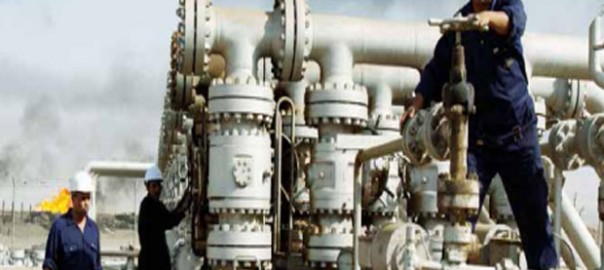
It goes without saying, Iran’s efforts to raise oil exports could not have come at a worse time, given the market’s lingering oversupply. Yet, that’s just part of the story.

In 2012, the US and European Union imposed sanctions on Iran’s energy and financial sectors, and as a result, the country’s oil exports were cut almost in half. Right up until the UN Security Council adopted resolution 2231, which was based on the recently agreed JCPOA between Iran and six world powers, the UN body had already passed some 6 other resolutions since 2006, imposing restrictions on Iranian commercial and financial activities.

Iran’s subsidy reform plan is now in its fifth year. The original plan was for the revenues generated by it to be spent on the poorest strata of the Iranian society and on making the country’s industries and production units more efficient thus lowering unemployment rates across the country.

The unveiling of this new contractual framework, otherwise known as the IPC, or the Iran (Integrated) Petroleum contract, took place through an international conference held on November 28th and 29th here in the Iranian capital, under the “Tehran Summit”.

Reasons for holding the Summit at this particular juncture in Iran is namely the promising prospects of a sense of broadening in Iran’s international engagement and presence among the larger community of nations which was ushered in following the Joint Comprehensive Plan of Action (JCPOA) and an agreement reached between Tehran and the P5+1 group of countries, recently. Energy carriers were offered at new prices in late 2010 by former Iranian President Mahmoud Ahmadinejad, in a policy that was meant to save hard currency to then be directly deposited into the nation’s sovereign fund or previously the country’s Oil Stabilization fund. This way, a considerable portion of what was supposed to be indirect subsidies, was directly handed out to the people.

According to the plan, 30% of the subsidy reform-induced revenues were planned to be re-directed toward the industrial sector; something which wasn’t accomplished. The six development plan is to be examined and voted on by the parliament this year. Its full name is the “Five-year Economic, Social, and Cultural Development Plan” and it was drawn up by the country’s Plan and Budget Organization. On February 19, 2014, and after consulting with the Expediency Council, an administrative assembly appointed by the leader himself, announced the general policies of what’s come to be known as a “resistive or resistance Economy”.

Cancer is a leading cause of disease worldwide. There were approximately 14.1 million new cases of cancer in 2012. The number of cancer cases in Iran is on the low side compared to the global average of a hundred and 85 per every one hundred thousand. The Foundation for Special Diseases is a non-governmental organization that has been researching on cancer and other terminal illnesses; for nearly two decades. The National Cancer Institute of Iran is a subdivision of the foundation that concentrates on research, education and prevention of cancer. When it comes to stem cell research and certain bio-engineering fields of investigation, Iran is cutting edge.

In recent years, the Laser technology has become very important in medicine and for industries. The National Laser Centre in Tehran generates lasers for a variety of applications, which every few years is then put on display to highlight some of its achievements. Iran’s National Center for Laser Science and Technology was established 8 years ago and has been working on laser technology and laser generation ever since. The centre produces a wide range of lasers that can be used in medicine, as well as high powered lasers that can be used for industrial purposes.

PRESS TV
Iran Photographer Wins Afghan Prize

An Iranian photographer Ali Hamed Haghdoust has won the top prize of the UNESCO photo competition ‘Show Us the Afghanistan You Are Proud Of.’

Of the 3,033 photos submitted in the mobile-phone and camera photograph categories, a photo of Haghdoust in the latter category was selected as the winner and received a $5000 cash prize, Mehr News Agency reported.

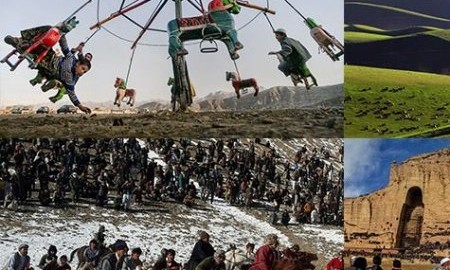
Commenting on the winning photo, the jury said in a statement, “The photographer of the winning image of a carousel made a strong composition, getting down on the ground and shooting up so the whole sky is filled with the circling horses. The action, youth, and color in this image speak to the future, but also give a nod to traditional past as the children are leaning off their horses to pick up a coin, imitating their national game of Buzkashi (literally ‘goat dragging’, the national sport of Afghanistan in which horse-mounted players attempt to drag a goat or calf carcass toward a goal),” the UNESCO website reported.

Born in Tabriz, Haghdoust, 34, is a documentary photographer. His images, which focus on raising human rights awareness, have been published by AP Images, Sipa Press (French Photo Agency), Time Magazine, New York Times, National Geographic, Washington Post, and many more.

He has documented Iran, Afghanistan, Pakistan and Turkey through his camera and his works have been shown in several solo and group exhibitions, winning awards too.

Afghan photographers Reza Sahel and Mohammad Ali Sheida were ranked second and third in the same category and were awarded $4000 and $3000 cash prizes respectively.

In the mobile-phone photo category, Iranian-born Afghan photographer Hamid Reza Rahmani won the first prize.

Rahmani, 25, usually takes landscapes. In his recently-held exhibition in Tehran he showcased Afghanistan’s serene scenery and natural environment as well as historical sites and tourist attractions.

“Unfortunately, most of the images on the subject of Afghanistan in the media deal with war and human disasters. But I believe that there is great beauty in the country that is unknown to the world,” he said.

Afghan photographers Najeeb Azad and Nasrullah Alili got the second and third prizes. All the three winners in the category received a $2000 cash prize each.

In the award ceremony on May 2, Director of the UNESCO Office in Afghanistan Patricia McPhillips said, “One of the most difficult tasks for strengthening state legitimacy of post-conflict states is to build a shared national identity and to restore a form of social capital. In the past decade, UNESCO has contributed to this task through its cultural projects in Afghanistan.”

A selection of the photos is on display at an exhibition in Kabul for a month and then they will be showcased in Switzerland on a request from the country.

/financialtribune.com/

Iranian women do not give up easily: Tech girl Roxanne Varza

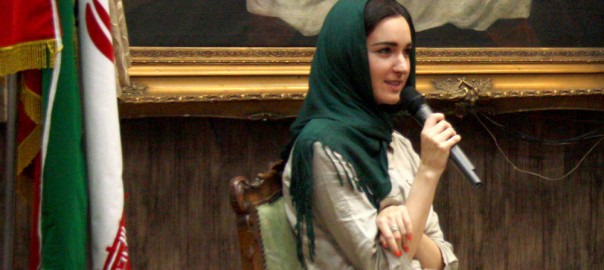
Iranian women don’t give up easily and this is something that has impressed me very much, said Roxanne Varza, the 31-year-old girl who was placed by Business Insider at 6th place among the top 30 women under 30 in tech in 2013.

Varza, born to an Iranian family in the U.S., is trilingual and holds degrees from UCLA, Sciences Po Paris and the London School of Economics. She is also an epilepsy advocate.

Varza is the co-organizer of the Failcon Paris conference. More recently, she co-founded Tech.eu, a European tech media.

Prior to TechCrunch, Varza worked for the French government’s foreign direct investment agency helping fast-growing startups develop their activities in France. Roxanne has spoken, moderated, mentored and judged numerous startup events and programs throughout Europe and also helps European startups with content and communications.

“Iranian women have a very good spirit. I love it. I have heard a lot about difficulties and challenges that they have but still they have a very strong spirit,” Varza said in an interview with the Tehran Times.

“This was a funny feeling when I came to know that I am among the top thirties. I think it is always very nice to be on this list but I definitely think that there are so many women around the world that should be recognized”, she explained.

“Technology is both for men and women. When we started Girls in Tech, we were two people. I was a journalist at the time and I was writing about technology startups and all the startups that I met were founded by men and I was looking for some new stories. So we started this group to see who are the women working in technology and we actually discovered that they are a lot but they don’t go to other technology events,” Varza said, who was the former editor of TechCrunch France (2010-2011).

So, this was the main reason that we started Girls in Tech and today we do a lot of different programs to help encourage more women to join technology, she said, adding the number of women in technology is very low, usually around 30% in western Europe and the U.S..

I know Iran’s statistics is actually much better, she noted.

“For girls that want to work on startups, I usually say you should start your own project. It doesn’t have to be your own start-up, but a startup project,” Varza, the director of the Halle Freyssinet, 1000 Startups project, which is set to be the largest startup incubator worldwide said.

I did the same thing when I started my blog or when I started Girls in Tech, explained Varza, the co-founder of the French and British chapters of Girls in Tech.

Startup is not specific to women, but definitely I have been very excited about getting more women into technology and encouraging especially younger generations to come into technology, she noted.

For me beginning to work in startups was by accident. I worked for a French government agency, working with American startups to bring them to France. So I tried to open offices for facebook, twitter, and other companies in France and that was when I discovered actually I love startups, Varza said.

I love people who are creative, very optimistic and very intelligent. So I love entrepreneurs and that is how I got involved in startups. The second step I took was when I started a blog and my blog let me meet a lot of people, go to lots of events, and develop my network.

The talent of women in technology is actually very good. When people ask me what is the difference between a man and woman, I always say I don’t know. I haven’t been a man! But I think when we are looking at the talent, it is exactly the same. Women are actually matching men in everything, she stressed.

I think it is a very good time to be a woman entrepreneur right now, noted Varza. I always think even though women’s percentage in technology is very low, it’s an advantage. Having been somebody who is rare is definitely something that people remember and people notice, which actually helps businesses a lot and the second thing is right now we are seeing a lot of big corporations, Microsoft, Google, IBM, all big companies that want to work more with women, she explained.

I think they are looking at being in diverse profiles. They don’t want to hire a ton of people with the same background, because that’s not where innovation comes from. So I think that they are realizing that they need women, said  Varza, who was the lead for Microsoft’s startup activities in France, running both Bizspark and Microsoft Ventures programs for 3 years.

There is no reason that a woman should be paid less than a man in any job, she stressed. There are different campaigns in France to make equal salaries for men and women.

Varza who prefers to come to Iran than going to the U.S., travels to Iran at least once a year, this time to meet her old grandmother, Tooran Shahriyari, who is one of the first female Iranian lawyers and also a poet living in Tehran.

I think Iran is also in a very exciting time because its economy and market is very attractive for foreigners, Varza noted, adding, foreigners want to learn about Iran and they want to be connected with Iran; and I think Iran is a very good place for investment right now.

/ tehran times /

Developing ties with Bangladesh always stressed by Iranian nation, gov’t

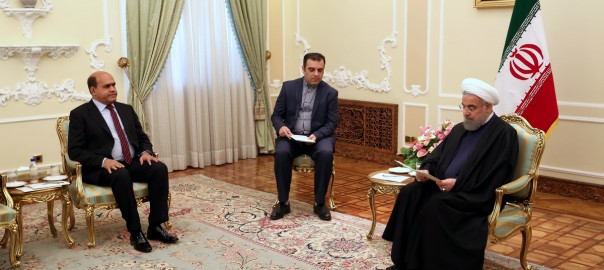
President Rouhani referred to amicable and deep cultural and historical ties between Iran and Bangladesh and said: “Developing ties with Bangladesh as a friend and Muslim country has always been stressed by the Iranian nation and government”.

In a meeting with Bangladesh Ambassador to Tehran on Tuesday, Dr Rouhani referred to close viewpoints of Iran and Bangladesh and said: “Today after the nuclear deal and lift of sanctions, there is a good foundation for development of ties between the two countries in all fields and we should make the best use of the opportunity”.

He also described the new Bangladesh Ambassador’s important mission as attempting to cement Tehran-Dhaka ties and said: “The Islamic Republic of Iran is ready to boost cooperation with Bangladesh in different economic, political, cultural and trade fields”.

President Rouhani underscored further development of ties in scientific, academic, technical, engineering and tourism fields.

At the same meeting, the new Bangladesh Ambassador Mujeeb ul-Rahman presented his credentials to the President and described the two countries’ relations friendly and brotherly and called for further ties in various political, economic, trade and infrastructural areas. /www.president.ir/

Iranian Olympic gold medalists to receive Golden Shoe

Iranian athletes who can secure gold medals at the Rio 2016 will receive Golden Shoes. An Iranian footwear company, as a sponsor of Iran National Olympic Committee, will award the gold medalist a pair of Golden Shoes.

The shoes will cost between $22,000 and $28,000. Iran won four gold medals at the 2012 Summer Olympics in London.

Three gold medals went to Iranian Greco-Roman wrestlers and super heavyweight lifter Behdad Salimi snatched a gold medal.

/ Tehran times /

Free diabetes screening on Tehran’s subway

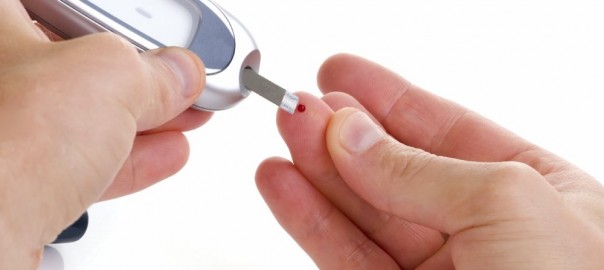
Over 600 medical students from universities of medical sciences of Tehran will carry out free of charge diabetes screening at 77 Tehran’s subway stations on Thursday.

The volunteer program, called ‘heavenly hands’, is administered by Shahid Beheshti University of Medical Sciences in association with Tehran’s Municipality, according to IRNA news agency.

On the occasion of the ‘health week’ in Iran and in step with the World Health Organization (WHO) that marked 2016 as the year to beat diabetes by calling for action on it the medical students are going perform free diabetes screening on the passengers from 7 a.m. to 4 p.m. on Thursday.

Medical students will run blood pressure and blood sugar tests on the passengers and will refer at-risk patients to the hospitals.

They will additionally educate the citizens about the diabetes, cancer and other chronic diseases.

The programs aim at fostering and promoting self-care and being attentive to one’s health and all citizens can get the aforesaid services by referring to the subway stations such as Imam Khomeini, Shahid Beheshti, Tajrish, Imam Hossein, and Vali-Asr.

Besides, 100,000 leaflets on health and diseases will be out and distributed among the passengers.

So far 18 healthcare centers affiliated with Shahid Beheshti, Iran and Tehran universities of medical sciences expressed readiness for free diagnostic and treatment services up to May 5.

Women roll infants in roses to keep them fresh and healthy

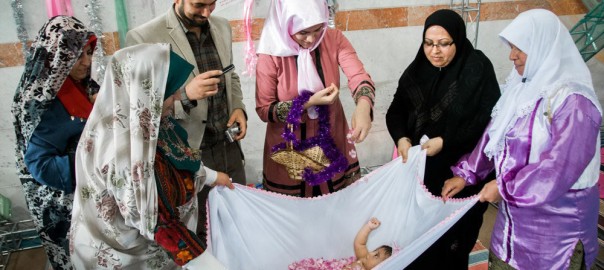
Women in different parts of Damghan county, northern Semnan province, roll their infants below one year of age in pink roses, believing that it will keep them fresh and healthy.

They perform a ritual called Gol Ghaltan (literally meaning rolling in flowers) in April-May when roses bloom in that area.

Female members of the families, mainly the baby’s mother, grandmothers, and aunts, perform the ceremony.

In early morning, women bath the baby, then put him/her on a white bed sheet full of pink rose petals and roll the baby while waving the sheet to and fro.

Four female members of the family hold four corners of the sheet and recite religious songs marking the dignity of Prophet Mohammad (PBUH).

The Gol Ghaltan ritual, being held for more than four hundred years, is registered as the oldest spiritual heritage in Semnan province.

This year the festival will be held May 4-6 in the city of Amiriyeh, Damghan.

/ Tehran times /

Iran Graphics in Istanbul Show

A series of graphic designs by Iranian artists are currently on display at the 20th Istanbul Graphic Design Show (Grafist 20).

The items were selected from an earlier contest held by ‘Vije’ school of visual communications in Tehran, under the theme ‘Man-made disasters in the world around us’, Mehr News agency reported.

Among the 440 poster designs submitted by visual communication students from around the world, to the Istanbul exhibition, the jury selected 80 works, including nine by ‘Vije’ students Rasoul Khosravi, Elham Eshaqi, Mostafa Behzadi, Samira Adilipour, Hamed Shamlou, Parizad Hosseini, Pouneh Shafiei, Fatemeh Afshar and Behnam Azizi.

Russian graphic designer and art director Maksim Arbuzov, Stuttgart-based graphic designer and academic Ralph Burkhardt, Amsterdam designer and lecturer Nikki Gonnissen, designer and lecturer Karin Langeveld from the Hague and graphic designer and lecturer Vahit Tuna from Istanbul were members of the jury.

Michele Santella from Italy won the first prize and five others were given the encouragement award for poster designs, including Iranian artist Rasoul Khosravi. Furthermore, five Iranian participants were selected to take part in the design workshops.

The graphic design department of Istanbul’s Mimar Sinan Fine Arts University, asked participants to come up with creative ideas on one of the biggest problems the world is currently facing, namely the refugee crisis. The purpose of Grafist 20 is to create a platform for the interactive sharing of all works where graphic designers and students come together through activities such as seminars, workshops and exhibitions and evaluate and discuss their design criteria and visions.

The exhibit will run through May 18 at the university’s Osman Hamdi Bey Hall.

/financialtribune.com/

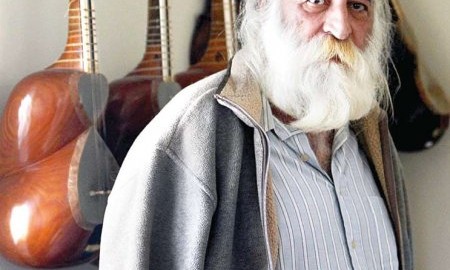
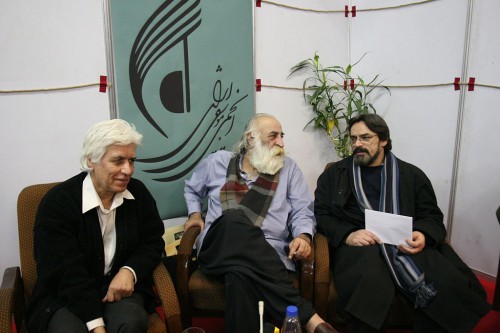
Memorial Concert for Late Mohammadreza Lotfi

On the 2nd death anniversary of renowned Persian classical music maestro Mohammadreza Lotfi, several members of the ‘Sheida’ Music group will stage a concert on April 28.

A number of Lotfi’s students and fans, and veteran musicians will attend the event at Fakhreddin As’ad Gorgani Hall, located in Lotfi’s hometown Gorgan, the capital of Golestan Province, IRNA reported.

1024px-Lofti2
The band will perform several pieces composed by the late artist, accompanied by vocalist Amir Asna-Ashari. ‘Kamancheh’ player Sina Danesh and Farima Movafaqi, ‘tar’ player Sanaz Sattarzadeh, ‘setar’ player Sepideh Moshki, ‘rebab’ player Pouya Leqaei, ‘ney’ player Houshmand Ebadi and ‘tonbak’ player Mahour lotfi are members of the group.

Acclaimed composers and musicians will deliver speeches on the technical features of Lotfi’s repertoires.

Apart from his mastery in ‘tar’ and ‘setar’ (stringed instruments), Lotfi (1947-2014) was a music composer, vocalist, researcher and teacher. In 1971 he established Chavoush Culture and Art Center. Houshang Ebtehaj, a prominent Persian poet, was one of his major supporters in developing the center.

Among his numerous albums, the best known are ‘Love Knows’, ‘Sepideh’ (dawn), ‘Bidad’, and ‘Bal-dar-Bal’ (Wing in Wing).

Co-founding of the Sheida Music Group, artistic collaboration with Mahmoud Dolatabadi, renowned Persian author and the late Ali Hatami, celebrated film director, and publication of the Sheida Year Book, are among his achievements.

Lotfi established the Mirza Abdollah Music School in 1993 for classical music enthusiasts of ‘radif’ a collection of old melodic figures preserved through many generations by oral tradition. This traditional repertoire forms the essence of Persian musical culture that has been handed down by the masters to the students through the generations.

/financialtribune.com/

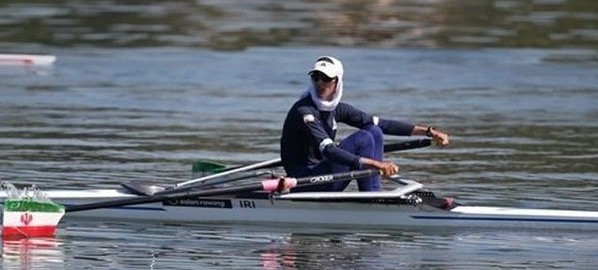
Iran’s rower Mahsa Javar runner-up at Olympics qualifier

Iranian rower Mahsa Javar finished in second place at the 2016 Asian and Oceania Olympic Qualification Regatta on Monday.

Javar, who has already secured a place at the Rio 2016 by advancing to the final six, came second in the 2,000 meters women’s single sculls event with a time of 8:05.08.

She is the nine Iranian woman to book a place at the Rio 2016.

Chinese Taipei’s Yi-Ting Huang came first, clocking a time of 8:01.86.

Kazakhstan’s Svetlana Germanovich finished in third place with a time of 8:07.12.

/ Tehran times /