All posts by islam

Intl. science Olympiad opens in Tehran

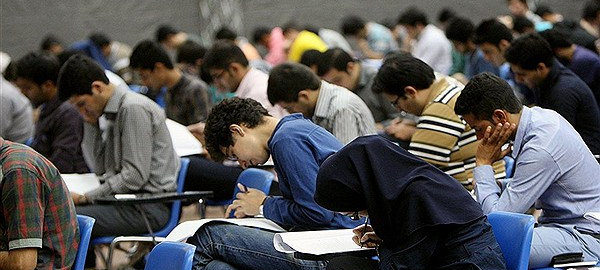
An international Olympiad of math, chemistry and statistics will open today in Tehran’s Shahid Beheshti University, Tasnim news agency reported.

Starting from Sunday the event will last for five days and students from Russia, Tatarstan, Ukraine, Turkmenistan, Aljazeera, India, Iraq, Poland, and Slovenia along with Iranian students will compete against one another for the first three places.

50 foreign students, 12 foreign professors and 15 Iranian students will take part in the examination.

Students will take the exams for two days and get the final results after two days on Thursday and those come into first three places in each field will be awarded with medals on the closing ceremony of the event.  / Tehran times /

‘Green Relief’ scheme aims to cut environmental damages

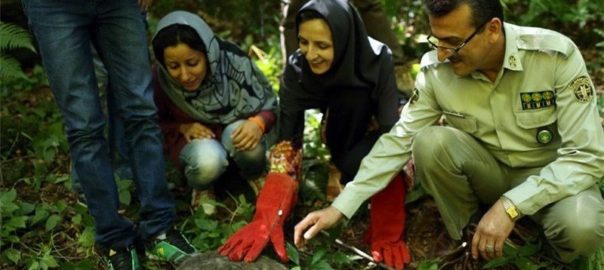
“Green Relief”, a scheme co-developed by Iran’s Red Crescent Society (IRCS) and the Department of Environment (DoE) aims to reduce environmental damages in the near future.

This scheme is intended for minimizing detrimental effects on the environment by taking preventive measures as well as training  volunteers and promoting the culture of environment protection among the public, Tasnim quoted IRCS official Farahnaz Rafe’ as saying.

She noted that waste problem, water crisis, deforestation, desertification, forests fire, air pollution, sustainable development, etc. would be the issues which receive priority in this scheme.

/ Tehran times /

Cardiovascular Congress

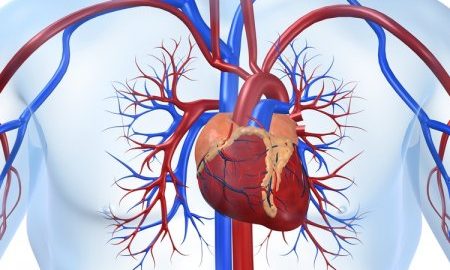
The 8th round of the Razavi International Cardiovascular Congress opened on Wednesday at Razavi Hospital in Mashhad, the capital of northeastern province of Khorasan Razavi. The three-day meeting will present the latest research and scientific achievements in treatment of cardiovascular diseases and provide a platform for sharing experience between foreign and local experts, medcongress.ir reported. Over 400 domestic and foreign surgeons, cardiologists and doctors from Germany, Britain, US, Italy, Japan, Malaysia, Turkey, India, Egypt, South Korea, Vietnam and Ireland are participating.

/financialtribune.com/

Iran sets May 19 for presidential election

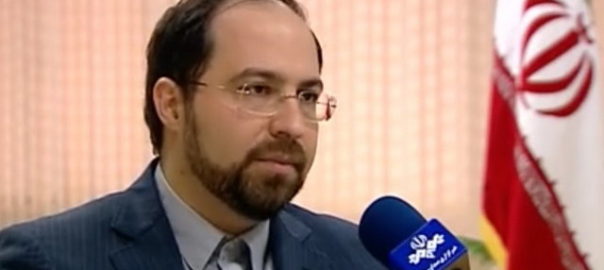
Iran will hold its next presidential election on May 19, 2017. The Guardian Council said in a letter to the Interior Ministry that it had agreed on a date of May 19 proposed by the ministry, the ministry confirmed late Wednesday.

“The 29th of Ordibehesht of 1396 (May 19, 2017) has been announced as the definite date for the 12the presidential and fifth city and village council elections to the Interior Ministry by the Guardian Council,” Salman Samani told IRNA.

Iranian officials have said that the election would be held earlier than usual so as not to coincide with the Muslim fasting month of Ramadan which starts in late May.

/ Tehran times/

Golestan Gallery Holding Summer Exhibition

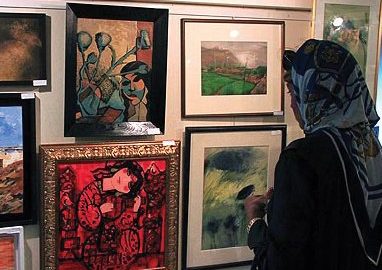
Golestan Gallery in Tehran will, like in the past years, hold the exhibition ‘100 Works, 100 Artists’ this summer too. The show is set to open on July 22.

Known as the oldest visual arts event run by the private sector in Iran, this year it will present 220 paintings, calligraphy paintings and sculptures from 195 artists, Mehr News Agency reported.

“The presence of artists from outside Tehran and presentation of sculptures are significant in this year’s edition,” gallery director Lili Golestan said.

High quality of artworks as well as reasonable prices are the two factors considered in the 24th edition.

The highest price tag is for a painting by the late contemporary poet Sohrab Sepehri ($70,000); however, in order to attract and encourage people from different social strata to purchase pieces of art, the gallery will also present works costing as low as $30.

Since the gallery motto is “Any Iranian Home, One Art Piece”, it has always paid serious attention towards the ordinary people by providing them with affordable artworks.

Of the 195 artists, 130 are women and 65 men. A total of 190 paintings and calligraphy paintings will be put on display besides 30 sculptures.

Born in Tehran, Lili, 72, studied dress and textile design at the Decorative Art Institute of Paris. Simultaneously, she attended classes on world art history and French literature at La Sorbonne. While in Paris, she also participated in pottery classes.

After she returned home she took up a job as a textile designer at a textile factory. Later, she worked in national television as a dress designer for TV shows.

She quit her TV job after seven years and published her first translation of a novel in 1967: ‘Life, War and Then Nothing’ by Italian author Oriana Fallaci. The book was welcomed and encouraged her to translate more novels. She has since published more than 20 books.

Lili founded Golestan Gallery in 1988 and since then has tried to make it easy for people to buy art, support new talent and young artists and take strong steps to expand the horizons of art in society.

She is the daughter of well-known filmmaker and writer Ebrahim Golestan and sister of the late photojournalist Kaveh Golestan. Filmmaker Mani Haghighi is her son.

The exhibition will run till August 17, at No. 34, Shahid Kamasai Ave., Darouss.

/financialtribune.com/

57% of Post-JCPOA Deals Put Into Effect

Iran has signed some $4.2 billion worth of industrial and commercial agreements with European countries after signing last year’s nuclear deal with P5+1 (the five permanent members of the UN Security Council plus Germany), also known as the Joint Comprehensive Plan of Action, an advisor to the minister of industries, mining and trade, said.

“More than 57% of these agreements, amounting to $2.4 billion, have been put into effect,” Behrouz Riyahi was also quoted as saying by IRNA.

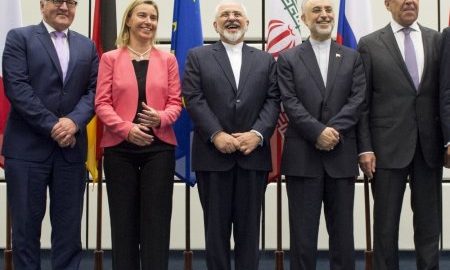
The JCPOA reached in Vienna, Austria, on July 14, 2015, saw the lifting of economic sanctions against Iran on the one hand and enforcement of limits on the country’s nuclear program on the other. The landmark agreement was implemented on January 16 this year.

/financialtribune.com/

Iran rises to 12th place among world’s top steelmakers

Iran produced 8.806 million tons of crude steel in the first half of 2016, up 5.2 percent compared to the same period in previous year, the World Steel Association (WSA) reported.

According to the WSA’s latest report, registering the mentioned growth the country stood at the 12th place among top world’s steel producers leaving Mexico behind.

The country produced 8.372 million tons of crude steel in the first half of 2015. This is the second time that WSA upgrades Iran’s place in its ranking lists released in the current year.

It is worth mentioning that while Iran’s crude steel production grew during the said period, the world’s steel production declined 1.9 percent to 794 million tons compared to the same period last year.

In WSA ranking, China seized the first place with 399 million tons of steel produced in the first half of 2016 and marked itself as the world’s biggest steel producer. Japan stood at the second place with 52 million tons and India with 40 million tons of steel production holds the third place.

As a major steel producer in the region, Iran boosted its steel mills across the country in recent years, as central Isfahan and southwestern Khuzestan provinces remain the major steel producers.

According to WSA, Iran was the biggest producer of crude steel in the Middle East in 2013. The country’s rank was 14th in the world in 2014.   /Tehran times /

Iran Travel Guide in Italian

An Iran travel guide introducing the country’s myriads of attractions has been published in Italy in the local language to provide key information on Iran as a travel destination. The move comes shortly after a visit by an Italian trade and tourism delegation to Mazandaran Province, which was the 12th foreign delegation visiting the northern province since the signing of the nuclear deal between Iran and six major world powers last July. The book is expected to help travelers learn more about Iran and encourage them to travel to the Middle East country, IRNA reported. Titled “Welcome to Iran”, the 260-page book covers a wide array of topics and includes a historical timeline of the country, provides interesting facts on Iranian customs, traditions and society. It contains 560 images and 30 maps, with tourist attractions clearly marked. The book is available in select Italian bookshops for €29.5.

/financialtribune.com/

First Major US Exhibit of Qur’ans

The first major exhibition of Qur’ans in the US, “The Art of the Qur’an: Treasures from the Museum of Turkish and Islamic Arts,” will open at the Smithsonian Arthur M. Sackler Gallery in Washington on Oct. 15 and continue through Feb. 20, 2017.

The exhibition is organized by the Sackler in collaboration with the Museum of Turkish and Islamic Arts in Istanbul. It will feature more than 60 of the most important Qur’an manuscripts ever produced from the Arab world, Turkey, Iran and Afghanistan.

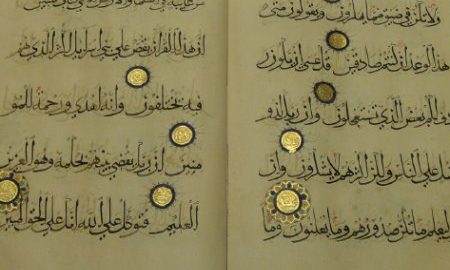
Celebrated for their superb calligraphy and lavish illumination, these manuscripts span almost 1,000 years of history—from eighth-century Damascus, Syria, to 17th-century Istanbul. Many of the works, which will be on view outside of Turkey for the first time, are critical to the history and appreciation of the arts of the book.

This landmark exhibition tells the individual stories of some of these extraordinary manuscripts, their makers and their owners. Visitors will learn how the Qur’an was transformed from an orally transmitted message to a written, illuminated and bound text produced by highly accomplished artists from the Islamic world, the website asia.si.edu reports.

These Qur’ans were originally created for some of the most powerful rulers of the Islamic world. As the finest examples of their kind, long after their completion the manuscripts were sought out and cherished as prized possessions by the Ottoman ruling elite, whose power once extended from southeast Europe to northern Africa and the Middle East. They were offered as gifts to cement political and military relationships or recognize special acts, and they were also given to public and religious institutions to express personal piety and secure political power and prestige. Donations of Qur’ans to libraries and public institutions by royal women expressed their commitment to contemporary religious and social life.

A Unique Opportunity

Shortly before 1914, when the Ottoman Empire was in political turmoil, its government decided to transfer to Istanbul all valuable works of art that had been donated to mosques, schools, shrines and other religious institutions across the empire. These included thousands of the most ornate Qur’an manuscripts and loose folios, which are housed today in the Museum of Turkish and Islamic Arts, located in the heart of the historical city, opposite the so-called Blue Mosque.

“This exhibition offers a unique opportunity to see Qur’ans of different origins, formats and styles and begin to appreciate the power and beauty of the calligraphy as well as intricacy of the illuminated decoration,” said Massumeh Farhad, the Freer and Sackler’s chief curator and curator of Islamic art.

“Although each copy of the Qur’an contains an identical text, the mastery and skill of the artists have transformed it into a unique work of art.”

Farhad joined the gallery in 1995 as associate curator of Islamic art. In 2004, she was appointed chief curator and curator of Islamic art. She is a specialist in the arts of the book from 16th and 17th century Iran.

Farhad has curated numerous exhibitions on the arts of the Islamic world, namely Art of the Persian Courts (1996), Fountains of Light: The Nuhad Es-Said Collection of Metalwork (2000), Love and Yearning: Mystical and Moral Themes in Persian Painting (2003) and The Tsars and the East: Gifts from Turkey and Iran in the Kremlin (2009),

She received her Ph.D. in Islamic Art History from Harvard University in 1987 and has written extensively on 17th-century Persian painting. She is a frequent contributor to the Encyclopaedia Iranica.

Extraordinary Collections

“The Museum of Turkish and Islamic Arts in Istanbul has one of the most extraordinary collections of Qur’ans in the world, yet its holdings are little known even to many experts,” said Julian Raby, The Dame Jillian Sackler director of the Arthur M. Sackler Gallery and Freer Gallery of Art. “This exhibition provides an unparalleled opportunity for audiences in the United States to appreciate the artistry of Muslim scribes and craftsmen over more than a millennium, in regions from North Africa to Afghanistan.”

The Freer and Sackler galleries have one of the most comprehensive collections of Islamic art in the US. A number of important Qur’ans from the museums’ permanent collections will be on display in the exhibition.

A multi-author, full-color catalog published by the Freer and Sackler will feature a series of essays on the Qur’an, its calligraphy, illumination and organization as a text.

A website will offer additional resources on the art of the Qur’an for online and on-site visitors. These include videos, “closer looks” at several manuscripts, an interactive map and curriculum plans. In addition to extensive public programs, an international symposium on the art of the Qur’an will be held December 1-3.

/financialtribune.com/

Iran extends visa on arrival to 3 months

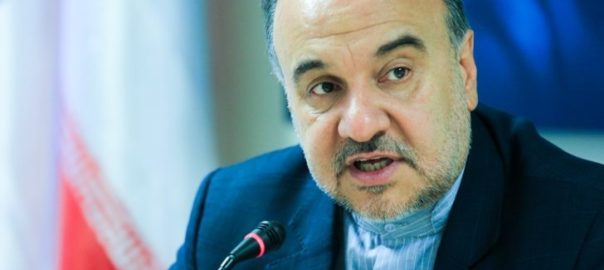
Iran has increased its visa on arrival extension from 1 month to 3 months, Cultural Heritage, Tourism, and Handicraft Organization Director Masoud Soltanifar announced.

For the time being, citizens of 190 countries can obtain visa on arrival at the country’s airports with one-month validation, he added.

“The decision will pave the way for development of tourism industry in Iran,” he said.

He named Imam Khomeini International Airport as well as airports in Shiraz, Isfahan, Mashhad, Tabriz, Bandar Abbas, Larestan, Kish, and Qeshm as places which issue visa on arrival up to now.

“Airports of Urmia, Ahvaz, Yazd and Tehran’s Mehrabad will issue visa on arrival in the near future,” he noted.

In August 2015, Iran extended visa on arrival from 15 days to 30 days.

In October 2015, Soltanifar said the easing of visa rules was opening the door for the return of foreign tourists to Iran.

Even before sanctions are lifted, the number of foreigners visiting Iran has grown 12 percent in each of the past two years.

In 2014, Iran hosted over five million tourists, bringing in some $7.5 billion in revenue.

/Tehran times /