All posts by islam

Tabriz Inaugurated as 2018 Islamic Tourism Capital

Tabriz 2018 was informally initiated on Thursday but the official ceremony is to be held on March 23 in the presence of the President Hassan Rouhani and top officials of Islamic states

T abriz 2018, an event in which the central city of East Azarbaijan Province is to represent the capital of Islamic tourism for over a year, was unofficially opened during a ceremony on Thursday.

Culture Minister Abbas Salehi, the head of Iran’s Cultural Heritage, Handicrafts and Tourism Organization, Ali Asghar Mounesan, Majlis First Deputy Speaker Masoud Pezeshkian, Governor General of East Azarbaijan Majid Khodabakhsh, Mayor of Tabriz Iraj Shahin-Baher and several ambassadors of Muslim countries attended the ceremony that was accompanied with performances of plays and folk music and dance, IRNA reported.

Speaking during the event, the culture minister underscored the significance of Tabriz that has made it eligible for the nomination, noting that it can be a model for other cities.

“Tabriz has been a bridge through which the Iranian culture has crossed over to the world,” he said.

Salehi noted that Tabriz will represent Iran at the international level as a symbol of “artistic and cultural diplomacy”.

“By the time 2018 ends, the culture of the region will have made its way beyond borders to join eternity,” he said.

Pezeshkian highlighted the city’s past flourishing period, adding that the successful experiences of that time can be used today to foster dialogue with the world.

Pointing to the insufficient allocation of funds, the official said Tabriz has to rely on its own capacities to fund the programs of this year.

“Although the government has pledged to supply funds, it is not logical to count on such donations,” he said.

The ICHHTO chief also addressed the ceremony and again emphasized that the 2018 event is not the ultimate goal but a starting point for further development of Tabriz’s tourism.

“We must all make efforts to use this opportunity to achieve our broader objectives,” he said.

He noted that East Azarbaijan is among the top five destinations in Iran and has hosted some 300,000 foreign tourists in the first half of the current Iranian year (started March 21, 2017), marking a 6% increase compared with the same period of last year.

“Tabriz boasts 1,800 national heritage sites that the majority of these tourists had come to visit,” he said.

Mounesan added that although 3,500 years of history are a valuable potential, Tabriz has large capacities for health, education, leisure and nature tourism as well.

He stressed that besides national goals, Iran must also serve the general purpose for which the Organization of Islamic Cooperation selects cities as capitals of Islamic tourism.

“The OIC is certainly promoting Islamic tourism and we should draw on the experiences of the past selected cities to prove that Tabriz is an ideal destination for Islamic tourists,” he said

In the Ninth Islamic Conference of Tourism Ministers in 2016, ministers of tourism of OIC member states approved the selection of Tabriz as the capital of Islamic tourism in 2018.

The title was given to the Turkish city of Konya in 2016 and Medina in Saudi Arabia in 2017.

Although 2018 has already started, the authorities have decided to officially open the event on the Iranian New Year (March 21).

The official ceremony, scheduled for March 23, will be attended by President Hassan Rouhani and top officials of a number of Muslim countries. / Financial tribune /

A mountain village built on rooftops

Sar-e Aqa Seyyed is a village in Chaharmahal-Bakhtiyari province, western Iran. Earth-colored houses are stacked on top of one another so that the roof of one house forms the pathway for the next.

The village is named after Aqa Seyyed shrine. Most of the houses are windowless and only have doors. The village has a population of around 3,000 who are mostly living on husbandry and agriculture. They are very hardworking. Unfortunately, Aqa Seyyed lacks any development infrastructure such as asphalted roads or communication facilities./ Tehran times /

Annual Fajr Music Festival Slated for January 10-20

Over 90 performances by domestic and foreign musicians are scheduled to be staged at six venues across Tehran

T he 33rd edition of the Fajr International Music Festival, Iran’s most prestigious music event, will be held in Tehran from January 10-20, 2018.

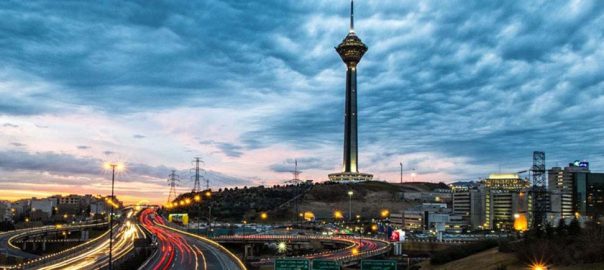
According to the website of the event, fajrmusicfestival.com, 90 performances are scheduled at six venues across Tehran, namely Azadi and Milad towers, Niavaran Cultural Center, Iranian Hall, Roudaki Hall and Vahdat Hall, where the closing ceremony will be held.

Like the previous edition, musician and traditional vocalist Hamid-Reza Nourbakhsh is the director of the festival.

Iran’s National Orchestra conducted by Fereydoun Shahbazian, 74, and Tehran Symphony Orchestra conducted by Shahrdad Rouhani, 62, are among participating ensembles.

Nilper Orchestra, Pars Orchestra, Austrian-Iranian Symphonic Orchestra (AISO), Tehran Flute Choir, Mehr Orchestra, Iran Chamber Orchestra and Tehran Wind Orchestra are among the groups that will attend.

Most of the orchestral performances will take place at Vahdat and Roudaki halls, both located on Shahryar Blvd, Hafez Street, south of Enqelab Avenue.

Contemporary Santur Ensemble led by famous composer, santur player and music arranger Ardavan Kamkar, 49, are among the major bands at the event. Other Iranian groups include the folk bands Rastak, Lian and Dilmun, Amin Ghaffari’s ensemble, the pop band Puzzle and the fusion band Damahi.

Among the celebrated singers, Mehdi Yarahi, Hamed Homayoun, Mohammad Alizadeh, Xaniar and Sirvan Khosravi, Behnam Bani, Alireza Talischi, Omid Hajili and Ali Zand-Vakili will perform at the annual national event.

Ethnic music performances will represent Mazandaran, Gilan, Bushehr, Lorestan, East Azarbaijan and West Azarbaijan, Kurdistan and Golestan provinces.

Foreign participants at the 33rd Fajr International Music Festival are from Turkey, Portugal, Afghanistan, France, Italy, India, Mongolia, Serbia, Austria, Senegal, Slovenia, Germany, Japan and Spain. / Financial tribune /

Cheetah cub saved from smugglers

Following the arrest of an animal-trafficking band in Tehran, an Asiatic cheetah cub was discovered and required measures were taken for her protection, Iran’s Department of Environment official website reported on Tuesday.

The cheetah, named Iran, was quickly moved to the wildlife rehabilitation center of Pardisan Park for further medical examinations, Hooman Jokar, director of the Conservation of Asiatic Cheetah Project (CACP) in Iran, said.

The examinations have shown that “Fortunately, all of her limbs are healthy,” he said, adding, “She is just 8 months old and weighs nearly 15 kilograms.”

Further details about the animal’s fate is not revealed yet.

Trading and keeping animals as pets, importing and exporting any wildlife species should be under the license of the Department of Environment, otherwise it is considered as an illegal act, ISNA quoted Ali Teymouri, the Department of Environment’s deputy director for hunting and fishing, as saying on Tuesday.

Violators are punished by up to three years of imprisonment and 1 billion rials (nearly $25,000) fine, he highlighted.

The main habitat of the Asiatic cheetah in Iran is Dasht-e Kavir desert, encompassing parts of Khorasan, Kerman, Yazd, Semnan, Tehran and Markazi provinces. The cheetah has been put on the IUCN Red List since 1996 as a ‘critically endangered’ species. / Tehran times /

Iran among 25 top countries in brain implants

Iran is now ranked among the top 25 countries in the world active in the field of brain implants, a director at the Science and Cognitive Technologies Council said Wednesday.

According to the head of brain implant working group at the Science and Cognitive Technologies Council, Iran currently holds 0.6 per cent of the world’s science production in the last decade, and based on global statistics, Iran is among the top 25 countries with a remarkable record in the field of brain implants.

Hossein Maghami went on to add, “brain implant systems, which are composed of different parts, are responsible for recording neural signals or stimulating neuronal cells. Through their contact with the surface of the brain and receiving signals and sending them outside of the brain, the systems are able to process the received signals and extract the required data from them.”

Deep brain stimulation (DBS) technology is used in treatment of diseases such as Parkinson’s, he said, adding that the Science and Cognitive Technologies Council is currently supporting projects on production of electrodes and batteries used in the deep brain stimulation systems. / Mehr news /

Iran ranks 2nd in launch tech., space infrastructure

Head of the Iran’s National Space Center announced on Tuesday that Iran has ranked second in the field of launch technologies and space infrastructure in the region.

According to Manouchehr Manteghi, they, in Iran’s National Space Center, have studied and assessed different sections of the industry to reach the conclusion.


He added that after considering different criteria, they now can say that Iran ranks second in launch and space infrastructure, second in space exploration sciences, fifth in remote sensing, seventh in the telecommunications, fifth in satellite technology, finally second in navigation system in the region.


Manteghi pointed out that one of the aims of the National Space Agency is to collaborate with other countries’ aerospace organizations and centers to increase the knowledge about space and advance technologies related to space. / Mehr news /

Iranian karateka win title at Asian event

An Iranian karate squad offered awe-inspiring athletic performances to stand atop Central Asia Karate Championships in Uzbekistan.

Tashkent hosted Central Asia Karate Championships among seniors, cadets and juniors in men’s and women’s divisions on December 24-25.

Athletes from Afghanistan, Iran, Kazakhstan, Tajikistan, Kyrgyzstan, and Turkmenistan had taken part in the two-day competition which convened at the Universal Sports Complex.

The Iranian outfit, comprising top karate practitioners from Qazvin Province, succeeding in collecting two gold, one silver and two bronze medals and stood on top of the podium overall.

Accordingly, Bahman Asgari (-84kg) and Saleh Abazari (+84kg) gained upper hands over their rivals and brought home two gold trophies.

One silver medal was bagged by Meysam Reshvand (+84kg) while Mohammad Hossein Ghasemi (-60kg) and Rauf Dastafkan (-75kg) settled for bronze medals.

Persian athletes also came first in the team kumite section of the sportive event.

The championships were organized by the State Committee of the Republic of Uzbekistan on Physical Culture and Sport, Asian Karate Federation and Uzbekistan National Karate Federation.Prior to the competition, the workshops and exams were organized for the juries. / Mehr news /

Iran handmade carpet exports up 31%

Deputy Head of Iran’s Carpet Center for Economic Affairs Mohammad Mehdi Farshchi said Iran exported $270 million worth of hand-woven carpets during the 8 months of the current Iranian year.

Speaking during a local ceremony in Qazvin on Monday night, Farshchi said the figure shows a 31% hike compared with the similar period of a year before.

Iran exported $290 million hand-woven carpet in 2016, he said, adding the figure rose to $359 million in 2016, rising by 3 percent in terms of weight and and 23 percent in terms of value.

He added 29 countries are the main buyers of Iran’s handmade carpets, among them are 13 Asian, 11 European, 4 Americans and 1 African countries.

Japan, Germany, Italy, Switzerland, France, Britain, the UAE, Kuwait, Lebanon and Qatar are traditional markets for the luxury Iranian product.

He underlined that $141 million worth of carpets were exported to the Asian countries.

Iran’s carpet exports were hit hard by sanctions imposed on the country over its nuclear program. The United States—the biggest importer of Iran’s handmade rugs—banned the import of Iranian carpets, among other products, in September 2010. / Mehr news /

Royan Institute clones Murciana goat

Scientists at Iran’s Royan Research Institute has succeeded in producing the country’s third cloned goat belonging to Murcia-Granada breed of goat.

Dr. Mahdi Hajian, Head of Embryology Department at Isfahan Campus of Royan Research Institute, made the announcement asserting “following successful cloning of Saanen and Alpine goats, we sought to clone a third one from Murcia-Granada breed.”

Imported from Spain, these types have no particular season for breeding and the females can come into heat at any time of the year and produce a significant amount of milk, said the Iranian scientists while highlighting main characteristics of Murciana goats.

“We managed to extract a sample tissue from the imported goat’s ear in order to obtain necessary stem cells,” noted Hajian.

We were able to extract a sample of the tissue of the ears of this goat to extract the cells, resulting in simulation of the third goat in Royan Research Institute in the central city of Isfahan, Iran.

Hajian said the goat had been born a month ago since when its conditions have been analyzed and investigated.

Referring to the characteristics of the three cloned goats, he said “each simulated goat has its own unique features; the first two ones produce high milk yields.”

“They yield about 3-4 kilos of milk while the newly-born one produces two to 2-3klograms of milk and instead is more resistant to heat.”

Murciana goat can even tolerate high temperatures in southern regions of Iran, emphasized the Iranian embryologist.

In 2006, Iran became the first Middle Eastern country to announce it had cloned a sheep, named Royana.

The effort is part of Iran’s quest to become a regional powerhouse in advanced science and technology by 2025. In particular, Iran is striving for achievements in medicine and in aerospace and nuclear technology.

The cloning of sheep and other animals could lead to advances in medical research, including using cloned animals to produce human antibodies against diseases.

Royan Institute’s main aim in cloning the goat is to produce medicine to be used to treat people who have had strokes.  . / Mehr News /

Historic human remains unearthed in construction site

Head of the provincial office of the Cultural Heritage Organization of Hamedan said that archaeologists have unearthed another buried skeleton in Imam square, Hamedan.

Ali Malmir referred to the excavations in Imam Square in Hamedan and said “archaeological experts have managed to unearth another skeleton in the southern corner of the hole dug up in Imam Khomeini Square, Hamedan.”

“The evidence shows that the skeleton is in a squatting position with its head toward the south,” he added.

Head of the provincial office of the Cultural Heritage Organization of Hamedan expressed regret that the torso of the skeleton has been destroyed as the result of a hole which has been dug up recently and said “preliminary studies show that this skeleton belongs to the historic era and has been buried shortly after the clay coffins of the Parthian Empire.”

“No objects or relics have so far been unearthed near the skeleton,” he added.

During the process of digging tunnels for an urban construction project earlier this month, historic antiques were unearthed in Imam Square, Hamedan. Experts are still carrying out excavations with the expectation to find new antiques near the site. / Mehr News /