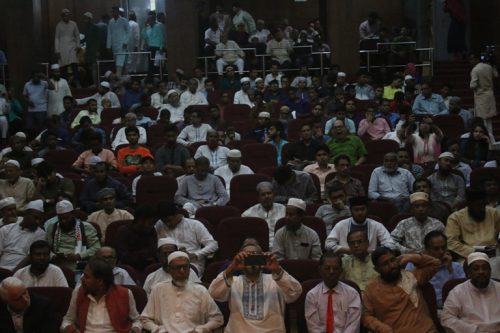
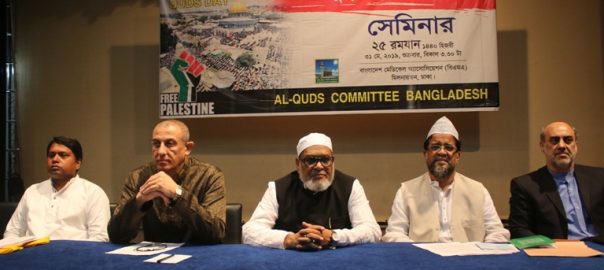
On the occasion of the Al-Quds Day, Al-Quds Committee Bangladesh arranged a Seminar on ‘Towards the Emancipation of Al-Quds’ on 25th Ramadan, 1440 A/H Corresponding 31 May, 2019, 03.30 p.m. at Bangladesh Medical Association (BMA) Auditorium.
Mr. AKM Mozammel Haque Hon’ble Minister, Ministry of Freedom Fighters Affairs, Govt. of the People’s Republic of Bangladesh was present as Chief Guest.
H.E. Mr. Mohammad Reza Nafar, Ambassador of the I. R. of Iran in Bangladesh, H.E. Yousef S Y Ramadan, Ambassador of Palestine in Bangladesh & Professor Dr. Borhan Uddin, Former Vice-Chancellor, City University were present as Special Guests.
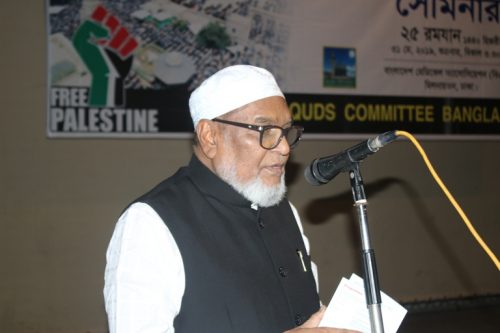
Professor Dr. Siddiqur Rahman Khan, University of Dhaka, Mawlana Muhammad Ruhul Amin, Khatib, Eastern Plus Jame Mashjid, Dhaka, Mr. Abdullah Al Kafee, Eminent thinker spoke on the occasion.
Mr. Jamal Uddin Bari, Assistant Editor, The Daily Inqilab, presented the keynote paper.
Advocate A.K.M. Badruddoza, Bangladesh Supreme Court delivered the inaugural speech.
Professor Dr. Shah Kawther Mustafa Abululae, Dept. of Philosophy, University of Dhaka and President of Al-Quds Committee Bangladesh, presided over the Seminar.
In support of oppressed Palestinians, a human chain program also held at 2.30 p.m. in front of National Press Club.
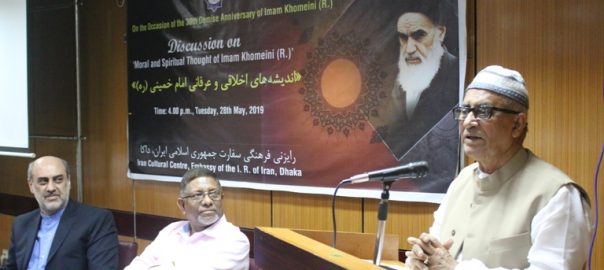
Discussion on 30th death anniversary of Imam Khomenei – Iran Cultural Centre
In establishing Islamic state in a peaceful way as did by Prophet Muhammad (SW), Imam Khomini set an example in this century, speakers said in a program in Bangladesh’s capital Dhaka on Tuesday evening.
“The historical Islamic revolution in Iran is a great miracle in the 20th century and even after four decades the role of it is becoming stronger worldwide”, Hujjatul Islam Mohammad Ashraf Uddin Khan, noted researcher on Iran’s revolution, said while presenting the keynote paper in a discussion on the occasion of 30th demise anniversary of Imam Khomeini (r.).
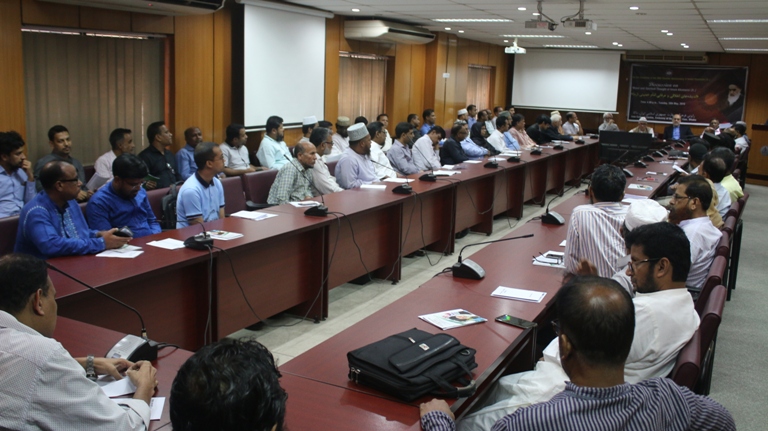
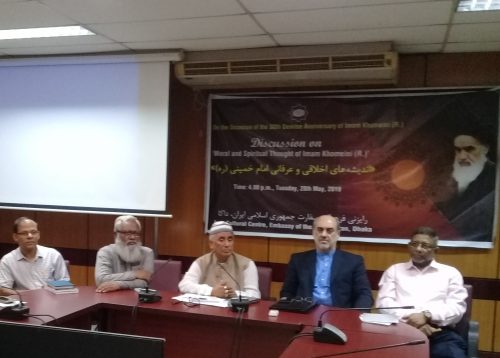
Iran Cultural Centre, Dhaka organized the program entitled ‘Moral and Spiritual Thought of Imam Khomeini (R.)’ at the Shaheed Dr. Shamsul Alam Khan Milon auditorium of Bangladesh Medical Association (BMA).
Khan added that Iran’s revolution has a great socio-economic significance for people worldwide that also carries a spiritual message for whole Muslim community.
“What real Islam is can be fathomed in interpreting the historical Islamic revolution in Iran under the leadership of Imam Khomeini”, said Abul Kalam Azad MP, Chairman, Parliamentary Standing Committee, Ministry of Planning, Government of the People’s Republic of Bangladesh.
Mohammad Reza Nafar, Ambassador of the Islamic Republic of Iran in Bangladesh was present at the discussion as special guest.
Professor Dr. Maimul Ahsan Khan, Dept. of Law, University of Dhaka and Tanim Nowshad, Eminent thinker discussed on this occasion.
Iran Cultural Centre, Dhaka has announced that, this year Government of Islamic Republic of Iran will give Scholarship for higher education at Masters Level two students in Persian Language and Literature. The scholarship declared as ‘A’ category, would cover all expenses of the recipients. The selection would be under a certain process. The interested students are told to contact the Persian Language and Literature Department of Dhaka, Rajshahi and Chittagong University for further information.
Monitoring the status of the indicators of science, technology and innovation of Iran showed that Iran is one of the 5 top countries in the world in entrepreneurship growth.
Iran’s scientific development ranked 5th and Iran’s science production ranked 15th in the world in 2018 based on a report of monitoring the status of the indicators of science, technology and innovation and also the statistics published in “Science & Engineering Indicators 2018”.
Regarding this report, Iran is one of the 5 top countries in the world in terms of entrepreneurship growth. / MNA/
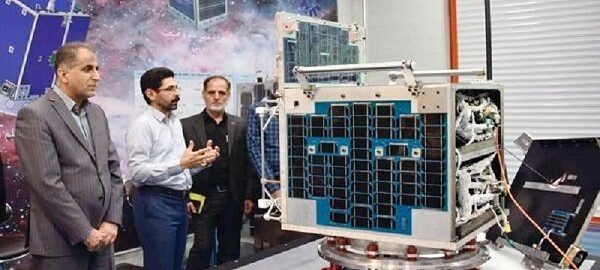
Iran University of Science and Technology president has said the university has planned to deliver Zafar satellite to Iranian Space Agency on September.
Iran University of Science and Technology president Jabbar Ali Zakeri said that the Zafar satellite manufactured by the University of Science and Technology will be sent into orbit by this summer.
The development of the satellite has been completed and the final stages of testing and controls are underway, he added.
He mentioned that researchers at the satellite research center in Iran University of Science and Technology are working on satellite projects, adding: “The ‘Zafar’ is designed by experts at research center of university and it weighs 90 kilograms and is equipped with color cameras and can survey the oil reserves, mines, jungles, and natural disasters.”
Iran launched its first satellite, called the Omid (Hope), in February 2009. The Rasad (Observation) satellite was also sent into orbit in June 2011.
In February 2012, Iran successfully put its third domestically manufactured satellite, named the Navid (Promise), into orbit. On February 8, 2012, Iran received the first image sent by the Navid satellite. / MNA /
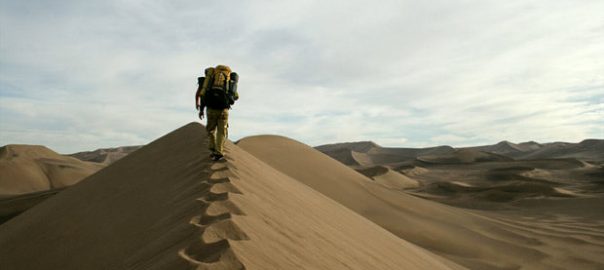
The University of Birjand in South Kkhorasan province is hosting the first international conference on tourism in Lut Desert, which is a UNESCO-inscribed and the world’s 27th-largest desert in eastern Iran.
The 1st International Conference on Lut Desert Tourism (Local and International Opportunities) was opened at the University of Birjand in South Kkhorasan province on Wednesday.
The event consists of two programs; the scientific part of it is currently underway at the University of Birjand, and the second program includes a visit to the Lut Desert, widely referred to as Dasht-e Lut, on Thursday.
According to the executive secretary of the Conference, as many as 135 papers from UK, Australia, India, Turkey, Italy and across Iran had been submitted to the secretariat of the event.
The Conference topics include: sustainable tourism and development of communities; tourism and local economy; attractions in Iran’s Lut Desert; sports tourism; geo-tourism; ECO tourism; transportation and community development, among other topics.
The event aims, among others, to promote tourism in South Khorasan province and increase the effectiveness of scientific education and the modern tourism technologies.
A specialized economic and business diplomacy meeting is also scheduled to be held at Birjand’s Chamber of Commerce with a number of Foreign Ministry and Iran Chamber of Commerce officials in attendance.
The Lut Deseret is a large salt desert located in the provinces of Kerman and Sistan and Baluchestan, Iran. It is the world’s 27th-largest desert, and was inscribed on UNESCO’s World Heritage List on July 17, 2016. / MNA/
The Nations’ Food festival will be held on 11-16 August 2019 at Milad Tower Exhibition Center with the participation of Economic Cooperation Organization (ECO) members.
The director of the festival Jalal Zokaie said that the Nations’ Food festival will be held in order to bring nations and countries closer together.
“Some countries have been invited to present their food, besides other NGOs and domestic and foreign food producers can also take part in the event,” he added.
The food festival will be sponsored by Cultural Heritage, Handicrafts and Tourism Organization of Iran, Touring & Automobile Club of Iran, Ministry of Culture and Islamic Guidance, and ECO Cultural Institute (ECI). The aims of this festival are to introduce indigenous Iranian and foreign foods, talent identification and selecting the best culinary talents and introducing top international chefs. / MNA /
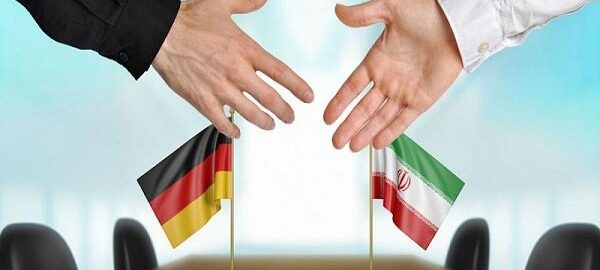
Deputy Chancellor of Iran University of Science and Technology (IUST) for International Affairs Hadi Shah-Hosseini said on Sat. that Iranian and German scientists launched 12 scientific projects jointly.
Speaking at the 5th National Working Group of international scientific cooperation with Germany, he expounded on the bilateral cooperation and launch of 12 national projects between scientists of the two countries.
He went on to say that researchers of the two countries have taken launch of the following plans into consideration, the most important of which are as follows: setting up working group for scientific and international interactions with Germany, organizing joint scientific committee between Iran and Germany, planning for organizing Iran Science Day in Germany, defining 12 projects in national level among Iranian and German scientists and supporting scientific interactions between university lecturers and researchers.
“Iran Science Day” in Germany is an annual conference for the development and promotion of scientific ties with Germany, he said, adding, “launching a peer-to-peer system, determining the most important fields of scientific interaction, paving suitable ways for holding specialized bilateral scientific workshops and also creating motivation for fulfilling international industrial projects are of the main objectives of the annual conference.”
Shah-Hosseini revealed the visit of a 60-member delegation of Iranian universities to Germany in the course of organizing Iran Science Day in this European country. / MNA/
The national Iranian freestyle wrestling team has powerfully won the Asian Championships in China with 220 points.
At the end of day 2 of the 2019 Asian Championships which was held in China’s Xi’an on 23-24 April, the Iranian freestyle wrestlers were crowned after clinching 7 gold medals and 3 bronzes.
Iranian national team won three gold medals and 2 bronzes on the opening day of the competitions yesterday.
Reza Atrianchi(57kg), Behnam Ehsanpour (61kg), Bahman Taimouri (79kg), Kamran Ghasempour (86kg), Alireza Karimi (92kg) and Yadolah Mohebi (125kg) were the gold winners, while Peyman Biabani (56kg), Mohammad Nokhodi (74kg) and Yunes Emami (70kg) brought home Iran’s three bronze medals.
Iran became champion with 220 points followed by India (155pts) and Kazakhstan (129pts) in the second and third places, respectively./ MNA /
Iranian gardens have for nearly 6,000 years combined the beauty of nature with the aesthetic qualities of art and architecture to create a symbolic representation of paradise on earth.
Ancient Iranians, who regarded planting trees as a sacred activity, gradually blended their expertise in agriculture and architecture into the design of gardens as part of their constant efforts to find more efficient ways to survive extreme climatic conditions.
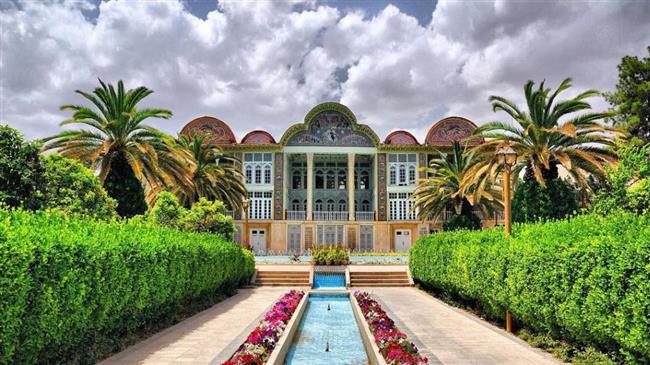
There are four main elements to the intricate geometric design of Iranian gardens: High walls surrounding the garden to create a protected space for spiritual and leisurely relaxation; a koushk (palace) on the highest point in the middle of the garden; a water pool decorated with tileworks and fountains; one or several water canals for irrigation of the entire green space.
The file photo shows the UNESCO World Heritage Eram Garden in the southern Iranian city of Shiraz.
Iranian gardens often integrate the indoor area of the koushk with its surrounding garden through an inner courtyard, with architectural elements such as vaulted arches connecting the two spaces.
Iranian gardens were basically built in front of the water flow coming out of qanats, underground tunnels for transferring of water. The water then circulates in the garden through streams and the pool.
Tall trees such as cedar, pine and plane surround the pool and streams, creating an extensive shadow which prevents water evaporation and cools down the area. Flowers with strong scent are also planted in the area to produce pleasant smell in the environment.
The pool is normally located in front of the Koushk, functioning as a large mirror which reflects a full image of the mansion.
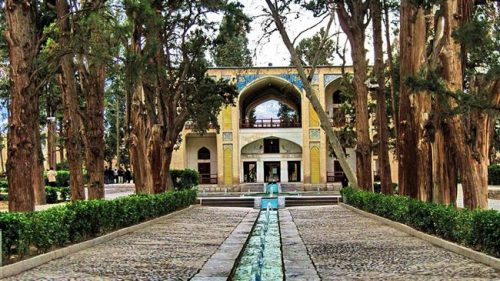
The file photo shows Fin Garden in the central Iranian city of Kashan.
The idea of building earthly paradises became a key part of the Iranian culture and spread to other cultures during the Achaemenid Empire (550–330 BC).
Nearly 2,500 years ago, Cyrus the Great ordered the construction of a garden in Pasargad royal complex in the southern province of Fars. The garden which had magnificent pavilions, orchids, pools and terraces was laid out symmetrically in a four-part system and it is considered as the first official example for the style of Persian gardens.
During the Sasanian Empire (224-651 AD), decorative and functional use of water fountains and ponds became more important in gardens under the influence of Zoroastrianism and its respect for the vital value of water.
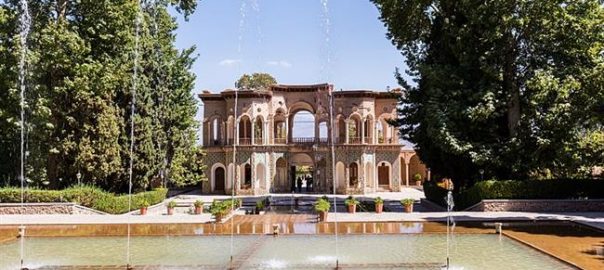
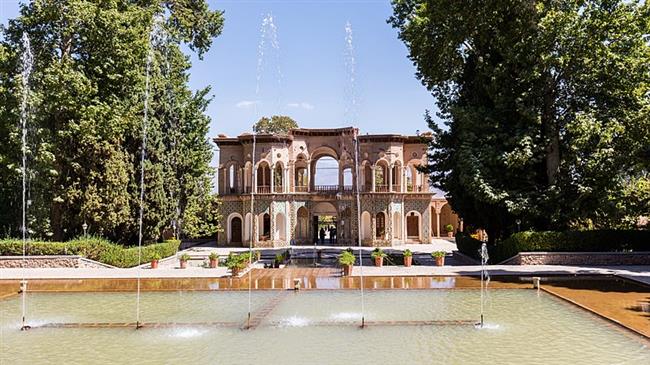
The file photo shows Shazdeh Garden in the town of Mahan in the southeastern Iranian province of Kerman.
The file photo shows Shazdeh Garden in the town of Mahan in the southeastern Iranian province of Kerman.
After Islam, the geometric design and aesthetic aspect of gardens increased in importance and became a major influence in the design of gardens from Andalusia in Spain to India and beyond.
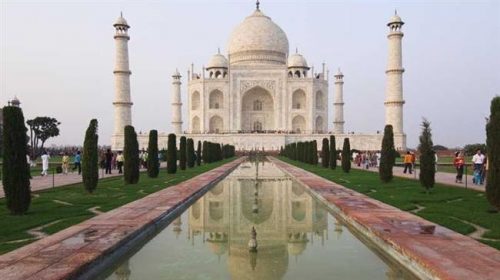
Humayun’s Tomb and Taj Mahal, which were built under the Mughal Empire (1526-1857 AD) in India, have some of the largest Persian gardens in the world.
The file photo shows Taj Mahal in the Indian city of Agra.
The design of Iranian gardens reached its zenith during the Safavid Dynasty (1501–1736) which designed the urban planning of its first and second capital cities, Qazvin and Esfahan, based on the style of Persian gardens.
There are currently 12 UNESCO World Heritage Persian Gardens in the world, including nine in Iran, two in India and one in Pakistan.
The file photo shows Dowlatabad Garden in the central Iranian city of Yazd.
Apart from the role of Persian Gardens in Iranian architecture and urban designing, the gardens have had the most significant influence in the artistic design of Persian carpets.
Persian carpets mainly depict a panorama of a heavenly garden with visible illustrations of architectural and artistic elements of Iranian gardens.
In Persian carpets, gardens, as the symbols of paradise, transcend the restrictions of place and time and picture a world in which the body and soul can achieve peace.

 Professor Dr. Siddiqur Rahman Khan, University of Dhaka, Mawlana Muhammad Ruhul Amin, Khatib, Eastern Plus Jame Mashjid, Dhaka, Mr. Abdullah Al Kafee, Eminent thinker spoke on the occasion.