All posts by islam

ADAK 150AC hauler puts Iran among global trucking giants

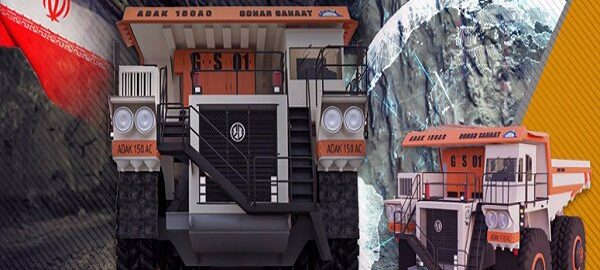
Defying international sanctions, Iran has achieved a groundbreaking milestone in its industrial sector with the launch of the ADAK 150AC, a fully electric, 150-ton mining dump truck designed and manufactured inside the state.

This accomplishment is more than just a technical milestone. It embodies a strategic national effort to achieve self-sufficiency in heavy machinery and end reliance on costly foreign imports and their fragile support systems.

Guided by the principles of Iran’s “Resistance Economy” and inspired by the vision of Leader of the Islamic Revolution Ayatollah Seyyed Ali Khamenei to replace oil with mining as the backbone of the national economy, the ADAK 150AC is the result of meticulous reverse engineering, collaborative expertise, and determined political resolve.

Developed by Gohar Sanat Adak Gostar Company, the truck represents a fully integrated ecosystem of innovation, from a 100 percent indigenous control system to a powerful regenerative braking mechanism, designed to deliver reliable, cost-effective, and environmentally sustainable technology to the country’s mines.

This is the story of how Iran transformed a critical vulnerability into a sovereign strength, paving the way to a redefined industrial future.

The ADAK 150AC truck’s specifications

The ADAK 150AC marks a monumental leap in Iran’s domestic industrial capabilities. This fully electric, 150-ton mining dump truck has been meticulously engineered to eliminate the country’s historical reliance on foreign machinery and the notoriously unreliable support networks that accompany it.

Built for the most demanding deep-pit mining operations, the ADAK 150AC is designed to replace outdated, inefficient, and costly diesel-powered trucks with a modern, environmentally conscious, and economically superior alternative.

At the heart of its innovation lies a sophisticated, fully indigenous AC electric drive system, a technological marvel that eliminates traditional mechanical components like gearboxes and differentials. This design drastically reduces potential points of failure and minimizes the extensive downtime typically associated with maintaining such complex equipment.

The truck’s 100 percent localized control and monitoring system is arguably the project’s crowning achievement. This intricate network of hardware and software functions as the truck’s central nervous system, processing vast amounts of data to manage traction, regulate speed on steep inclines, and maintain operational stability under a full 150-ton load.

ADAK 150AC hauler puts Iran among global trucking giants

The system incorporates a highly efficient regenerative braking mechanism, a critical feature that captures kinetic energy during descents or deceleration and converts it back into electrical energy to recharge the onboard power bank. This innovation significantly enhances overall energy efficiency and lowers the operational cost per ton of material moved.

Choosing a power bank over a fixed cable connection provides unparalleled operational flexibility, enabling the truck to move freely throughout a mine site. These power banks can be charged using clean energy sources such as solar power, aligning the vehicle with global environmental, social, and governance (ESG) standards and supporting the national directive for green steel production.

The chassis and load-bearing structures have been rigorously designed and tested for maximum strength and durability, ensuring they can withstand the extreme stresses of a fully loaded 150-ton truck while navigating harsh and unpredictable mining terrain. This guarantees both structural integrity and operator safety.

Beyond its mechanical and electrical innovations, the ADAK 150AC is the product of a uniquely collaborative national effort. A consortium of domestic knowledge-based companies contributed specialized expertise in advanced metallurgy, power electronics, and software engineering, ensuring that every component, from the smallest sensor to the largest structural beam, is designed and manufactured entirely within Iran.

This approach has not only secured the truck’s technical specifications but also created a wide ecosystem of technological spin-offs.

Advanced systems developed for the ADAK 150AC, particularly in power management, high-torque electric motors, and robust data acquisition, are already being adapted for other industrial applications, including locomotives and marine vessels, multiplying the project’s national impact far beyond a single vehicle.

The design philosophy prioritizes operational resilience and ease of maintenance, directly addressing a long-standing bottleneck in Iranian mines: the failure of a single imported circuit board could previously halt a multi-million-dollar operation for months.

With a fully domestic system, any malfunctioning vehicle can now be restored within a single day, fundamentally transforming mine planning and productivity.

Field tests, which began in early August 2025, represent the final validation phase for these specifications. They rigorously evaluate real-world performance metrics, including traction on steep slopes, the efficiency of the regenerative braking system, overall energy consumption, and structural durability under full load.

Data from these trials will inform final adjustments before mass production, slated to begin in the second half of the year, with 51 units scheduled for deployment over the next three years.

The ADAK 150AC truck’s development

The development of the ADAK 150AC is a compelling story of national ambition, strategic reverse-engineering, and collaborative achievement.

It began in the second half of 2021 with the establishment of Gohar Sanat Technical Engineering Company, founded with a clear mandate to address a critical vulnerability in Iran’s mining sector.

The project officially launched at the start of 2022 with the ambitious goal of designing a 150-ton electric dump truck from the ground up.

This initiative was driven by the Leader of the Islamic Revolution’s vision of making mining, rather than oil, the cornerstone of Iran’s sustainable economic development, as well as the principles of the “Resistance Economy,” which emphasize localization, domestic production, and complete independence from foreign entities.

ADAK 150AC hauler puts Iran among global trucking giants

In a masterstroke of pragmatic engineering, Gohar Sanat simultaneously acquired, renovated, and operated eight American TEREX MT3300-AC 150-ton dump trucks.

These vehicles served as real-world laboratories, allowing the team to meticulously monitor, analyze, and decode a vast array of electrical signals and mechanical performance data over more than a year.

This hands-on approach provided invaluable empirical knowledge, enabling the team to deconstruct foreign technology and significantly de-risk the indigenous design process by avoiding potential dead ends and rework.

By the end of 2022, the intensive design phase was complete, allowing the company to move swiftly into procurement and manufacturing by early 2023.

Key contracts were signed with a network of domestic knowledge-based companies and research partners to produce the specialized components required for a planned run of 51 units over three years.

The company’s growing stature and alignment with national industrial goals were publicly recognized in April 2023, when it was honored as a Provincial Model Working Group and National Model Unit at the 34th National Festival of Appreciation for Labor and Production Elites.

This award celebrated the early progress on the 100% indigenous control system and the truck’s design.

By October 2023, Gohar Sanat showcased its programs and prototypes at the prestigious Minex 2023 exhibition in Tehran, presenting its progress to industry leaders and government officials from the Ministry of Industry, Mines, and Trade.

The display marked the project’s transition from theoretical concept to tangible reality.

The most significant technological breakthrough occurred in October 2024 at the Zanjan International Exhibition with the unveiling of the fully localized control and monitoring system for mining dump trucks.

This milestone liberated Iranian mines from the prolonged and costly downtime caused by failures in imported system boards, which previously had to be sourced from Africa or Australia and were often incompatible with existing setups. The new system now offers a domestic repair capability with a turnaround time of less than 24 hours.

The unveiling also formally marked the start of manufacturing the ADAK 150AC itself, shortly after a memorandum of understanding was signed to import similar trucks from Belarus, a clear statement of the company’s commitment to achieving self-sufficiency.

In January 2025, the project received the highest endorsement when Leader of the Islamic Revolution visited Gohar Sanat’s booth at the “Pioneers of Progress” exhibition, emphasizing the national strategic importance of replacing oil with mining and producing green steel using electrically powered machinery charged with clean energy.

In March 2025, engineer Abolfazl Mahiapourlari, a member of Gohar Sanat’s technical team, was honored as the youngest top researcher in mechanical engineering for 2024 at an awards ceremony in Sirjan County, recognizing his significant contributions to both research and professional work.

The company’s accolades continued in May 2025 when it received the special prize for Best National Brand in Localizing Mining Equipment at the 6th Hatam National Festival.

This award recognized the successful design of the ADAK 150AC and highlighted its symbolic value as a beacon of national capability.

ADAK 150AC hauler puts Iran among global trucking giants

The methodical and collaborative development of the ADAK 150AC reached its most critical phase in early August 2025, when the first prototype began rigorous field testing.

These trials evaluated the truck’s electric propulsion, braking, and structural performance, marking the final step before the planned mass production launch in the second half of the year.

This milestone concluded a four-year journey, transforming a strategic concept into a fully operational, world-class mining vehicle, born entirely from Iranian expertise and determination.

Global comparisons: Ultra-class haul trucks

The global market for ultra-class haul trucks, vehicles with payload capacities of at least 150 tons, is dominated by a handful of established industrial giants, alongside emerging manufacturers such as Iran’s Gohar Sanat.

Most modern ultra-class trucks now utilize electric drives, typically in a diesel-electric configuration, where a diesel engine powers a generator that feeds electricity to wheel-mounted electric motors.

This approach offers substantial advantages over traditional mechanical drives, including improved traction control, superior retarding on declines, higher availability due to fewer mechanical components, and lower cost per ton hauled over the vehicle’s lifetime.

Key players in the global market

Caterpillar Inc. (US): A historic leader, known for its mechanical-drive trucks like the 797F and newer electric-drive models. Caterpillar trucks are celebrated for their durability and extensive global support network, making them a mainstay in major mining operations.

Komatsu Ltd. (Japan): Through strategic acquisitions, Komatsu has become a major competitor with models like the 930E and 980E, featuring advanced AC drive systems and strong reliability, reflecting deep expertise in large-scale mining logistics.

BelAZ (Belarus): A state-owned industrial champion, BelAZ is globally recognized for producing the world’s largest dump truck, the 75710, with a 450-ton payload, symbolizing post-Soviet industrial capability and serving markets across Eastern Europe and Asia.

Liebherr (Switzerland/Germany): Known for its innovative diesel-electric T 284 and T 264 models, Liebherr competes directly with Caterpillar and Komatsu, emphasizing engineering excellence and pioneering technology in haul trucks.

Hitachi Construction Machinery (Japan): Offers reliable rigid-frame electric-drive trucks such as the EH4000AC-3, combining high performance with the conglomerate’s engineering expertise.

Chinese Manufacturers: Companies like XCMG (Xuzhou Construction Machinery Group) and SANY have rapidly developed large-capacity trucks, such as the XCMG XDE440 and SANY SET360S, leveraging domestic demand and government support to close the technological gap and begin exporting globally.

The ADAK 150AC positions Iran within this elite class of ultra-class haul trucks, representing not only a leap in domestic industrial capability but also the potential to compete with international leaders in a strategically critical sector.

ADAK 150AC hauler puts Iran among global trucking giants

Other significant players include BEML (Bharat Earth Movers Limited, India), which serves India’s substantial domestic mining sector with models like the BH150 and BH205, and Kress Corporation (US), which has carved out a niche with its specialized slanted-body, bi-directional haulers designed for applications such as feeding mobile crushers.

Unlike all other major manufacturers, Iran’s industrial development has occurred under the unique constraints of comprehensive American and Western sanctions.

While global competitors can freely source and exchange components on the international market, Iran has been compelled to innovate entirely through domestic capabilities, achieving complete technological self-reliance.

The significance of Iran’s success

Ultra-class haul trucks are critically important for Iran because they provide the high-capacity equipment necessary to efficiently and economically extract its vast mineral resources, valued at approximately $770 billion. This equipment is a cornerstone of the national strategy to achieve self-sufficiency, overcome sanctions, and transition from an oil-dependent economy to one powered by mining.

The strategic importance of these trucks is underscored by the fact that precise, real-time production figures are considered highly sensitive proprietary information. Companies like Caterpillar, Komatsu, and Liebherr treat their sales and production data as key competitive intelligence, releasing only aggregate financial results rather than model-specific volumes.

The market for ultra-class trucks is a true niche. Total global annual production of these vehicles is estimated at only a few hundred units per year under normal conditions.

Production occurs in batches, typically in response to large fleet orders from major mining conglomerates such as BHP, Rio Tinto, Vale, and Glencore.

A single order might comprise 10-30 trucks to equip a new pit or replace an aging fleet, representing a substantial portion of a manufacturer’s annual output for that model.

Demand is highly cyclical, surging during periods of high commodity prices when miners expand operations and plunging during downturns when capital expenditures are cut first.

Chinese manufacturers like XCMG and SANY are increasingly capturing the domestic Chinese market, the world’s largest mining market, but their export volumes for ultra-class models outside Asia and Africa remain limited compared to established global leaders.

BelAZ aligns its production primarily with the CIS mining industry and politically allied markets, causing output to fluctuate based on specific economic and geopolitical factors.

Iran’s independent production of 17 units per year during the first three years is expected to cover domestic demand fully, with the potential for future exports of these multi-million-dollar trucks.

This milestone represents not only a technological achievement but also a strategic leap in national industrial self-sufficiency.

PressTV / MNA
Iran shines at INNOVERSE 2025

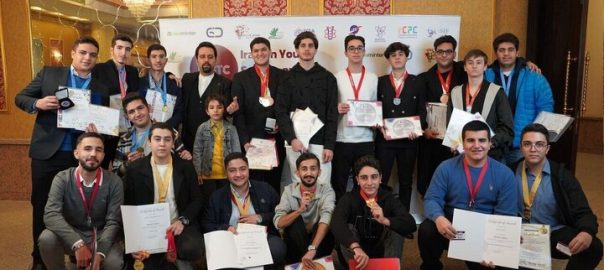
Iranian students have managed to grab 13 medals – 3 gold medals, 4 silver medals, and 6 bronze medals – at the INNOVERSE International Invention & Innovation Expo, showcasing exceptional talents in science and technology.

Hosted by the United States, the event was held online on August 24. INNOVERSE 2025 represented more than a competition; it was an arena for collaboration, knowledge exchange, and intellectual growth across disciplines and generations.

It provided a distinguished platform for inventors, researchers, students, and emerging talents from around the world to introduce their ideas, inventions, and scientific contributions.
The projects encompassed fields such as advanced technologies, artificial intelligence, social development, and environmental sustainability, Innoverse.world reported.

This year, a total of 177 teams from 47 countries, including Armenia, Bangladesh, Belgium, China, France, Chile, Iran, Iraq, Saudi Arabia, Japan, Taiwan, the UK, the U.S., Vietnam, India, and Finland, participated in the competition.

Ilia Majidzadeh Heravi, Parsa Karimi Yazdi for inventing ‘CommuniMateSmartApp: Solutions for Deaf Communication Challenges’, Artin Radmatin, Ava Alebouyeh, Baran Bahman, Elyar Ferdosizadeh, MohammadHossein Ezzati, for ‘Evaluation of the effect of using magnetic gear in improving the performance of process systems based on mechanical gear’, and Niki Abtahi, Parsa Ahmadpour Rahiminejad, Baran Derakhshandeh Daryasari, Sarina Nosrati, Ramiya Rahjou, for their invention ‘Improving the design of pneumatic muscles: Simulation and analysis of the dynamic behavior of the system’, bagged home gold medals.

Mehran Rajabi and Alireza Jafarnezhad, for the invention of ‘EcoNet Bin: An AI-IoT Powered Smart Waste Segregation System for Efficient Recycling’, Yasin Abbasi, Ali Rahbari, Nikasadat Hosseini, Kiarash Rshidzadeh Gargari, and Eizadyar Jalali Pour, for the invention of ‘Medismart Smart Pharmacy Solution’, Parmida Salahmand and Sorena Salahmand, for their invention titled ‘Development of Nano-Composites Containing Herbal Extracts with Resistance to Wear and Oral Bacterial Decay’, and Matin Hayati, for inventing ‘Automated Analysis and Visualization of EEG Signals for Seizure Prediction Using Frequency Band Decomposition’ successfully clinched silver medals.

Mohammad-Sam Nemati-moein, and Mahan Ghadimi, for ‘Evaluation of Gamma-Aminobutyric Acid efficiency on Caco2 Colorectal Cancer Cells’, Rojina Hoodehshenas and Baran Moradi, for ‘Preparation and characterization of an antimicrobial biodegradable biofilm packaging based on Silver-zinc oxide nanocomposite with sago starch and ziziphora essential oil for protein based Packaging application’, Sam Rashidi and Radin Abasi, for ‘Design and Implementation of Smart NannyBot: A Humanoid IoT-Based Robot for Remote Child Activity’, Arshia Chehrezad, Taha Tajik, for ‘Fabrication of a Hydrogel Containing Captopril and Investigation of Its Effects on Oral Ulcers in Type 2 Diabetic rats’, Raman Nafarieh, for ‘Evaluation of a novel herbal nanogel formulation on skin cancer cells utilizing the MTT assay’, as well as Moeid Rajabi and Helena Rajabi, for ‘Protecting Curious Little Minds: A Smart Child Safety Solution with IoT and Image Processing’ secured bronze medals.

Recent achievements

The Iranian students have grabbed five gold medals at the 18th International Olympiad on Astronomy and Astrophysics (IOAA), marking the country’s second consecutive world championship.

The event was held from August 11 to 21, in Mumbai, India, attracting over 300 high school students from 64 countries. During the event, students participated in several challenging exams covering theoretical, observational, and data analysis aspects of astronomy.

The five-member Iranian team comprised Ali Naderi Lordjani, Arshia Mirshamsi Kakhaki, Hossein Soltani, Hossein Masoumi, and Hirbod Foodazi. The first three students are placed atop the whole winners.

This remarkable achievement is the result of the students’ dedication, the support of their families, the tireless efforts of their coaches, and the solidarity of the country’s scientific community, which has once again raised Iran’s flag in the international arena, Pres TV quoted a statement by the Ministry of Education on August 23.

Iranian students continued to showcase their excellence at international competitions by winning medals at the Yakutia International Science Fair (YISF) and the World Invention Creativity Olympics (WICO).

YISF was held in Yakutsk, Russia, from July 6 to 9. The event brought together 129 teams from 10 countries, participating in two different categories.

The first category included mathematics, computer science, and information technology, and the second one involved physics, astronomy, and engineering.

In the second category, Mehran Rajabi and Alireza Jafarnejad ranked first for their project titled ‘EcoNet Bin: AI-Driven Waste Segregation with IoT-Enabled’.

‘Protecting Curious Little Minds: A Smart Child Safety Solution with IoT and Image Processing’ was the name of the project presented by Moeid Rajabi and Helena Rajabi, who secured second place.

Artin Radmatin, Baran Bahman, Mohammad-Hossein Ezzati, Niki Abtahi, Sarina Nosrati, and Baran Derakhshandeh won third place for ‘Evaluation of the effect of using magnetic gear in improving the performance of process systems based on mechanical gear’.

Also, Zhina Aminorroaya-Karladani managed to grab the special prize for her project, ‘UVGuard Grooming Brush’.

In the first category, Artin Salari and Amir-Abbas Kavosi Amin ranked second for ‘Smart Glasses for the Blind with Real-Time Object Detection.

Ilia Majidzadeh Heravi and Parsa Karimi Yazdi came in third for their project titled ‘CommuniMate SmartApp: An Innovative Solution for Deaf Communication’.

WICO is a global platform for inventors to showcase their talents, explore new ideas, and gain recognition.

The 14th WICO was held from July 17 to 19 at Seoul National University of Education in South Korea. Hosted by the Korea University Invention Association (KUIA), the 2025 edition gathered 313 teams from 28 countries, creating a global platform to share advancements in science, technology, and invention.

Radin Abbasi and Sam Rashidi claimed the gold medal for building a humanoid robot called NannyBot to manage children’s activities using the Internet of Things.

Matin Hayati’s project, ‘automatic analysis and display of EEG signals for seizure prediction using frequency band analysis’, and Raman Nafarieh’s project titled ‘studying the effect of plant nanogels on skin cancer cells’ grabbed the silver medals.

MNA/

Iranian knowledge-based firms to attend Uzbekistan fair

The Republic of Uzbekistan will host Iranian knowledge-based firms at the 17th International Exhibition of Medical Equipment, Pharmaceutical, Dentistry Services in Uzbekistan entitled “UzMedExpo-2025”.

The pavilion of the domestic knowledge-based firms at the exhibition will be set up with the support of the Iranian Presidency’s Innovation and Prosperity Fund.

The 17th International Exhibition of Medical Equipment, Pharmaceutical, Dentistry Services in Uzbekistan entitled “UzMedExpo-2025” is one of the largest exhibitions in the Central Asia in the fields of healthcare services.

This exhibition is active in the following areas: medical equipment, pharmaceuticals, dietary supplements, medicinal herbs, medical tourism and services, orthopedics and rehabilitation, cosmetic medicine and aesthetics, new medical information technologies, ophthalmology and neurology, medical furniture, laboratory equipment, consumables and dressings, and dentistry.

The pavilion of the Iranian knowledge-based companies in UZMEDEXPO 2025 will be set up on November 4-6, 2025.

One of the empowerment services of the Innovation and Prosperity Fund is to help develop the domestic and export market of knowledge-based companies, support the presence of knowledge-based companies in reputable domestic and international exhibitions in the form of independent presence, support the dispatch of Iranian trade and technology delegations (knowledge-based companies) and also admission of foreign trade and technology delegations.

/MNA/

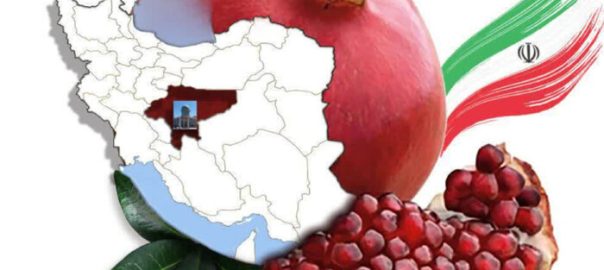
Isfahan tourism festival begins with 90 events

An enormous tourism festival in Isfahan has commenced to highlight the endless charms of the province, whose capital of the same name was the seat of power in the 17th century.

Alireza Habibi, a provincial tourism official, told IRNA on Monday that 90 diverse tourism, cultural, and artistic events will be held in various parts of the province during the one-month festival.

He said the festival aims to boost tourism and introduce various capacities of the province.

Habibi explained that 36 urban festivals, 30 rural festivals, and 34 private sector festivals will be held. He called holding pomegranate, almond, bread and ice cream, adobe structure, Kavir carpet, handicrafts, local garments and souvenirs as some of the programs of the festival.

The festival includes special support programs for tourists, he said, adding that during this period, some hotels and traditional accommodations, ecotourism and tourism centers in the province have provided discounts of up to 30 percent for travelers, and in addition, shopping centers, restaurants and entertainment spaces are also participating in the discount plan.

He clarified that many accommodation centers have tried to attract more tourists by participating in this plan.

According to him, this festival is an appropriate opportunity for introducing natural, historical and cultural attractions of the province. All domestic and foreign tourists are invited to travel to Isfahan during this period and benefit from its diverse programs, he added.

Some 22,000 historical and architectural monuments in Isfahan, along with a range of intangible cultural heritage indicators including foods, rituals, celebrations, traditional skills, and handicraft production, reflect the history and culture of Iran in this region, and this richness has made Isfahan one of the most tourist-friendly provinces in Iran.

Isfahan was once a crossroads of international trade and diplomacy in Iran and now it is one of Iran’s top tourist destinations for good reasons. It is filled with many architectural wonders, such as unmatched Islamic buildings, bazaars, museums, Persian gardens, and tree-lined boulevards. It’s a city for walking, getting lost in its mazing bazaars, dozing in beautiful gardens, and meeting people.

The Persian proverb “Isfahan, Nesf-e-Jahan” (Isfahan is half the world) reflects the city’s cultural and historical prominence.            /T.T/

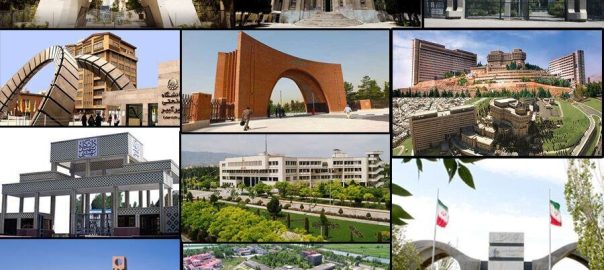
More Iranian universities in ISC WUR 2024

The 2024 World University Rankings (WUR) report by the Islamic World Science Citation Center (ISC) has included 72 Iranian universities, up from 69 in 2023.

A total of 426 universities from 31 Islamic countries are listed in the ranking, where Turkey, with 102 universities and Iran, with 72 universities, and Pakistan, with 39 universities, are placed first to third, IRNA reported.

Among the top universities of Islamic countries, Saudi Arabia ranks 172. Iran, Pakistan, Malaysia, and Egypt jointly rank 401–450, Qatar ranks 451–500, and Turkey, the UAE, and Lebanon rank 501–600.

Tehran University’s ranking has changed from 501-600 in 2023 to 401-500 in 2024. The University is placed first in the country.

Tehran University of Medical Sciences ranks second. The university’s global ranking is 501-600, up from 601-700 in 2023.

Shahid Beheshti University of Medical Sciences’ ranking has also improved from 801-900 in 2023 to 601-700 in 2024, ranking third in the country.

Sharif University of Technology and Tarbiat Modares University are placed fourth and Fifth, respectively.

In the ISC WUR 2024, there are 2,661 top universities from 114 countries and six continents. Harvard University, Stanford University, Johns Hopkins University, University College London, and the University of Oxford are the top five universities.

ISC WUR is one of the ranking systems that started ranking universities for the first time in 2018 by the ISC Ranking Department with the aim of evaluating the universities of the country as well as Islamic countries at the world level.

To rank the world universities in its criteria, ISC considers the most important mission of universities, which are research (60 percent), education (10 percent), international activities (15 percent), technology and innovation (15 percent), and then evaluates universities.

Besides, the number of university retractions is calculated with a negative score, which is included in a criterion called Negative Reputation.

In the ISC World University Ranking, universities that have published at least 850 documents in Web of Science 2020-2022 are considered. The information on this ranking is collected from USPTO, WOS, and InCites.

Recent rankings

Shanghai University ranking 2025 has placed six Iranian universities among the top 1,000 institutions worldwide, down from 9 in 2024.

Tehran University of Medical Sciences and University of Tehran are among the top 500 universities in the world, ranking 401–500 globally. Tarbiat Modares University ranks 701–800.

Shahid Beheshti University of Medical Sciences and Sharif University of Technology rank 801-900. Iran University of Medical Sciences ranks 901–1000.

The July edition of the Webometrics world ranking has included 64 medical universities from Iran, unchanged from January’s edition, 11 of which have advanced in the ranking compared to the January edition.

Tehran University of Medical Sciences (485) is the only university ranked among the top 500 institutions in the world, Mehr news agency reported.

Among Iranian universities, Mazandaran University of Medical Sciences, Kermanshah University of Medical Sciences, and Yazd University of Medical Sciences have improved their rankings by 1002, 961, and 948 positions, respectively.

Shahrekord University of Medical Sciences, Urmia University of Medical Sciences, Ilam University of Medical Sciences, Kashan University of Medical Sciences, Alborz University of Medical Sciences, Kordestan University of Medical Sciences, Gonabad University of Medical Sciences, and Maraghe University of Medical Sciences are the other universities that have noticeably improved their rankings.

The Times Higher Education (THE) has included 34 universities from Iran among the top universities pursuing sustainable development goals (SDGs), up from 33 universities in 2024.

Iran University of Medical Sciences, with a global ranking of 301-400, is placed first in the country.

Alzahra University, Kerman University of Medical Sciences, and Shahid Beheshti University of Medical Sciences (ranking 401-600) are placed second.

Iran University of Medical Sciences ranks 48th in good health and well-being as well as reduced inequalities, and 62nd in quality education goals.

Alzahra University and Kerman University of Medical Sciences rank 85th and 89th in gender equality, respectively.

Shahid Beheshti University of Medical Sciences ranks 30th in good health and well-being.

Amirkabir University of Technology and Shahid Beheshti University rank 46th and 60th in industry, innovation, and infrastructure.

The 22nd edition of the Quacquarelli Symonds (QS) World University Rankings (WUR), 2026, has placed nine Iranian universities among the world’s top institutes, unchanged from the 2025 ranking.

University of Tehran, with a global ranking of 322, ranks first among the Iranian universities.

Sharif University of Technology (ranking 375) and Amirkabir University of Technology (456) are placed second and third.

Iran University of Science and Technology (496), Isfahan University of Technology (571), University of Tabriz (578), Shiraz University (701-710), Shahid Beheshti University (741-750), and Ferdowsi University of Mashhad (951- 1000) are other top universities included in this year’s ranking.

The Round University Ranking (RUR) 2025 has placed 36 Iranian universities among the top universities in the world, up from 32 universities in 2024.

Islamic Azad University, with a global ranking of 93, is placed first in the country.

Tehran University of Medical Sciences (125), University of Tehran (202), Iran University of Science and Technology (355), Shiraz University of Medical Sciences (371), Sharif University of Technology (389), University of Tabriz (422), Kurdistan University of Medical Sciences (440), Qazvin University of Medical Sciences (445), and Shahid Beheshti University (454) ranked second to tenth.

T.T /

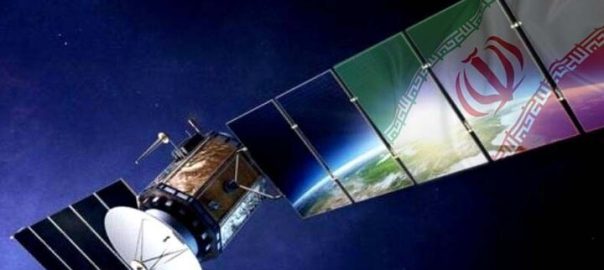
lran unveils upgraded Kowsar satellite

The enhanced Kowsar satellite was unveiled on Saturday with Deputy Minister and head of the Iranian Space Agency Hassan Salarieh in attendance.

Salarieh confirmed that the second model of the domestically built satellite will be launched into orbit in the coming months.

Last year, Kowsar-1 and Hodhod satellites were successfully placed in orbit using a Soyuz launcher. In less than a year, Iran has now completed final testing of the upgraded Kowsar, which weighs 50 kilograms and will be positioned in a 500-kilometer sun-synchronous orbit.

The new satellite will combine the missions of Kowsar-1 and Hodhod, with applications in remote sensing, Internet of Things, precision agriculture, and mapping. Salarieh emphasized that Kowsar is the first observation satellite built by Iran’s private sector, with the second version developed based on lessons learned from the first.

“The launch schedule is influenced by coordination with other payloads on the Soyuz rocket,” Salarieh explained. “Any delay in preparation of those payloads can postpone the entire launch, but our planning is to launch Kowsar-2 this year.”

He said the second version includes upgrades in imaging and telecommunications payloads, as well as in data management codes and algorithms, reflecting advances drawn from the first mission.

Salarieh highlighted that private-sector participation in space technology is inherently high-risk and that only a limited number of companies have the capacity to engage. Among them is Omid-Faza Company, which has taken on this challenge. He stressed that under Iran’s 10-year roadmap and the seventh development plan, multiple satellites will be developed and launched with private-sector involvement.

He added that the Ministry of Information and Communication Technology is working to expand private-sector activity in the space industry. New tenders will soon be announced to hand over more projects to Iranian private firms, providing both a market and guaranteed purchases to encourage growth.

MNA/

Iran crowned champions of 2025 FIVB U21 World

Iran came from a set down to beat Italy 3-1 (15-25, 25-18, 25-22, 25-14) in the 2025 FIVB Volleyball Men’s U21 World Championship semifinals on Sunday.

Matin Hosseini led Iran with 18 points, while Tommaso Barotto scored 14 points for Italy.

Iran had defeated Italy 3-2 in the previous edition.

It was Iran’s ninth win in the competition as the young Persians had defeated Kazakhstan, Puerto Rico, South Korea, Canada, Poland, Argentina, China and the U.S. in the competition.

Earlier in the day, the U.S. defeated Czech Republic 3-0 (25-20, 25-19, 25-18) in the bronze medal match.

The competition took place in Jiangmen, China from Aug. 21 to 31. / T.T/

Iranian boxers win medals at Belt & Road Youth Boxing Festive

Iranian youth boxers claimed two silver and two bronze medals at the 3rd Belt & Road Youth Boxing Festival.The competition was held in Xinjiang Uyghur Autonomous Region, China from August 15 to 30.

The tournament brought 32 teams from 20 countries together. Mehrshad Sherafatmand lost to Kazakhstan boxer in the final bout of 75kg and seized a silver medal.

In 80kg weight class, Amir Ali Fatahian lost to his Indian rival and won a silver medal.

Zubair Issa Zehi and Matin Chamipa won two bronzes in 50kg and 54kg, respectively.

MNA/

Iran’s defense readiness increased since June war

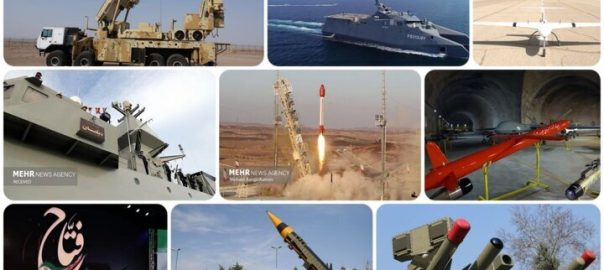
The Defense Ministry spokesperson said that the country’s Armed Forces have significantly improved their readiness and capabilities since the recent 12-day war.

Defense Ministry spokesperson Brigadier General Reza Talaei-Nik has emphasized that the defensive, operational, and logistical readiness of Iran’s armed forces has improved significantly compared to the period before the recent 12-day war.

Speaking at a ceremony on Saturday in Sanandaj, the provincial capital of Kordestan, Brigadier General Talaei-Nik said, “During the 12-day war, our country’s military sectors suffered certain damages. However, today, the operational, combat, and defensive readiness of Iran’s Armed Forces has increased significantly as a direct result of the lessons learned from that war.”

He added, “Sixty percent of the weaponry, equipment, and munitions used by the armed forces are now produced by the private sector and knowledge-based companies.”

He further cited, “Today, Iran ranks among the top 10 countries in the world in terms of missile capability, which demonstrates our country’s independence from foreign sources for its weaponry.”

Talaei-Nik underscored that the objective of the Zionist enemy in attacking Iran was to weaken the country, force its surrender, and ultimately overthrow the Islamic Republic. “However, this goal was not achieved, and they once again miscalculated.”

On June 13, Israel launched a blatant and unprovoked aggression against Iran, triggering a 12-day war that killed at least 1,064 people in the country, including military commanders, nuclear scientists, and ordinary civilians.

The United States also entered the war by bombing three Iranian nuclear sites in a grave violation of international law.

In response, the Iranian Armed Forces targeted strategic sites across the occupied territories as well as the al-Udeid air base in Qatar, the largest American military base in West Asia.

On June 24, Iran, through its successful retaliatory operations against both the Israeli regime and the US, managed to impose a halt to the terrorist aggression.

MNA/

Iran marks Pharmaceutical Day honoring legacy of Razi

Iranians mark Pharmaceutical Day to commemorate Muhammad ibn Zakariya al-Razi, whose groundbreaking work in evidence-based medicine, psychology, and chemistry left an indelible mark on medical science worldwide.

Centuries before the Renaissance, a compassionate physician in Persia championed evidence-based practice, discovered fundamental chemical compounds, and penned over 200 manuscripts that would shape Western medicine.

On Pharmaceutical Day, Iran and the scientific world remember the enduring legacy of Muhammad ibn Zakariya al-Razi.

In Iran, August 27 is observed as Pharmaceutical Day in commemoration of Muhammad ibn Zakariya al-Razi, the 9th-century Persian polymath, known in the West as Rhazes.

A Persian Muslim polymath, physician, alchemist, and philosopher born near Tehran, Razi made enduring contributions to medicine, philosophy, and chemistry, authoring over 200 manuscripts.

He championed evidence-based medicine and is considered the father of psychology, psychotherapy, pediatrics, obstetrics, and ophthalmology.

Razi served as chief physician of Baghdad and Ray hospitals, renowned for his compassion and dedication to patients, and attracted students from diverse backgrounds.

He integrated Greek medical knowledge with his own observations, viewing himself as a modern Hippocrates.

Razi pioneered the differentiation of contagious diseases using humoral theory and wrote groundbreaking works on smallpox and measles. He also discovered compounds like alcohol and sulfuric acid.

His encyclopedia, “The Virtuous Life (al-Hawi),” and other works like “Kitab al-Mansuri” and “Al-Judari wal Hasabah” profoundly impacted Western medical education.

Razi’s detailed descriptions of chemical reactions and instruments are found in “Kitab-al-Asrar.” Although his philosophical writings were initially overlooked, his medical and scientific advancements significantly influenced the development of these fields.

About 40 of his manuscripts are preserved in libraries worldwide. Razi’s holistic approach to medicine, emphasizing both physical and psychological well-being, cemented his status as a visionary figure.

His emphasis on meticulous observation, experimentation, and clinical documentation laid the groundwork for future generations of physicians and scientists.

Beyond his direct medical contributions, Razi’s writings fostered intellectual exchange between Eastern and Western scholars, contributing to the advancement of scientific knowledge across cultures.

His legacy continues to inspire medical professionals and researchers to embrace innovation and prioritize patient care above all else.

The annual observance of Pharmaceutical Day in Iran serves as a reminder of Razi’s profound and lasting impact on the world of medicine and science.

Today, the legacy of Muhammad ibn Zakariya al-Razi extends far beyond historical recognition.

It lives on in the very ethos of modern healthcare: in the relentless pursuit of evidence, the holistic care of the patient, and the courageous spirit of scientific inquiry.

As new generations of doctors, chemists, and researchers stand on the shoulders of this Persian giant, his story serves as a powerful testament to the universal and collaborative nature of knowledge.

The annual observance of Pharmaceutical Day is more than a tribute to a great mind of the past; it is a timeless reminder that innovation, compassion, and rigorous observation are the enduring pillars upon which human progress is built. /MNA/