All posts by islam

Sonia Hadadi’s short film ‘Exam’ wins best film award in French fest.

Iranian short film ‘Exam’, directed by Sonia Hadadi, won the best film award in the international section of the 42nd Créteil International Women’s Film Festival in France.

‘Exam’ narrates the story of a teenage girl who gets involved in the process of delivering a pack of illicit drugs to a buyer, and she gets stuck in a cycle of strange occurrences.

The short film was selected to take part at the 42nd edition of the Créteil International Women’s Film Festival, an annual event in Créteil, Paris, France founded by Jackie Buet in 1978 to showcase the directing talents of female filmmakers who, at the time, had difficulty getting their films adequately distributed.

The festival also offers film classes, thematic forums and debates. The competition is open to women from around the world who have made a feature-length documentary, a short length fiction and a documentary film. Their work is judged by a jury of 6 cinema professionals.

The 42nd edition of Créteil International Women’s Film Festival was held on 13-22 March, 2020.

MNA/

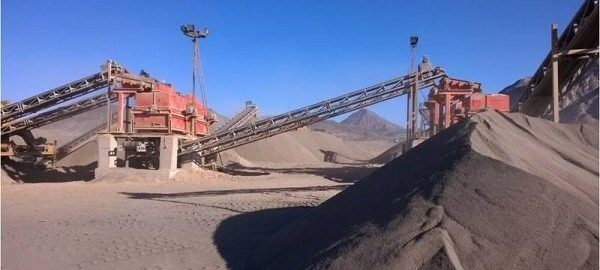
Iran’s export volume of sponge iron surges 77%

Some 942,000 tons of Direct Reduction Iron (DRI) was exported from the country last year [from March 21, 2019 to March 20, 2020], showing a 77 percent growth year on year.

According to the statistical tables of the Iranian Steel Producers Association (ISPA), 533,000 tons of Direct Reduction Iron (DRI, also called sponge iron) was exported from the country from March 21, 2018, to March 20, 2019.

ISPA put the volume of Direct Reduction Iron produced in the country last year at 27,907,000 tons, showing a six percent growth as compared to a year earlier.

Some 26,359,000 tons of sponge iron was produced from March 21, 2018 to March 20, 2019.

After India, Islamic Republic of Iran is considered as the second-largest producer of sponge iron in the world, ISPA added.

Statistics showed that 26,965,000 tons of sponge iron was consumed in the country last year [from March 21, 2019 to March 20, 2020], registering a four percent growth as compared to the same period of last year.

MNA/

Satellite launch proved sanctions to be ineffective: IRGC spox

The spokesman of the Islamic Revolutionary Guards Corps says the IRGC’s satellite launch once again proved that the US sanctions have not hampered the country’s scientific development.

“Following the launch, the Americans and Europeans have confessed that the sanctions have failed to interrupt the Islamic Republic’s scientific development,” Brigadier General Ramezan Sharif said during a state TV interview on Monday.

“They confessed that although the sanctions have affected the Iranians’ lives, they have not hampered the country’s growth in different areas,” he said, stressing that when the country is capable of such measures under sanctions, it is also able to provide its people with their needs despite the economic terrorism posed to them.

He expressed gratitude to the Iranian scientists, authorities, political figures, and the noble nation for their positive reactions to the satellite launch, underlining that the IRGC will continue its efforts on hte path Iran’s development and empowerment.

IRGC successfully launched and placed the country’s first military satellite into the orbit on Wednesday (April 22).

The satellite, dubbed Noor-1 (Light), was placed into the orbit 425 kilometers above Earth’s surface.

According to reports, the Noor-1 is Iran’s first multi-purpose satellite with application in the defense industry among other areas. It was launched by Qased, the country’s first three-stage satellite launcher.

On Friday, IRGC Aerospace Division Commander Brigadier General Amir-Ali Hajizadeh said that the country had received signals from Noor-1 satellite and that it plans to launch a future satellite in a higher orbit.

“We received the latest signal last night,” he added, explaining that the satellite orbits the earth every 90 minutes.

“The satellite’s configurations will be fully set in a few days allowing the satellite to attain its full operational capacity,” he added.

He said that the satellite launch has caught the enemies in surprise, following their economic pressures against the Islamic Republic and the nation.

In a tweet on Thursday, Secretary of Iran’s Supreme National Security Council (SNSC) Ali Shamkhani also said that “new surprises are on the way” as the country battles US sanctions and pressure alongside the coronavirus outbreak in the country.

“The continuous production of power & use of up-to-date knowledge for security & welfare of Iran people from hospitals to space will continue. New surprises are on the way,” he said.

The US claims that medical equipment and medicines are technically exempt from the sanctions, but their purchases and imports are blocked by bank’s unwillingness to process payment over fears of heavy US penalties.

Iran has now stepped up the production of its own medical equipment, such as ventilators needed for COVID-19 patients.

MNA/

124 historical monuments restored in northeast Iran

Some 124 historical buildings and structures in Khorasan Razavi province, northeast Iran, were restored during the previous Iranian calendar year 1398 (ended March 20).

Ferdowsi mausoleum, Tus Tower, Ancient Windmills of Nashtifan, Ghyasieh School and Ribat-i Sharaf are among the restored sites, IRNA quoted Abolfazl Mokarramifar, the provincial tourism chief, as saying on Monday.

He also explained that some of these historical buildings have the potential to be placed on the UNESCO World Heritage list.

The restoration projects aimed at preserving, protecting, and strengthening the historical sites, which were damaged over the years, he concluded.

The holy shrine of Imam Reza (AS), the eighth Shia Imam, in the province’s capital city of Mashhad, attracts thousands of pilgrims each day.

The province has also the highest concentration of water parks in the country, and it also embraces a variety of cultural and historical sites which are generally crowded.

Mausoleum of Ferdowsi, the illustrious Persian poet, in Tus is one of the tourist attractions of the region. Many Iranians regard Ferdowsi as the greatest of their poets. Down through the centuries they have continued to read and to listen to recitations from his masterwork, the Shahnameh.

Nashtifan Asbad or ancient Windmills of Nashtifan are vertical-axis windmills that have been in use for several centuries in the Nashtifan region. Such windmills are fueled with strong northern winds blow throughout the year in the eastern parts of the country.

“Asbad is a smart technique to grind grains, a technique which goes back to ancient times when the people living in the eastern parts of Iran, in an attempt to adapt themselves with nature and transform environmental obstacles into opportunities, managed to invent it,” according to UNESCO’s website./T.T/

Ali-qapu, Isfahan

In order to enter the “Royal Precinct of Naqsh-e-Jahan” through the “Supreme Gate” or “Ali-Qapu”, one would bow down in the honour of the great Safavid King.

Ali Qapu, which literally translates to the Supreme Gate, is located on the west side of Naqsh-e-Jahan square, directly across from Sheykh Lotfollah Mosque. It was originally built as a gatehouse to connect the square with the assemblage of palaces, Dowlat-Khaneh (government bureaus), storehouses and stables. However it gradually grew to hold in more courtly affairs consisting ceremonies, entertainment and administration.

Approximately, in the last decade of 16th century and in tandem with construction of Naqsh-e-Jahan square, Ali Qapu was founded under the oredr of Safavid Shah Abbas I, and was initially opened after 5 years, a two-story building with a terrace, on which there is some evidence of Shah Abbas I celebrating Nowrouz, Iranian new year. Different extensions were, then, added to the construction through a period of between 70 and 100 years by the king’s successors. The existing building, which until last couple of decades used to be the tallest in Isfahan, is 48 meters tall and consists of a five-story tower, fronted by a two-story gatehouse supporting a columned porch, looking over Naqsh-e-Jahan square.

Masterpieces of Art and Architecture

Façades are of bricks and decorated with magnificent triangular diversely coloured tiles and Eslimi inscriptions on the entrances and doorways. Inside Ali-Qapu masterpieces of miniature paintings by Reza Abbasi would steal the visitors’ gaze. To reach the top of the tower, one should either take the main staircase, or Pellekan e Shahi, in the middle or either of the two narrow spiral staircases, with remarkably tiled steps, on the sides. It has been said that spiral staircases were intentionally designed to be quite narrow in order to avoid possible assailants attacking in number.

On the way up, on third floor a rectangular hall with an arched ceiling leads the audience to the columned porch or Talar with 18 columns of carved wood, which affords both views of Naqsh-e-Jahan square and the so called “Royal Precinct”. In order to bring water to the pool and fountain in the middle of this porch an elaborate system of plumbing was made use of. Topping the bill is the music room on the fifth story of the tower; a lofty airy cross-shaped space with smaller flanking chambers on the sides, which is by and large famous for its ceiling decorated with muqarnas niches carved with vessels and instrument-shaped motifs and crowned with a lantern bathing the space with light. /visitiran.ir/

Persian Miniature, Blend Of Art And Professionalism

Miniature or Persian miniature is an art that brings the ability of depicting the whole nature in a small frame and basically refers to any delicate artistic phenomenon, regardless the way it has been created. The word miniature in Persian literally means a small and delicate nature, though the word itself has entered the Persian language in the middle of the recent century and almost since the Qajar period, it is an art which has for long existed and is of an ancient history in Iran.

The historical development of Persian miniature is attributed to the distant past before the advent of Islam. Indeed, Persian miniature, which has once been inspired by Chinese painting methods assimilated with unique perspective of Iranian art, has made a path for emergence of divine effects in Iranian painting before the advent of Islam; and, afterwards, has finally merged with theosophy and Islamic thoughts.

The tiles, some of which still exists, suggest that years before Mongol invasion of Iran, the same painting and drawing styles and methods, which were then adopted as styles of book paintings, were used in Iran. On the contrary, there is another popular belief which suggests the origin of this art is Iran, it is believed by many researchers that this art has originated in Iran, and afterwards has spread to China; and, in the Mongol period it has returned to Iran in a rather developed form.

Hence, in the first centuries after emergence of Islam, Iranian artists made an extraordinary effort to complete and develop this art, establishing special painting schools such as schools of Shiraz, Harat, Tabriz, Qazvin, and Isfahan, and combining it with Arabic script or handwriting. Gilding edges and frontispiece of Qur’an, arabesques and Khitan patterns are all the precious works of miniature which originated as a combination of miniature and Arabic handwriting, in the third century AH, i.e. when Iranians succeeded to enter the Abbasid court. Unfortunately, a considerable portion of these works was destroyed during the Mongol invasions in the seventh and eighth centuries. Moreover, during Ilkhanid period when the country has returned to a relatively calm situation, other prominent works of art emerged including Shahnama of Ferdowsi and Demotte Shahnama.

After this period, due to the constant intellect and freedom of act with which craftsmen were provided after Bagdad school, Iranian miniature works in Herat school developed to some extent and finally the art of Persian painting and miniature, after Herat period, was transferred to the Safavid era. In this period, after selection of Tabriz as the capital, Kamaleddin Behzad was invited to Tabriz and was appointed as the head of the royal library and, in collaboration with great craftsmen, endeavored to develop and evolve it. Therefore, in an overall classification, style and school of painting in Safavid era can be considered two distinguished sections:

Tabriz School whose style remained as before until Qazvin became the capital. Regarding this school, it can be noted that miniatures in this era were all of a similar type, and in terms of elegance, pen strokes, color and design, it followed the Herat school, and differs only slightly.
Isfahan School which was established when Isfahan became the capital city, and during this period style and methods of work changed dramatically and as obvious and typical examples we can refer to decorative motifs of mosques in Isfahan, as well as Chehelsotoon and Ali Qāpu palaces. / visitiran.ir/

Zereshk Polow Ba Morgh (Barberry Rice With Saffron & Chicken)

Zereshk (Barberries) is an ancient berry which grows in Europe and the Middle East. Iran is one of the few countries in the world where people still use Zereshk in their daily cooking.

You may find Zereshk and saffron being served on top of the steamed rice more like a decoration to it. In some place in Iran, people may layer the rice with Zereshk and steam them together. The sour flavor of the Zereshk creates a good combination with chicken./ visitiran.ir/

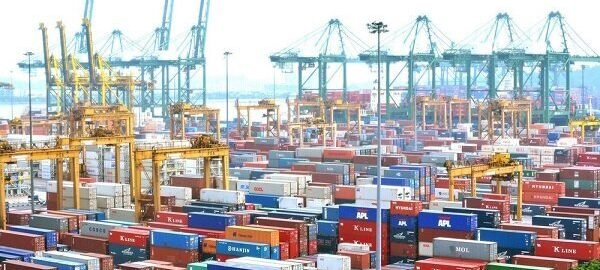
Iran exports products to 128 world countries despite sanctions: IRICA

In spite of cruel sanctions imposed against the Islamic Republic of Iran, the country managed to export products to 128 countries, said President of the Islamic Republic of Iran Customs Administration (IRICA) Mehdi Mir-Ashrafi on Friday.

Turning to Iran’s foreign trade record last year [ended March 20, 2020], he said, “despite cruel and unjust sanctions imposed against the country, the country succeeded in exporting its goods to 128 world countries.”

In this period, the Islamic Republic of Iran imported products from 112 countries, he added.

Mir-Ashrafi put Iran’s foreign trade value last year at over $85.107 billion, adding, “The Islamic Republic of Iran exported 169.302 million tons of products to other countries in this period.”

Of total $85.107 billion worth of Iran’s trade value, exports and imports accounted for more than $41.370 billion and $43.737 billion respectively.

In the same period, Iran’s largest trade partners included Asian, European and African continents, he said, adding, “Iran’s total foreign trade value with Asia stood at over $57 billion, i.e. more than 68 percent of country’s total trade value.”

Elsewhere in his remarks, he pointed out that Iran exported its products to 40 European, 21 Asian, 28 African, and 12 American countries respectively last year.

MNA/

“Untimely” wins best 1st feature award at American fest.

The Iranian film “Untimely” directed by Pouya Eshtehardi has won the best first feature award at the Dallas VieoFest’s Alternative Fiction in the US.

Eshtehardi’s debut feature film narrates the story of a Baluch soldier, named Hamin, doing his military service in a watchtower in the borderline of Iran and Pakistan.

Impatient for a day off to attend his sister’s wedding ceremony, he gets into a fight with his commander. Up in the watchtower, he reviews the past years and the things that happened to him and his sister since their childhood. The movie depicts Hamin’s life in a non-linear way. The word “Hamin” in Baluchi language means the summer heat that ripens dates.

The cast includes Iman Afshar, Shayan Afshar, Ayyoub Afshar, Mahsa Narouee, Ava Azarpira, and Mollabakhsh Raeesi among others.

“Untimely” has already won the Best World Cinema Feature at the 2020 edition of the International Kansas City File Festival in the US.

It has also won the best film, best director and best cinematography awards at the fifth edition of Tokyo Independent Films Celebration in Japan and the best feature film and best editing awards of the 2019 Asian Cinematography Awards.

Born in 1984 in Tehran, Eshtehardi is a musician, novelist, and filmmaker. Since 2010, he has made many short films and documentaries.

Dallas VideoFest has been innovating with technology since 1987. It is the major event presented by the Video Association of Dallas, which is dedicated to promoting an understanding of video as a creative medium and cultural force in the world.

MNA/

Interview by Masoud Hossein Exclusive: IWF acting president Papandrea lauds Iranians

International Weightlifting Federation (IWF) acting president Ursula Papandrea says the Iranian women lifters have risen faster than even expected and she is very happy for them.

Papandrea was elected the first-ever female vice president for the International Weightlifting Federation (IWF) in May 2017. Now, she is the IWF acting president after Tamas Ajan was forced to step down from active duty.

This resignation comes amid the ongoing investigation of allegations of financial corruption, false drug testing, and subsequent cover-up made against Ajan and the IWF.

The IWF’s Oversight and Integrity Commission, which is chaired by Papandrea, has also been mandated to continue its work until June 19.

In an exclusive interview with Tehran Times, Papandrea, who is also president of the U.S. Weightlifting Federation, discussed about several issues including rising Iranian female weightlifters.

Tehran Times: As acting president of IWF, what is your plan until June? You are in a very difficult situation since IWF will have to reschedule the Olympics qualification program, following postponing the Games over coronavirus.

I am taking the time it has afforded me to rebuild and reform the IWF. I have started the process of moving our IWF headquarters to Lausanne, Switzerland, the official headquarters according to the IWF Constitution and the city of the International Olympic Committee headquarters. I will prepare the IWF to function solely out of Lausanne for the future. It is a huge task. We must also hire key professionals. This is what lay ahead.

It is a huge misfortune for the athletes and our concern for their safety and our member federations is also a concern for the IWF. We just created a fund for the member federations to request funding for COVID-19 related costs. Iran was the second country affected by the virus after China. I know it has created a hardship on the IRI federation. I hope they will apply for some funding so we can assist in some of the COVID-19 related costs like disinfecting the gyms, masks and like items.

You’ve recently published a verse from the Holy Quran on your Instagram account which has gone viral. Could you speak a little more in-depth about your post?

We are all under the stresses the virus has caused worldwide. It is hard to remember the blessings when everyday is difficult. I just wanted to share the love of this quote with others, especially many of my friends who are not acquainted with the beautiful text in the Quran.

You traveled to Iran two years ago for Fajr Weightlifting Cup as head of the U.S. delegation and played a role in the launch of a women’s development program in the West Asian country, where the sport had previously been a men-only sport. Please talk about the program.

I was in Ahvaz in 2017 for several days where I conducted a women’s training and coaching session as well as attending the Fajr Cup. The program had started about eight months prior and I went to show support and to practically assist as much as possible. I really wanted the women weightlifters to know they have a bright future and that there is worldwide support for them. Since then the women have competed at many competitions beginning with the Asian Junior and Youth Championships in 2017. I have since been able to meet again with several of the women and coaches I met at other international championships including the 2018 world championships.

You said you would help the Iranian women to compete internationally. For the first time, Iran sent a female team to the IWF World Championships in Thailand in last year’s September. Do you see a bright future ahead of the Iranian women weightlifters?

It is my dream for them to compete internationally at all levels and to be able to witness their successes. I know the success of the men and expect that the women will be of commensurate level soon. They have risen faster than even I expected! I am very happy for them.

International Olympic Committee (IOC) is dissatisfied with the sport due to financial corruption and false drug testing. Is there any plan to reform the situation?

As I mentioned before, I am moving the IWF offices to Lausanne. But of course many reforms are required to ensure we can remain an Olympic sport. Regarding allegations, as chair of the Oversight and Integrity Commission, which was created by the Executive Board in January as a response to the allegation, we hired the best and most trusted sports investigation firm in the world. We await their report in June. In the meantime the former President resigned. This has opened up the opportunity to truly reform and reorganize. We have already taken several steps in creating note independence in the doping controls by handing over more power to ITA.

Iran has a long history of victories in weightlifting as the country’s lifters have won so many medals in the Olympics. The country boasts 300 professional weightlifters and it shows that weightlifting is very popular in Iran. Do you think Iran can be a role model in the world?

What the IWF needs is clean athletes on the podiums. I have been very happy to see clean athletes from Iran win many more medals since we have started a more serious anti-doping effort. Of course this should be an encouragement to all weightlifters.

The world’s strongest powerlifter Siamand Rahman passed away 40 days ago due to a heart attack. The professional sport could be dangerous sometimes. As a highly-qualified coach, have you any advice for the athletes?

I am aware of his death and send my condolences. I do not know enough about it though to make any comment about it.

General advice for athletes is to retain a healthy lifestyle past their career. It is very difficult with the demands of life, family, and career. I have difficulties myself staying active and I own a gym. But it is important to take care and keep the discipline one has as an athlete and carry that into one’s health and fitness routine./MNA/