All posts by islam

‘Red gold’ farming to amplify tourism in southwestern Iran

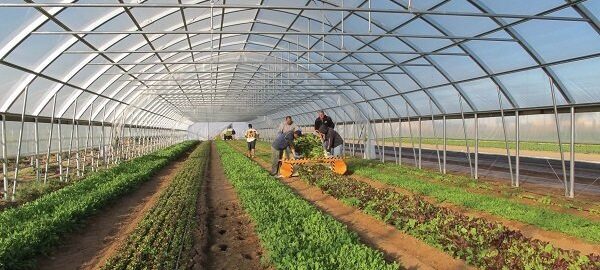
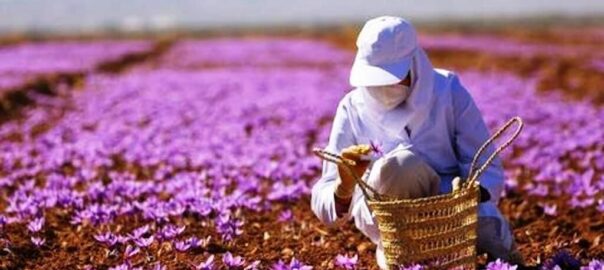
Saffron farming has been amplified in the tourist areas of the southwestern Kohgiluyeh and Boyer-Ahmad province with the aim of developing agritourism in the region.

Saffron production and harvest, which started about five years ago [across the province], have increased during the first half of the current Iranian calendar year 1399 (March 20 – September 20), provincial tourism chief Majid Safai said on Saturday.

So far saffron bulbs have been harvested from over eight hectares of farms in Kohgiluyeh and Boyer-Ahmad, the official added.

He also noted some five kilograms of saffron are harvested from each hectare.

Saffron festivals are scheduled to be held in the province after the end of the coronavirus outbreak in the country, he explained.

Iranian saffron is known as the “red gold”. Saffron is a magical ingredient in Persian culture, from aromatic foods and colorful desserts to physical and spiritual medicine. Every year, the saffron harvest season begins in early November. While most other vegetation is gone, the bright purple flowers cover the fields and create an outstanding landscape in dry regions in Iran.

Major saffron producers of Iran are located on the east side of the country. If you would like to see the biggest market, head to Mashhad, which is also known for its religious importance.

Agritourism and nature-tourism enterprises might also include outdoor recreation (fishing, hunting, wildlife study, horseback riding), educational experiences (cannery tours, cooking classes, or tea or coffee tasting), entertainment (harvest festivals or barn dances), hospitality services (farm stays, guided tours, or outfitter services), and on-farm direct sales (u-pick operations or roadside stands).

Today, agritourism is regarded as a stimulus to the imbalanced economy of agriculture sectors and the tendency for emotional and nostalgic roots of the modern world citizens and due to factors such as visitor participation in farm activities, direct purchase of products, spending a night at a farm, curiosity and learning about the farm and agriculture products has been able to create a wide target population.

Kohgiluyeh and Boyer-Ahmad province is known for its nomads and nomadic life. Sightseers may live with a nomadic or rural family for a while or enjoy an independent stay and assist them with day-to-day life. It also opens up an opportunity to feel rustic routines, their agriculture, traditions, arts, and culture. /T.T/


Royan among world’s top 10 for assisted reproductive techniques

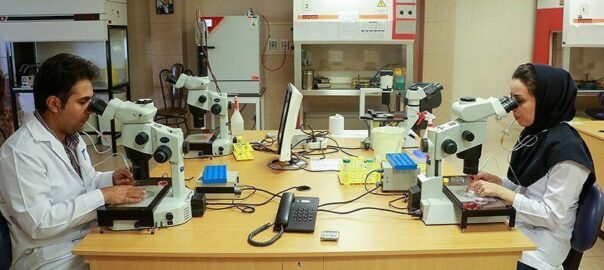
Royan Research Institute ranked among the world’s top 10 centers based on the total number of publications investigating male infertility and assisted reproductive techniques (ART) during 2000 to 2019, based on the results of a study published in the international journal Andrologia.

The article by researchers from eight American, African, Asian and European countries evaluates the total number of publications in male infertility and ART from 2000 to 2019.

According to the study, ART is considered one of the main options in treatment, and Royan Research Institute is one of the world leaders in this field.

The results are obtained from the analysis of twenty years of work by researchers worldwide evaluating the number of articles, authors, type of citation, subject area, international collaborations, and year of publication.

The research shows that Iranian researchers have had good collaborations with others in the international arena, which is an important issue in the future of the research process.

Also, in the analysis of knowledge measurement, it has been shown that the trend of this type of research in the last twenty years has always been constant, and azoospermia (obstructive / non-obstructive) has been the most field of clinical studies (more than 60 percent).

Moreover, using assisted reproductive techniques has reported over 47 percent success.

According to the research, assisted reproductive technologies currently play a special role in treating men’s infertility.

Royan is a public, non-profit organization affiliated with the academic center for education, culture, and research. Established in 1991, Royan is a research institute for reproductive biomedicine and infertility treatments; and a world’s leading one in both research and treatment of this field.

The institute also acts as a stem cell research leader and is one of the best clinics for infertility treatment. It has 46 scientific members and 186 lab technicians.

Infertility treatment in Iran

Abdolhossein Shahverdi, head of Royan, said in October that foreign couples from neighboring and even European countries highly welcome infertility treatment in Iran because of the favorable cost and successful test results compared to other countries.

Infertility is the inability to become pregnant after one year of intercourse without contraception involving a male and female partner. There are many causes of infertility, including some that medical intervention can treat.

Infertility occurs in 10 to 15 percent of couples. Causes of infertility can be female or male, or both. Male infertility is responsible for 40 percent of infertility cases, while 40 percent are due to female infertility, and 10 percent are due to combined problems in both parts. In 10 percent of cases, no cause is found. In other words, in these couples, both people do not have a problem according to the available tests, but they do not have children for unknown reasons.

In the last two decades, great strides have been made in diagnosing and treating infertility, and about 65 percent of infertile couples have had children using new methods.
Studies conducted worldwide, and in Iran, about 10 to 15 percent of couples are infertile, Shahverdi said.

Until the 1970s, these couples went to European countries for treatment, but we entered into this issue in time and established more than 70 infertility centers, so great success achieved in education, research, and specialized services, he highlighted.

The cost of infertility treatment in Iran is about 50 percent lower than in European and American countries. And the success rate in the best centers is between 30 and 40 percent, he also said. /T.T/

Kohgiluyeh and Boyer-Ahmad tourist attractions available online

Tourist attractions in the southwestern Kohgiluyeh and Boyer-Ahmad province are available online, the provincial tourism chief has said.

Several videos and programs have been produced to introduce the province’s historical sites, natural sceneries, and handicrafts to virtual visitors, Majid Safai announced on Saturday.

He also noted that the service will be available until the end of the coronavirus pandemic.

Guided excursions had been well established at the heart of travel, but like everything else, the coronavirus pandemic has upset such events, and many starting to go online. Socially-distanced craft workshops, virtual museum tours, city tours accompanied by avatar guides are amongst examples showing us how virtual realities are changing during the pandemic.

Kohgiluyeh and Boyer-Ahmad province is known for its nomads and nomadic life. Sightseers may live with a nomadic or rural family for a while or enjoy an independent stay and assist them with day-to-day life. It also opens up an opportunity to feel rustic routines, their agriculture, traditions, arts, and culture.

The province attracted over four million people, mostly domestic travelers, during the Iranian year 1397 (ended March 2019), according to data announced by the provincial tourism department. /T.T/

Iran to open home-made seawater greenhouse

An official with the Vice Presidential Office said that two homegrown seawater greenhouses using solar heat for changing seawater to freshwater will be inaugurated by the end of the current Iranian year.

The Iranian Professor at Soil Conservation and Watershed Management Research Institute announced the launching of seawater greenhouses in the coastline of Bushehr Province and Makran in Sistan-Baluchestan Province.

Stating that the pilot project of the construction of two seawater greenhouses has started last Iranian fiscal year, Jahangir Pourhemmat said, “We intend to use the capacities of Iranian knowledge-based companies and seas in order to provide fresh water and save energy for seawater greenhouses.”

The greenhouse will be inaugurated by the end of the Iranian calendar year (March 20, 2021) he said and added, the homegrown greenhouses use the capacity of the seas in terms of environment and water to produce the freshwater needed by the greenhouse as well as the energy to cool it.

Utilizing the capacities of the coasts of the Persian Gulf and the Sea of Oman in the development of seawater greenhouses will boost the production of agricultural products and it will also create many jobs, he noted.

Using seawater to create humidity and cool the air as well as using solar heat for evaporating and producing freshwater from seawater are the two major processes used in these greenhouses. / MNA/

Iranian university students runner-up at IMC 2020

The students of Tabriz University won a gold and a silver medal, ranking the second team at the 27th International Mathematics Competition for University Students (IMC 2020), held virtually on July 25-30.

The two-member mathematics team of Tabriz University consisting of Arman Shirdel, a student of Statistics, and Erfan Masoumi, a student of Computer Science, won a gold and a silver medal and got the second position at the IMC 2020.

The competition was held with the participation of 546 students in 96 teams from different universities of the world.

The IMC Competition is one of the most prestigious international maths competitions at the student level, with teams from the world’s top universities competing every year at the IMC Institute of University College London.

The IMC began in 1994 in Plovdiv, Bulgaria, with 49 participants, mostly from Bulgaria, and was hosted by Plovdiv University “Paisii Hilendarski”.

Next year’s competition is organized by University College London and will be hosted by the American University in Bulgaria, which will take place in Blagoevgrad, Bulgaria, in July or August. /T.T/


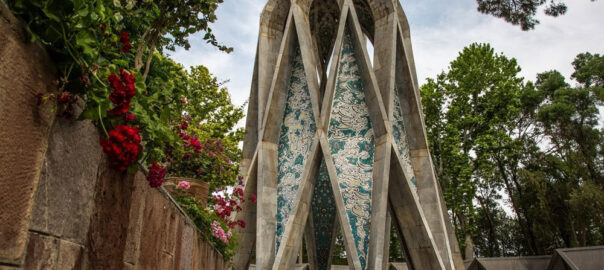
Omar Khayyam’s mausoleum undergoes restoration work

A rehabilitation project has recently been commenced on the mausoleum of Omar Khayyam (1048-1131), who was a legendry Persian mathematician, astronomer, and poet.

A budget of four billion rials (about $95,000 at the official rate of 42,000 rials) has been allocated to the project, Neyshabur’s tourism chief Mohammad-Esmaeil Etemadi Moqaddam said on Thursday.

The project aims to repair the stones and the mausoleum’s foundation, which is worn and cracked due to the time passing, temperature, and climate change, the official added.

Located in the northeastern city of Neyshabur, the mausoleum was built in 1962 by the prominent Iranian architect Hushang Seyhun. It was made a National Cultural Heritage in 1975.

The 12th-century Persian mathematician, astronomer, and poet Omar Khayyam Neyshaburi received a good education in the sciences and philosophy in his homeland Neyshsbur before traveling Samarkand (now in Uzbekistan), where he completed his algebra treatise, on which his mathematical reputation principally rests.

He made such a name for himself that the Seljuk sultan Malik Shah invited him to Isfahan to undertake the astronomical observations necessary for the calendar’s reform. To accomplish this, an observatory was built there, and a new calendar was produced, known as the Jalali calendar.

Philosophy, jurisprudence, history, mathematics, medicine, and astronomy are among the subjects mastered by this brilliant man.

Khayyam is chiefly known to English-speaking readers through a translation of a collection of his quatrains in the Rubaiyat of Omar Khayyam by the English writer Edward FitzGerald.

Located on the Silk Road, Neyshabur is one of the ancient Iran cities, which houses several religious, historical, and cultural monuments. / T.T/


Art Bureau to produce teleplays on nuclear scientist Mohsen Fakhrizadeh

The Art Bureau’s Center for Dramatic Arts plans to produce several short teleplays on nuclear scientist Mohsen Fakhrizadeh, who was assassinated in a terrorist attack on Friday.

The plan has been adopted to help introduce the top scientist, the director of the center, Kurosh Zarei told the Persian service of MNA on Wednesday.

“We believe producing plays on those personalities who have been assassinated is our duty and the center has taken its first step almost seventh months ago,” Zarei said.

He added that the bureau organized a committee soon after the assassination of Fakhrizadeh to produce works of music, plays, short films and visual arts about the martyrs who have been assassinated.

“There is still not enough information about the life and character of Martyr Fakhrizadeh because of his position and we cannot produce long plays, and we are waiting to collect more complete information,” he added.

“We will be negotiating with the Islamic Republic of Iran Broadcasting (IRIB) to broadcast the teleplays, or else we will stream them on different platforms,” he noted.

“This will be a tribute to the martyr before we can collect more information. According to some friends of the martyr, Fakhrizadeh was an art aficionado and used to attend poetry nights of the bureau for several years, while he used to hold poetry nights,” he concluded.

The Art Bureau has also launched a website to promote artworks on Fakhrizadeh.

The website features posters, poems and other artworks on Fakhrizadeh. The art bureau has also asked artists to send their artworks for publication on the website that can be found at www.shahidfakhrizadeh.com.

Iran has blamed Israel for the assassination and vowed to respond firmly at the right time.

Israeli Prime Minister Benjamin Netanyahu had mentioned Fakhrizadeh in a 2018 presentation on the alleged atomic archive of Iran that Israel claims it stole from a warehouse in southern Tehran.

Netanyahu said at the time that he identified Fakhrizadeh as the head scientist in Iran’s nuclear program, and asked people to “remember that name.”/T.T/

Seb Castle reigns magnificent again

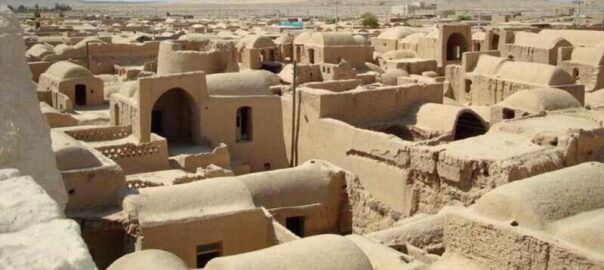
Seb Castle reigns magnificent again over an ancient Iranian village it is named after. The castle, which is one of the biggest in the country, has recently undergone a round of reinforcement and restoration works, Abarkuh tourism chief announced on Wednesday.

Located in Abarkuh county of Yazd province, the mudbrick monument dates back to the Safavid era (1501–1736).

Abarkuh is famed for being home to a 4000-year-old cypress, which is inscribed on the National Heritage List. Venetian merchant and explorer Marco Polo described the tree as one of the most stunning cypress trees he had ever seen in Iran. / T.T/

Wrestling teams invited to Henri Deglane Grand Prix

Iranian freestyle and Greco-Roman wrestling teams have been invited to the 47th edition of the Grand Prix de France Henri Deglane.

The tournament will be held in Nice, France from Jan. 15 to 17.

The French Wrestling Federation has invited the Iranian teams to participant in the event which will be held in 10 weight classes.

The tournament is named after Deglane, who won Olympic gold for France in the heavyweight category at their home Paris Games in 1924. Deglane also won world and European titles and died at the age of 73 in 1975./ MNA/

Pistachio exports up 131% in 8 months yr/yr

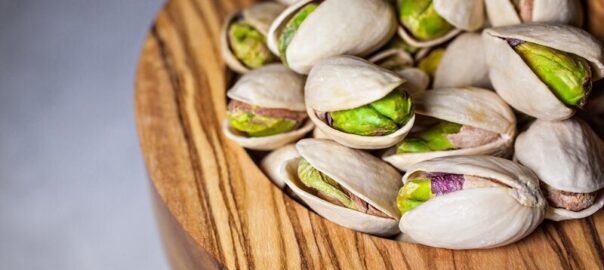
Iran exported 110,000 tons of pistachio during the first eight months of the current Iranian calendar year (March 20-November 20), registering a 131-percent increase year on year, the spokesman of the Islamic Republic of Iran Customs Administration (IRICA) said.

Ruhollah Latifi put the value of the pistachio exports in the mentioned period at $676 million, 82.5 percent more than the figure for the previous year’s same time span.

According to the IRICA data, 47,000 tons of pistachios worth $371 million were exported from Iran in the first eight months of the previous year (March 21-November 21, 2019).

A total of 97 million tons of goods worth more than $44 billion have been traded between Iran and other countries in the said eight months, of which more than 75 million tons worth $21.5 billion were exported goods.

Iranian exports in the mentioned period have decreased by 14 percent in terms of weight, and 19 percent in terms of value compared to the same period of the previous year.

Earlier in August, Iran’s Trade Promotion Organization (TPO) held a pistachio export desk meeting to investigate the challenges and barriers in the way of the country’s pistachio exports.

Addressing the meeting, TPO Head Hamid Zadboum put emphasis on the significant status of pistachio in Iran’s export basket as the top agricultural export item and said that a national view toward removing the pistachio export barriers should be adopted.

As announced by Iran’s Pistachio Association, the country has exported 35,000 tons of pistachio during the first four months of the current Iranian calendar year (March 20-July 21).

In early September, the Chairman of Iran Dried Fruit Exporters Association (IDFEA) said the country’s pistachio production is expected to increase by up to 55,000 tons in the current Iranian calendar year (ends on March 20, 2021) compared to the previous year.

“This year’s production is going to be better than last year and the output is expected to reach at least 200,000 to 230,000 tons from the last year’s 175,000 tons,” Mohammad-Hassan Shams Fard said. /T.T/