All posts by islam

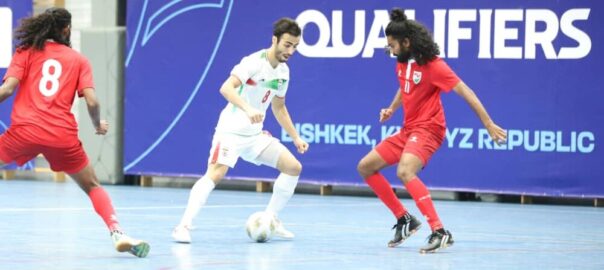
Iran defeat Turkmenistan in 2022 AFC Futsal Asian Cup qualification

Iran beat Turkmenistan 3-0 in the 2022 AFC Futsal Asian Cup qualification on Monday.Iran, who started the campaign with a 17-0 win over the Maldives, will play Kyrgyzstan in Group A on Tuesday.

The competition is the qualification process organized by the Asian Football Confederation (AFC) to determine the participating teams for the 2022 AFC Futsal Asian Cup, the 17th edition of the international men’s futsal championship of Asia.

A total of 15 teams will qualify to play in the final tournament, excluding Kuwait – who automatically qualified as a host. /T.T/

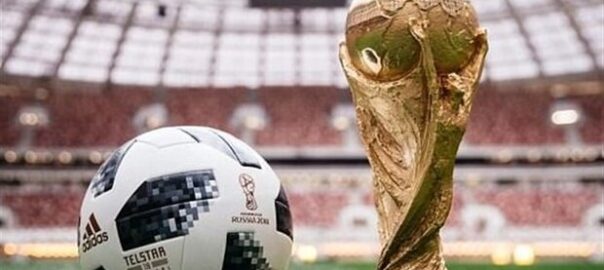
Iran mulls free visas for Qatar World Cup visitors

The Iranian Foreign Ministry has proposed a plan for approval by the government that will enable foreigners visiting Qatar for World Cup 2022 to travel to Iran by obtaining visas free of charge.

The official IRNA news agency said in a Saturday report that the plan will cover all foreigners visiting Qatar for World Cup 2022 except nationals of the United States, Britain and Canada as well as Afghanistan, Pakistan, India, Bangladesh, Somalia and Sri Lanka.

The report said visas issued under the scheme will be valid for two months and for 20-day stays and visitors will be able to apply for one, two or multiple entries.

The report said nationals of countries that have qualified for the World Cup 2022 will be granted free of charge visas to visit Iran without any need to supply extra documentation.

Others, it said, should submit match tickets or paperwork proving their purpose of visit to Qatar to be able to receive the visas.

The announcement comes as part of Iran’s efforts to use the World Cup in neighboring Qatar as an opportunity to boost tourism.

Iran’s tourism sector has suffered because of the spread of the coronavirus since February 2020.

Iran has also announced plans to assist Qatar’s hosting of the tournament which will be held from November 21 to December 18.

Iranian road and transportation minister Rostam Qassemi and his Qatari counterpart Jassim bin Saif Al Sulaiti are planning to meet in the southern Iranian resort island of Kish on April 10-11 to discuss how the island can accommodate arrivals from Qatar during the World Cup season./ MNA/

Lorestan’s Sassanid-era fortress draws thousands of travelers

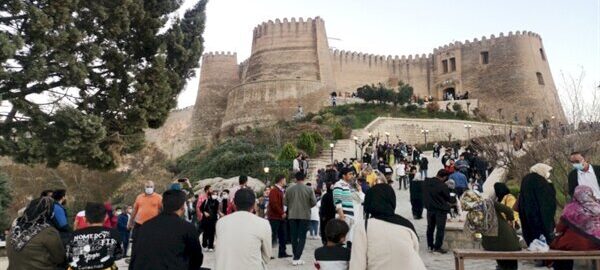
The centuries-old Falak-ol-Aflak Fortress in Khorramabad, was the most visited monument in the western province of Lorestan during the two-week New Year (Noruz) holidays (March 21-April 2).

While over 1.6 million Noruz trippers visited the historical sites and natural sights across the province, 190,967 people visited Falak-ol-Aflak Castle during the mentioned period, making it the top most visited attraction in the province, the provincial tourism chief has said.

After Falak al-Aflak Castle, Lake Keeyow attracted the most visitors during the time noted, Seyyed Amin Qasemi explained on Wednesday.

The unmissable eight-towered Falak-ol-Aflak Castle dominates the city as one of the most visited travel destinations in the region for both domestic and foreign sightseers.

The fortress dates from the Sassanid era (224–651). It seems particularly imposing and dramatic when floodlit at night, offering picturesque views of its encircling crenelated battlements.

The Sassanid era is of very high importance in Iranian history, under which Persian art and architecture experienced a general renaissance.

Soaked in history and culture, Lorestan is one of the lesser-known travel destinations in Iran, which mainly acts as a gateway to the sweltering plains below in adjoining Khuzestan province. Lorestan is also a region of raw beauty that an avid nature lover could spend weeks exploring.

The region was inhabited by Iranian Indo-European peoples, including the Medes, c. 1000 BC. Cimmerians and Scythians intermittently ruled the region from about 700 to 625 BC.

Lorestan was incorporated into the growing Achaemenid Empire in about 540 BC and successively was part of the Seleucid, Parthian, and Sassanid dynasties. / T.T/

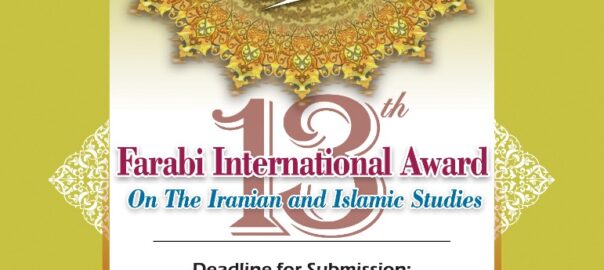
13th Farabi International Award

All the researchers in the fields of Iranian and Islamic studies are here by invited to send their works, including books, researches, doctoral dissertations and M.A. thesis, written and conducted from March 2018 to March 2021 to the secretariat of the award. For more information please visit the awards website.

www.farabiaward.ir

40,500 more ha under cultivation of medicinal plants

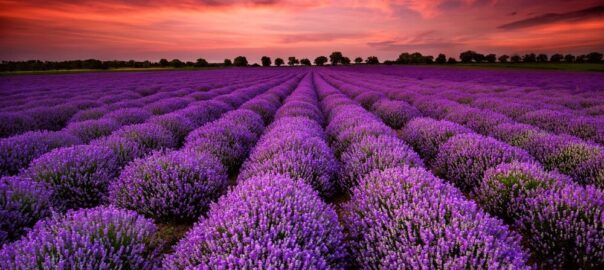
The Ministry of Agriculture announced plans to expand the area of lands under the cultivation of medicinal plants by 40,500 hectares during the current [Iranian calendar] year (began on March 21), IRIB reported on Sunday.

Hossein Zeinali, the manager of the Ministry of Agriculture’s cultivation project, said that plants such as saffron, Damask rose, cumin, caraway, licorice, shallot, mallow, henna, thyme, fennel flower, coriander, and hops are the main medicinal plants in the project.

These plants meet the domestic needs, then it is planned to improve the quality and productivity of these herbs, which will result in increasing the added value of products, he explained.

According to the statistics, about 70 percent of people around the world consume medicinal plants and herbal medicines.

The global industry has a large market in the world, and forecasts indicate that by 2050, the export value of this industry will reach $5 trillion.

In Iran, the area under cultivation of medicinal plants has reached more than 250,000 hectares, according to the latest statistics released by the Vice President for Science and Technology.

Other measures in this area include increasing the number of knowledge-based and creative companies to 700, increasing health centers to 60, and producing more than 5,000 herbal products.

Persian traditional medicine

Iranian traditional medicine is one of the most ancient forms of traditional medicine. It is grounded in the concept of four senses of humor: phlegm (Balgham), blood (Dam), yellow bile (Safra’), and black bile (Sauda’). The concept of four senses of humor is based on the teachings of Rhazes and Avicenna in an elaborate medical system.

Iranian traditional medicine strongly focuses on prioritizing health maintenance and disease prevention over treatment.

So far, about 30,000 plant species are identified in the world, with Iran’s share of about 8,000 species its plant diversity is more than the whole of Europe.

Currently, about 2,300 species of medicinal plants have been identified in the country, accounting for one-third of the medicines used in human societies, the share of world trade in these products is about $124 billion and Iran’s share is $570 million, which is only 0.5 percent of the total.

The per capita consumption of medicinal plants in Iran is about one kilogram of dried plants, in other words, 83,000 tons of medicinal plants worth 1.2 trillion rials (around $29 million at the official rate of 42,000 rials) are consumed in the country, while in Europe this amount is 900 grams and in the United States is 2.5 kilograms. /T.T/

Quran reading during Ramadan

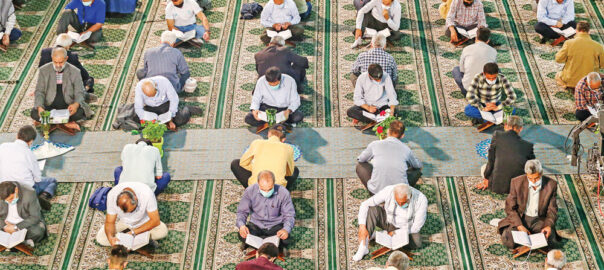
People from all walks of life come together at Shah Abdol Azim shrine, southern Tehran, during the month of Ramadan to read verses of the Holy Quran.

In different parts of Iran, people, tribes, and ethnic groups celebrate the holy month of Ramadan with various rituals which have been passed down from generation to generation. /T.T/

2 Iranian short films to take part at Russia Kino Festival

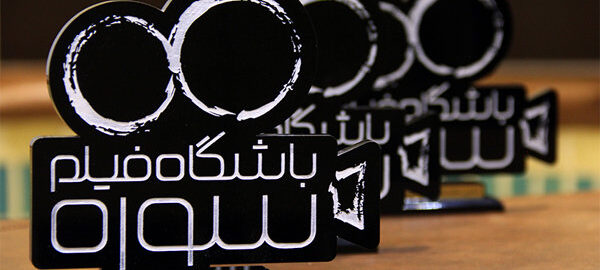
Produced by Soureh Film Club, the two Iranian titles “Loneliness” and “Kite” are scheduled to compete at the Russian Kino Festival.

Directed and written by Ehsan Mahboubi, ‘Loneliness’ is about an old woman who clings to a telephone to get out of solitude.

Written by Mohsen Maleki and directed by Mohammad Nabi Talebi, ‘Kite’ is a narrative of a street fight that leads to social solidarity.

Kino Festival will take place on May 17-21, 2022, in Russia’s Rybinsk.

The Festival will be held with the purpose of promoting the spiritual, moral, Patriotic and aesthetic education of the modern youth. /MNA/

Afghans account for 25% of foreign students in Iran

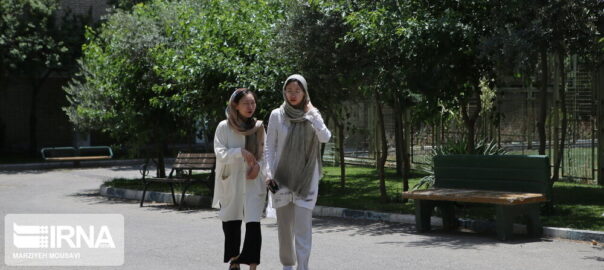
Twenty-five percent of the foreign students studying in Iranian universities are Afghan nationals, Mohammad Javad Salmanpour, the deputy head of the Organization for Student Affairs, said on Wednesday.

Afghan students attend Iranian universities in three ways; some enter the university by participating in the national entrance exam of Iran, and some others receive admission from universities that have non-Iranian student licenses. The third group also attended the country’s universities through scholarships, he explained.

Many of the Afghan students are studying master’s and Ph.D. courses in Iranian universities, he added, IRNA reported.

Currently, foreign nationals constitute 1.64 percent of the country’s student population, which is about 0.14 percent higher than the goal set by the Sixth Five-Year National Development Plan (2016-2021).

According to the plan, some 1.5 percent of the population of university students in the country should be non-Iranian, however, the figure stood at 1.64 percent in the past Iranian calendar year (March 2020-March 2021), Afshin Akhoundzadeh, an official at the Organization for Student Affairs, said, IRNA reported in May 2021.

Also, according to the 20-Year National Vision Document (ending 2025), foreign students should account for 1.8 percent of the whole student population, which is likely to even reach 2 percent, Akhoundzadeh explained.

“Some 57,675 foreign nationals from 133 countries are studying in Iranian universities, 30,600 of whom are studying in universities affiliated with the Ministry of Science, while 25,000 others are receiving education in Azad University, and about 2,000 in medical universities.”

Fifty-seven percent of the international students are studying for a master’s degree, 27 percent for a bachelor’s degree and 15 percent are educating to receive a Ph.D., while the remaining one percent study at other levels.

Law, Persian literature and computer engineering are the top three fields of study for foreign students in Iran, while civil engineering, business management, political science, English language and literature, Quran and hadith sciences, international relations, electrical engineering, and other majors with the highest number of non-Iranian students.

In 2013, 35 centers were allowed to admit foreign students, which has increased to 77 in 2021. /T.T/

10 African countries importing Iranian-made COVID vaccines: health minister

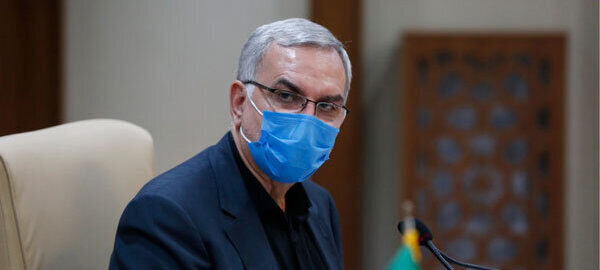
Health Minister Bahram Einollahi has said the country is currently exporting domestically-made vaccines for coronavirus to ten African countries.

“We started exporting coronavirus vaccines one or two weeks ago,” he said, adding, “For the time being, Iranian-made vaccines are being exported to ten African countries,” IRNA reported on Thursday.

Meanwhile, the head of the Food and Drug Organization has said some four million doses of domestically-made vaccines have been so far exported.

“Despite limitations of the World Health Organization, Iranian products are waiting to be confirmed by the organization,” Bahram Daraei wrote on his Twitter account on Wednesday.

World Health Organization Director-General Tedros Adhanom Ghebreyesus has pledged to expedite the process of evaluating and registering Iranian vaccines to receive an emergency use license, appreciating Iran’s efforts to develop vaccines against the global pandemic.

He made the remarks during a meeting with Kazem Gharibabadi, the Judiciary’s deputy chief for international affairs and secretary of Iran’s Human Rights Headquarters, on the sidelines of the 49th session of the Human Rights Council in Geneva.

“Iran’s high progress in the health system and the expansion of health network coverage throughout the country has increased the rate of vaccination.
The high rate of vaccination in Iran, as well as the inoculation of foreign refugees, are among other good public control measures that have stabilized the country’s health condition,” he stated, IRNA reported.

Referring to the impact of U.S. sanctions on drugs and medical equipment, he said that humanitarian items should be exempted from economic sanctions so that we will take the necessary steps in this regard.

He also promised to speed up the process of registering domestically produced vaccines in Iran.

WHO representative to Iran Jaffar Hussain said in September 2021 that the Organization was collecting the necessary information for the registration and certification of Iranian-made coronavirus vaccines.

On January 28, the process for global registration of the Iranian-made “COVIRAN Barkat” vaccine started by holding a virtual meeting with the World Health Organization officials.

COVIRAN is the first vaccine in West Asia that is in the process of global registration, IRIB reported.

According to a new study, the effectiveness of the COVIRAN vaccine in fighting the coronavirus has been more than foreign rivals, namely Sinopharm, AstraZeneca, and Sputnik. / T.T/

Two foreign volleyball coaches added to Iran staff

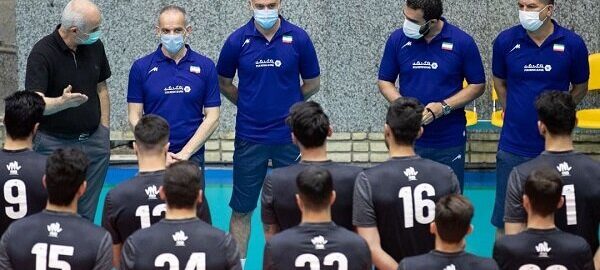
Tomaso Totolo and Janusz Ignaczak have been added to the Iran national volleyball team coaching staff.

Italian Totolo, 56, will work as Iran assistant for the second stint. He Was Vladimir Alekno’s assistant in the 2020 Olympic Games in Tokyo.

Ignaczak is a 67-year-old Polish coach, who has already worked in the Polish clubs.

The foreign coaches will assist Iran head coach Behrouz Ataei in the 2022 FIVB Volleyball Men’s Nations League (VNL).

Iran are scheduled to play the Netherlands, Australia and Japan in Week 1 to be held in Brazil. /T.T/