All posts by islam

Susa, a cradle of civilization

Situated between the Karkheh and Dez rivers in southwest Iran, Susa was once one of the most important and glamorous cities of the ancient world.

Susa, which is inhabited for thousands of years, embraces several layers of superimposed urban settlements from around the late 5th millennium BC until the 13th century CE.

The ancient town served as the capital of Elam (Susiana) and the administrative capital of the Achaemenian king Darius I and his successors from 522 BC.

Historically speaking, Susa was once part of the historic kingdom of Elam between Babylon and ancient Persia as the lower Zagros Mountains of Persia descend into the Mesopotamian region.

In a story published by The Travel website on Sunday, People may be familiar with it as being the capital of the Persian Empire in the Book of Esther. According to that account, it was here that Esther was wed to the powerful Persian Emperor and managed to bravely save her Hebrew people from annihilation.

Moreover, Susa continued its magnificence and remained a strategic center during the Parthian and Sasanian periods, the empires that ruled this region during the Roman period.

Today Susa is made up of three archeological mounds and covers around a square kilometer. On top of the archeological site is the modern Iranian town of Shush. One may visit the excavated mounds and try to imagine what it was like during its heyday as the capital of what was then the largest Empire in the world. Furthermore, at the archeological site, one can see Ardeshir’s palace, various excavated administrative, residential, and other monuments.

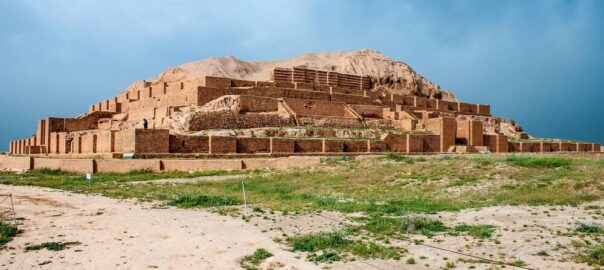
Very close to the ancient site of Susa is one of the best-preserved ziggurats in the world. Also in Iran is the Sialk Ziggurat which is one of the oldest known ziggurats dating from the early 3rd millennium BC. Most of these Mesopotamian Pyramids are in what is today Iraq, but some are in Iran.

The ancients believed that the ziggurats connected heaven and earth – shown in that the name of the ziggurat at Babylon (Etemenanki) means “House of the foundation of heaven and earth.” It is thought that the famous tail in the Bible of the Tower of Babel is a reference to the ziggurats of Mesopotamia.

Unlike other temples, Mesopotamian ziggurats were not places for public worship or ceremonies. They were just the dwelling places for the gods. And the purpose was to get the temple closer to the heavens. The temple complex of which the ziggurats were a part included storage rooms, bathrooms, living quarters, and a courtyard.

Susa is part of a region often termed a cradle of civilization. The city appears in the very earliest Sumerian records and is one of the first recorded cities in human history. /T.T/
IRGC’s Noor-2 satellite releases image of fifth US Navy base

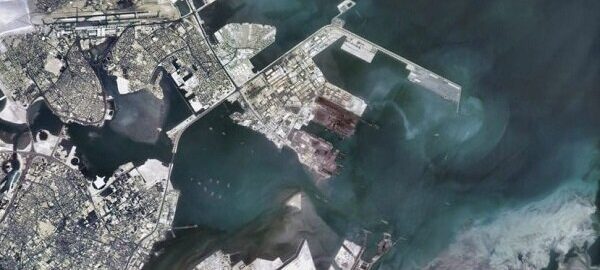
‘Noor-2’ Satellite launched by the IRGC Aerospace, recently released a new image of the fifth US Navy base in Bahrain.

Iranian Minister of Communications and Information Technology (ICT) Eissa Zarepour has released the first color video taken by the ‘Noor-2’ Satellite.

The new image taken by IRGC Aerospace’s satellite which was released from a distance of 500 km from the ground shows the fifth US Navy base in Bahrain.

The IRGC Aerospace launched the ‘Noor-2’ Satellite by the domestically-built launcher Qassed (messenger) on March 8, 2022, and placed it into orbit at an altitude of 500 km.

The mission of the satellite is reconnaissance, and it was placed in orbit after 480 seconds at a speed of 6.7 km/s.  / MNA/

Iran among 5 world producers of newborn screening test kits

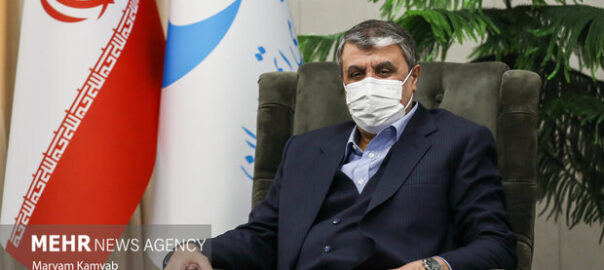
Head of the Atomic Energy Organization of Iran said that Iran is among the top five producers of newborn metabolic disease screening test kits in the world.

Speaking in the unveiling ceremony of producing newborn screening test kits for the detection of metabolic disorders, Head of Atomic Energy Organization of Iran (AEOI) Mohammad Eslami said that it took a year for Iranian scientists to produce screening kits to detect metabolic diseases in newborns at birth quickly.

With the permission of the Food and Drug Administration Of Iran, these test kits are ready to be launched, Eslami said, adding that the country also has some plans to export the kits to other countries.

AEOI chief also said that today, Iran is among the top five producers of metabolic disease screening kits for newborns in the world.

He concluded his remarks by saying that Westerners imposed pressures on Iran to prevent its achievement in the field of heavy water technology.

But under the guidelines of the Leader of the Islamic Revolution, the nuclear technology of Iran is expanding more day by day, he stressed. /MNA/

Iran exports to African countries grew by 120% last year

Head of Iranian Foreign Ministry for Western and Central African Affairs said that Iran’s export of products to the African continent last year in 1400 (from March 21, 2021 to March 20, 2022) registered a 120% growth.

Ali Akbar Rezaei said on Tuesday in a seminar entitled “Reviewing the Opportunities in Senegal Market”, which was held through videoconference between the Iranian Ambassador to Senegal and representatives of a number of manufacturers in the Alborz province, and stated that West Africa has a population of about 1.4 million which is a good hub for investing and promoting exports of products of Iran to the African country.

The Islamic Republic of Iran exported $1.2 billion worth of non-oil products to African countries last year, showing a 120% growth as compared to the same period last year.

More than 20 countries including Senegal, Ghana, Ivory Coast, Nigeria, Mali and Guinea are located in West Africa and have good potential and capacities in their trade relations with other countries, he emphasized.

One of the salient goals of this seminar is to familiarize traders, economic activists and members of the Alborz Chamber of Commerce with the capacities and potentials of West Asian countries as a lucrative and attractive target market for the export of Iranian products.

Because of the fact Senegal imports most of its consumer goods and products, ranging from food to machinery, petrochemical industry, petroleum products and other products, it provides a golden opportunity for Iranian companies to export their high-quality products there. /MNA/

Nikshahr holds potential to become tourism hub

Nikshahr, a lesser-known city in Sistan-Baluchestan, has considerable potential to become one of the tourism hubs of the southeastern province, the provincial tourism chief has said.

On Monday, Alireza Jalalzai added that the development of tourism infrastructure inside the city and its travel destinations is a prerequisite for such an evolution.

“There are many tourism and handicraft capacities there being neglected due to inadequacies in the development infrastructure and the lack of accurate and correct introduction of tourist attractions,” the official added.

Boosting tourism infrastructure in this city will assist in balancing the distribution of tourists in the province due to its proximity to the port of Chabahar and its location on the transit road, he noted.

Sistan-Baluchestan was previously shunned by potential foreign and domestic travelers though it is home to several distinctive archaeological sites and natural attractions, including two UNESCO World Heritage sites, namely Shahr-e-Soukhteh (Burnt City) and Lut desert, parts of the latter is situated in Kerman province.

In ancient times, according to Encyclopedia Britannica, the Baluchistan region provided a land route to the Indus Valley and the Babylonian civilizations. The armies of Alexander the Great marched through Baluchistan in 326 BC on their way to the Hindu Kush and their return march in 325 experienced great hardships in the region’s barren wastes. /T.T/

Innovation and technology join Khwarizmi Intl. Festival

The fields of innovation and technology have been added to the acceptable fields of the 36th Khwarizmi International Festival at the suggestion of Science Minister Mohammad-Ali Zolfigol, IRNA reported on Sunday.

Applications are accepted in the fields of aerospace, civil engineering, materials, metallurgy and new energies, agriculture, natural resources, animal sciences and veterinary medicine, electrical and computer, mechanics, basic sciences, green technology, mechatronics, biotechnology, and basic medical sciences, industry and technology management, medical sciences, chemical technologies, information technology, nanotechnology.

Those interested in participating in the 36th Khwarizmi International Festival can send their works until mid-September.

The annual festival is an opportunity for both Iranian and foreign participants to put their scientific achievements on display. Khwarizmi International Award is dedicated to recognizing outstanding scientific achievements made by researchers, inventors, and innovators from all over the world.

The executive process of this festival in five competitive sections includes domestic projects, foreign projects, projects of Iranians living abroad, selected successful projects in national production, commercialized projects from the previous award winners, and special awards (to honor Iranian intellectuals and scientists).

IROST proposed the creation of the Khwarizmi Award in memory of Abu Jafar Mohammad Ibn Mousa Khwarizmi, the great Iranian Mathematician, and Astronomer (770-840 C.E).

The first session of the Khwarizmi Award, in 1987, called for Iranian nationals to present their outstanding contribution, invention, or innovation. /T.T/

Tehran to host 1st tourism exhibit of Islamic world

Tehran is getting ready to host the 1st edition of the Islamic World Tourism Exhibition (IWTE) aimed to turn the spotlight on lesser-known destinations from 15 countries.

Arranged in close collaboration with the Islamic World Educational, Scientific and Cultural Organization (ICESCO), the event will touch upon sightseeing tours, ecotourism centers, medical services, e-services, and pilgrimage as well, according to organizers.

Islamic countries have immense potential to deepen tourism relations, Abdolkarim Sadeqdoust, who presides over the ICESCO office in Iran, said on Tuesday.

Sadeqdoust made the remarks during a press conference where he also stated: “We are trying to introduce Iran as one of the axes of the Islamic world in the ICESCO.”

Tehran to host 1st tourism exhibit of Islamic world

A hidden gem and a backpacker’s dream, Iran holds vast potential as a holiday destination with stunning landscapes, numerous World Heritage sites, and above all, its hospitable people.

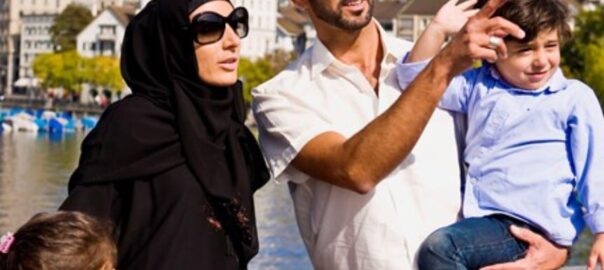
The country is often portrayed as “one of the safest to travel” by most visitors who experienced it, particularly solo female travelers and families, and the Lonely Planet calls its people the “friendliest in the world.”

“My advice is: don’t believe what you hear on the news. Explore the place, talk to locals and come to your own conclusions. Come to Iran with an open mind and I guarantee you’ll make many great friends in Iran,” Polish traveler Anna Karsten wrote in her travelogue in 2020.

“To me, being uncomfortable once or twice doesn’t mean that the place is dangerous. I never once felt physically threatened, unsafe, or at risk, even when I was wandering the streets of Iran. I felt safer in Iran than if I was walking around in NYC. Even the tap water was safe in Iran!”

Ellis Veen, a cultural anthropologist from the Netherlands who has traveled for more than 20 years to over 50 countries along the ancient Silk Road, says: “After my visit to Iran one of the most frequent questions I got is whether it was safe for me to travel to Iran as a woman. My short answer would be yes and I would recommend Iran to anyone considering it.”

“Iran is one of the safest countries in the Middle East (West Asia) and Iranians are among the friendliest people I have met in my travel history.”

It’s no surprise for those who are aware of Iranian culture and the great hospitality its people are famous for. Iranians are traditionally generous hosts giving the best of what they have to their guests. In traditional Iranian culture, guests are cherished like precious jewels. It is here in Iran that a typical invitation for a cup of tea can be extended to an overnight stay, or a humble asking for directions may forge a warm friendship.

Long shunned by Western travelers, the Islamic Republic has steadily stepped-up efforts to use tourism, over the past couple of years, to help promote its international image battered by endless opposition mostly from the U.S.

Before the COVID pandemic, Iran tourism had constantly been growing, reaching more than eight million visitors in the Iranian calendar year 1398 (started March 21, 2019). That surge, however, helped prejudices to become thick and thin.

Some experts believe even before the pandemic, Iran’s tourism was already grappling with some challenges, on top of those Western “media propaganda” aimed at scaring potential travelers away from the Islamic Republic. They say Iran is still somehow “unknown” for many potential travelers due to such a “media war”.

In the realm of medical tourism, many domestic experts believe it is a win-win opportunity both for the country and foreign patients, as they are offered affordable yet quality treatment services and the country gains considerable foreign currency.

Amongst Iran’s trump cards are the presence of credible surgeons and physicians, cutting-edge medical technologies, high-tech medicine and diverse specializations, super affordable procedures, and finally its hospitable people. The Islamic Republic has set goals to exceed its yearly medical travelers to around two million in [calendar year] 1404 (March 2025-March 2026).

The Islamic World Tourism Exhibition will be held at Shahr-e Aftab International Exhibition Center from June 7 to 10./T.T/

Tourism seen as effective tool against Iranophobia: ICESCO official

The contribution of tourism and the hospitality industry is an effective tool to foil anti-Iranian sentiment or Iranophobia, which has long been forged and spread by some Western governments, an ICESCO official has said.

When holidaymakers arrive in Iran, they feel the real face of the country so tourism is a great instrument to help thwart Iranophobia and Islamophobia sentiments, Abdolkarim Sadeqdoust said on Thursday.

“Through a correct introduction of Iran, we can stand against anti-Iran propaganda,” said the official who presides over the ICESCO office in Iran.

In this regard, Tehran is getting ready to host the 1st edition of the Islamic World Tourism Exhibition (IWTE) aimed to turn the spotlight on lesser-known destinations in 15 countries including the Islamic Republic.

Sightseeing tours, ecotourism centers, medical tourism, and pilgrimage are the main themes of the exhibit, which will be held at Shahr-e Aftab International Exhibition Center from June 7 to 10.

Some experts believe Iran is still somehow “unknown” to many potential travelers due to such a “media war”. “Iran’s tourism is grappling with some challenges, on top of those Western ‘media propaganda’ aimed at scaring potential travelers away from the Islamic Republic.”

Long shunned by Western travelers, the Islamic Republic has steadily stepped-up efforts to use tourism, over the past couple of years, to help promote its international image battered by endless opposition mostly from the U.S.

A backpacker’s dream, Iran holds vast potential as a holiday destination with stunning landscapes, numerous World Heritage sites, and above all, its hospitable people.

The country is often portrayed as “one of the safest to travel” by most visitors who experienced it, particularly solo female travelers and families, and the Lonely Planet calls its people the “friendliest in the world.”

“My advice is: don’t believe what you hear on the news. Explore the place, talk to locals and come to your own conclusions. Come to Iran with an open mind and I guarantee you’ll make many great friends in Iran,” Polish traveler Anna Karsten wrote in her travelogue in 2020.

“To me, being uncomfortable once or twice doesn’t mean that the place is dangerous. I never once felt physically threatened, unsafe, or at risk, even when I was wandering the streets of Iran. I felt safer in Iran than if I was walking around in NYC. Even the tap water was safe in Iran!”

Ellis Veen, a cultural anthropologist from the Netherlands who has traveled for more than 20 years to over 50 countries along the ancient Silk Road, says: “After my visit to Iran one of the most frequent questions I got is whether it was safe for me to travel to Iran as a woman. My short answer would be yes and I would recommend Iran to anyone considering it.”

“Iran is one of the safest countries in the Middle East (West Asia) and Iranians are among the friendliest people I have met in my travel history.”

It’s no surprise for those who are aware of Iranian culture and the great hospitality its people are famous for. Iranians are traditionally generous hosts giving the best of what they have to their guests. In traditional Iranian culture, guests are cherished like precious jewels. It is here in Iran that a typical invitation for a cup of tea can be extended to an overnight stay, or a humble asking for directions may forge a warm friendship.

In the realm of medical tourism, many domestic experts believe it is a win-win opportunity both for the country and foreign patients, as they are offered affordable yet quality treatment services and the country gains considerable foreign currency.

Amongst Iran’s trump cards are the presence of credible surgeons and physicians, cutting-edge medical technologies, high-tech medicine and diverse specializations, super affordable procedures, and finally its hospitable people. The Islamic Republic has set goals to exceed its yearly medical travelers to around two million in [calendar year] 1404 (March 2025-March 2026).

The ICESCO, which stands for the Islamic World Educational, Scientific and Cultural Organization, is a specialized organization that operates under the aegis of the Organization of Islamic Cooperation (OIC) and is concerned with fields of education, science, culture and communication in Islamic countries to support and strengthen relations among member states. /T.T/

Iran becomes 20th world’s largest economy despite sanctions

According to the statistics of International Monetary Fund (IMF), Iran was turned into the 20th largest economy in the world in spite of tough sanctions imposed against the country.

In the latest ranking of the world’s largest economies, Iran was ranked 20th at the international level, higher than countries such as Poland, Egypt, the Netherlands, Argentina, Switzerland, Belgium and Austria.

With the release of statistics on the gross domestic product (GDP) of 193 countries in the world according to Purchasing Power Index (PPI) in 2021, the International Monetary Fund (IMF) put Iran’s rank at 20th as the largest economy in the world in spite of harsh sanctions imposed against the country.

According to IMF, the value of Iran’s GDP based on its PPI in 2021 exceeded $1,436 billion.

Despite the imposition of tough sanctions against Iran over the past years, Iran’s economy stood larger than 173 countries in 2021, the report added.

Another statistic showed that countries including Egypt, Thailand, Pakistan, the Netherlands, Argentina, South Africa, the UAE, Switzerland, Belgium, Sweden, Austria, Norway, Portugal, Greece, Finland, Oman and Kuwait had small-scale economies than Iran in 2021./T.T/

‘Zalava’ to compete at two US film festivals

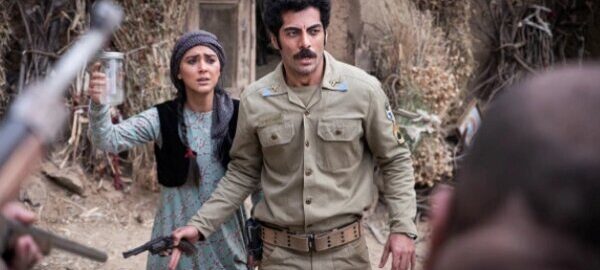
Directed by Arsalan Amiri, the Iranian film ‘Zalava’ is set to be screened at two international film festivals in the United States.

‘Zalava’ will be screened at the Minneapolis–Saint Paul International Film Festival which is being held from May 5 to May 19.

The Minneapolis–Saint Paul International Film Festival is a springtime film festival in the US state of Minnesota that has been held since 1981.

Overlook Film Festival would be the second film festival where Amiri’s film would be screened at. The event is slated to be held on June 2–5, 2022.

The Overlook Film Festival is a 4-day celebration of all things horror held in America’s New Orleans.

The film also last month was screened at the Jim Thorpe Independent Film Festival in Pennsylvania and was nominated for best picture at the festival.

Navid Pourfaraj, Pouria Rahimi-sam, and Hoda Zeinolabedin are among Zalava’s cast.

The synopsis of ‘Zalava’, a ghost story with elements of noir and melodrama set in pre-revolution Iran, reads, “When a village is claimed to be possessed, an atheist police officer attempts to denounce the exorcist in charge, whom he believes is nothing but a fraud.” /MNA/