All posts by islam

Iranian short to compete at U.S. film festival

Iranian short film “On the Beach” by Abolhassan Keyvan will go on screen at Manhattan Film Festival, Honaronline reported on Monday.

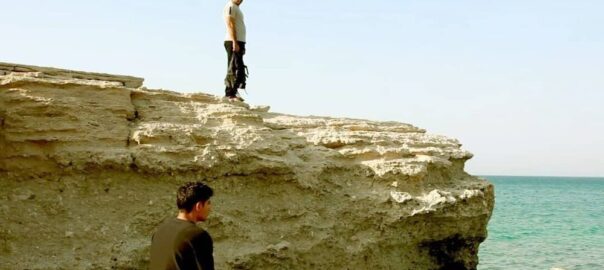
The film tells the story of a young man whose fiancé has migrated abroad and the man has been waiting for her on the beach for days. His brother visits him every day, brings him food and water, and sometimes blames him for his condition.

Manhattan Film Festival will be held in New York from June 9 to 23./T.T/

Conditions improve for foreign nationals studying in Iran

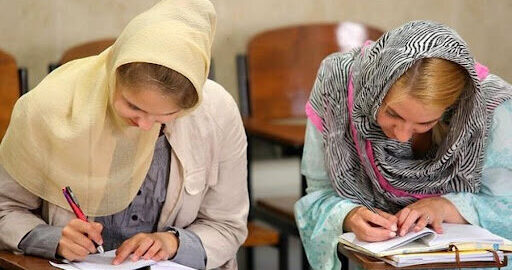
Health insurance coverage, longer residency, shorter visa processing time, and awarding exemplary students are among the conditions provided for foreign nationals studying in Iran, the deputy minister of science for foreign affairs, has stated.

The residency is currently extended for one year, but for the first time, some international students have been granted long-term residency based on the length of their education, ISNA quoted Jafar Razeqi as saying on Saturday.

One of the most important problems for non-Iranian students, especially in recent months, was the visa processing time, which took time due to problems at the host university and administrative processes in different parts of the organization, but now this time has been reduced by one third, he noted.

This year, a ceremony will be held to honor the best foreign students. Non-Iranian students who have learned Persian can also defend their dissertation in this language, he further said.

Some 57,675 foreign nationals from 133 countries are studying in Iranian universities.

“We have corresponded with all host universities of international students to cover these students with “health insurance”, which will pay 70 to 90 percent of the treatment costs as well as 100 percent of the medical cost.

Another plan of the ministry is to provide dormitories to married students,” he explained.

Foreign students

Some 57,675 foreign nationals from 133 countries are studying in Iranian universities, 30,600 of whom are studying in universities affiliated with the Ministry of Science, while 25,000 others are receiving education at Azad University and about 2,000 in medical universities.

Currently, foreign nationals constitute 1.64 percent of the country’s student population, which is about 0.14 percent higher than the goal set by the Sixth Five-Year National Development Plan (2016-2021), Mohammad Javad Salmanpour, the deputy head of the Organization for Student Affairs, said in April.

Twenty-five percent of the foreign students studying in Iranian universities are Afghan nationals, he added.

Afghan students attend Iranian universities in three ways; some enter the university by participating in the national entrance exam of Iran, and some others receive admission from universities that have non-Iranian student licenses. The third group also attended the country’s universities through scholarships, he explained.

Many of the Afghan students are studying master’s and Ph.D. courses in Iranian universities, he added, IRNA reported.

On May 7, Abolfazl Kamali, the deputy education minister said some 527,000 foreign students are studying in schools nationwide, the majority are Afghans and the rest are from Bangladesh, Pakistan, Iraq, and other countries.

There are also 22 special schools for foreign nationals across the country, IRNA quoted Kamali as saying.

Pointing out that 10,000 foreign students are studying in the special schools, he said that they study according to the Iranian education system.

Iran spends about 20 trillion rials (nearly $77 million) every year on the education of foreign national students residing in the country, according to data released by the education ministry. /T.T/

Iran on par with developed countries in children’s health

Many diseases have been eradicated through mass vaccination programs in Iran, and the children’s health is equal to that of developed countries, deputy health minister Kamal Heydari, has said.

He made the remarks on the occasion of World Immunization Week 2022, celebrated annually in the last week of April.

With the efforts of all officials and those involved in the development of vaccination, many diseases that were once considered a serious threat to the people’s health have now been eliminated, and the health of Iranian children is at the level of developed countries and in some indicators are exceeding the region and the world, he explained.

Concerns about the spread of measles in the country are growing as the Afghan population grows. Eradication of diseases such as rubella, measles, and polio in Iran has been approved by the World Health Organization, he noted, expressing concern over the outbreak of these diseases in some neighboring countries including, Pakistan and Afghanistan.

Therefore, everyone should pay attention to vaccination coverage and include their children in the full coverage of vaccines that are offered in health centers.

Concerns about the spread of measles in the country are growing as the Afghan population grows, so the measles vaccination operation for non-Iranian people, including Afghans, was put on the agenda and implemented, he noted.

Measles mostly infects children under the age of 10, and all families need to get their children vaccinated between the ages of 12 to 18 months, he said, adding that vaccination will be free of charge.

The measles vaccination program in Iran started in 1984 when 34 percent of the population was vaccinated in the first year and 90 to 95 percent of the population after 6 years. Also in 2003, 33 million people were vaccinated with a national program to eradicate measles in the country.

Then it was managed to minimize the measles incidence rate in three years and increase vaccination coverage to 95 to 98 percent. In 2019, the World Health Organization approved the elimination of measles and rubella in Iran.

Some 64 percent of the infected people are Afghans, 3 percent are Pakistanis and the rest are Iranians. The disease causes severe symptoms in people with malnutrition, including blindness, pneumonia, and brain infection.

The disease is much more contagious than coronavirus, and kills one to five percent of the patients,” Zahraei said on May 9.

World Immunization Week

World Immunization Week 2022, celebrated from April 24 to 30, aims to highlight the collective action needed and to promote the use of vaccines to protect people of all ages against disease.

‘Long Life for All – Vaccines, in the pursuit of a long life well lived’ is the theme of this year.

WHO works with countries across the globe to raise awareness of the value of vaccines and immunization and ensures that governments obtain the necessary guidance and technical support to implement high-quality immunization programs. The ultimate goal of World Immunization Week is for more people – and their communities – to be protected from vaccine-preventable diseases. /T.T/


Employment development through nanotechnology

Unemployment of university graduates is one of the most important social issues in the country, which can be overcome with the help of knowledge-based nanotechnology companies.

The issue of employment is one of the most basic needs of every society so increasing employment and reducing unemployment are considered the main indicators of development.

Given the vital role of a specialized and educated workforce in the process of economic, social, and cultural development, and also considering that a huge amount of budget is spent annually on training costs, if the specialized and educated workforce is not used in jobs related to their fields of study, on the one hand, we have wasted costs and on the other hand, we have provided the emergence of frictional unemployment and migration in the society.

The Nanotechnology Innovation Council has started cooperation with the Ministry of Cooperatives, Labor, and Social Welfare to create employment by using the power of knowledge-based companies in this field to eliminate unemployment and prevent the migration of graduates.

Following this agreement, nano-companies that have the potential to produce nano-industrial and semi-industrial products will be supported.

Nanotech products are being produced and marketed in more than 15 industrial fields based on domestic technologies and are being exported to 49 countries. Saeed Sarkar, the secretary of the Nanotechnology Innovation Council, said that one of the reasons and weaknesses that lead to the emigration of the elites is that these people do not find jobs that fit their specialty in the country so they choose migration.

Referring to two types of elite migration, he explained that one is geographical migration in which the elites cannot find jobs; and some people have graduated but are engaged in fields other than their own specialization and occupations, which is also a cause of migration.

In the past, unfortunately, the employment was thought to be in charge of labor or rural employment, and as a result, the quantity of employment was the priority, not the quality, he lamented.

Fortunately, the ministry of labor now has a new approach to job creation, which is to support specialized employment, to consider both the quantity and quality of employment, he noted.

With the cooperation of the Ministry, we intend to create conditions by granting low-interest loans that companies can be the source of creating specialized employment by developing their work, creativity, and innovation, he said, expressing hope to extend this model to other areas of technology.

There are 350 companies that have products in the market and their products are commercialized, in the country, so these firms are eligible to receive loans to create specialized employment, however, startup companies, research, and development companies that have a nano product in the path of production and commercialization are not included, he added.

One of the industries that have experienced good growth in Iran in recent years, proving the country’s scientific development, is the nanotechnology industry, a subject area that has brought Iran to the world’s fourth place.

Currently, nanotech products are produced and marketed in more than 15 industrial fields based on domestic technologies and are being exported to 49 countries from five continents.

Over the current year (ending March 20, 2023), the total sale of Iranian nanoproducts has been equal to 115 trillion rials (nearly $425 million).

The expansion of nanotechnology export programs in recent years and the establishment of bases for exporting nanoproducts to China, India, Indonesia, Syria, Turkey, and Iraq have provided the opportunity for the entry of Iranian nanotechnology goods, and equipment, and services into global markets.

Some 42 percent of the products in this field are related to construction, more than 17 percent to the field of oil, gas, and petrochemicals, 13 percent to the field of automobiles, and over 10 percent to the field of optoelectronic.

Some 270 companies are active in the nanotechnology field and it is predicted that their revenue will reach up to 80 trillion rials (nearly $310 million), Vice President for Science and Technology, Sourena Sattari, announced.

Iran improves in nanotechnology

Iran’s ranking in nanotechnology articles citation in 2019 has significantly improved compared to 2018, as it moved 26 levels higher, according to the StatNano’s statistics collected from the WoS database.

Based on a report Nanotechnology Publications report, Iran ranked 38 worldwide for the average number of times the nano-articles have been cited in the Journal Citation Reports in 2019, while in 2018, it was placed 64.
Iran ranked 4th for the highest number of nano-article publications.

Knowledge-based ecosystem

Today, the country’s knowledge-based ecosystem accounts for more than 3 percent of GDP. And the figure is projected to reach 5 percent, however, the main goal is to step toward a 10 percent share in GDP, Sattari told Fars on February 13.

The share of knowledge-based companies in the country’s economy has exceeded 9 quadrillion rials (about $34 billion), and since 2019, it has experienced a growth of more than 450 percent, he stated.

There are currently 6,263 knowledge-based companies operating in the country, offering advanced products and services in various fields of technology to domestic and foreign markets, and some of them have entered international markets, Siavash Maleki, deputy head of the Fund, stated.

The fields of aircraft maintenance, steel, pharmaceuticals, medical equipment, oil, and gas are among the sectors that researchers in technology companies have engaged in, leading to import reduction. /T.T/

Japanese tourists visit Iran after two-year slump in arrivals

A group of Japanese tourists have traveled to Iran after a two-year standstill due to the COVID-19 pandemic which ground the entire tourism sector to a halt worldwide.

Individual Japanese tourists have visited Iran on business trips or for seeing family or friends since the Iranian calendar month of Aban (falling from October 23 to November 21), said Seyyed Abbas-Ali Emamieh, the secretary of the consortium of incoming tours from Korea and Japan at the Association of Air Transport and Tourist Agencies of Iran (AATTAI).

And group tours from Japan are also resuming after a two-year pause due to the coronavirus pandemic, added Emamieh.

Japanese tourists’ journey starts from northeastern province of Golestan which includes visits to Miankaleh peninsula and Ashooradeh Island, Emamieh said, noting, “We decided to start off with nature tours” due to the unstable conditions brought about by the pandemic and restrictions imposed to slow the spread of the virus.

Emamieh said that the Japanese tourists are scheduled to visit provinces of Semnan, Mazandaran and Gilan, but did not provide any information on how long the journey lasts or when it has started.

He added that so far Japanese tourism sector has embarked on nature-based outbound tours, saying that such tours will set the scene for attracting other incoming tourists to Iran in the near future.

Mentioning the Gold week (a collection of four national holidays within seven days) in Japan which starts from April 29 to May 5, he said that travel activity is normally anticipated to peak during this holiday in Japan, however, as re-entry to Japan is still very cumbersome due to the COVID-19 restrictions, the number of oversea trips remains low.

Nonetheless, as travel restrictions are easing in Europe, Japan is expected to follow suit and is hoped to reopen to leisure travelers in summer, he said, adding, it is predicted that Japan will first lift COVID-19-related travel bans for neighboring countries with lower confirmed coronavirus cases and eliminate the bans for other countries as well after assessing the conditions.

“In anticipation of resuming accepting foreign tourists, Iranian travel agencies have planned tours to Japan in September,” the tourism official said.

Commenting on Iran’s pandemic-related travel restrictions, Emamieh said that to avoid confusing travelers who plan to visit Iran, it is best not to keep changing COVID entry rules and remove restrictions gradually.

“Near the end of the last [Iranian calendar] year (February 20-March 20) it was announced that travelers only need vaccine certificates to travel to Iran, however, the restrictions intensified again entailing a negative PCR test as well,” he said, noting, such policies will affect the travel plans.

According to the United Nations World Tourism Organization (UNWTO), impact assessment of the covid-19 outbreak on international tourism experienced a 4% increase in 2021, 15 million more international tourist arrivals (overnight visitors) compared to 2020 (415 million versus 400 million).

However, international arrivals were still 72% below the pre-pandemic year of 2019, according to preliminary estimates. This follows on from 2020, the worst year on record for tourism, when international arrivals decreased by 73%.

The report adds that the pace of recovery remains slow and uneven across world regions due to varying degrees of mobility restrictions, vaccination rates and traveler confidence. /MNA/

Persian leopard spotted in Esfarayen

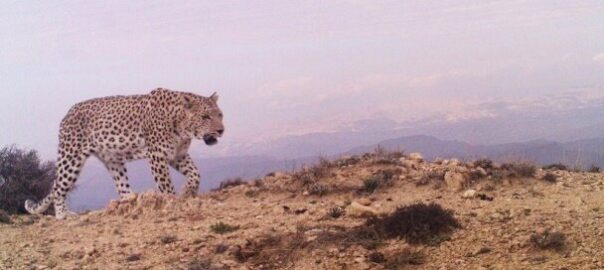
The head of Esfarayen’s department of environment said that a Persian leopard has been spotted in Salouk National Park in North Khorasan Province.

Ali Faraji, the head of Esfarayen’s department of environment said on Sunday that park rangers of the Salouk National Park spotted a Persian leopard and recorded the footage of it during their patrolling.

Since the beginning of the Iranian year [started on March 20, 2022], three leopards have been observed and photographed in these areas, he added.

The Persian leopard is a leopard subspecies native to the Iranian Plateau and surrounding areas encompassing Turkey, the Caucasus, Iran, Turkmenistan, Afghanistan and possibly Pakistan. It is distributed in different ecosystems, and Golestan Natural Park is one of the main habitats of the species in northeast Iran. Since 2016, it has been listed as Endangered on the IUCN Red List, as the wild population is estimated at less than 1000 mature individuals.

Salouk National Park, with an area of 8,231 hectares, consists of fabulous nature, various fauna and plant species, and specific geomorphology. The mountainous topography has made Salouk National Park one of the most varied wildlife habitats. More than 100 animal species have been identified in Salouk National Park.

A large number of Urial, gazelle, Wild goat, leopard, wildcat, and marten are the rare animal species of this area. /MNA/

Iran’s annual petchem export stands at over $15b

Iran exported petrochemical products valued at more than $15 billion in the past Iranian calendar year 1400 (ended on March 20), the managing director of National Petrochemical Company (NPC) announced.

Morteza Shahmirzaei made the remarks in a press conference held on the sidelines of the 26th International Oil, Gas, Refining and Petrochemical Exhibition of Iran (Iran Oil Show 2022) on Monday.

The official said that of the mentioned $15 billion petrchem revenues, over $12.5 billion was injected into the Forex Management Integrated System, locally known as NIMA.

The petrochemical industry plays a crucial role in Iran’s non-oil economy, as the petrochemical export is the second-largest source of revenue for the country after crude oil. Petrochemical exports already constitute nearly 33 percent of the country’s non-oil exports.

The NPC’s managing director further stressed that petrochemical industry is a value and job-creating industry, which has no risk.

The official said that 69 production units (including three service units which provide services such as water, electricity, and steam for the production units) are now active in the petrochemical industry of Iran, which play some significant role in bringing foreign currency for the country.

Annual petchem production capacity reaches 90m tons

Shahmirzaei further announced that the country’s petrochemical production capacity reached 90 million tons in the past year.

He said that the real production is 65 million tons, and the difference between the two figures is due to some reasons, one of them is the overhaul operations of the petrochemical units, which stop their activities, accidents is the other reason which stops the units’ activities, also in the cold seasons, the gas supplied to the industrial units, including the petrochemical ones, is reduced as more gas is supplied to the household sector.

“In line with completing the value chain in the petrochemical industry, that its products are used in almost every sector, we will achieve the annual production capacity of 200 million tons”, the official further underlined.

He also announced that six projects will be implemented this year, adding five million tons to the country’s petrochemical output.

Domestic production should be completely realized in petchem sector

Elsewhere in his remarks, Shahmirzaei stressed that domestic production should be realized in all sectors of the petrochemical industry.

A small part is still remained, so that this target will be achieved, he added.

Petrochemical Research and Technology Company and Research Institute of Petroleum Industry in addition to the other related institutes and centers are taking all efforts in this due, the official added.

He mentioned West Eslam-Abad petrochemical project as one of the projects that all of its parts will be domestically produced.

“We should apply five technical knowledge for this project, which require some special preciseness and effort”, Shahmirzaei noted.

“During a visit to the project last week, I saw that some good steps have been taken in this due”, the NPS’ managing director stated.

It is planned that all catalysts used in the petrochemical industry will be domestically produced by the end of the current government’s incumbency, the official further announced. /T.T/

Hemmati becomes 3rd Iranian women to climb Everest

Iranian female mountain climber Afsaneh Hemmati has managed to conquer the Everest on Sunday.

In a video message published on her Instagram account, Hemati thanked the people who helped him to climb to the top of the world.

Prior to her, Farkhondeh Sadegh, a graphic designer, and Laleh Keshavarz, a dentist, were the first Iranian women to reach to climb Everest in 2005. /MNA/

Iran’s ‘domestically manufactured’ Simorgh aircraft unveiled

The “Simorgh” transport aircraft, built by the specialists of the Iran Aviation Industries Organization was unveiled in the presence of Iran’s Minister of Defense in Isfahan province.

Speaking at the unveiling ceremony of the Simorgh transport aircraft at Iran Aircraft Manufacturing Industries (HESA) on Thursday, Brigadier-General Mohammad Reza Ashtiani said, “Given the developments in the region and the threats against the Islamic Republic, aircrafts play an important role in the transportation of cargo, personnel, and support for the armed forces on battlefields.”

Ministry of Defence and Armed Forces Logistics of Iran, as a power-building, authorizing, and supporting organization of the Armed Forces has a great mission to increase the deterrent power of the Islamic Republic, the Iranian Defense Minister stressed.

Meeting the needs of the armed forces in various fields of land, sea, air, and electronic warfare is a key priority of the ministry of defense, he stressed.

Simorh transport aircraft is a redesigned and advanced version of the same generation, which perfectly fits the needs of the country and armed forces, Ashtiani said, adding that

Being equipped with high-tech, indigenous materials, the Simorh aircraft has been designed in accordance with Iran’s climatic conditions as well as international standards and regulations./ MNA/

Iran marks National Day of Omar Khayyam

Today is considered a significant cultural event for Iranians to commemorate the great Iranian poet, astronomer, writer, and mathematician Omar Khayyam.

Omar Khayyam was born on 18 May 1048 in Nishapur, in northeastern Iran, and spent most of his life near the court of the Karakhanid and Seljuq rulers in the period which witnessed the First Crusade.

A literal translation of the name Khayyam means ‘tent maker’ and this may have been the trade of Ibrahim his father.

The political events of the 11th Century played a major role in the course of Khayyam’s life. The Seljuq Turks invaded southwestern Asia in the 11th Century and eventually founded an empire that included Mesopotamia, Syria, Palestine, and most of Iran. The Seljuq occupied the grazing grounds of Khorasan and then, between 1038 and 1040, they conquered all of north-eastern Iran. The Seljuq ruler Toghrïl Beg proclaimed himself sultan at Nishapur in 1038 and entered Baghdad in 1055. It was in this difficult unstable military empire, which also had religious problems as it attempted to establish an orthodox Muslim state that Khayyam grew up.


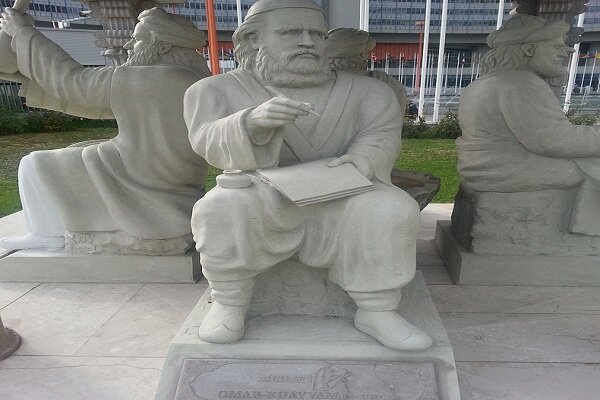
The statue of Khayyam in United Nations Office in Vienna as a part of Persian Scholars Pavilion

Khayyam studied science, philosophy, mathematics, and astronomy at Nishapur, and about the year 1068, he traveled to Bukhara, where he frequented the renowned library of the Ark. However Khayyam was an outstanding mathematician and astronomer and he did write several works including Problems of Arithmetic, a book on music and one on algebra before he was 25 years old.

In 1070 he moved to Samarkand in Uzbekistan where there Khayyam was supported by Abu Tahir, a prominent jurist of Samarkand, and this allowed him to write his most famous algebra work, Treatise on Demonstration of Problems of Algebra. It is presumed that due to his relationship with Tahir, ruler Shams al-Mulk distinctively regarded Omar with esteem.

Toghril Beg, the founder of the Seljuq dynasty, had made Isfahan the capital of his domains and his grandson Sultan Malik-Shah I was the ruler of that city from 1073. An invitation was sent to Khayyam from Malik-Shah and from his Grand Vizier Nizam al-Mulk asking Khayyam to go to Isfahan to set up an Observatory there and lead a group of scientists in carrying out precise astronomical observations aimed at the revision of the Persian calendar.


Jalali calendar by Khayyam

It was a period of peace during which the political situation allowed Khayyam the opportunity to devote himself entirely to his scholarly work. During this time the scientist measured the length of a year – tropical year length – with remarkable precision. The resulted calendar was named in Malik-Shah’s honor as the Jalali calendar and was inaugurated on March 15, 1079. The Jalali calendar was a true solar calendar where the duration of each month is equal to the time of the passage of the Sun across the corresponding sign of the Zodiac.

This calendar was used until the 20th century in Iran and it became the official national calendar of Qajar Iran in 1911. This calendar was simplified in 1925 and the names of the months were modernized, resulting in the modern Iranian calendar.

After the death of Malik-Shah and his vizier in 1092, Khayyam fell from favor at court and funding to run the Observatory ceased, and Khayyam’s calendar reform was put on hold. Despite being out of favor on all sides, Khayyam remained at the Court and tried to regain favor. He wrote a work in which he described former rulers in Iran as men of great honor who had supported public works, science, and scholarship.

He was then invited by the new Sultan Sanjar to Marv, possibly to work as a court astrologer. Sanjar created a great center of Islamic learning in Marv where Khayyam wrote further works on mathematics. He was famous during his life as a mathematician.

‘A commentary on the difficulties concerning the postulates of Euclid’s Elements’, ‘On the division of a quadrant of a circle’ and ‘On proofs for problems concerning Algebra’ are among his surviving mathematical works.

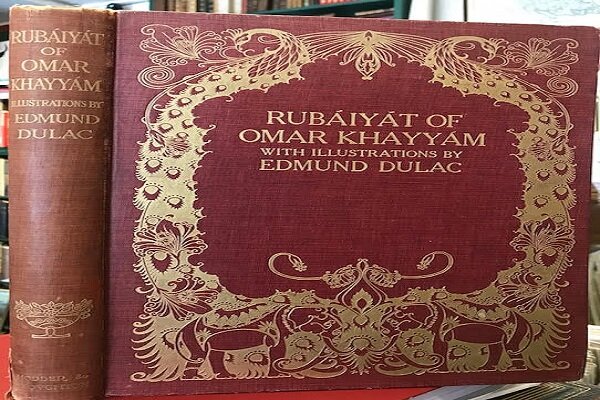
Outside the world of mathematics and astronomy, Khayyam is also best known as a result of Edward Fitzgerald’s popular translation in 1859 of nearly 600 short four-line poems the Rubaiyat.


Rubaiyat of Omar Khayyam

Khayyam’s fame as a poet has caused some to forget his scientific achievements which were much more substantial. Versions of the forms and verses used in the Rubaiyat existed in Persian literature before Khayyam, and only about 120 of the verses can be attributed to him with certainty.

The poems celebrated the pleasures of life while illuminating the nuanced political and religious context in which they were created. Of all the verses, the best known is the following:

The Moving Finger writes, and, having writ,

Moves on: nor all thy Piety nor Wit

Shall lure it back to cancel half a Line,

Nor all thy Tears wash out a Word of it.

He also considered himself intellectually to be a student of Avicenna. There are six philosophical papers believed to have been written by Khayyam. Philosophy, jurisprudence, history, mathematics, medicine, and astronomy are among the subjects mastered by this brilliant man.


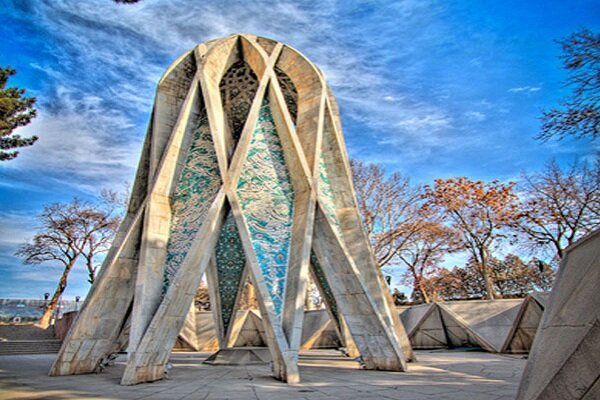
Mausoleum of Omar Khayyam in Nishapur

Khayyam died in Nishapur at the age of 83, on December 4, 1131. His mausoleum is a modern monument of white marble erected over Omar Khayyam’s tomb located in Nishapur. Although the tomb witnessed many calamities, it is not ruined and can host avid tourists from around the world.

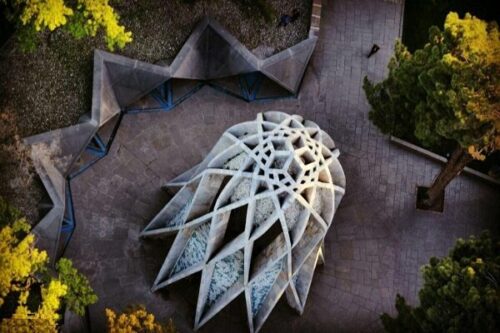
In 1934, the reconstruction of the mausoleum was commissioned and Hooshang Seyhoun, who was the supervisor of national monuments constructions with Hossein Jodat, transferred the place of the tomb, and this process continued till 1962. The triangular parts around the tomb are associated with a tent that implies Khayyam’s name.

The Mausoleum of Khayyam is one of the most important buildings of that period in terms of creativity, construction, and architecture. This monument was registered in the list of National Heritage in 1963.


Aerial view of Mausoleum of Omar Khayyam in Nishapur

Ordibehesht 28 in the Persian calendar corresponding with May 18 is the commemoration day of the world-renowned Persian poet, astronomer, and mathematician Omar Khayyam. Every year, a number of literati and scholars from around the world convene at the mausoleum of Khayyam to mark his National Day.

A ceremony is traditionally held on this day in his mausoleum in Nishapur, as well as in many other locations across the country and worldwide. /MNA/