
Iran’s legal legitimacy in controlling the Strait of Hormuz
Published: April 23, 2026
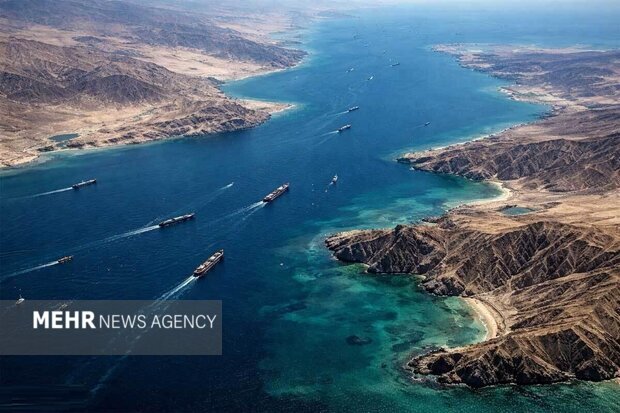
TEHRAN, Apr. 23 (MNA) – Iran’s control of Hormuz isn’t defiance—it’s law. Bound by 1958 innocent passage rules, not 1982 transit rights, Tehran holds legal ground even Washington can’t challenge.
Since the 15th century, when the importance of navigation for the colonization of African and American countries increased, Spain and Portugal, as major navigators, divided the seas between themselves, and by order of Pope Alexander VI in 1493, other states could not use the sea without the permission of Spain and Portugal. This development was protested by countries around the world, and an issue called the “Principle of Freedom of the Seas” entered international law. With the collapse of the Spanish and Portuguese empires from the 16th century onwards, two rules for ships passing through the straits were raised in international law under the titles of “innocent passage” and “transit passage”. This note briefly examines the two aforementioned rules and Iran’s position, as well as the legal legitimacy of controlling the Strait of Hormuz.
1. In 1947, two years after the formation of the United Nations, the International Law Commission in this organization prepared a draft of the Law of the Sea, which became the basis of the 1958 Geneva Conference. One of the resolutions of this conference, namely the rule of “innocent passage”, was a new concept in the United Nations Convention on the Law of the Sea and allowed ships to pass through the territorial waters of a country, subject to certain restrictions. In Article 19 of this convention, the definition of the rule of “innocent passage” states that passage is innocent if it does not prejudice the peace, good order, or security of the coastal State. Such passage shall be carried out in accordance with the terms of this Convention and other international law. The 1958 Convention also emphasized that coastal states have the right to exercise sovereignty over straits, but do not have the right to suspend (completely block) the passage of other countries. Article 16 of the 1958 Convention also states that innocent passage is achieved when ships are moving solely for the purpose of passing through the territorial sea without stopping and are not engaged in activities such as military threat, intelligence gathering, aircraft flying from ships, intentional pollution, fishing, or disruption of coastal installations. According to the “innocent passage” rule, submarines are not allowed to move underwater, ships must carry their own flag, military vessels are not allowed to pass, and any destructive action against the environment is prohibited. The Iranian government, during the Pahlavi and Islamic Republic periods, was subject to the “innocent passage” law based on the 1958 Convention and signed the 1958 Convention with some reservations. Although the obligation to implement all the provisions of this convention was not ratified by the parliament, Iran has been adhering to the “innocent passage” regime since then.
2. In 1982, due to the independence of the new states and their membership in the United Nations, and due to the recognition of mineral resources, especially oil, on the seabed, the need to combat environmental pollution, and of course the aspirations of the great powers to freely enjoy the benefits of the sea, a comprehensive convention on the basic rules of the law of the sea was proposed and adopted by the United Nations. Although the rule of “innocent passage” was confirmed in this convention, its articles 34-45 introduced a new regime called “transit passage”. According to Article 38 of this convention, in straits that connect two parts of the high seas or the exclusive economic zone, all ships and aircraft have the right of continuous, expeditious, and unimpeded passage. Article 26 of the convention also explicitly states: “No charges may be imposed on foreign ships for the sole purpose of passing through the territorial sea, except for specific services rendered to that ship.” This convention allowed all countries, especially hegemonic powers, to pass through the straits without any restrictions.
The Islamic Republic of Iran signed the Convention on the Law of the Sea on December 10, 1982, but at the same time, issued an interpretative declaration and made reservations to this law. Subsequently, Iran’s commitment to the provisions of the 1982 law was not ratified by the Islamic Consultative Assembly (Parliament), and since then, Iran has not followed the “transit passage” rule and continues to apply the “innocent passage” regime based on the 1958 Geneva Convention in the Strait of Hormuz. Commitment to a convention in the Iranian legal system, according to Article 9 of the Civil Code, occurs when the parliament ratifies it. It is worth noting that the United States and the UAE also consider the implementation of the 1982 Convention to be against their interests and do not consider themselves obligated to implement it, while they have the right to transit through all straits without regard to the rights of coastal states and expect Iran to implement it. In addition, because the United States is not a party to the 1982 Convention, ships and aircraft from this country and other non-member countries are not subject to the right of “transit passage,” and Iran can oppose the passage of American ships and aircraft.
3. In times of war and self-defense, the conditions are different, and the provisions of the International Institute’s “San Remo Humanitarian Law-1994” booklet allow countries to impose further restrictions to ensure security in the straits. This institute is an independent, non-profit, and humanitarian association that was founded in 1970 in San Remo, Italy, to promote international humanitarian law. Accordingly, countries that control the straits, including Iran, can inspect, target, or condition the passage of enemy ships within the framework of self-defense. Therefore, Iran’s recent actions, including the selective stopping of tankers and control of passage during wartime, have legal logic. The provisions of the 1982 Convention also have their own unique rules for wartime conditions and approve the actions of countries such as Iran. In addition, during wartime, citing Article 51 of the United Nations Charter, Iran can impose restrictions to ensure its security in the Strait of Hormuz.
4. According to Article 26 of the Convention on the Law of the Sea, no fees may be charged for the passage of ships. However, for the performance of maritime services such as pilotage or navigation, surveillance and management of maritime traffic, rescue of a ship or property in danger at sea, and ensuring the security of ships in time of war, the collection of “service fees” is permitted. For example, in straits controlled by Turkey, such as the Bosphorus, charging ships with service fees is enforced as an accepted practice, and in the same way, Iran can also earn financial income.
Consequently, according to international rules, Iran is not required to apply “transit passage” and can control the Strait of Hormuz to prevent any damage by adhering to the “innocent passage” regime. In domestic law, Iran’s commitment to the legal regime of “innocent passage” is also stipulated in Article 5 of the Law of the Maritime Zones of the Islamic Republic of Iran in the Persian Gulf and the Sea of Oman. Also, in times of war and self-defense, there is a set of domestic requirements and instructions that all ships and vessels are obliged to observe. Within this framework, Iran can receive “service fees” and not tolls in return for providing services such as ensuring safety, security, and environmental protection. Considering the above, all of Iran’s current measures to control the Strait of Hormuz have legal legitimacy and are defensible in international forums and international courts of justice.
MNA